
Logical thinking Reading Comprehension Worksheets for Ages 4-6
4 filtered results
Difficulty Level
Grade
Age
-
From - To
Subject
Activity
Standards
Discover our engaging Logical Thinking Reading Comprehension Worksheets designed specifically for children ages 4-6! These interactive worksheets promote critical thinking and enhance reading skills, making learning fun and effective. Each activity encourages young learners to analyze, interpret, and draw conclusions from the texts, fostering logical reasoning and comprehension. By combining colorful illustrations with age-appropriate stories and questions, we help children sharpen their cognitive abilities while instilling a love for reading. Perfect for home or classroom use, our worksheets provide an essential foundation for lifelong learning. Explore our collection today and watch your child's confidence and skills soar!
Favorites
With answer key
Interactive
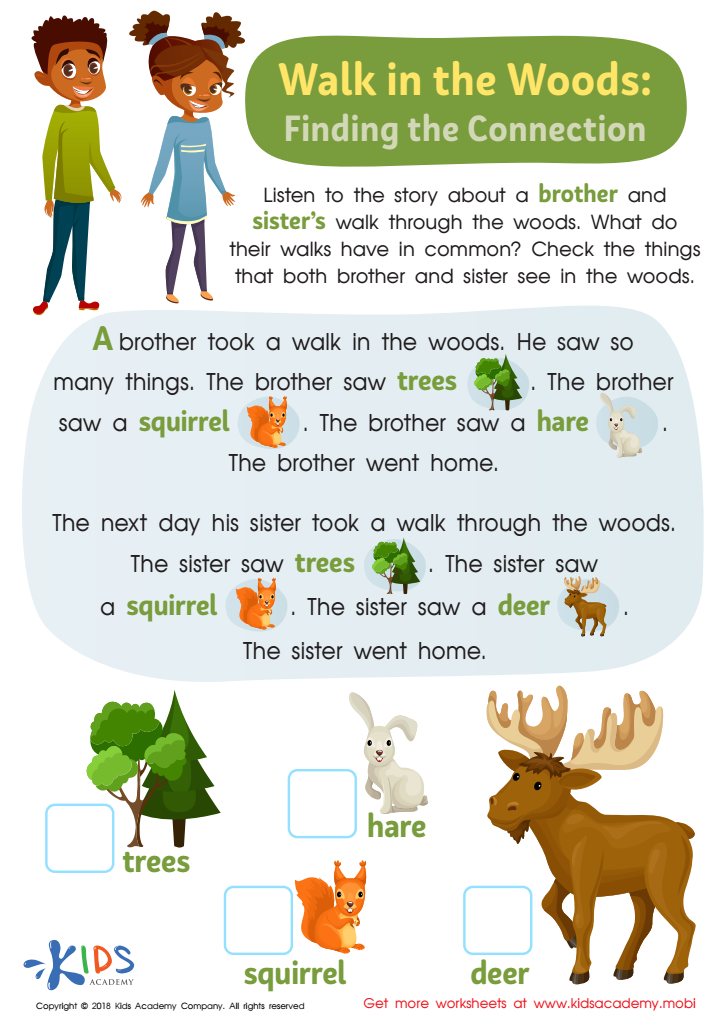
Walk In the Woods: Finding Connections Worksheet
Brother and sister took a walk in the woods to connect with nature and get some exercise. As they went, they noted different things like birds and plants, which they share in this story. Read it to your little ones, and help them check off the items the two saw. It's a great way to learn about nature and enjoy the outdoors.
 Assign to My Students
Walk In the Woods: Finding Connections Worksheet
Worksheet
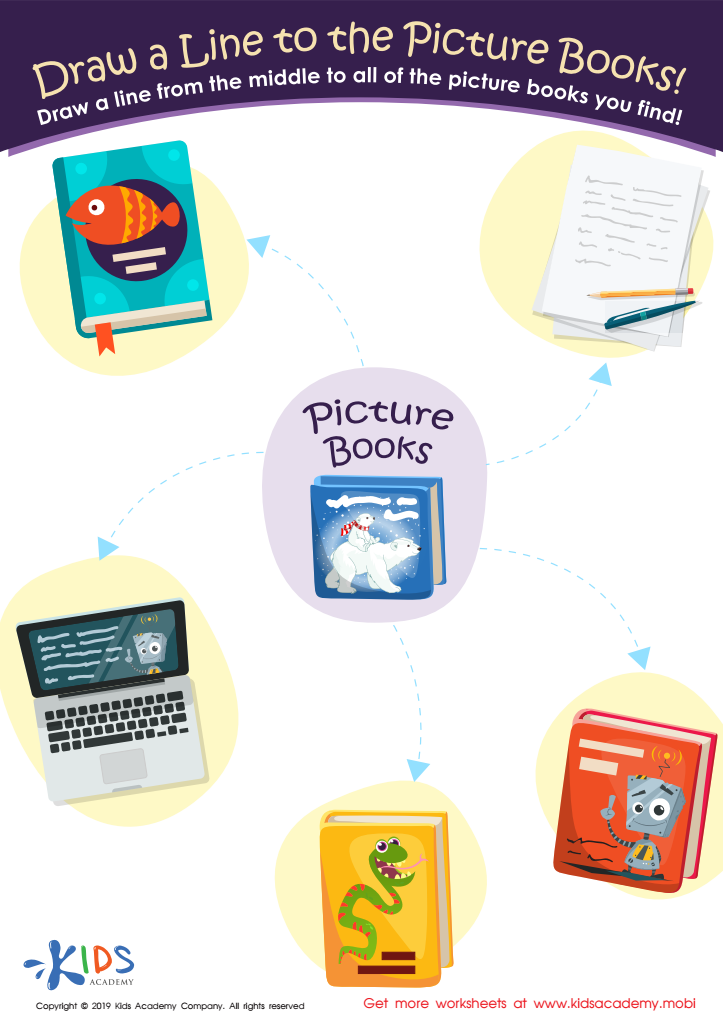
Draw a Line to the Picture Books Worksheet
Encourage your students to read and explore with this fun exercise! They'll draw a line from the word 'picture books' to the five objects. Picture books are exciting, with stories and colorful images. Make story time even more enjoyable with this worksheet!
Draw a Line to the Picture Books Worksheet
Worksheet
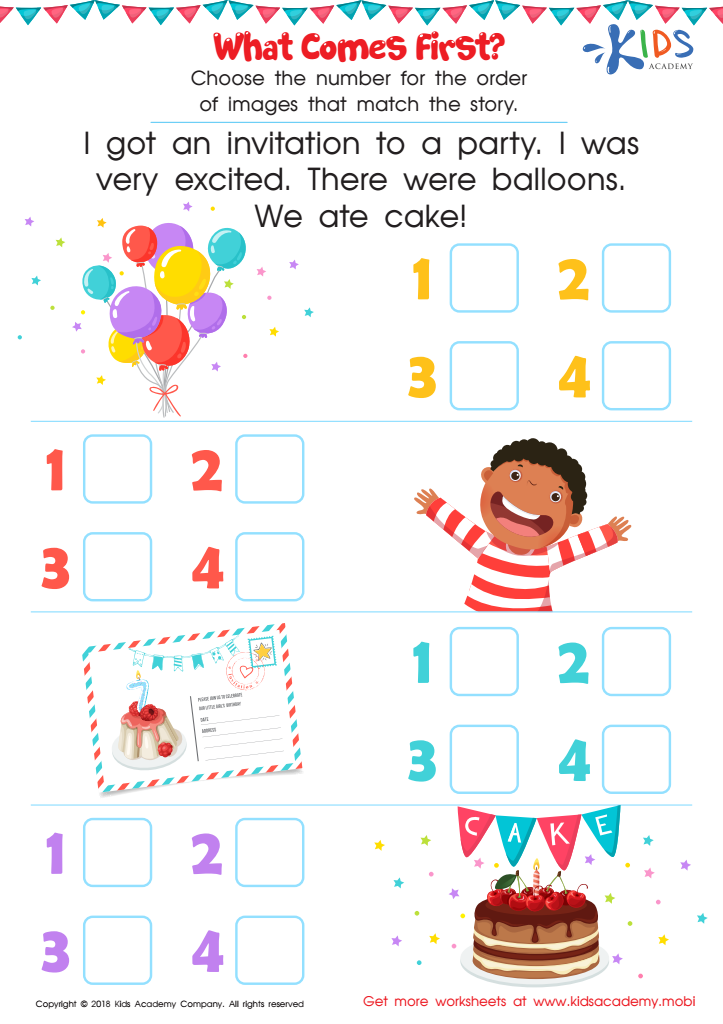
What Comes First Worksheet
Before you start, ask your child what they see in the picture. Read the story aloud together, then show them the images in order, numbered 1-5. Ask them to choose the numbers that match the story. Have fun and enjoy this party worksheet with your little one! (80 words)
What Comes First Worksheet
Worksheet
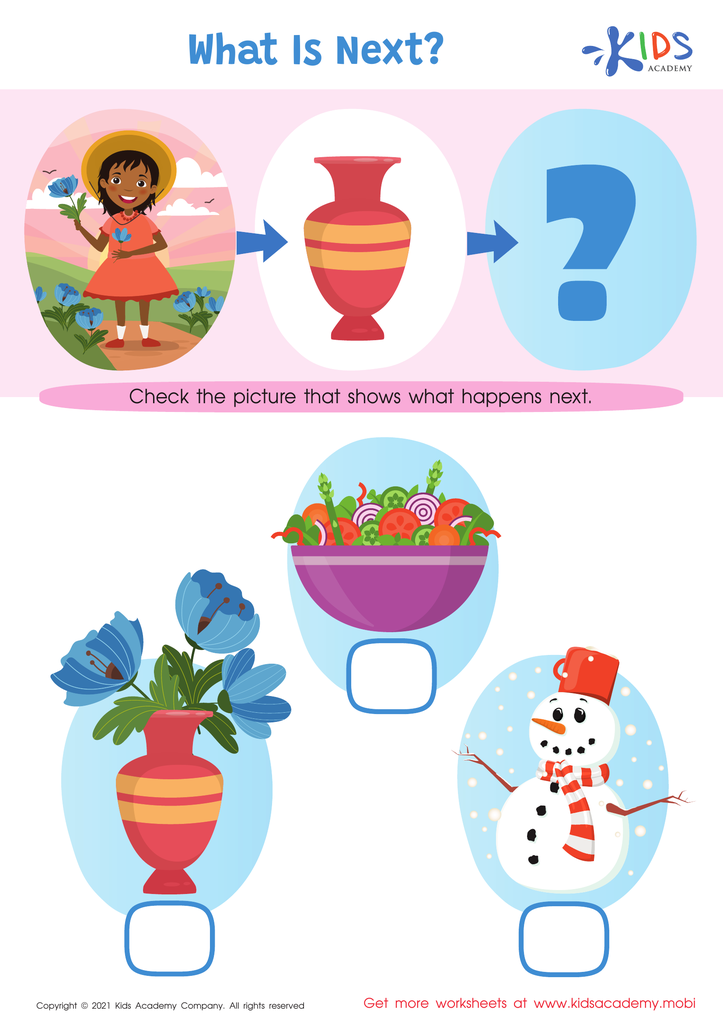
What is Next? Worksheet
The purpose of our company is to provide customers with the highest quality products and the best customer service experience in the industry.
We're committed to providing customers with excellent products and customer service. Our goal is to be the best in the industry.
What is Next? Worksheet
Worksheet
Join Kids Academy for Free
Who is primarily going to use this learning content?







Logical thinking and reading comprehension are foundational skills vital for children's early development, especially for ages 4-6. At this stage, children are highly receptive to learning, making it an ideal time for parents and teachers to instill these competencies.
Logical thinking enhances children's ability to analyze information, recognize relationships, and draw conclusions. This type of reasoning supports problem-solving skills that are essential not only in academics but also in everyday situations. When children engage in stories and dialogues, they learn to think critically about characters' motivations and plot developments, fostering deeper cognitive abilities.
Reading comprehension is similarly crucial. Understanding what they read lays the groundwork for success in all subjects as children progress through school. Comprehension nurtures vocabulary growth, improves attention spans, and enhances verbal skills, making it easier for children to express their ideas and thoughts.
Moreover, early mastery of logical thinking and reading comprehension positively influences standardized test performance later in their education. By prioritizing these skills, parents and teachers can empower children, making learning engaging and enjoyable. The benefits are long-lasting, equipping them not only for academic achievement but also for meaningful interactions and effective communication throughout their lives.








