Enhancing observational skills Science Worksheets for Ages 4-6
3 filtered results
-
From - To
Enhance your child's observational skills with our engaging Science Worksheets designed for ages 4 to 6! These printable resources encourage young learners to explore their surroundings and develop critical thinking abilities through hands-on activities. Kids will enjoy a variety of fun tasks that promote observation, analysis, and inquiry, fostering a strong foundation in science. Our beautifully illustrated worksheets are perfect for parents and teachers, making learning playful and interactive. Help your little ones discover the wonders of nature while building essential skills that support their academic journey. Dive into the world of exploration and watch their curiosity bloom!
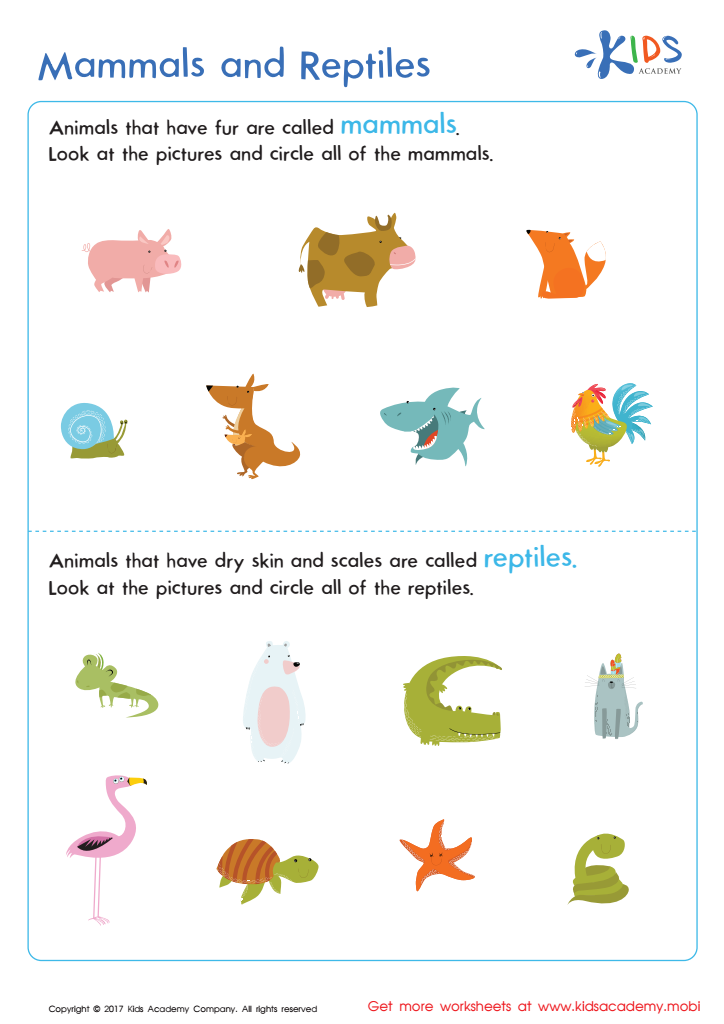
Mammals and Reptiles Worksheet
 Assign to My Students
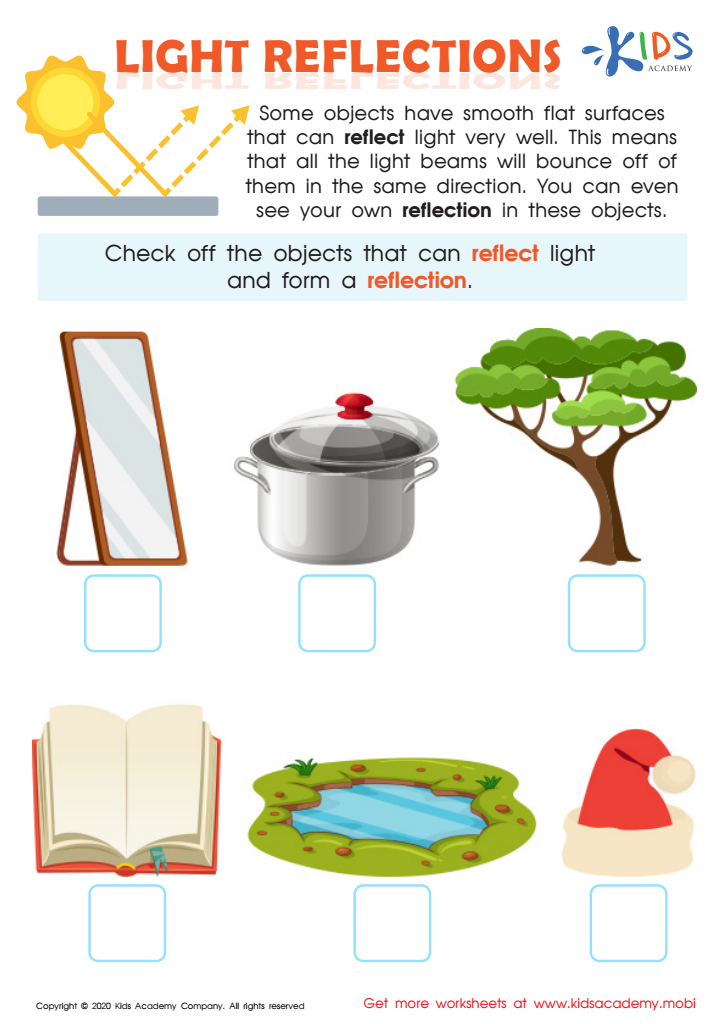
Light Reflections Worksheet
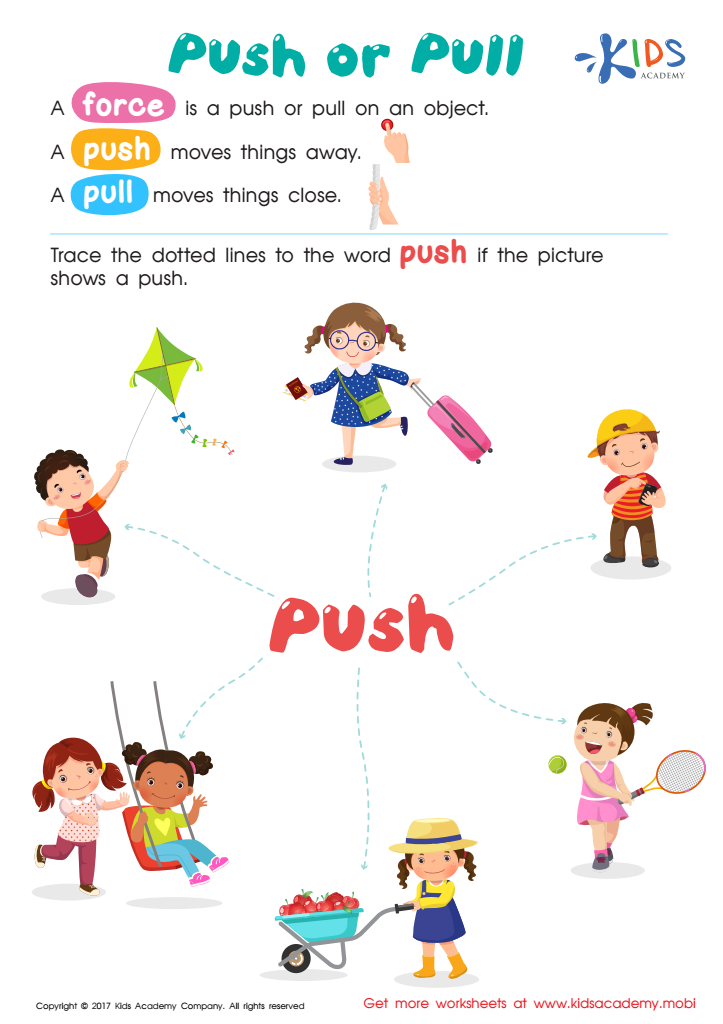
Push or Pull Worksheet







Enhancing observational skills in young children, especially ages 4-6, is crucial for their cognitive development and foundational learning. At this age, children are naturally curious about their environment, and fostering their observational abilities helps them make sense of the world around them. Parents and teachers initiatives in science-infused lessons guide children to notice details, recognize patterns, and make connections—skills that are essential in scientific exploration.
Observational skills form the bedrock of scientific inquiry. Children learn to ask questions, hypothesize, experiment, and draw conclusions based on what they observe. This not only ignites a passion for learning but also promotes critical thinking, creativity, and problem-solving skills necessary for navigating daily life.
Moreover, enhancing observational skills supports other areas of development, including language acquisition and social-emotional growth. Children who articulate their observations build richer vocabularies and improve communication skills, while those who engage in collaborative exploration learn cooperation and empathy.
Finally, cultivating these skills early sets the stage for future academic success in science and other subjects. By prioritizing these techniques, parents and teachers empower children to become keen observers and active participants in their learning journey, making science feel relevant and exciting.







