
Science knowledge Science Worksheets for Ages 4-6
3 filtered results
Difficulty Level
Grade
Age
-
From - To
Subject
Activity
Standards
Explore our engaging Science Knowledge Worksheets for children aged 4-6! Designed to spark curiosity and enhance understanding of the natural world, these worksheets provide fun, interactive activities that promote foundational scientific concepts. Young learners will explore topics such as living creatures, the environment, and simple experiments through colorful illustrations and easy-to-follow instructions. Perfect for both home and classroom use, our worksheets encourage hands-on learning and observation skills. Support your child’s early science education with activities that foster critical thinking and creativity. Dive into science today and watch your little ones discover the wonders of the world around them!
Favorites
With answer key
Interactive
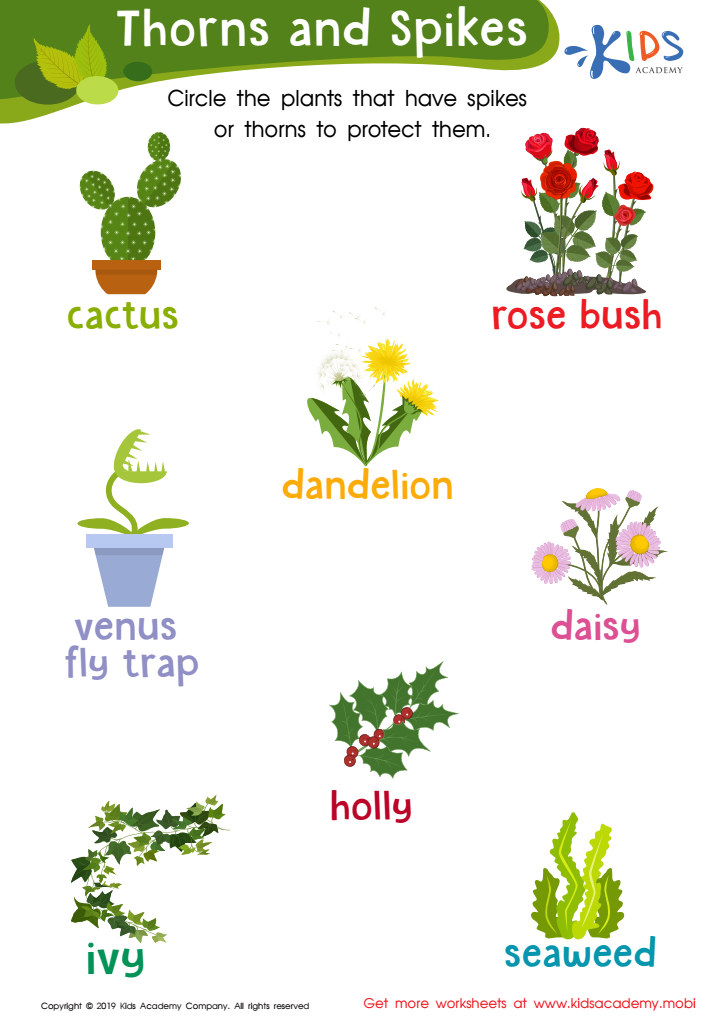
Thorns and Spikes Worksheet
Can your students name and identify the plants and flowers in this worksheet? Ask them to read out the names and circle the ones with spikes or thorns. Help them appreciate nature's beauty and understand how plants protect themselves.
 Assign to My Students
Thorns and Spikes Worksheet
Worksheet
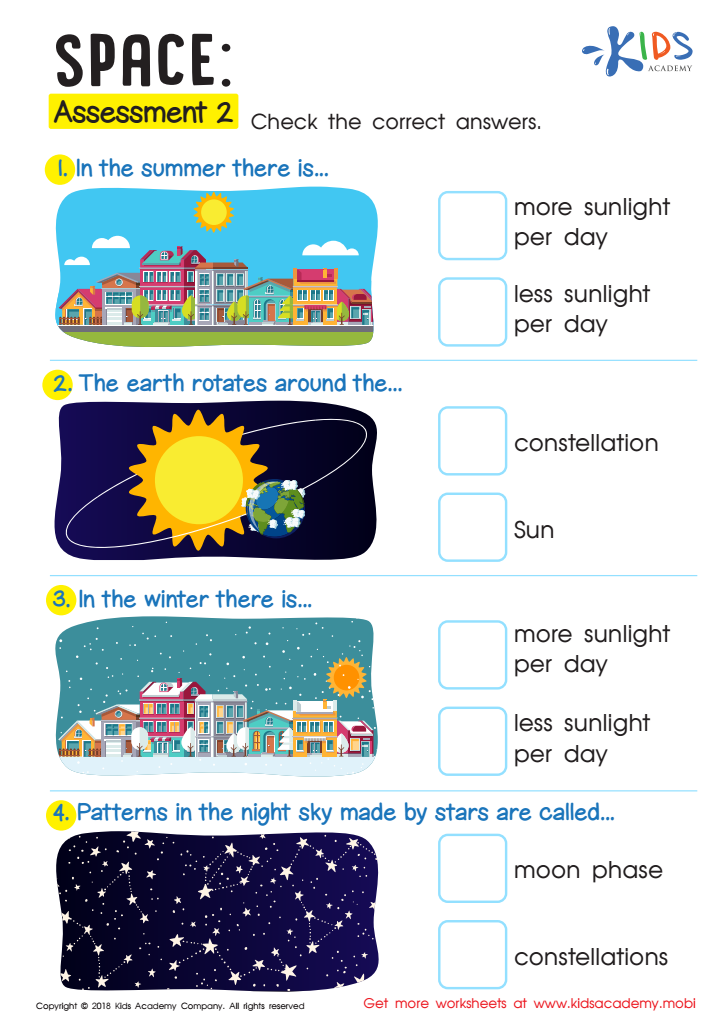
Space: Assessment 2 Worksheet
Test your kids' knowledge of the weather, constellations and Earth with this worksheet. Show them the 4 images and ask what's happening; then read the questions and options and help them pick the right answers. This printout is a helpful and fun way to learn!
Space: Assessment 2 Worksheet
Worksheet
Join Kids Academy for Free
Who is primarily going to use this learning content?





Parents and teachers should prioritize Science knowledge for children aged 4-6 because it lays the foundation for critical thinking and problem-solving skills. At this young age, children are naturally curious, seeking to understand the world around them. Engaging them in basic scientific concepts stimulates their exploratory instincts and nurtures a lifelong love for learning.
Introducing Science in early childhood fosters creativity and imagination as kids experiment, ask questions, and discover answers through hands-on activities. It helps them develop their observation skills and encourages them to manipulate and interact with their surroundings. This engagement with Science cultivates important cognitive abilities such as reasoning and analysis.
Moreover, understanding basic scientific principles can help young children make sense of daily experiences. For instance, learning about plants, animals, and seasons deepens their appreciation of nature, while simple experiments promote a sense of accomplishment and self-esteem.
Additionally, fostering early science education can bridge the gap between different learning areas, supporting literacy and mathematics development. As such, parents and teachers play a crucial role in providing young learners with the tools necessary to explore, inquire, and make discoveries, ultimately shaping informed and engaged citizens for the future.







