
Vocabulary Building Science Worksheets for Ages 4-6
11 filtered results
Difficulty Level
Grade
Age
-
From - To
Subject
Activity
Standards
Discover engaging Vocabulary Building Science Worksheets designed specifically for children aged 4-6! These worksheets provide fun and interactive activities that promote essential vocabulary skills while introducing young learners to the wonders of science. Through colorful illustrations and relatable scenarios, kids will enhance their language development as they explore topics such as plants, animals, and weather. Perfect for homeschooling or classroom use, our worksheets are crafted to nurture curiosity and foster a love for learning. Encourage your child's literacy skills and scientific understanding simultaneously with these easy-to-use resources. Visit our site today for a collection of printable worksheets that make learning enjoyable!
Favorites
With answer key
Interactive
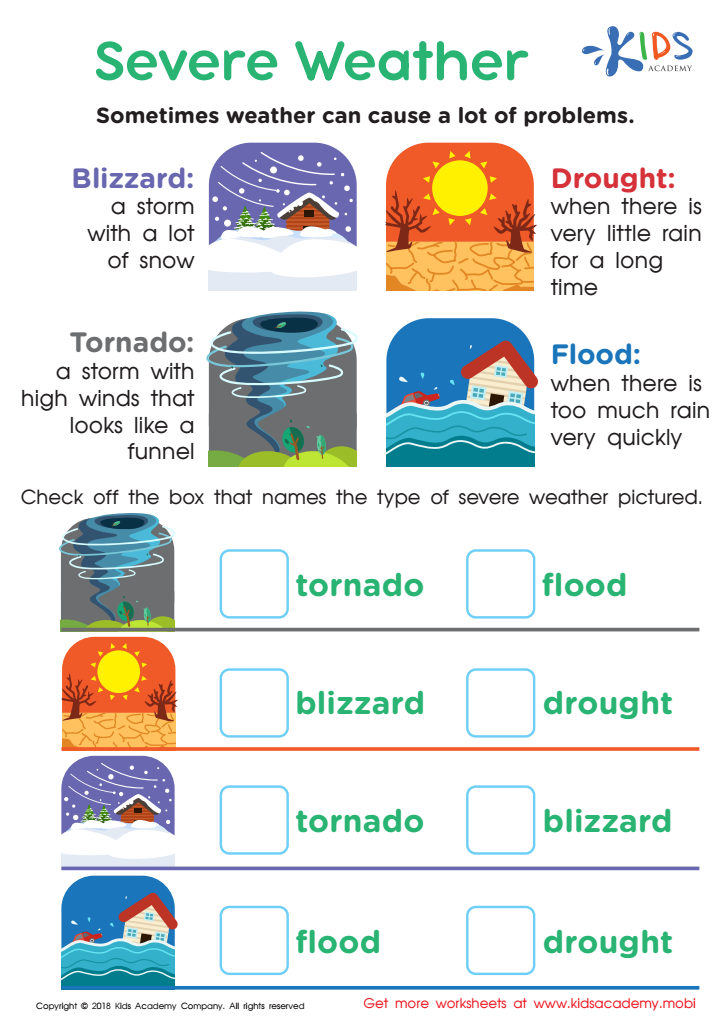
Severe Weather Worksheet
Weather can be dangerous, so teach your kids to stay safe with this interactive weather worksheet. Review the descriptions of tornadoes, blizzards, floods, and drought and match them with the colorful pictures. Tick the boxes to correctly identify each image and complete the sheet.
 Assign to My Students
Severe Weather Worksheet
Worksheet
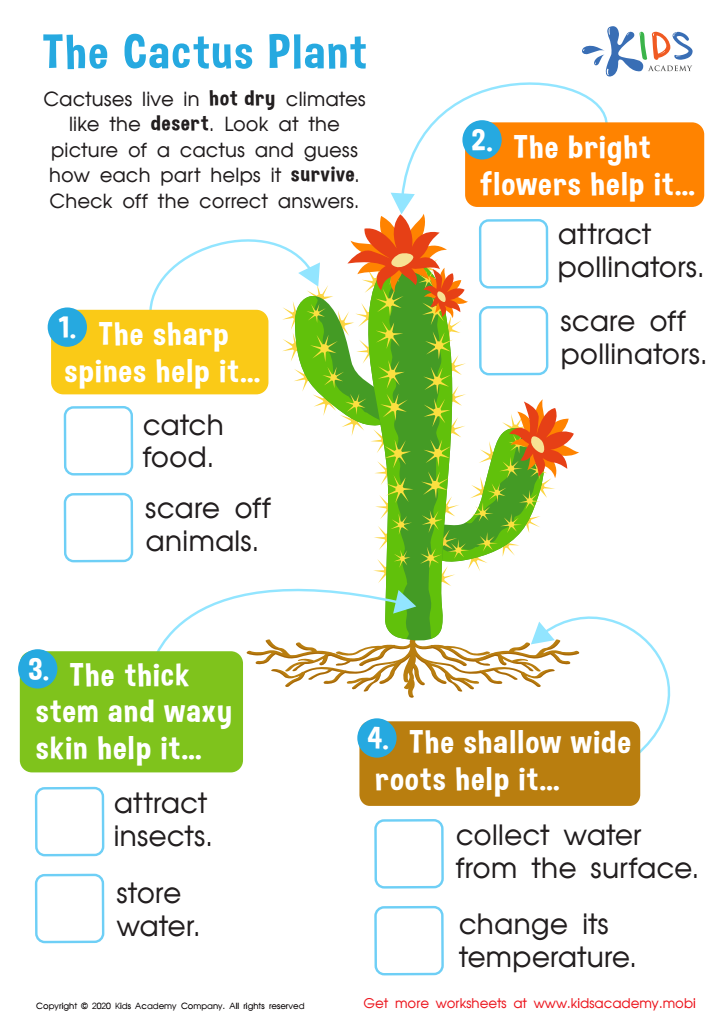
The Cactus Plant Worksheet
Encourage your little scientist to review cacti with this free biology worksheet. Check off the correct answer to show how the cactus survives its harsh desert environment! With sharp spikes and the ability to store water like a camel, the cactus is a remarkable plant that has adapted to its climate.
The Cactus Plant Worksheet
Worksheet
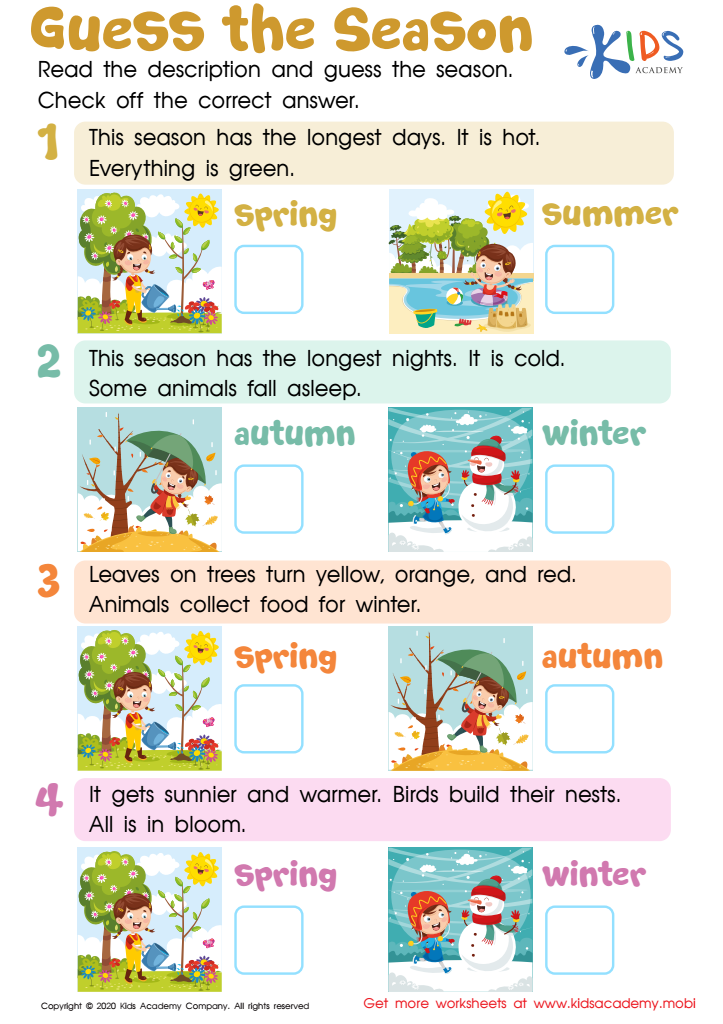
Guess the Season Worksheet
Winter and summer bring different weather! Help kids recognize the changes with this free Kids Academy PDF worksheet. Students read each description, look at the pictures, and check the box next to the season depicted. Make learning fun and easy with interactive activities.
Guess the Season Worksheet
Worksheet
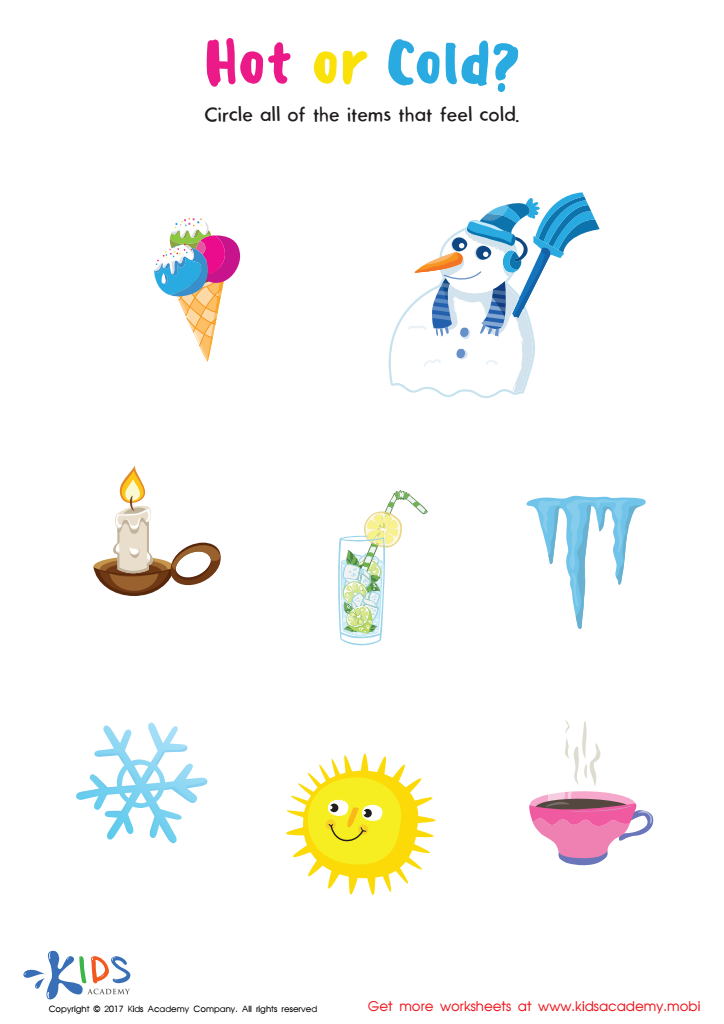
Hot or Cold Printable
Help your child stay safe with this hot or cold worksheet! It promotes problem solving skills and teaches the important concept of temperature differences. Plus, it’s fun! Get your child to learn by playing.
Hot or Cold Printable
Worksheet
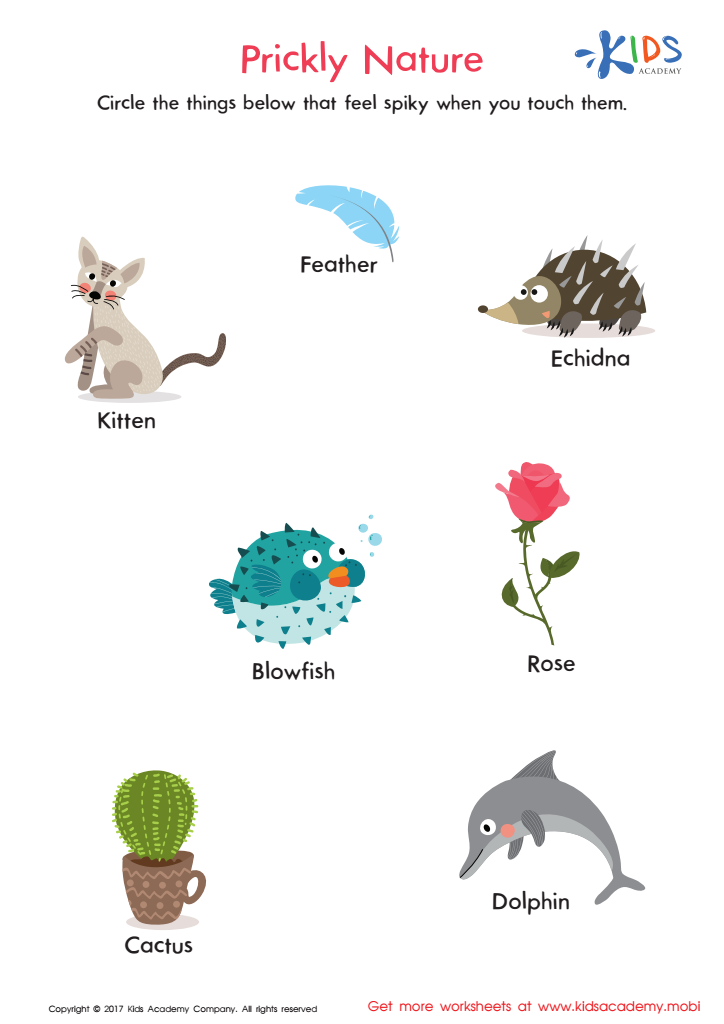
Prickly Nature Worksheet
Help your child stay safe and enhance critical thinking skills with this prickly nature worksheet. It can help them recognize spiky objects in their environment by teaching them to differentiate between prickly and soft textures. Plus, your kid will learn how to admire and avoid them. Get started today!
Prickly Nature Worksheet
Worksheet
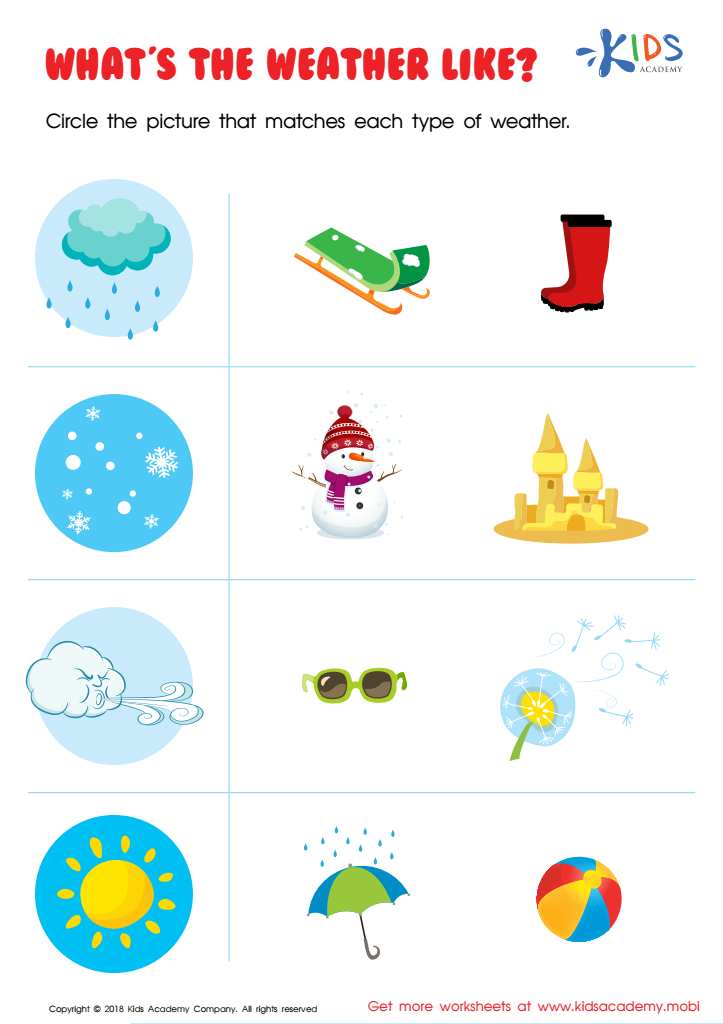
What's the Weather Like? Worksheet
Help budding meteorologists practice matching weather to seasons with this PDF worksheet. Picture clues help identify seasons and fine motor skills are practiced circling the correct weather patterns. Bright and engaging characters make learning fun and reinforce weather knowledge.
What's the Weather Like? Worksheet
Worksheet
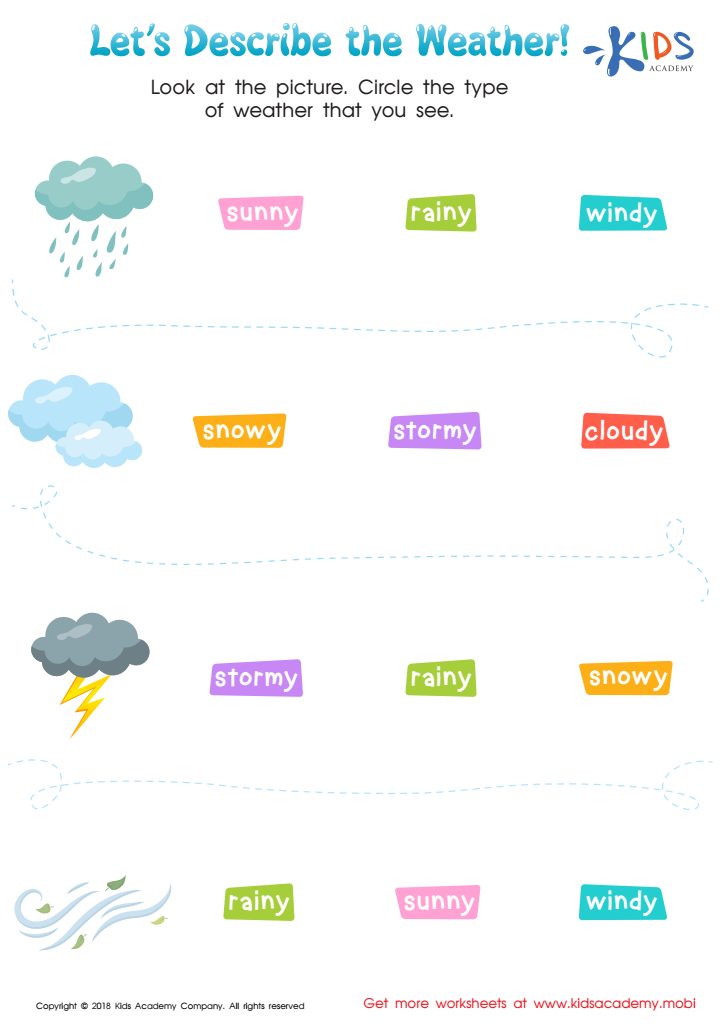
Let's Describe the Weather! Worksheet
Test your child's knowledge of weather with this fun worksheet. Ask them to look at the pictures and identify the type of weather. Then, have them select the correct answer from the options on the right. See how well your kids have been paying attention to the weather forecast!
Let's Describe the Weather! Worksheet
Worksheet
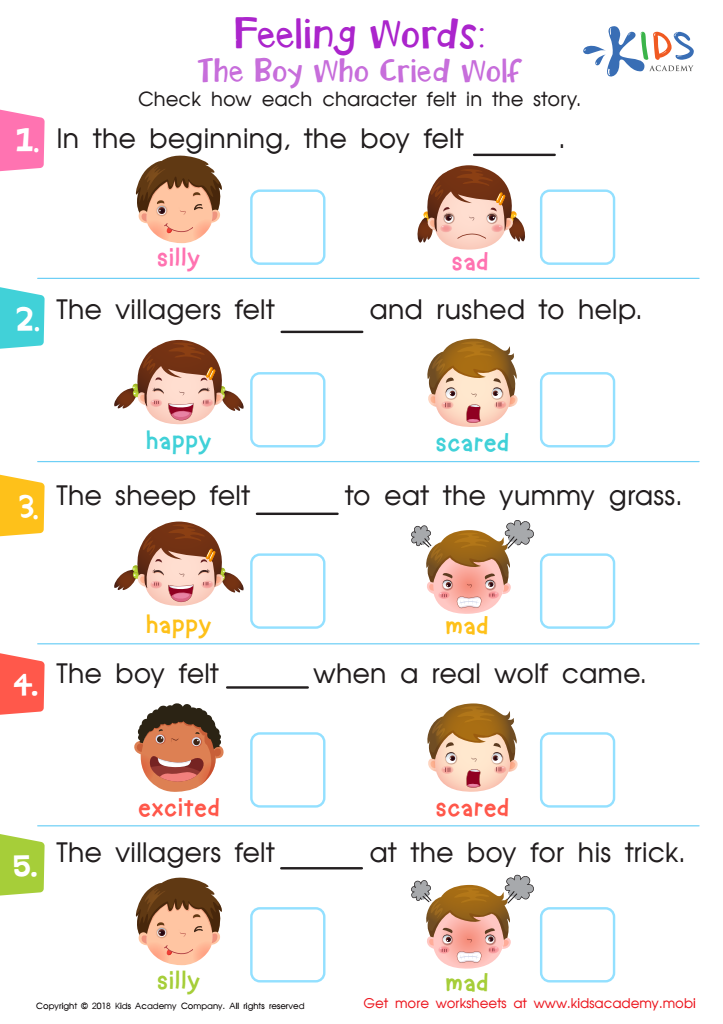
Feeling Words: The Boy Who Cried Wolf Worksheet
This worksheet helps students infer characters' traits and feelings by reading The Boy Who Cried Wolf. They choose the correct emotion for each character to improve their story comprehension. A great resource for the reading classroom, it teaches an essential comprehension skill.
Feeling Words: The Boy Who Cried Wolf Worksheet
Worksheet
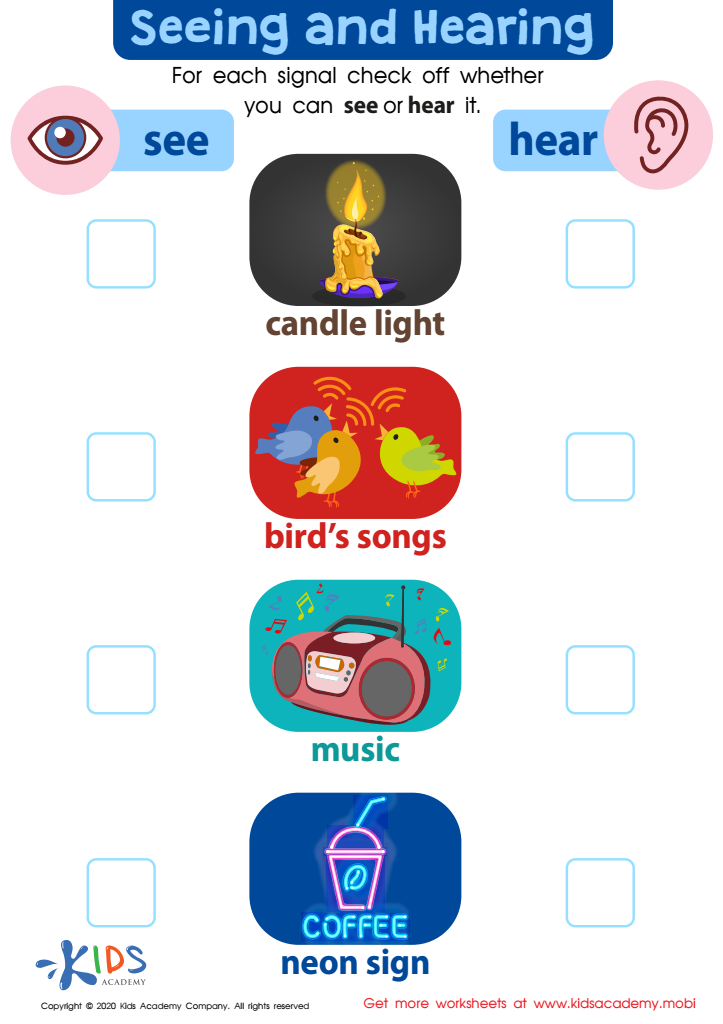
Seeing and Hearing Worksheet
Before beginning this worksheet, ensure your students know that we have five senses: eyes (seeing), tongue (tasting), skin (feeling), nose (smelling), and ears (hearing). This worksheet will explore seeing and hearing - ask your students what they can see/hear in the picture and get them to check it off.
Seeing and Hearing Worksheet
Worksheet
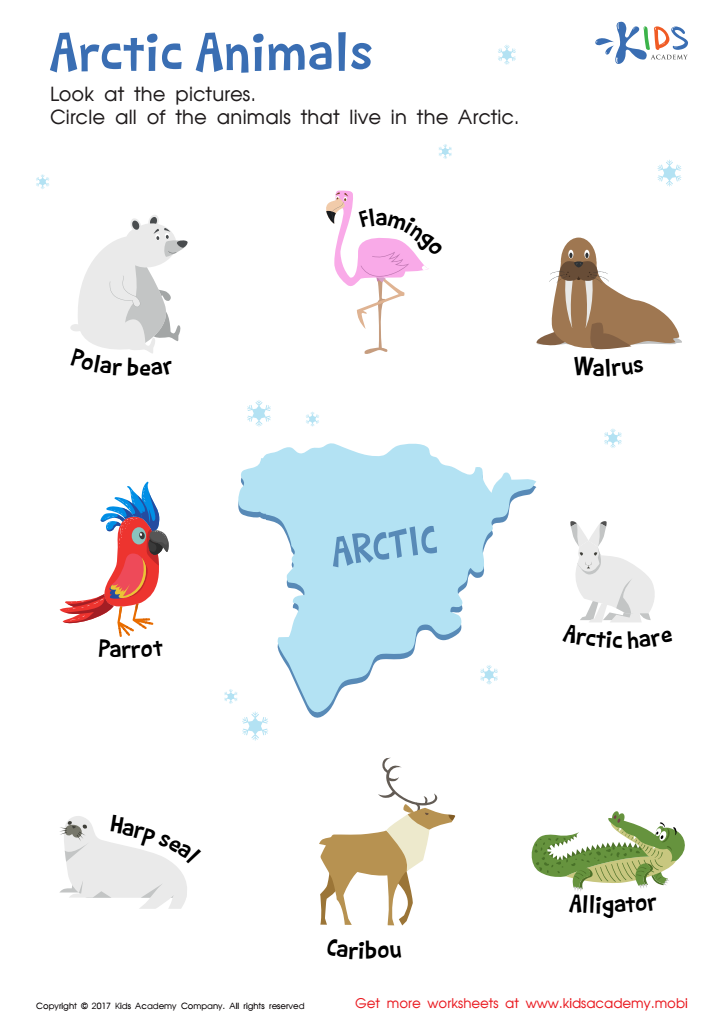
Arctic Animals Worksheet
Kids love animals and this worksheet is a great way to teach them where they live. It reinforces classification skills and introduces new animals, like the Arctic hare. Use it to discuss the Arctic climate and how these animals live, then ask your child where other animals live to keep the conversation going.
Arctic Animals Worksheet
Worksheet
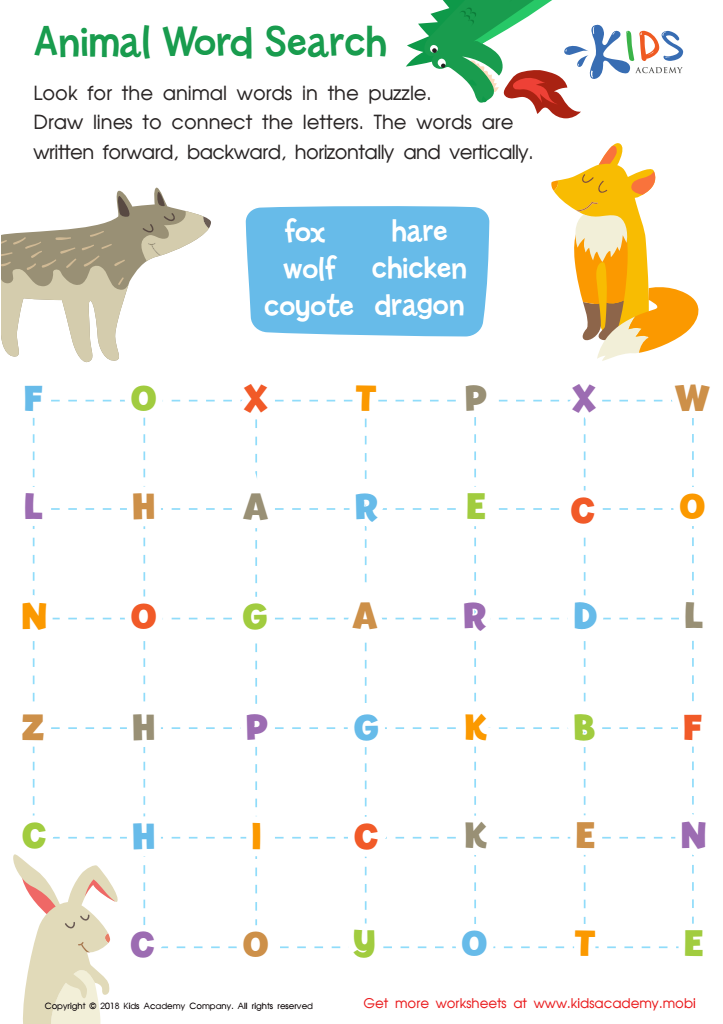
Animal Word Search Worksheet
Students can have fun and strengthen spelling and vocabulary skills with this word search worksheet. Search for animal words and circle the letters in the puzzle. Words can be found forwards, backwards, horizontally or vertically, providing a great challenge to foster critical thinking skills. An enriching activity for all ages!
Animal Word Search Worksheet
Worksheet
Join Kids Academy for Free
Who is primarily going to use this learning content?






Vocabulary Building Science for ages 4-6 is crucial for young children's overall development. At this stage, children are intensely curious and receptive to language. By engaging them in vocabulary-building activities, parents and teachers lay the foundation for effective communication skills, crucial for both academic and social success.
Vocabulary is directly linked to literacy; a rich vocabulary enhances reading comprehension, allowing children to process and understand texts more deeply. When vocabulary is nurtured during these formative years, it not only boosts language skills but also fosters critical thinking and boosts self-confidence.
Moreover, science concepts often utilize specialized vocabulary, such as terms related to nature, physical properties, or basic mechanics. By incorporating vocabulary-building science activities, educators can create engaging, hands-on learning experiences, making complex concepts accessible and exciting for young minds.
Furthermore, a strong vocabulary aids in the exploration of emotions and social situations, promoting better interpersonal relationships. Ultimately, investing time in vocabulary building paves the way for children to articulate their thoughts and feelings, encouraging a lifelong love of learning. For parents and teachers, fostering this area of early education is a gift that will pay dividends throughout a child's life.







