Phonological awareness Alphabet Worksheets for Ages 4-7
8 filtered results
-
From - To
Discover an engaging collection of Phonological Awareness Alphabet Worksheets designed specifically for children ages 4-7. These worksheets foster essential early literacy skills, helping young learners develop phonemic awareness through fun and interactive activities. Each worksheet focuses on identifying sounds, recognizing letter-sound relationships, and building foundational reading skills. With vibrant illustrations and age-appropriate exercises, children will enhance their understanding of language and boost their confidence while learning. Perfect for home or classroom use, our phonological awareness worksheets provide a comprehensive resource that encourages exploration and skill development. Start your child's literacy journey today and make learning the alphabet enjoyable and impactful!
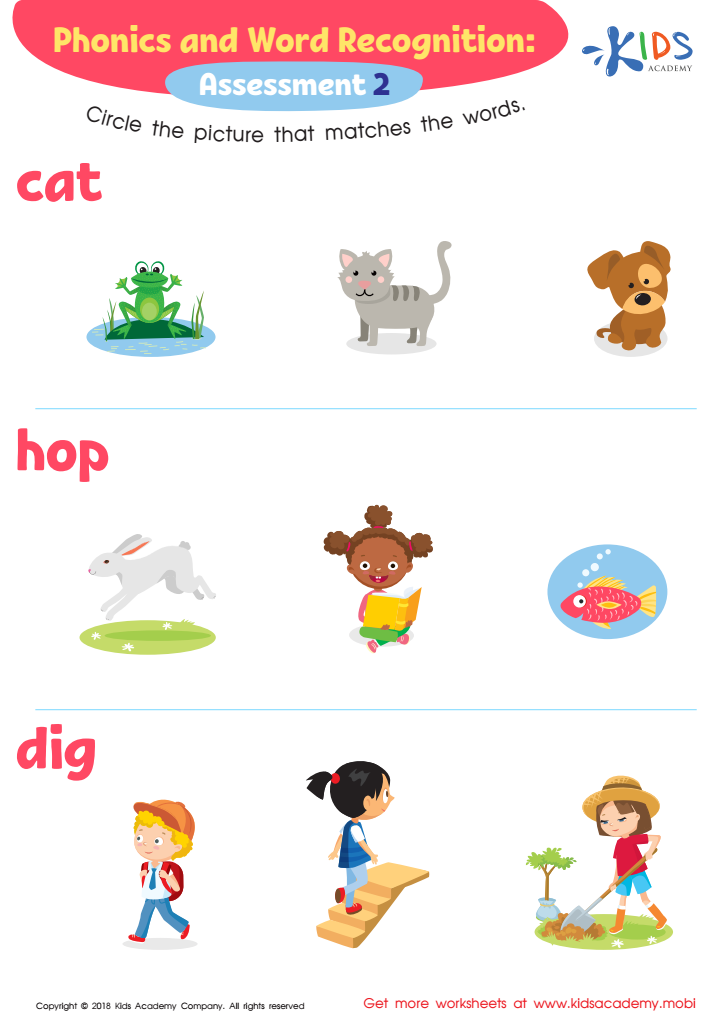
Phonological Awareness: Assessment 2 ELA Worksheet
 Assign to My Students
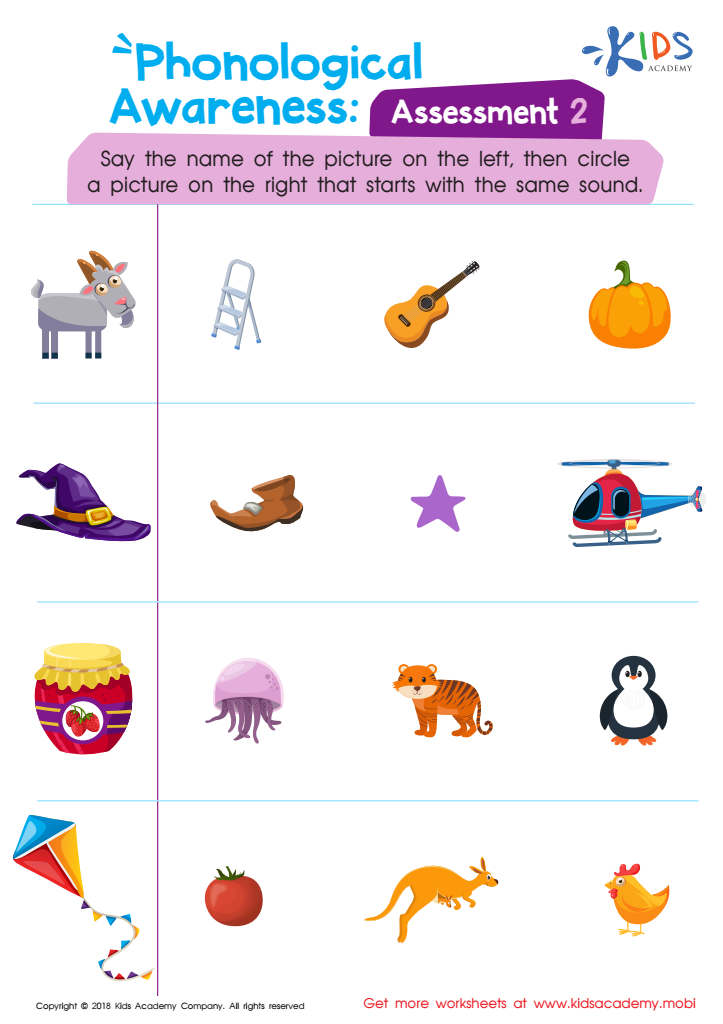
Phonological Awareness: Assessment 2 Worksheet
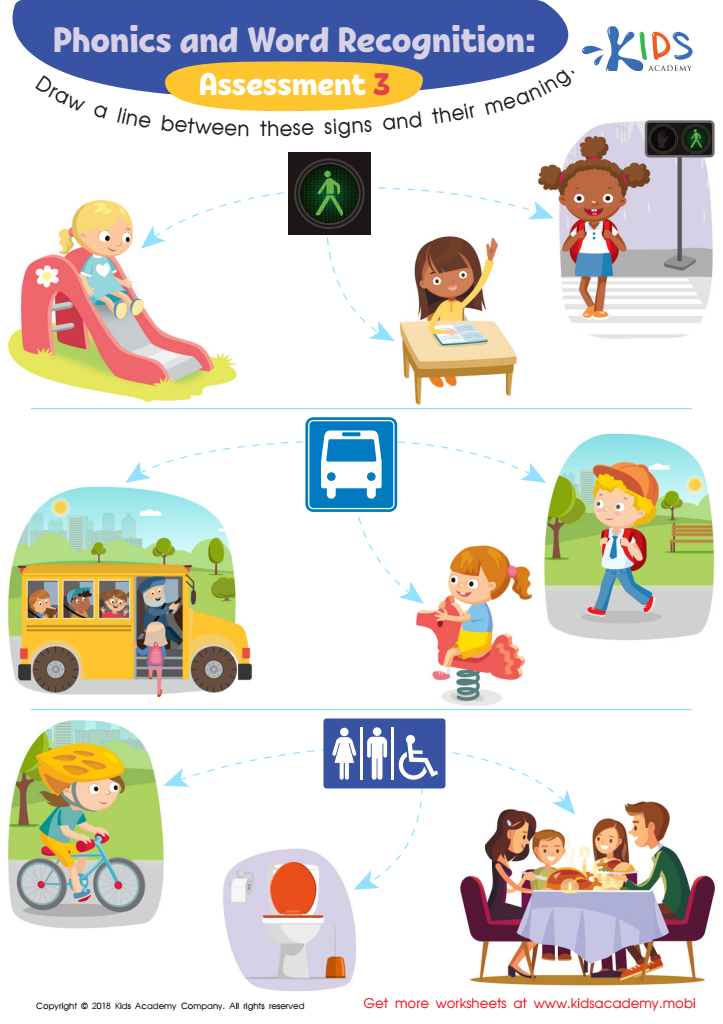
Phonological Awareness: Assessment 3 ELA Worksheet
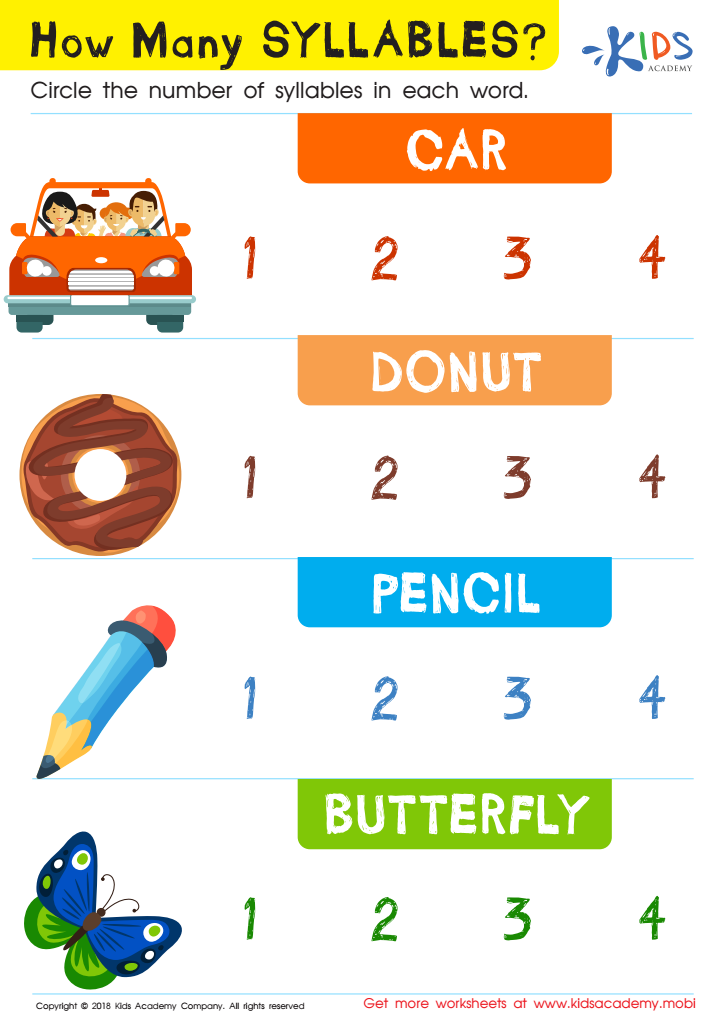
How Many Syllables? Worksheet
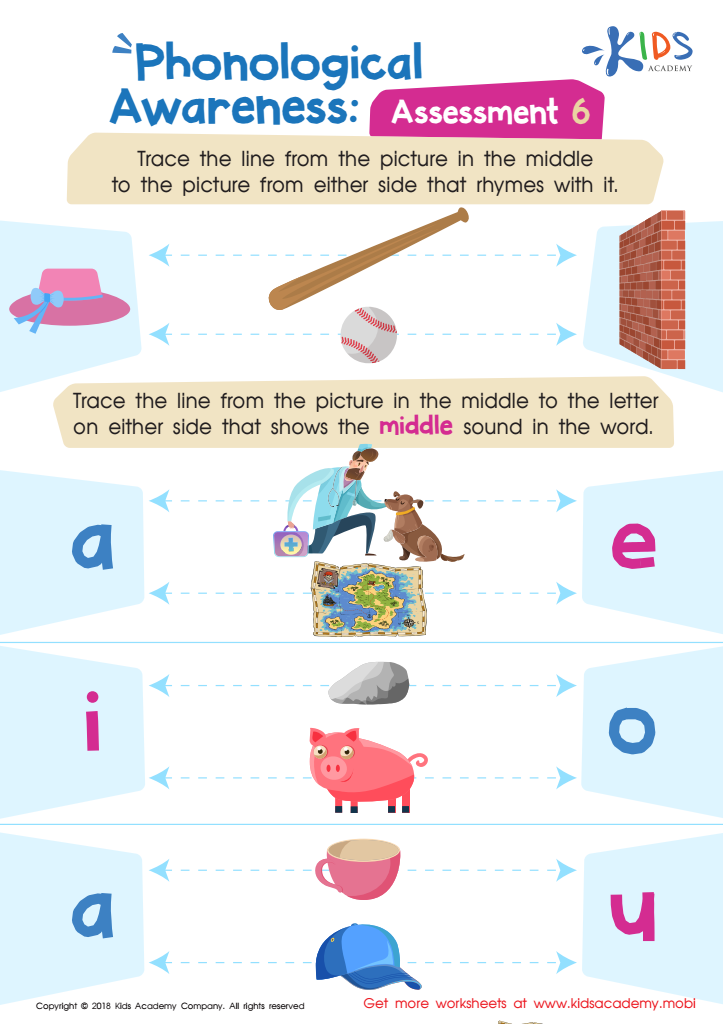
Phonological Awareness: Assessment 6 Worksheet
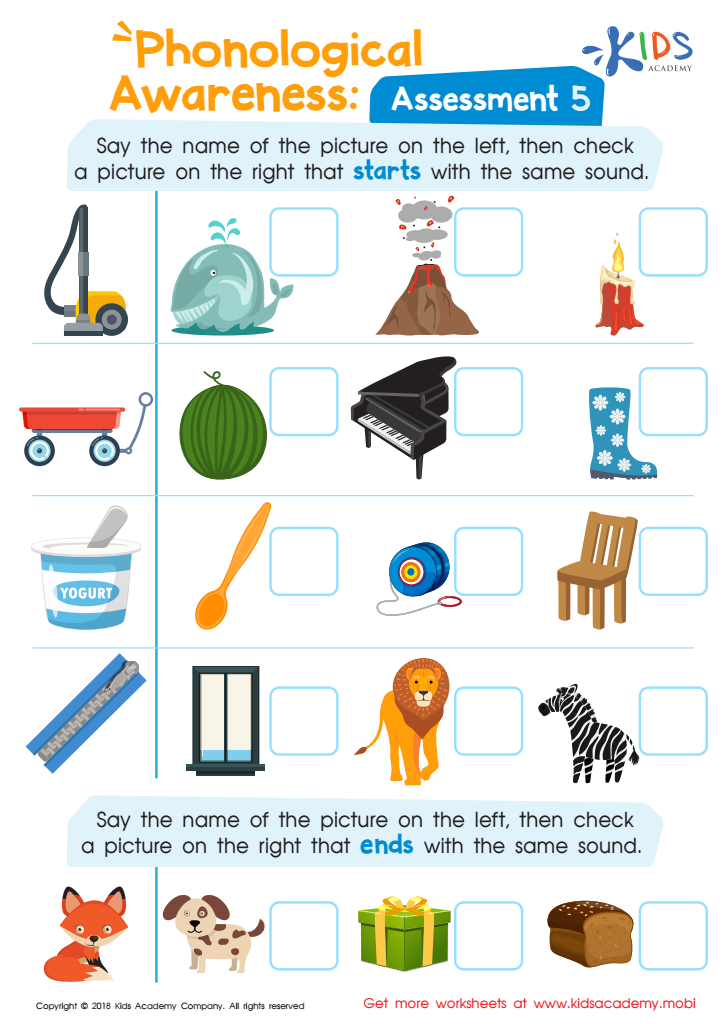
Phonological Awareness: Assessment 5 Worksheet
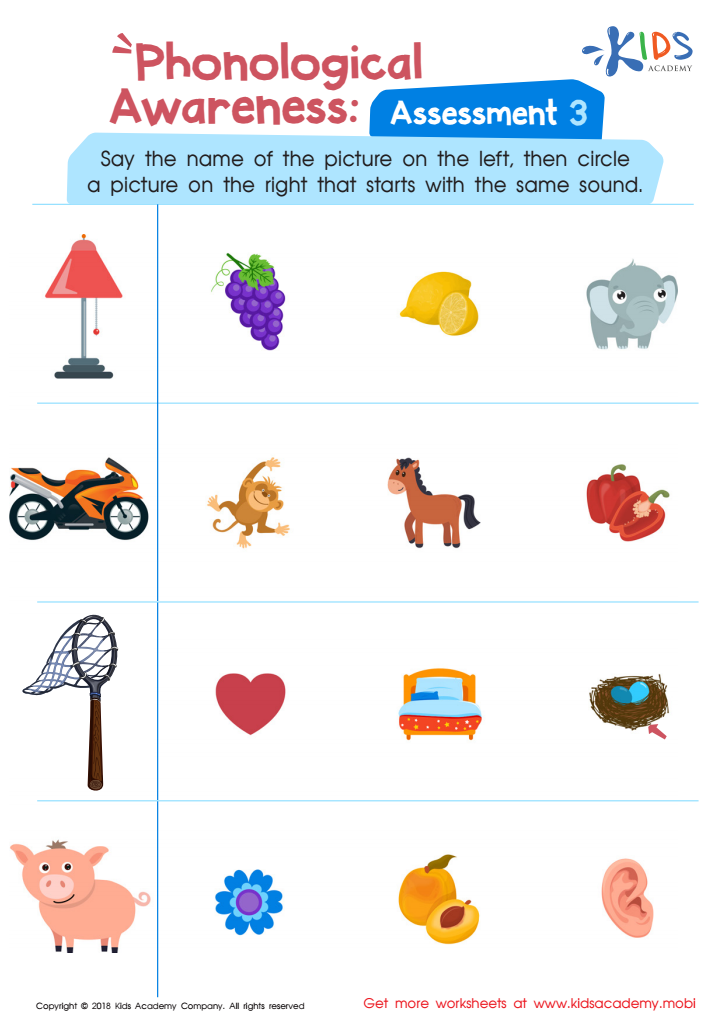
Phonological Awareness: Assessment 3 Worksheet
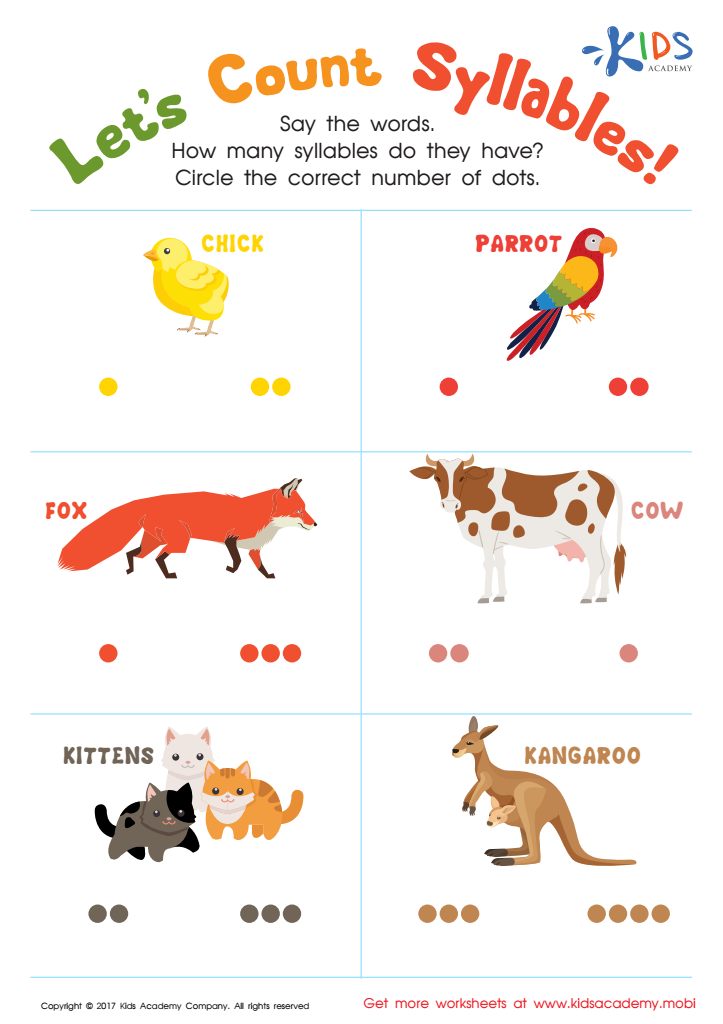
Lets Count Syllables Worksheet







Phonological awareness, particularly regarding the alphabet, plays a crucial role in early literacy development for children aged 4-7. This foundational skill encompasses understanding sounds in spoken language, including the ability to recognize and manipulate phonemes, syllables, and onsets and rimes. When parents and teachers prioritize phonological awareness, they set the groundwork for reading and writing success.
Children who develop phonological awareness can better connect letters to their sounds (phonemes), which facilitates decoding words. This connection leads to enhanced reading comprehension and writing fluency. Moreover, early practice in recognizing letter names and sounds helps children understand the alphabetic principle, the idea that letters represent sounds.
Furthermore, fostering phonological awareness can also bolster a child's confidence and motivation toward literacy activities. When children master these skills, they feel more capable and engaged, instilling a love for reading.
Incorporating fun and interactive activities—like rhyming games, sound sorting, and letter-matching—can be an enjoyable way to enhance phonological skills at home and in the classroom. Ultimately, nurturing phonological awareness strengthens a child's literacy foundation and equips them with the essential tools for future academic success. Parents and teachers are critical partners in this developmental journey.







