Chess Worksheets for Ages 4-7 - Page 5
97 filtered results
-
From - To
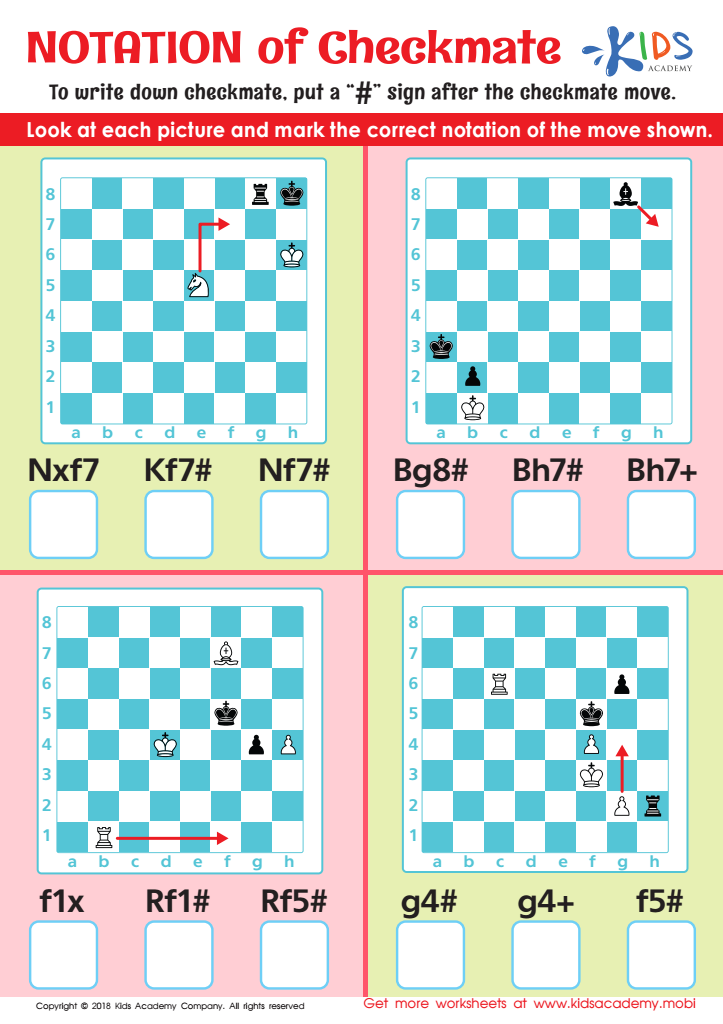
Notation of Checkmate Worksheet
 Assign to My Students








Chess for children aged 4-7 offers a multitude of developmental benefits, making it a valuable endeavor for both parents and teachers to encourage. During these formative years, young minds are exceptionally receptive to new concepts, and chess serves as a powerful tool to enhance cognitive development.
Playing chess helps boost critical thinking and problem-solving skills. As children learn to anticipate their opponent’s moves and plan several steps ahead, they develop improved concentration and focus. This is fundamental for academic success and day-to-day decision-making. Additionally, chess nurtures patience and discipline. Kids learn that good outcomes often require careful planning and consideration, an important lifelong lesson.
Moreover, chess promotes social interaction and cooperation. Whether played competitively or for fun, it teaches children the importance of taking turns, following rules, and handling wins and losses gracefully. These social skills contribute to emotional development and can be especially crucial during early childhood when manners and social etiquette are being learned.
Lastly, the game is a great equalizer; it does not depend on physical ability and is accessible to children of all skill levels and backgrounds, providing a sense of inclusion. Parents and teachers alike should value chess for these reasons, fostering both intellectual and emotional growth in young learners.