Basic Counting Worksheets for Ages 4-7
6 filtered results
-
From - To
Discover our engaging Basic Counting Worksheets designed specifically for children ages 4 to 7! These fun and interactive resources help young learners develop essential counting skills through colorful visuals and relatable themes. Our worksheets incorporate various activities, from counting objects to tracing numbers, ensuring a comprehensive learning experience. Tailored to complement your child's educational journey, these printables make mastering numbers enjoyable and effective. Perfect for home or classroom use, our worksheets promote number recognition and boost early math confidence. Explore our collection today and lay a strong foundation for your child's mathematical success!
 Assign to My Students
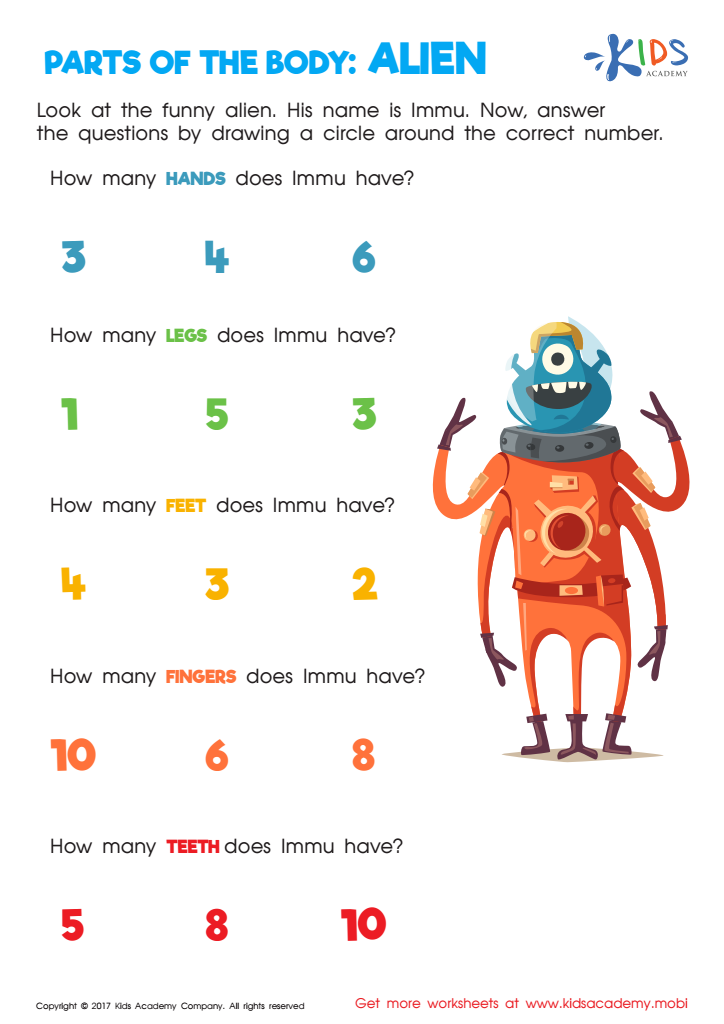
Alien Worksheet
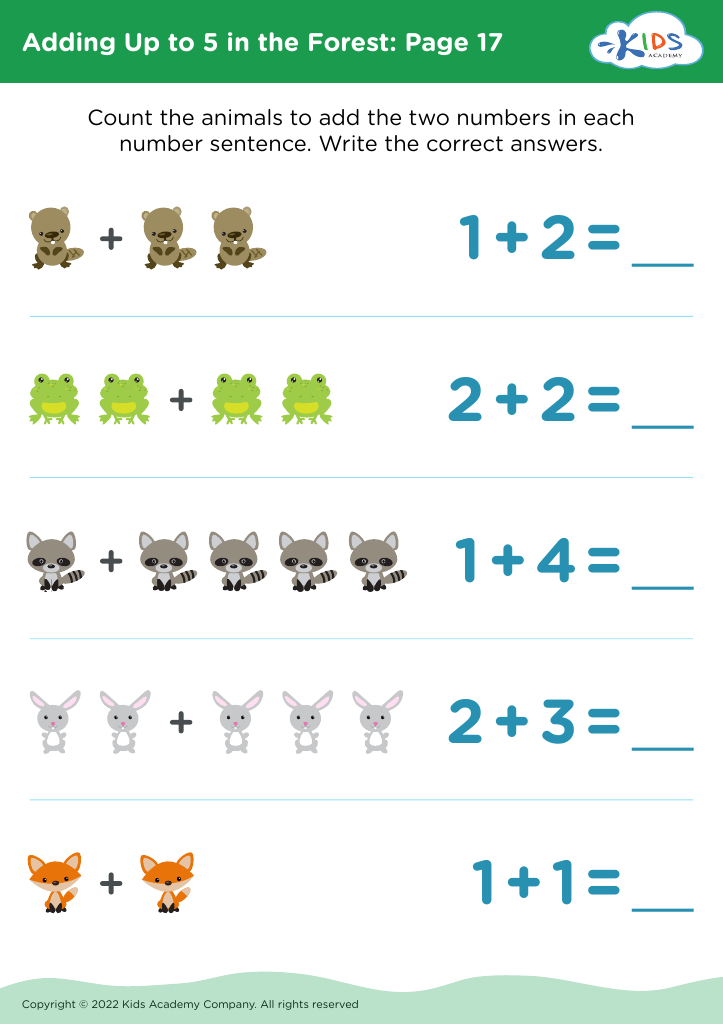
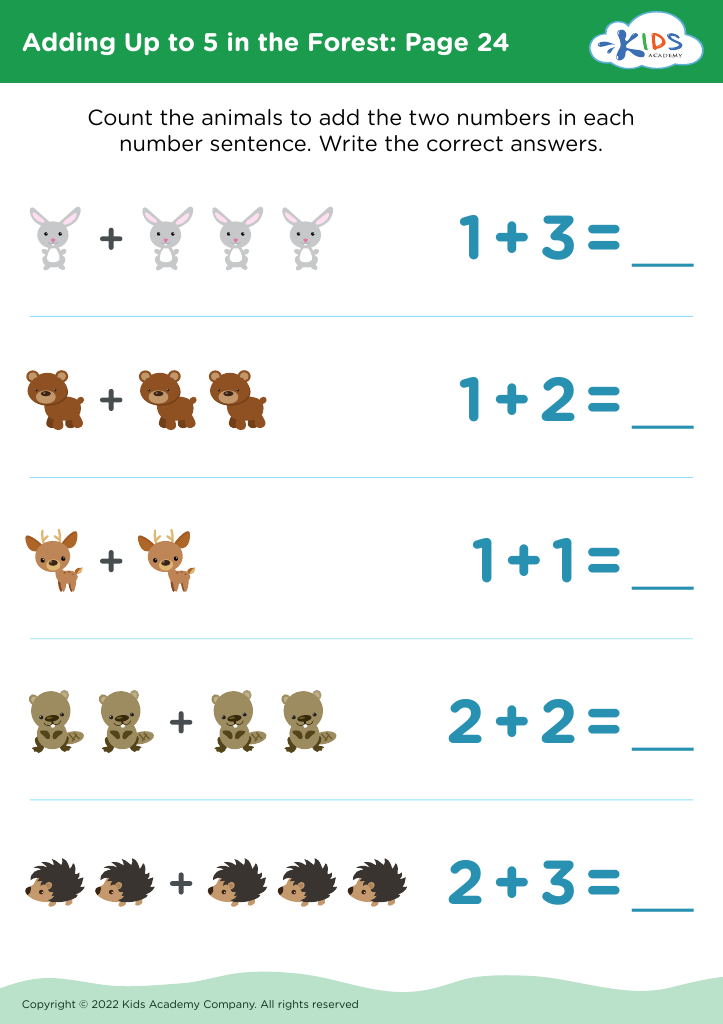
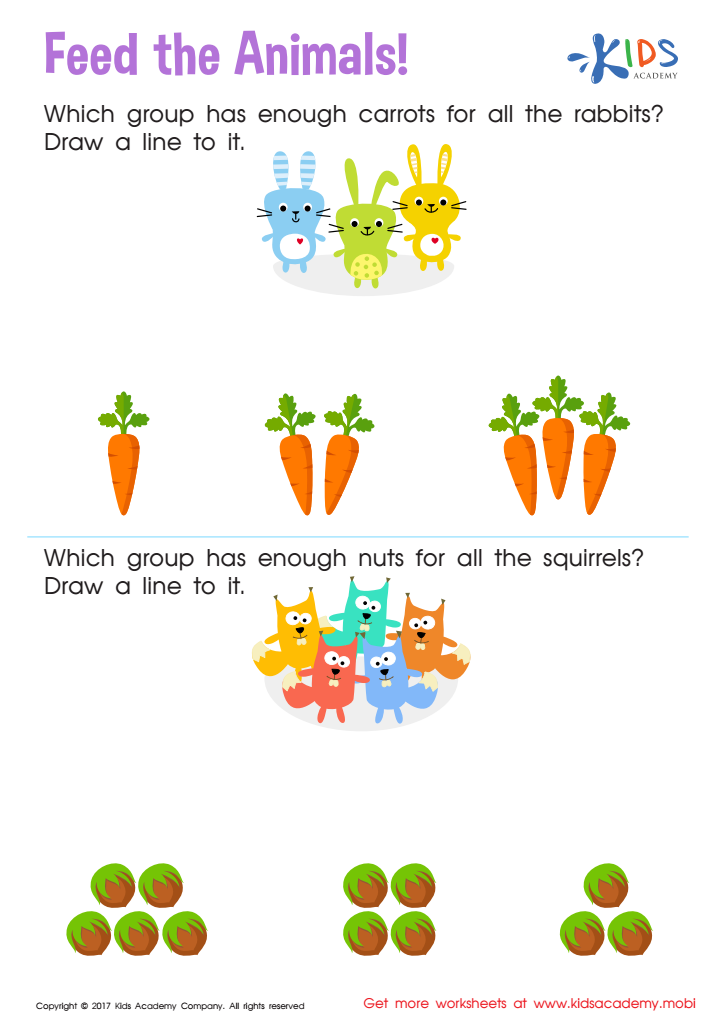
Count and Match: Feed the Animals Worksheet
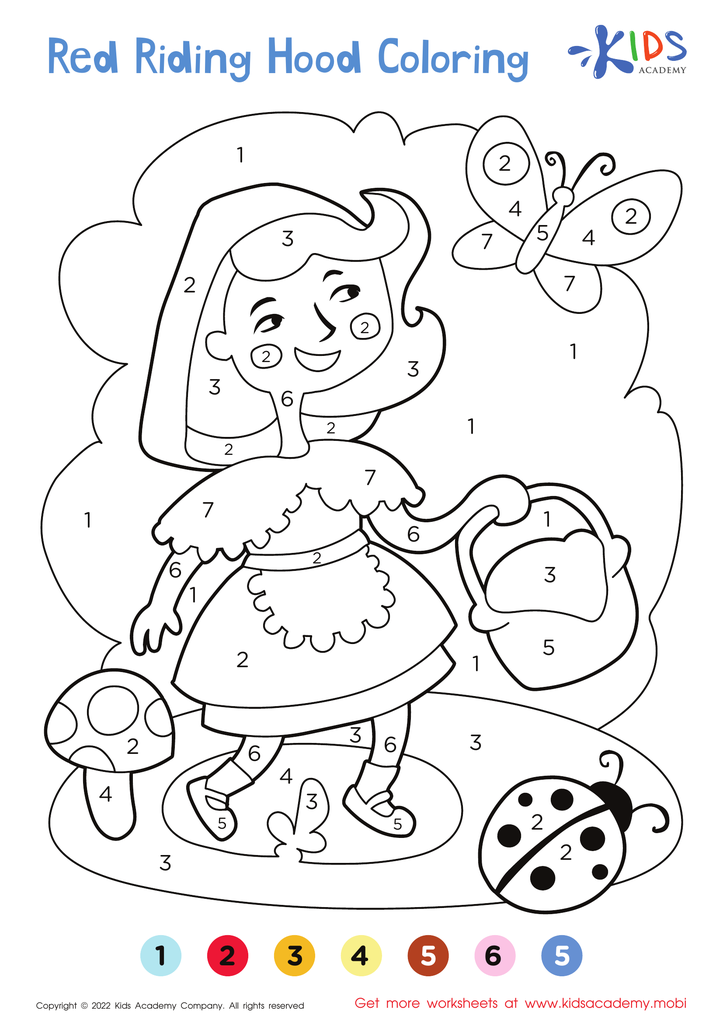
Little Red Riding Hood – Coloring by Numbers








Basic counting is a foundational skill that plays a vital role in early childhood development. For children aged 4-7, this ability not only serves as the groundwork for more complex mathematical concepts but also enhances cognitive development and critical thinking skills. By learning to count, children begin to understand number sense, which fosters confidence in their mathematical abilities.
Parents and teachers should care about basic counting because it supports a child's overall academic success. Early counting activities can encourage problem-solving skills as children learn to recognize patterns, relationships, and quantities. Additionally, such skills are often intertwined with everyday activities, making learning contextual and relatable—children can count objects during playtime or help set the table during meals.
Moreover, counting fosters language development as children learn to verbalize numbers and engage in conversations about quantity. This interactive learning process boosts social skills and teamwork, particularly when they work collaboratively on counting games or activities. Ultimately, emphasizing basic counting cultivates a foundation for lifelong learning, preparing children for future academic challenges while boosting their self-esteem and enthusiasm for math-related activities. Investing in these skills at a young age reaps benefits in various aspects of their development.








