Comparing lengths Worksheets for Ages 4-7
17 filtered results
-
From - To
Explore our engaging "Comparing Lengths Worksheets for Ages 4-7," designed to introduce young learners to the concepts of measurement and comparison in a fun and interactive way. These worksheets provide a variety of activities that help children understand the differences in length using everyday objects. Kids will compare, measure, and sort items, enhancing their critical thinking and fine motor skills while fostering excitement for learning. Perfect for both classroom and home use, these printables come with clear instructions and colorful visuals to captivate children's attention. Boost your child's Math skills with our exciting comparing lengths worksheets today!
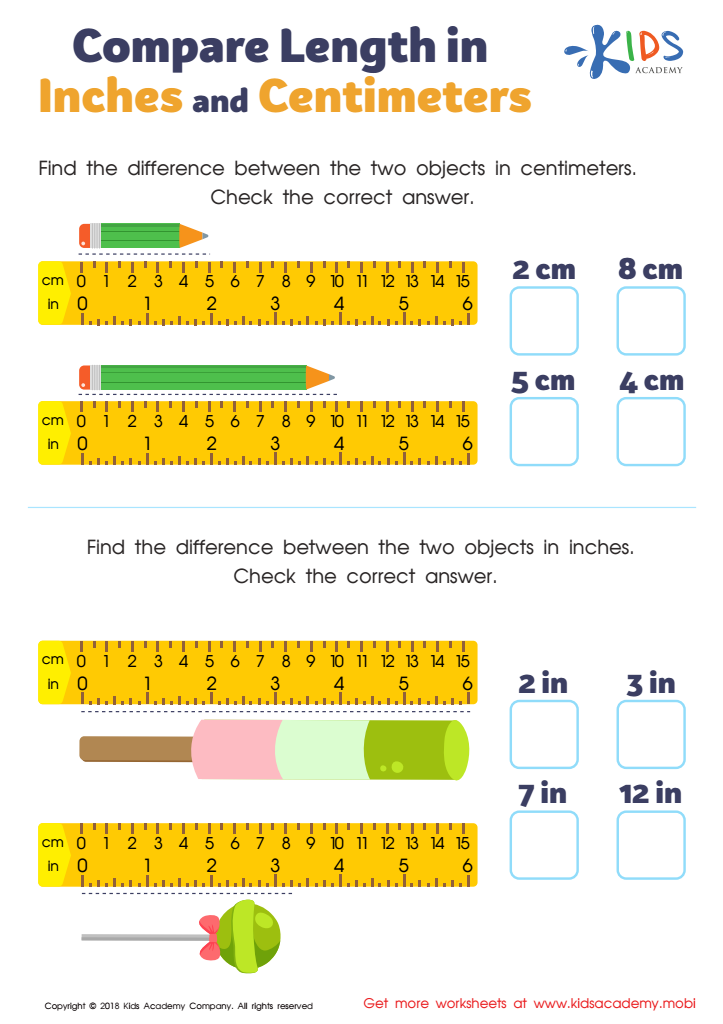
Compare Length in Inches and Centimeters Worksheet
 Assign to My Students
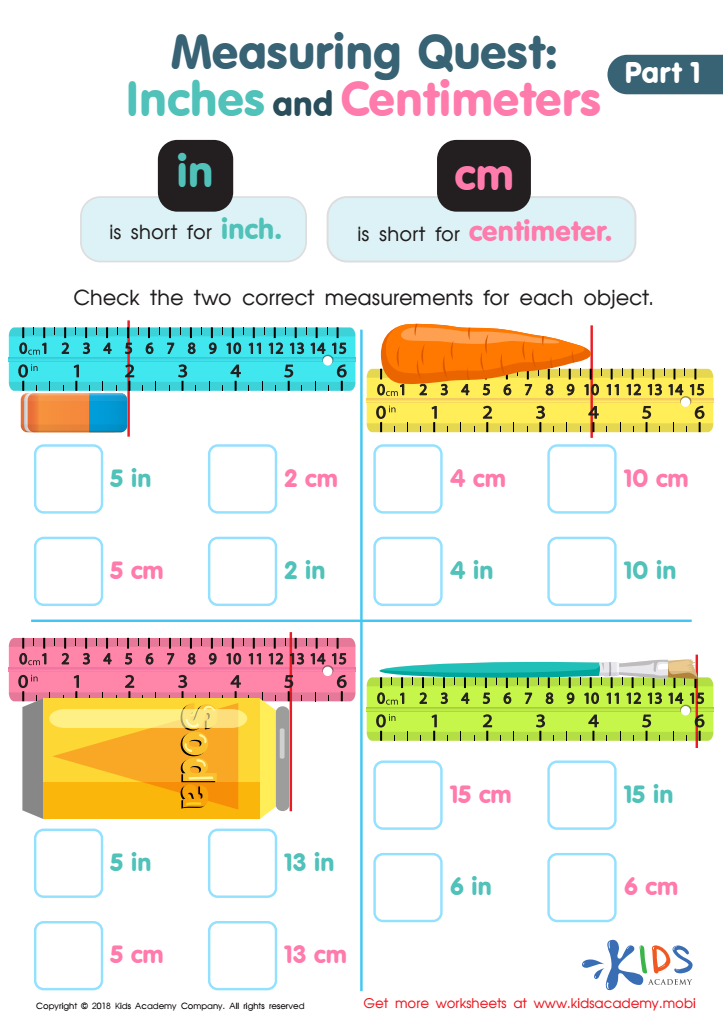
Measuring Quest: Inches and Centimeters Worksheet
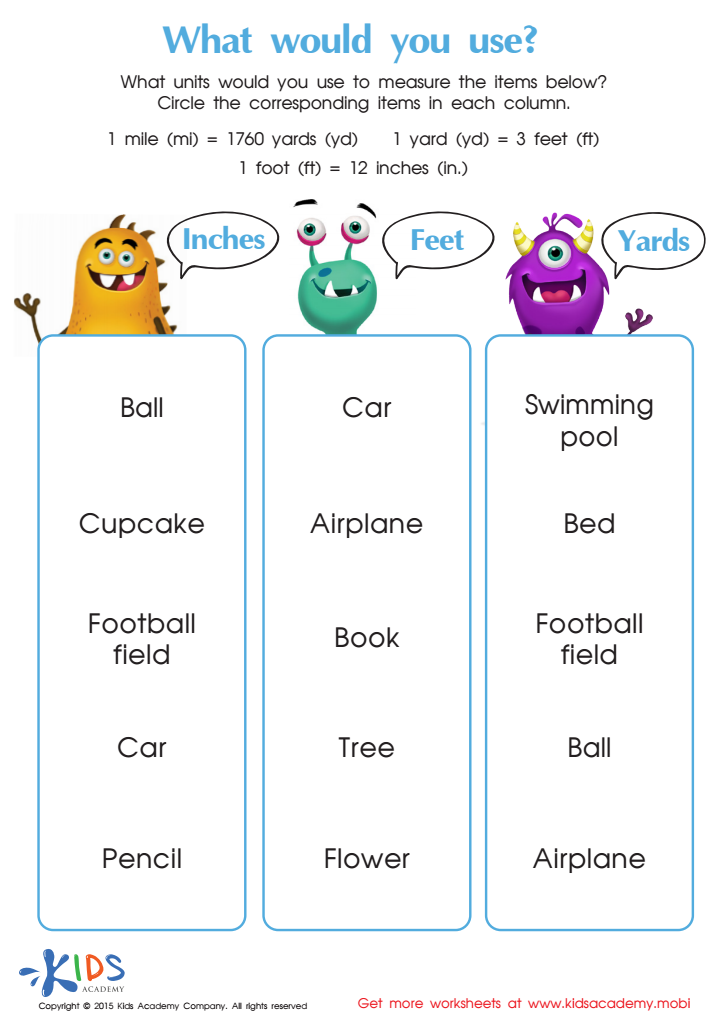
Learning about measuring objects in inches, feet and yards Worksheet
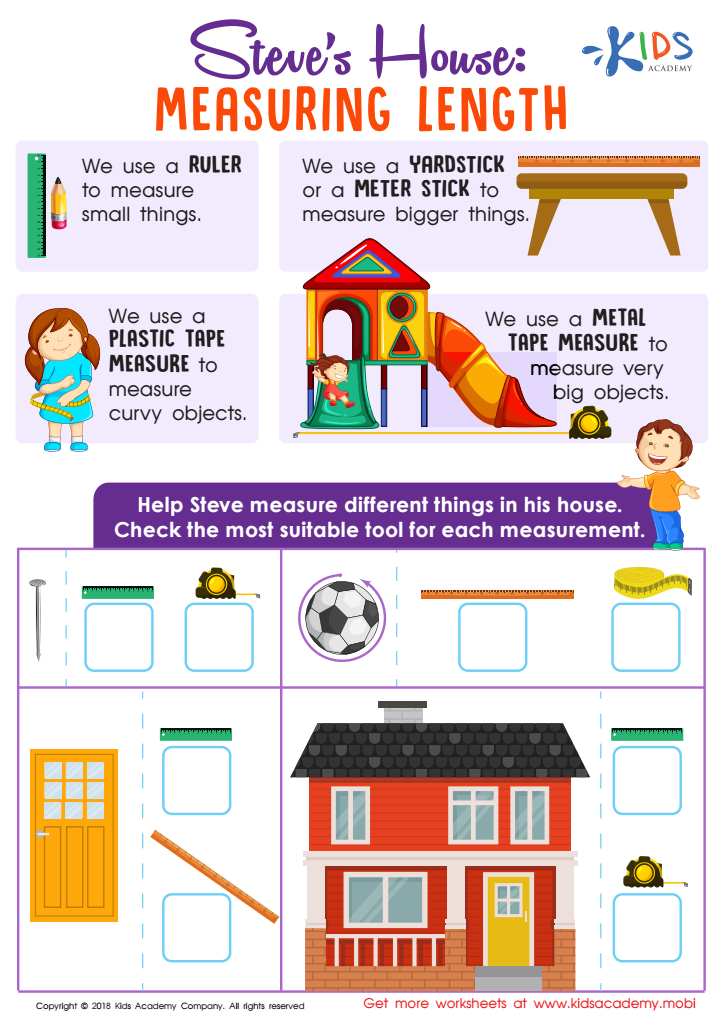
Steve's House: Measuring Length Worksheet
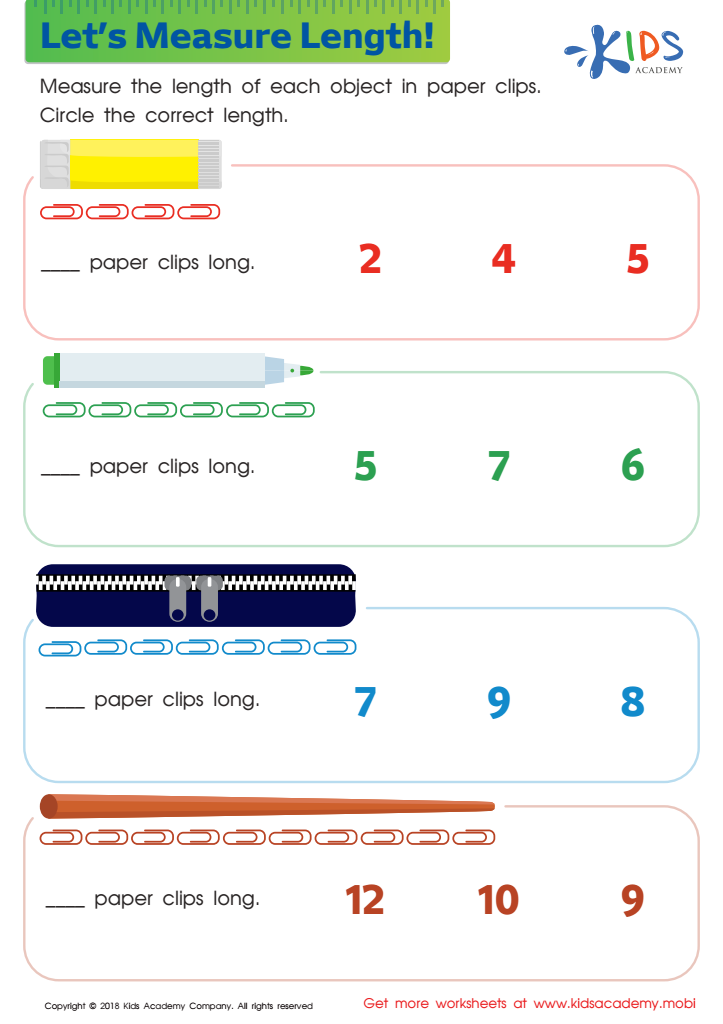
Lets Measure Length Worksheet
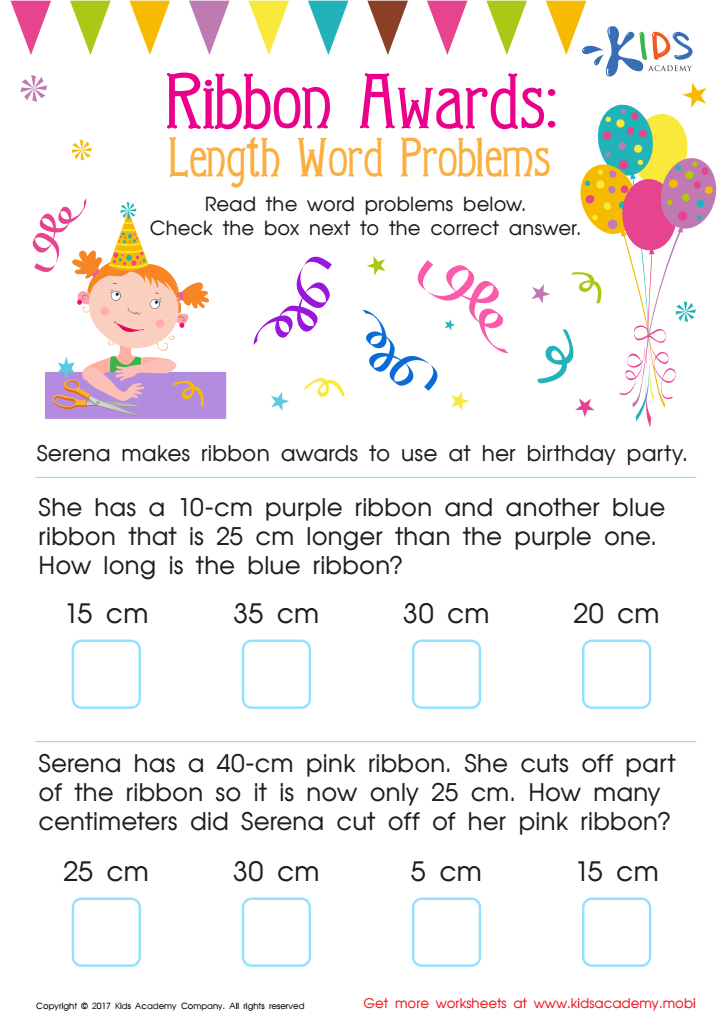
Length Word Problems Worksheet
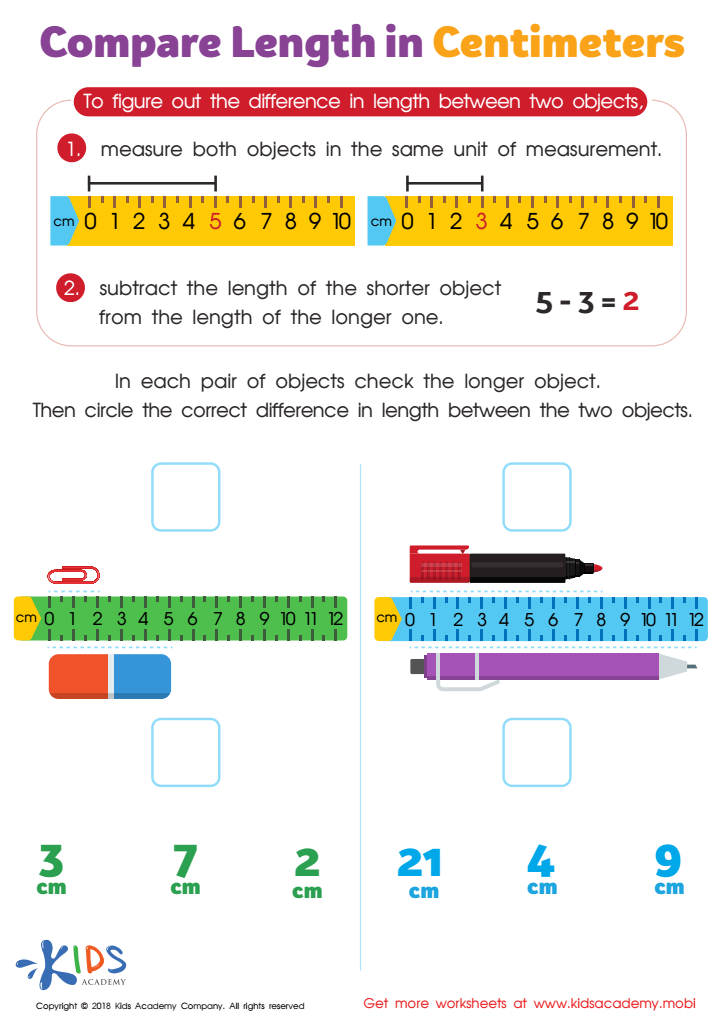
Compare Length in Centimeters Worksheet
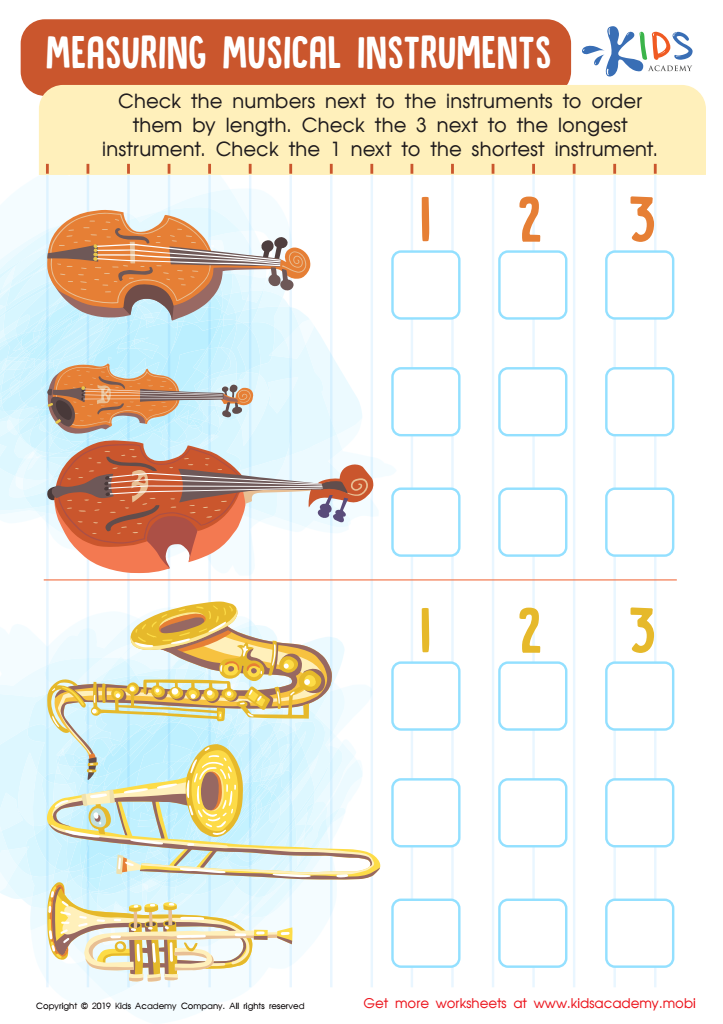
Measuring Musical Instruments Worksheet
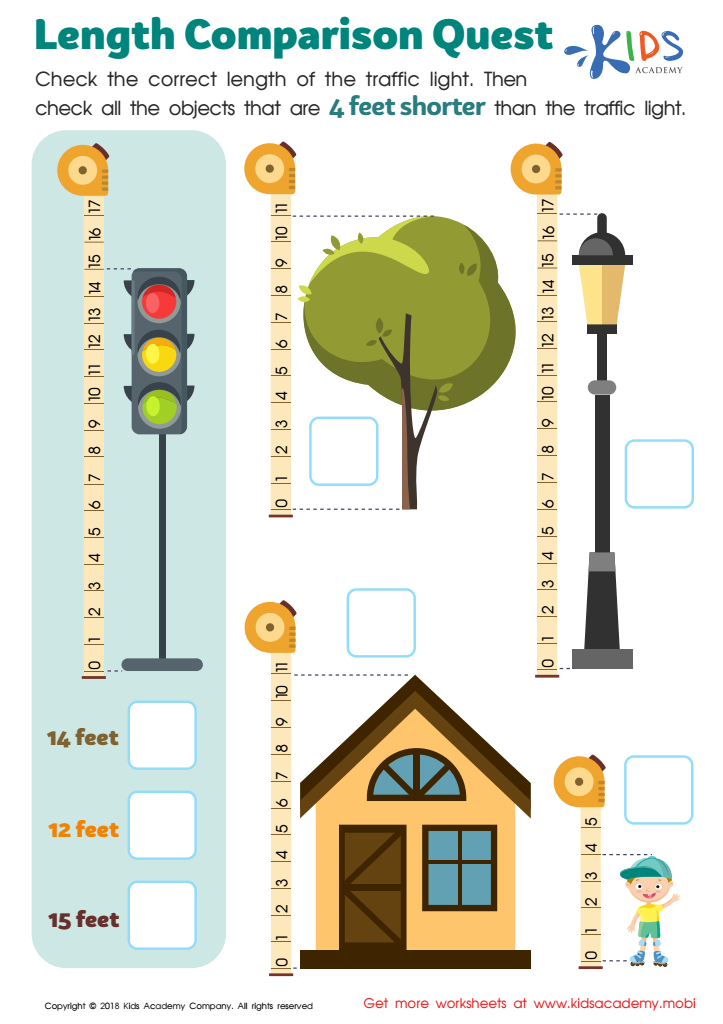
Length Comparison Quest Worksheet
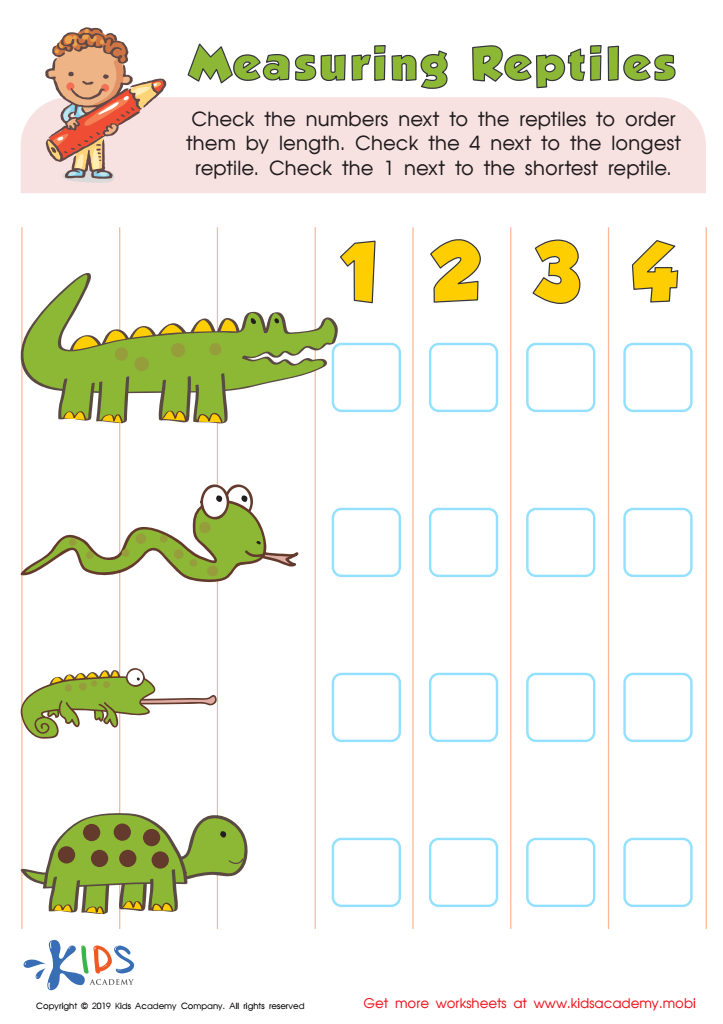
Measuring Reptiles Worksheet
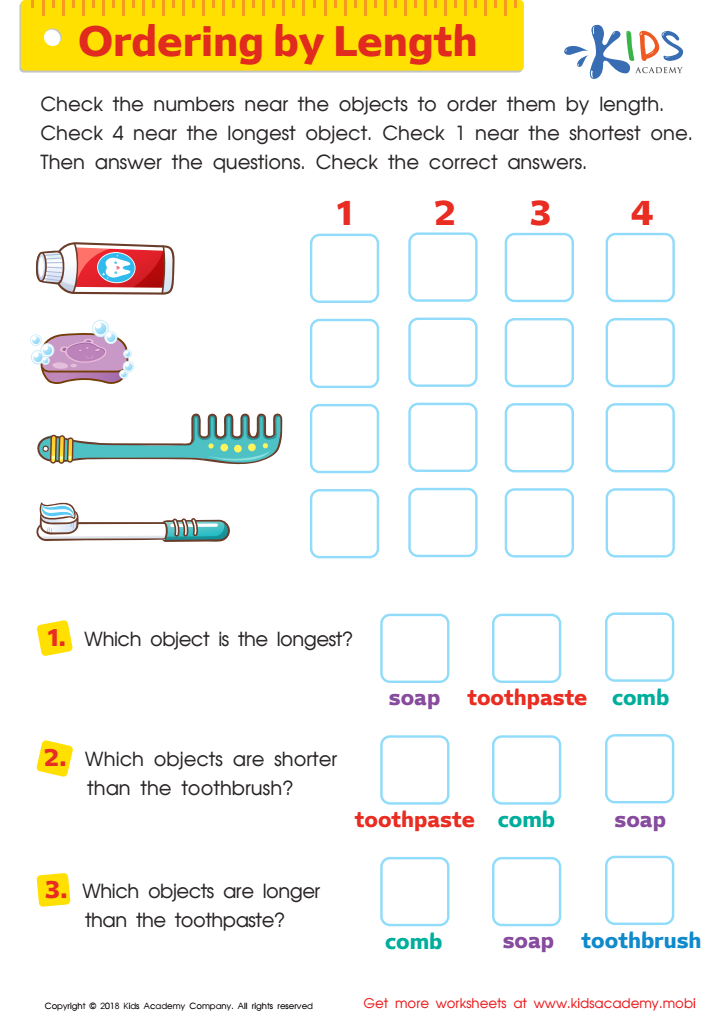
Ordering by Length Worksheet
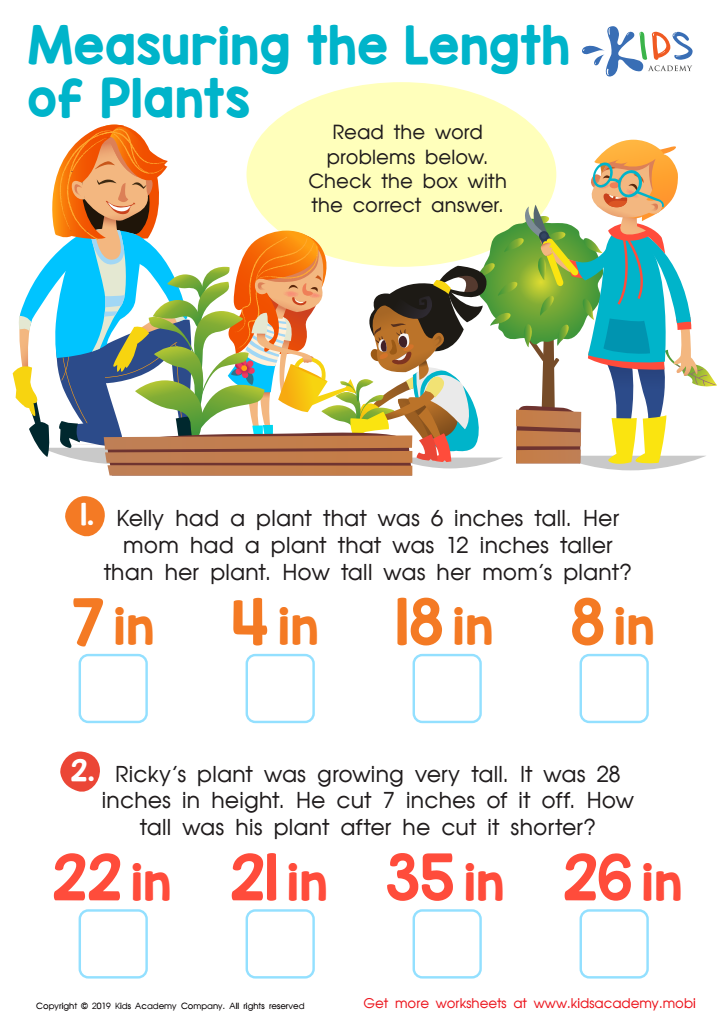
Measuring the Length of Plants Worksheet
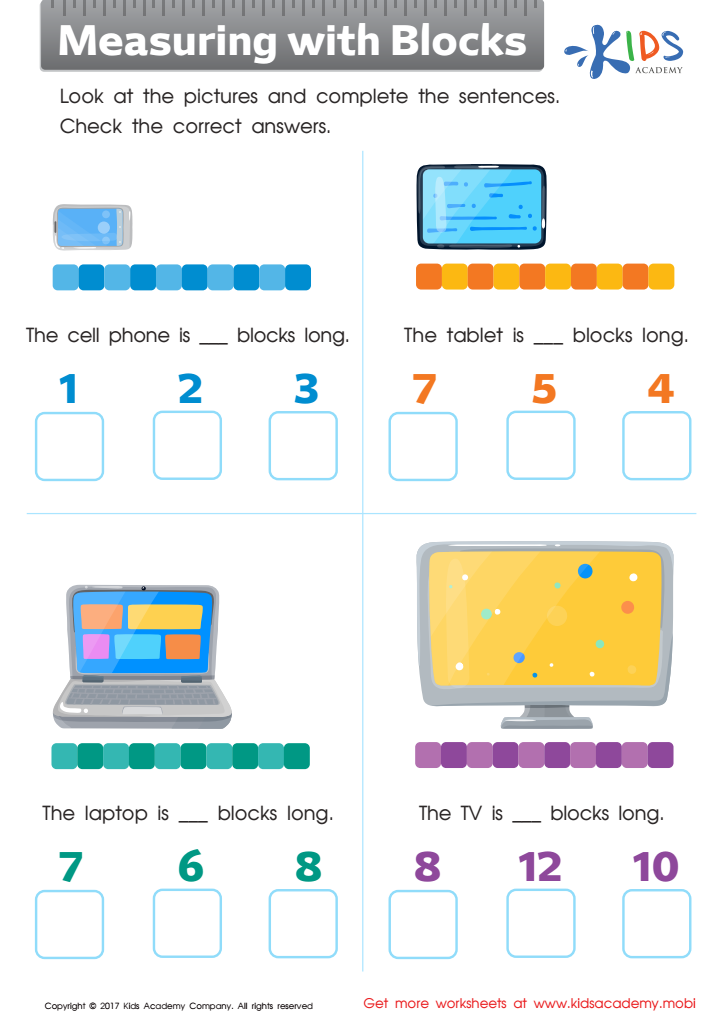
Measuring with Blocks Worksheet
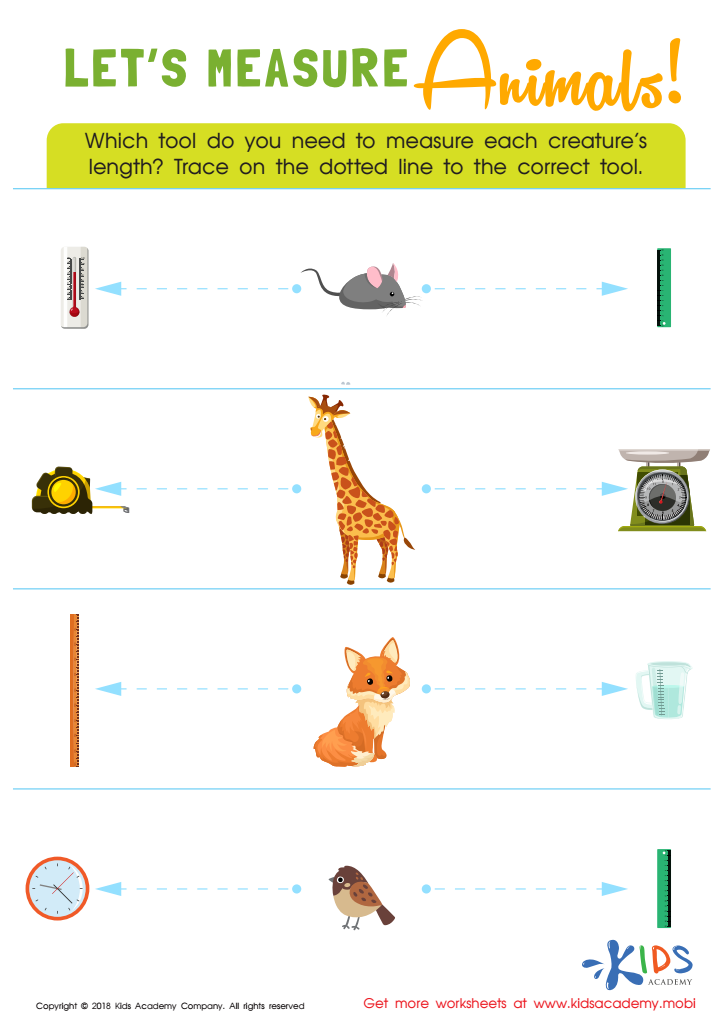
Let's Measure Animals! Worksheet
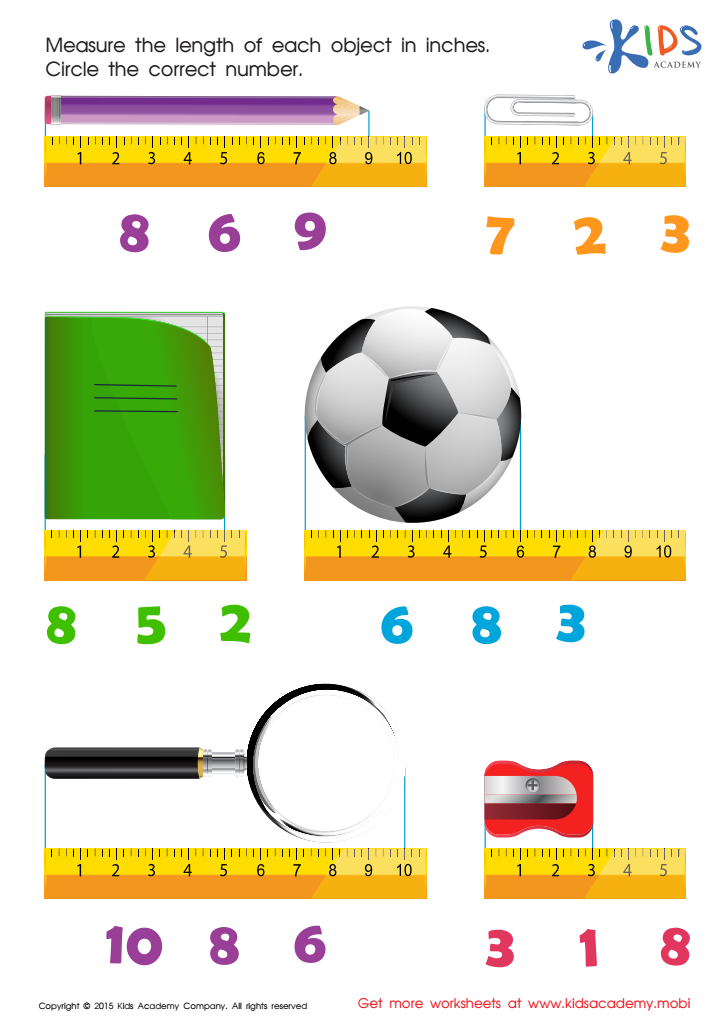
Learning measuring objects in inches Worksheet






Comparing lengths is a fundamental math skill that lays the groundwork for various learning opportunities for children aged 4-7. Parents and teachers should care about this important concept because it enhances children's problem-solving abilities, critical thinking, and understanding of the world around them.
Understanding length comparison helps children integrate concepts of measurement into their everyday life. For instance, when children compare the lengths of objects during playtime or in the classroom, they develop language skills related to size, such as "longer," "shorter," and "equal." This vocabulary builds their communication skills and allows them to express ideas clearly.
Furthermore, engaging in length comparison activities encourages hands-on learning and fosters curiosity. This age group thrives on exploration and discovery, making interactive comparisons not only educational but also fun. Through such activities, children learn to make connections, reason out their thoughts, and develop spatial awareness. They also gain confidence in their mathematical abilities, as consistent practice lays a solid foundation for more complex math concepts in their future education.
In summary, focusing on comparing lengths cultivates essential skills in young learners, promoting both academic success and critical life skills. It enables children to understand measurements, enhances cognitive development, and inspires lifelong learning habits.








