Comparing shapes Worksheets for Ages 4-7
6 filtered results
-
From - To
Enhance your child's understanding of geometry with our engaging "Comparing Shapes Worksheets" designed for ages 4-7. These worksheets provide a fun and interactive way for young learners to compare and identify various shapes, fostering crucial early math skills. Each activity encourages children to explore similarities and differences in shapes through visually stimulating illustrations and hands-on exercises. Ideal for home or classroom use, our resources are tailored to promote critical thinking and shape recognition. Download now to give your child the foundation they need in mathematics while keeping learning enjoyable! Perfect for reinforcing classroom lessons or supplementing at-home learning.
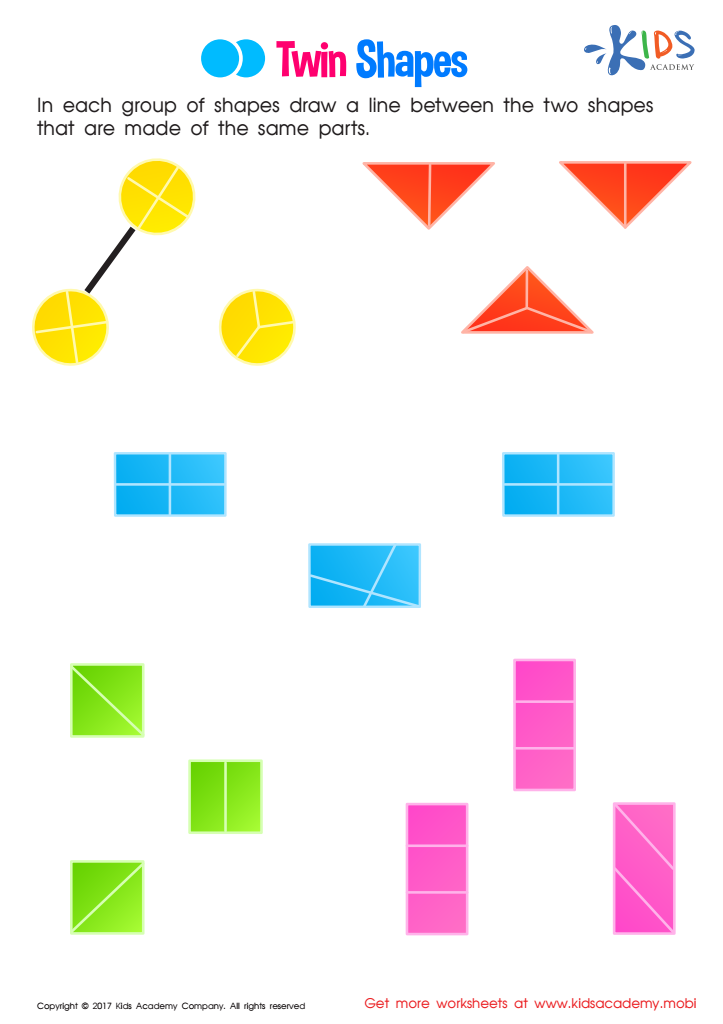
Twin Shapes Worksheet
 Assign to My Students
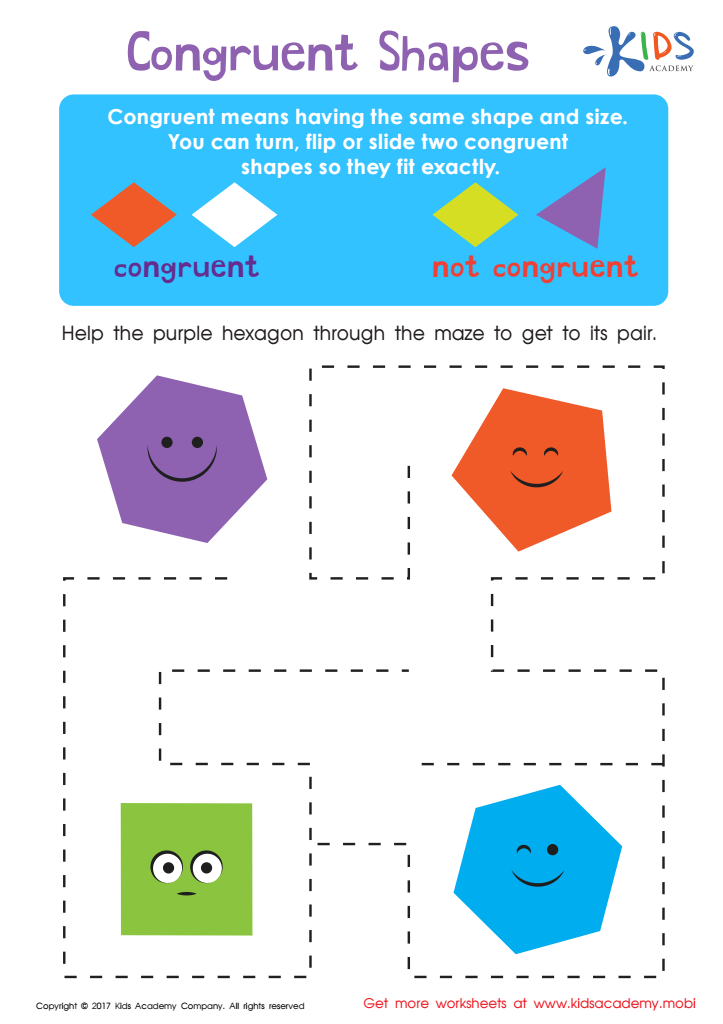
Congruent Shapes Worksheet
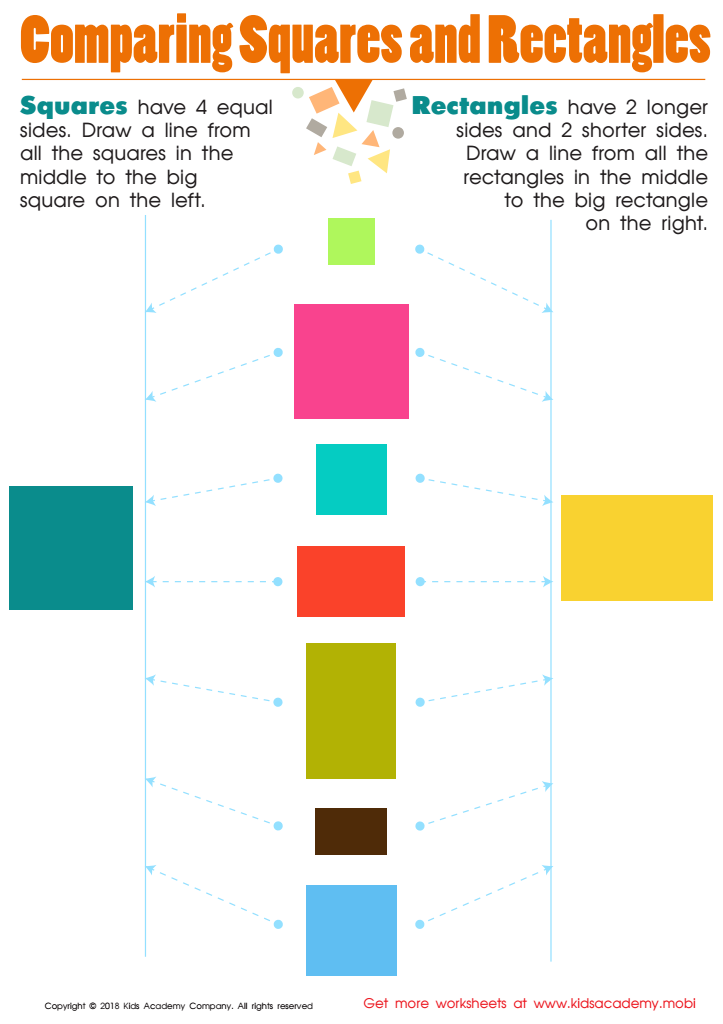
Comparing Squares Rectangles Worksheet
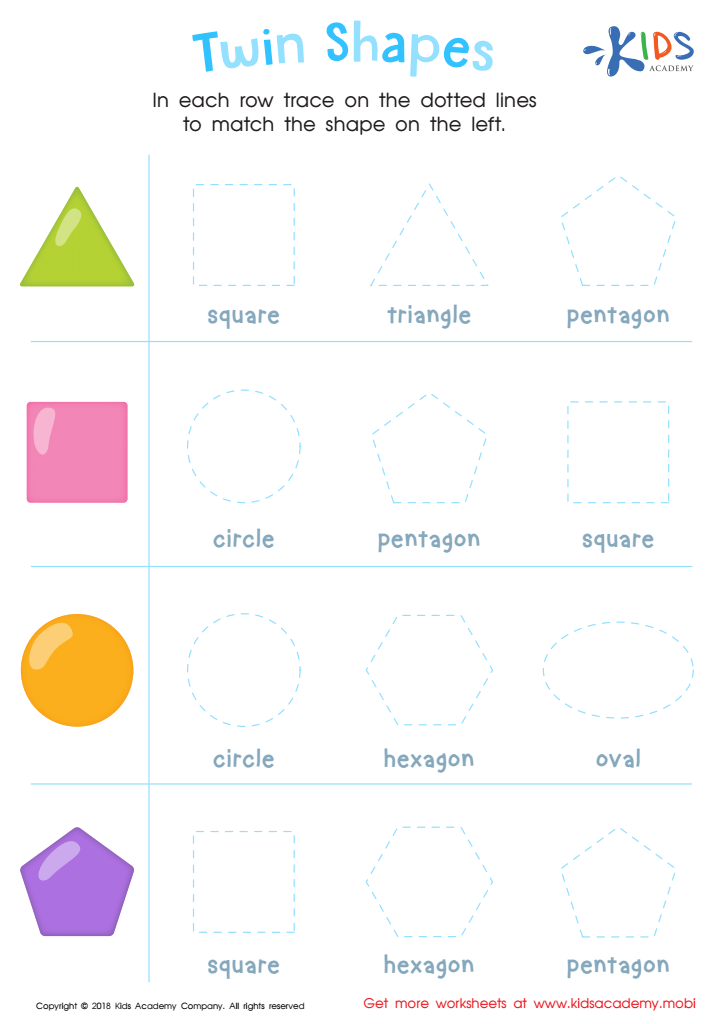
Twin Shapes Dot-to-Dot Worksheet







Comparing shapes is an essential skill for children aged 4 to 7, serving as a building block for their mathematical understanding and cognitive development. Engaging with shapes supports early learning in several key areas. Firstly, shape comparison helps children develop spatial awareness. Recognizing similarities and differences between shapes nurtures their observational skills, honing abilities to classify and categorize objects in their environment.
Additionally, shape comparison introduces vital concepts of geometry, fostering familiarity with terms such as "big," "small," "round," "square," and "triangle." This vocabulary enhances communication skills as children express their observations and engage in discussions about shapes, creating opportunities for collaborative learning with peers.
Moreover, comparing shapes lays the groundwork for problem-solving and critical thinking. As children analyze shapes and their relationships, they learn to make reasoned decisions, a skill that is essential for academic success in mathematics and beyond.
Finally, the enjoyment of hands-on activities involving shape comparison—such as sorting games or art projects—can make learning meaningful and fun, promoting a positive attitude towards education. For all these reasons, parents and teachers should prioritize activities that encourage shape comparison, ensuring a well-rounded and effective learning experience for young learners.








