Spatial understanding Worksheets for Ages 4-7
5 filtered results
-
From - To
Enhance your child’s spatial understanding with our engaging worksheets designed specifically for ages 4-7. These captivating activities promote essential skills such as the ability to visualize shapes, understand directions, and recognize patterns. Perfect for young learners, our worksheets encourage creativity while reinforcing core concepts through fun exercises. Children will explore spatial relationships and improve their cognitive skills as they interact with a variety of exercises, including puzzles, matching games, and more. Foster a love for learning and prepare your little ones for future academic success! Discover the perfect blend of education and entertainment with our spatial understanding worksheets today.
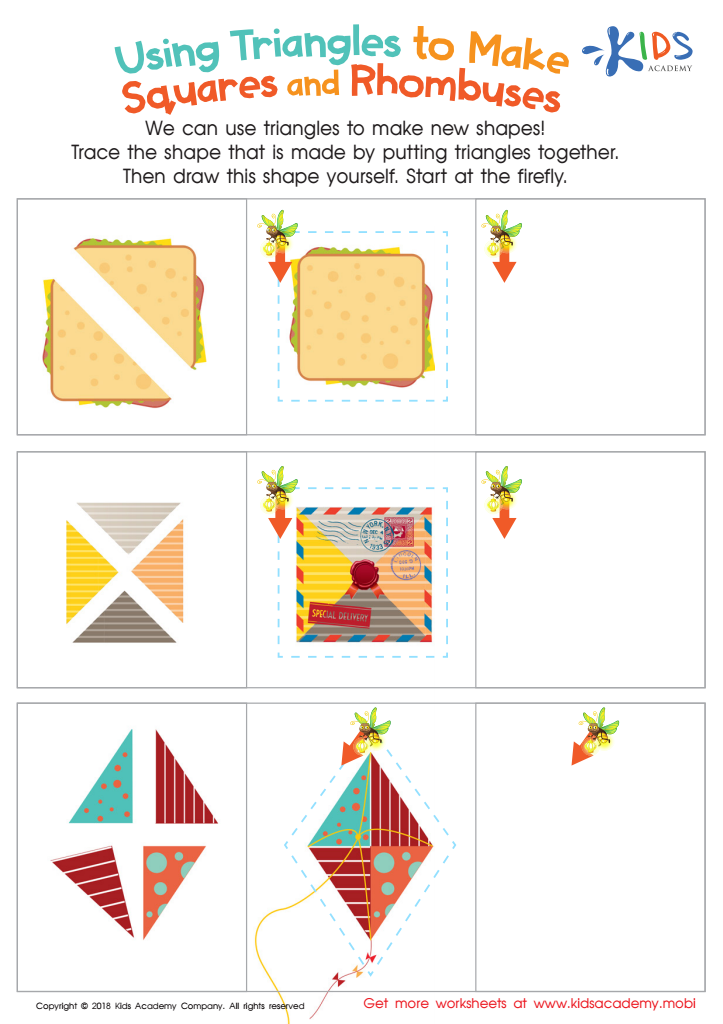
Using Triangles to Make Squares and Rhombuses Worksheet
 Assign to My Students
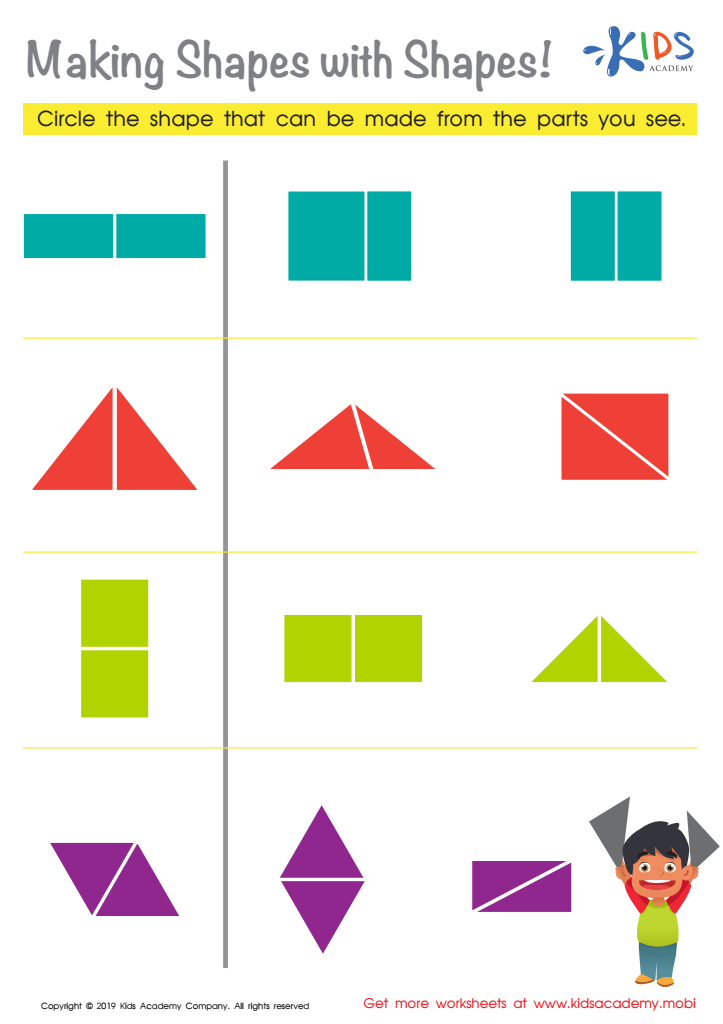
Making Shapes with Shapes Worksheet
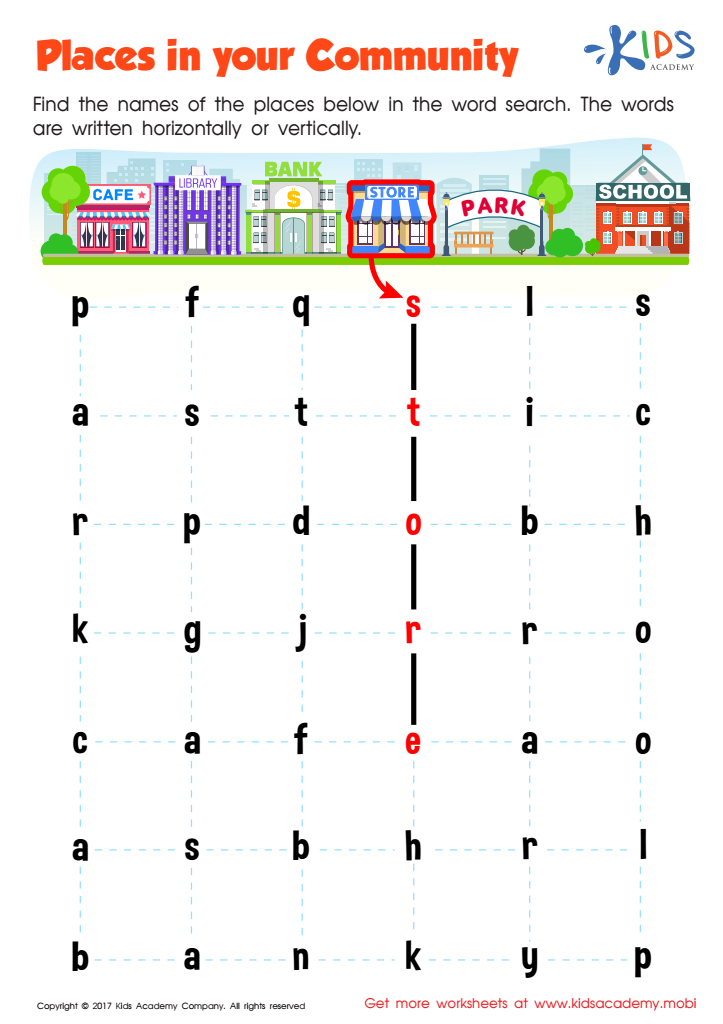
Places in Your Community Worksheet
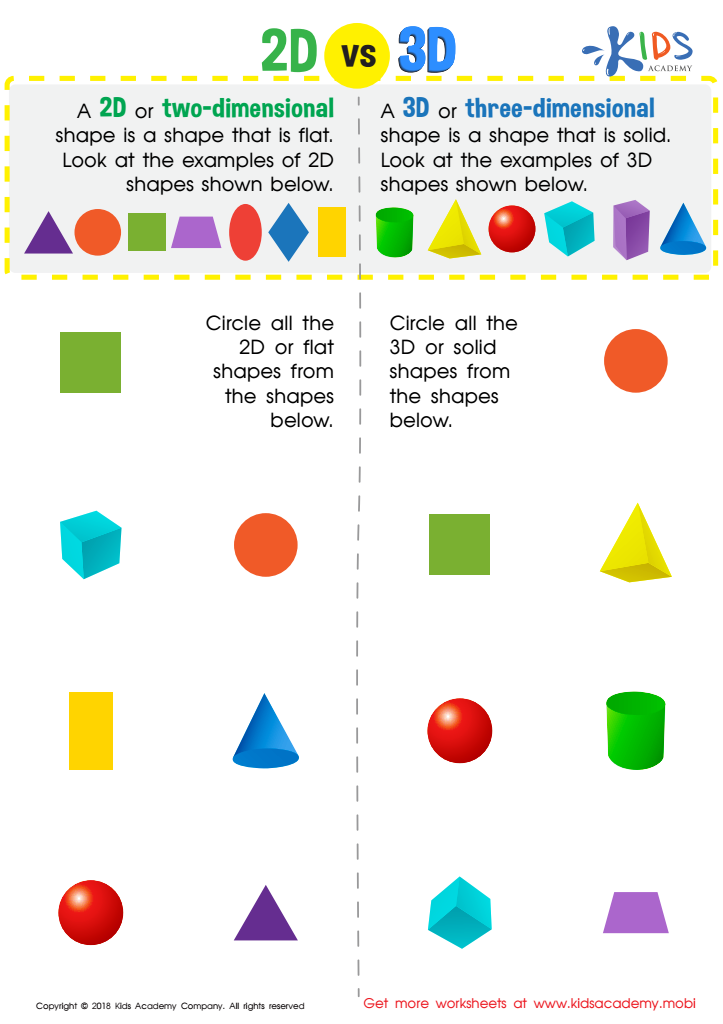
2D vs 3D Shapes Worksheet







Spatial understanding is crucial for children ages 4-7 as it forms the foundation for various cognitive and academic skills. At this developmental stage, children begin to grasp the relationships between objects, their sizes, shapes, and positions, which are essential for problem-solving and critical thinking. By nurturing spatial skills, parents and teachers can enhance children's ability to visualize and manipulate objects in real-life scenarios, leading to greater success in subjects like math and science.
Moreover, spatial understanding is closely linked to literacy development. Children who can mentally visualize and differentiate shapes and forms can better grasp letters and numbers, aiding reading and writing. Engaging in spatial activities—such as puzzles, block play, and mapping—stimulates brain development, fostering creativity and innovative thinking.
Additionally, spatial competency plays a significant role in everyday activities like navigating spaces and understanding directions, further empowering children in their interactions with the world. Encouraging play and exploration develops these vital skills, ultimately preparing children for future educational challenges and life experiences. Thus, fostering spatial understanding should be a priority for parents and teachers alike, ensuring a well-rounded and enriched learning journey for young children.








