Adding in the Forest Worksheets for Ages 4-7 - Page 4
77 filtered results
-
From - To
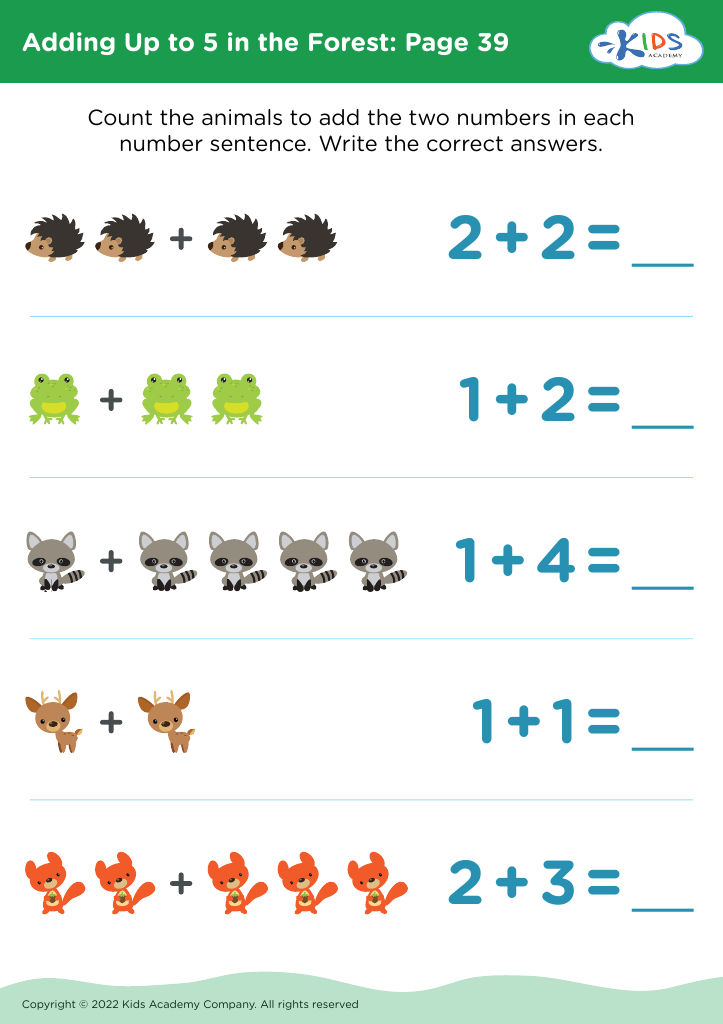
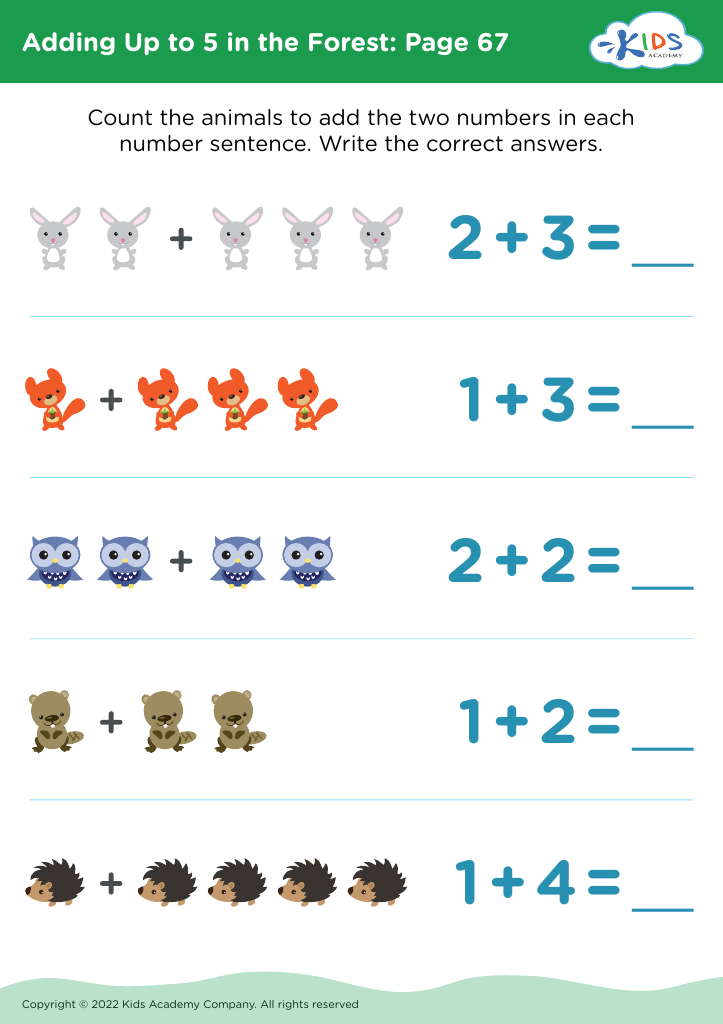
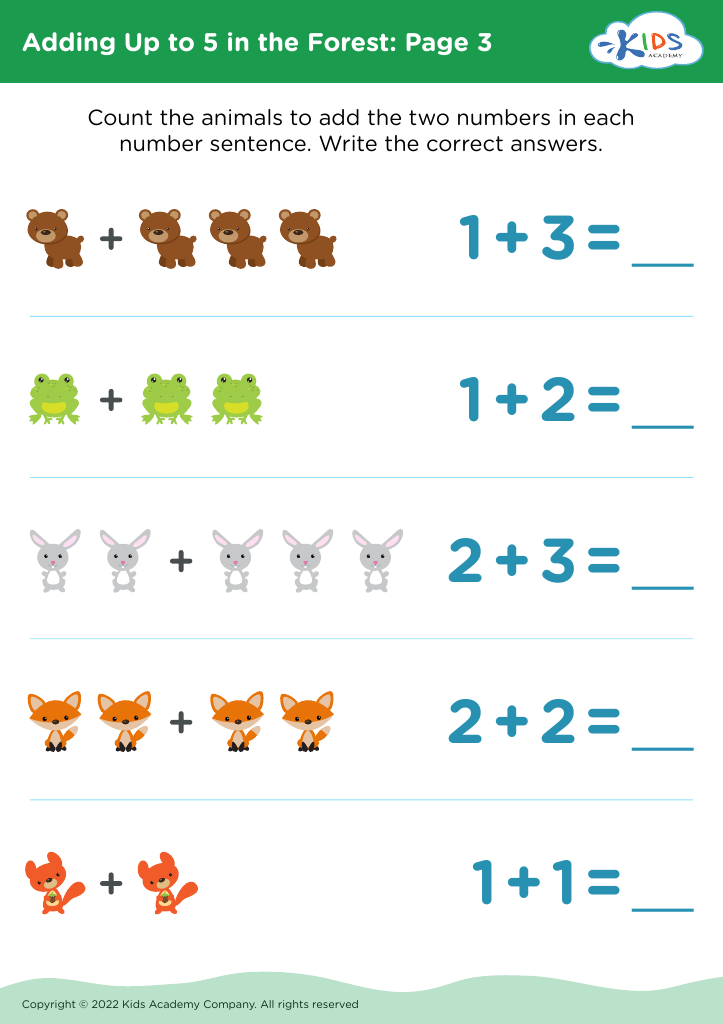
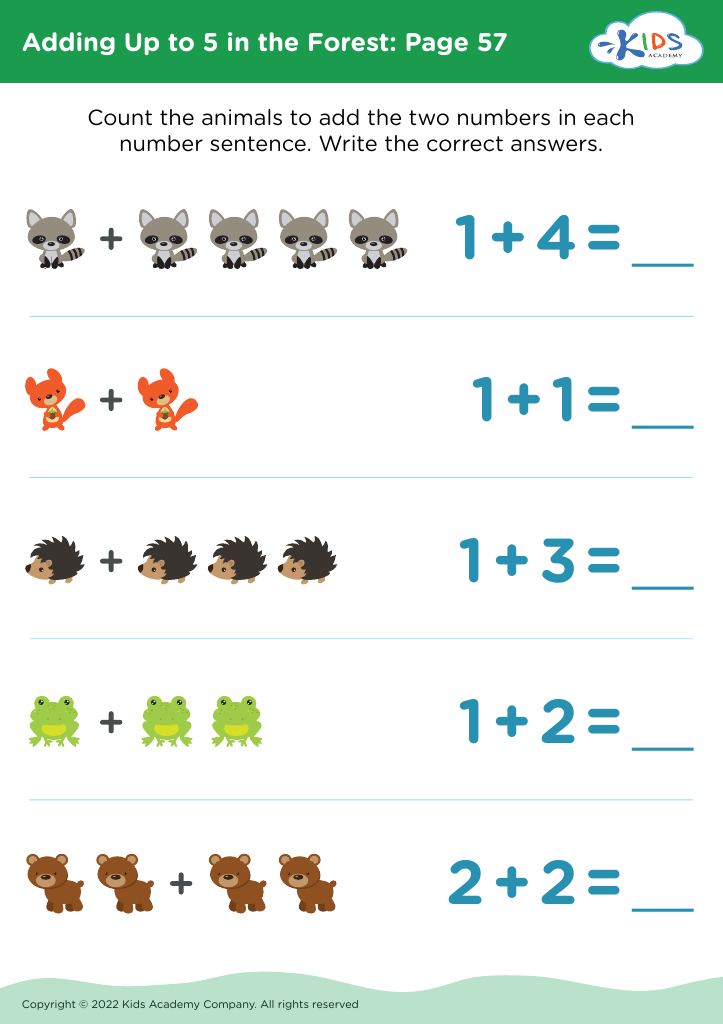
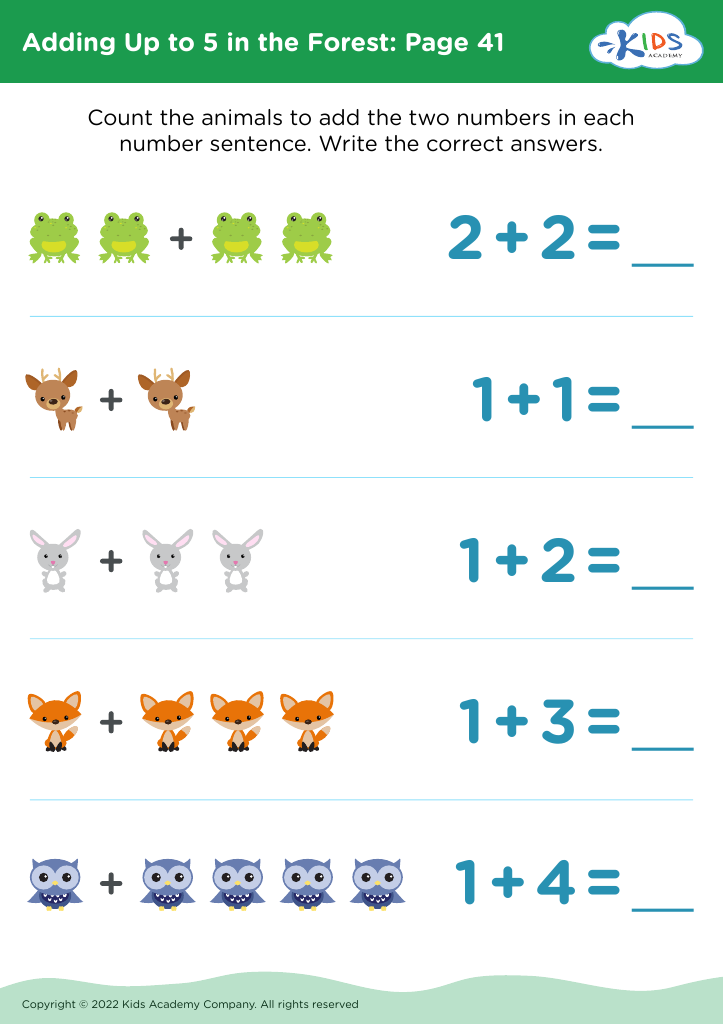




"Adding in the Forest" is an engaging educational tool that teaches young children aged 4-7 the foundational concepts of addition through interactive play. This age group is crucial for cognitive development, and learning math in a fun, hands-on environment fosters both understanding and a love for learning. The forest theme integrates nature, which can intrigue children and promote curiosity, making math feel less intimidating.
Parents and teachers should care about this resource because it supports varied learning styles and helps build critical early math skills. By using concrete objects and visual aids typical to a forest setting, young learners can grasp abstract concepts more easily. Furthermore, engaging with a thematic approach encourages imaginative play, enhancing creativity while reinforcing mathematical skills.
Additionally, incorporating "Adding in the Forest" can improve social skills as children collaborate and learn from one another in cooperative settings. It provides an opportunity for parents and teachers to bond with children over learning, establishing a positive atmosphere around math early on. This positive experience can diminish math anxiety and instill confidence, ensuring children are better prepared for future mathematical challenges. Overall, promoting such initiatives lays the groundwork for long-term academic success and fosters a love for nature and the outdoors.