Discover a variety of engaging and effective Addition and Subtraction worksheets designed specifically for children ages 4-7. These interactive resources help enhance comprehension as young learners explore basic arithmetic concepts through colorful illustrations and relatable contexts. Our carefully crafted activities encourage children to understand the relationship between numbers and develop essential problem-solving skills. With fun exercises and gradual progression, these worksheets cater to diverse learning styles, ensuring every child can thrive. Perfect for at-home learning or classroom settings, our Addition and Subtraction worksheets empower students to build a strong mathematical foundation while having fun along the way! Start enhancing their number skills today!
Check out this FREE Trial Lesson on Addition & Subtraction for age 4-7!

Sorting Objects into 3 Categories

Favorites
With answer key
Interactive
  • 4-7
  • Enhance comprehension
  • Addition & Subtraction
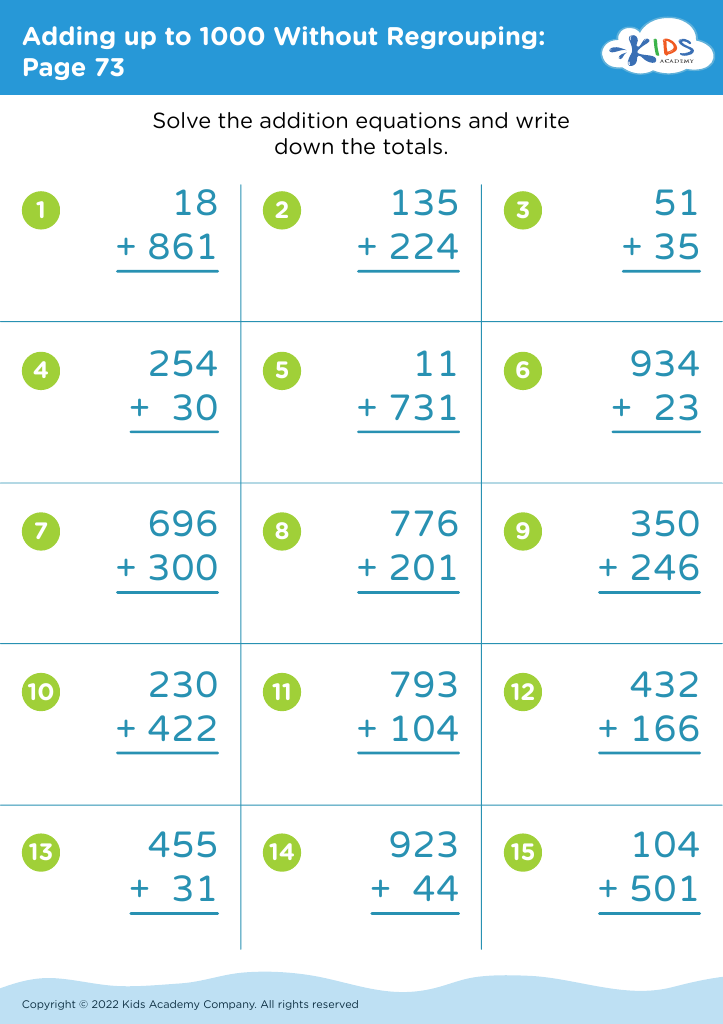
Adding up to 1000 Without Regrouping: Page 73
Worksheet
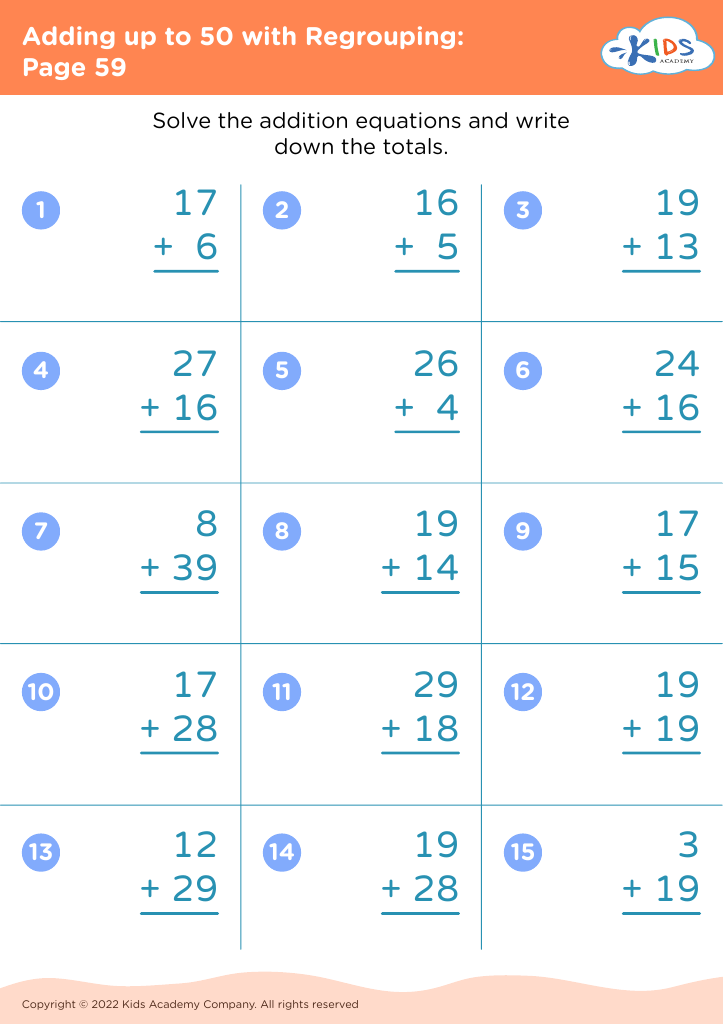
Adding up to 50 with Regrouping: Page 59
Worksheet
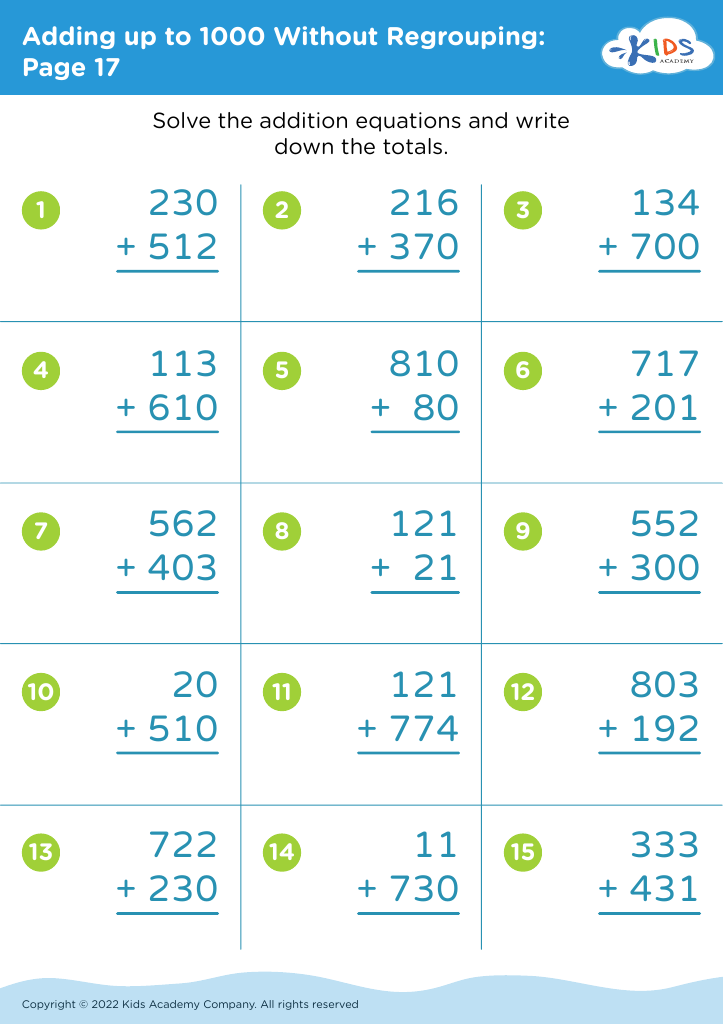
Adding up to 1000 Without Regrouping: Page 17
Worksheet
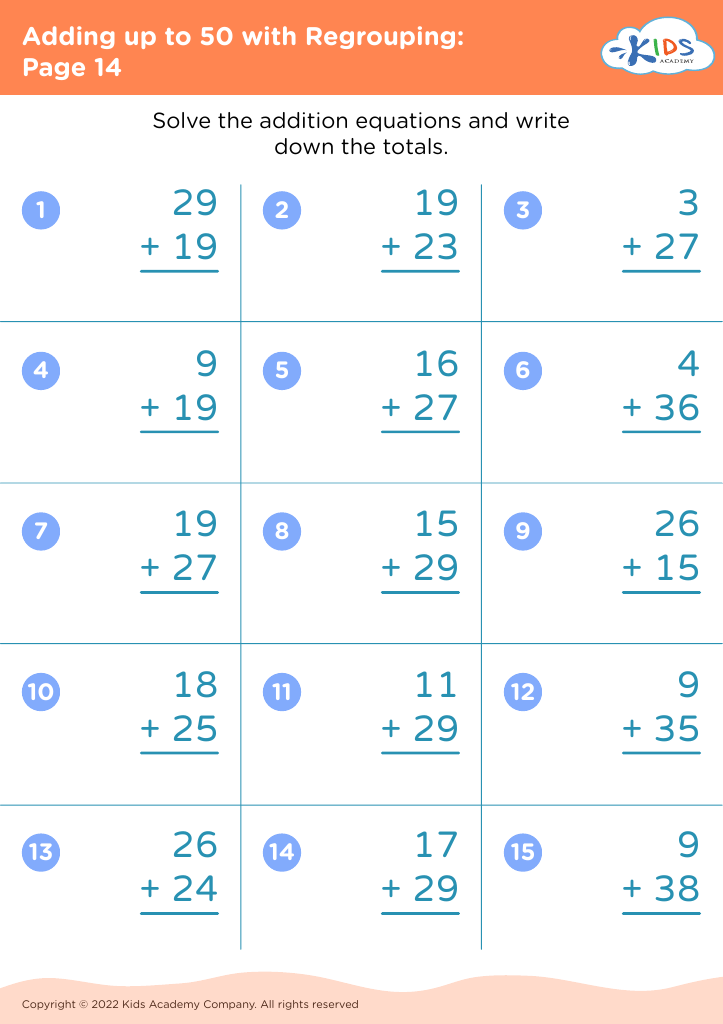
Adding up to 50 with Regrouping: Page 14
Worksheet
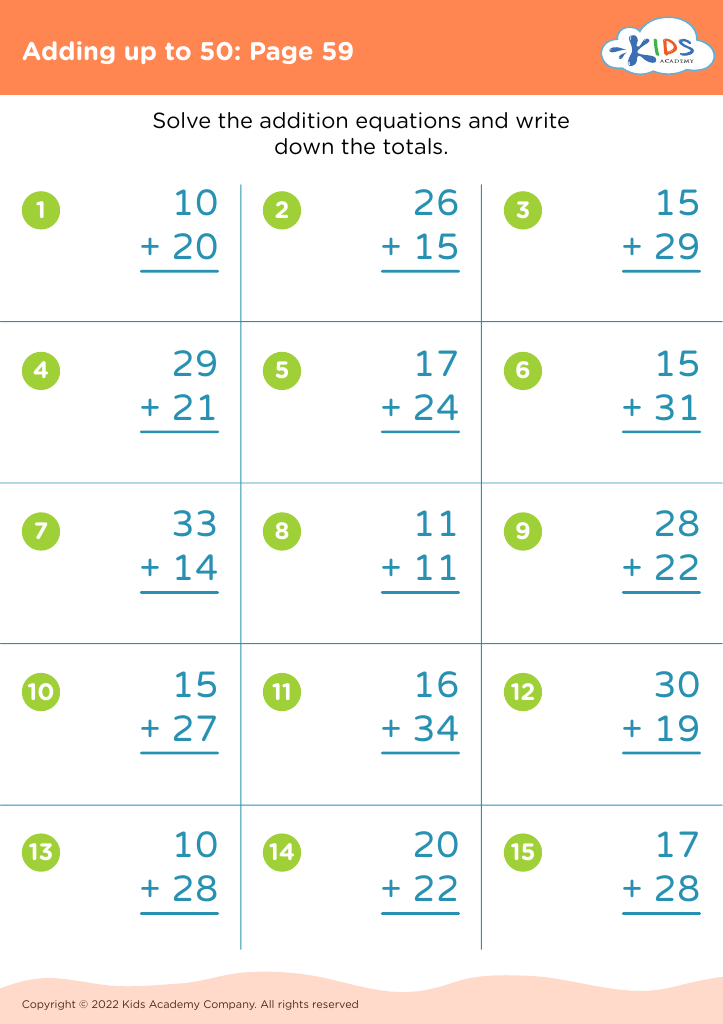
Adding up to 50: Page 59

Adding up to 50: Page 59

Adding up to 50: Page 59
Worksheet
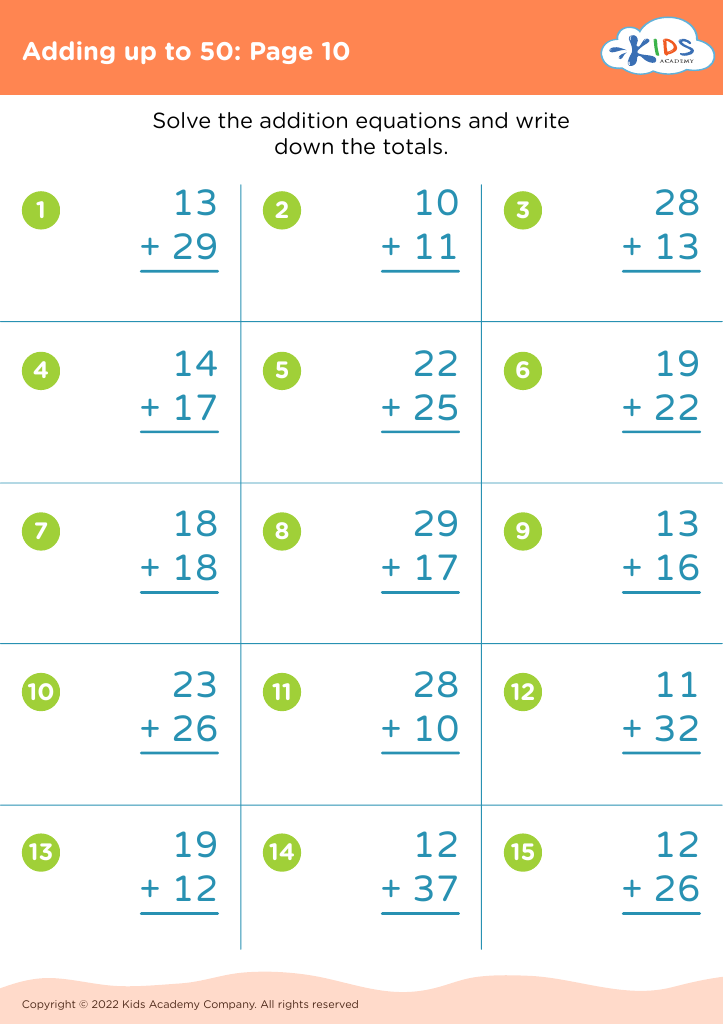
Adding up to 50: Page 10

Adding up to 50: Page 10

Adding up to 50: Page 10
Worksheet
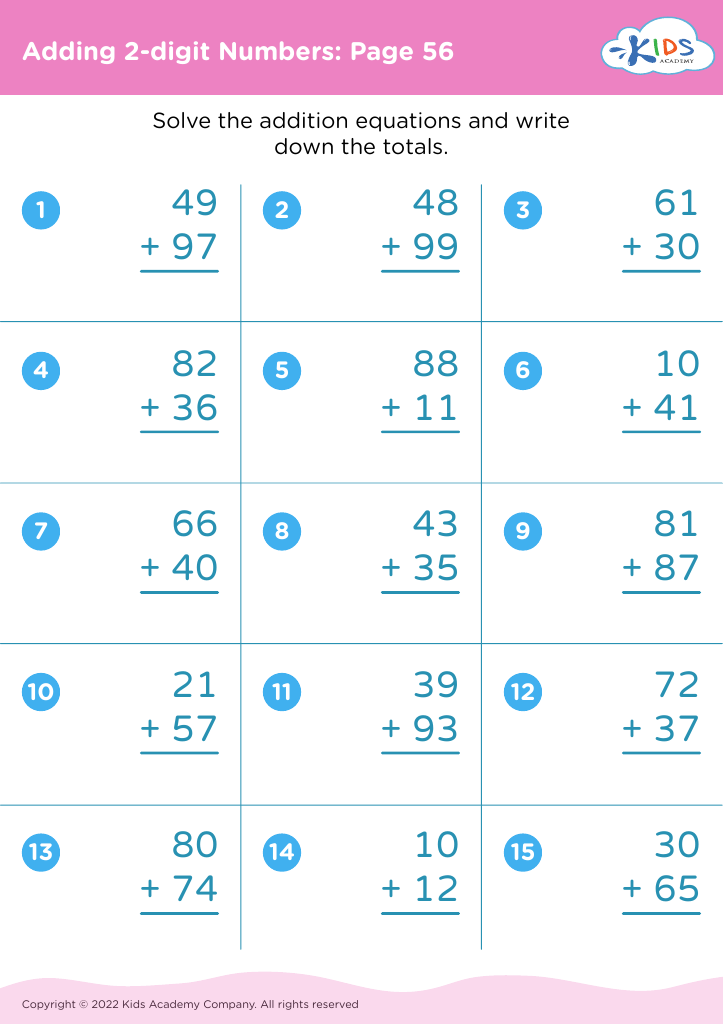
Adding 2-digit Numbers: Page 56

Adding 2-digit Numbers: Page 56

Adding 2-digit Numbers: Page 56
Worksheet
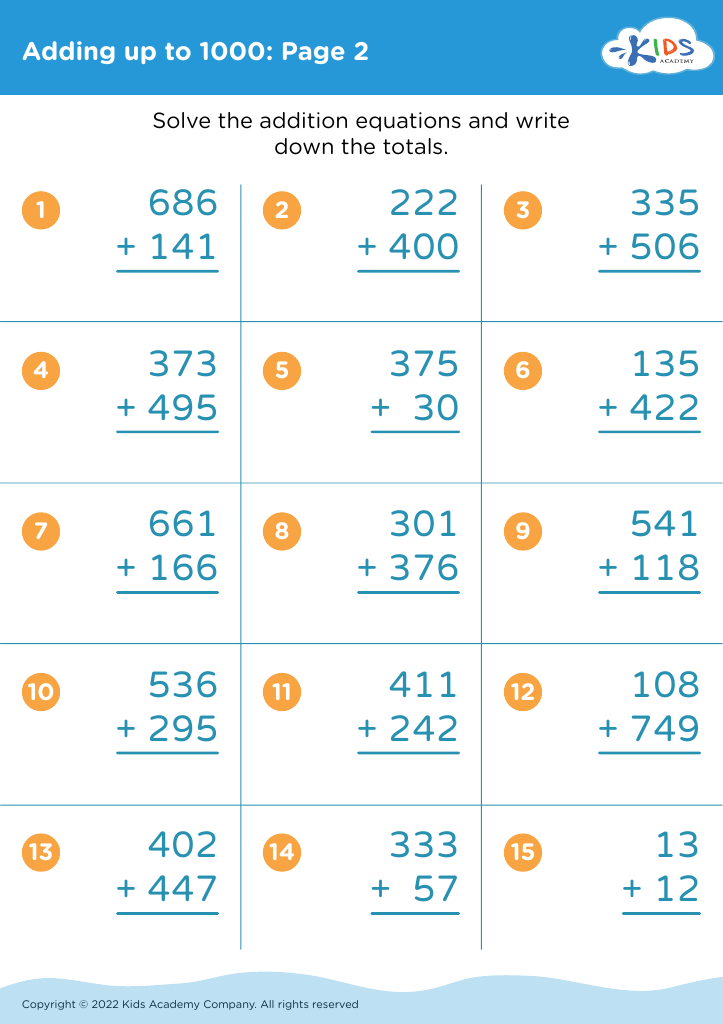
Adding up to 1000: Page 2

Adding up to 1000: Page 2

Adding up to 1000: Page 2
Worksheet
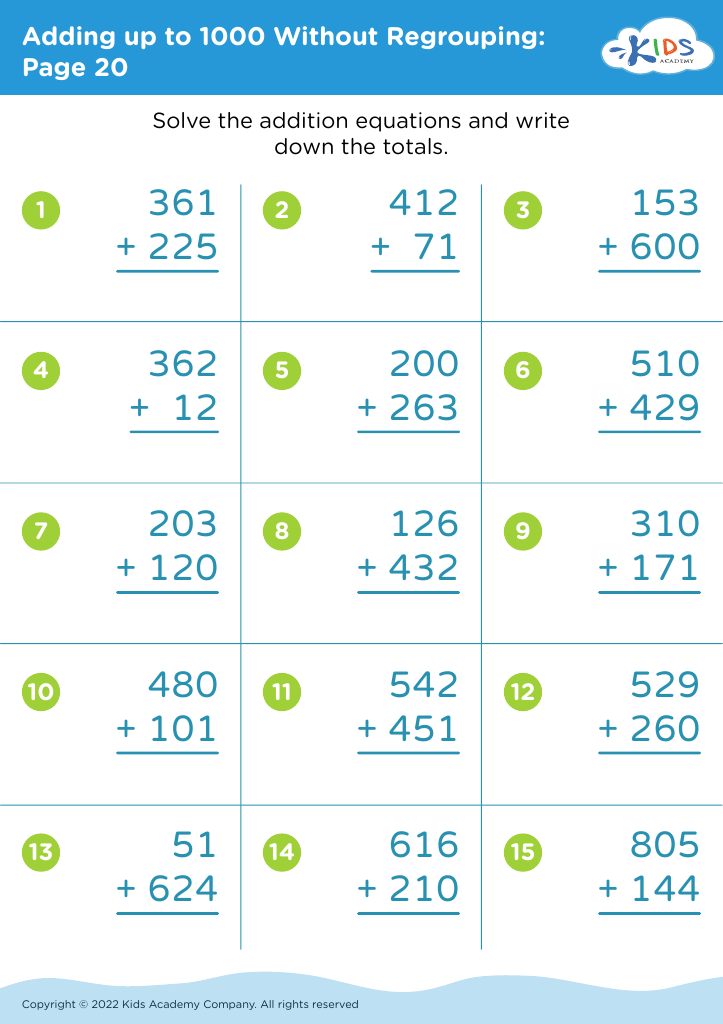
Adding up to 1000 Without Regrouping: Page 20
Worksheet
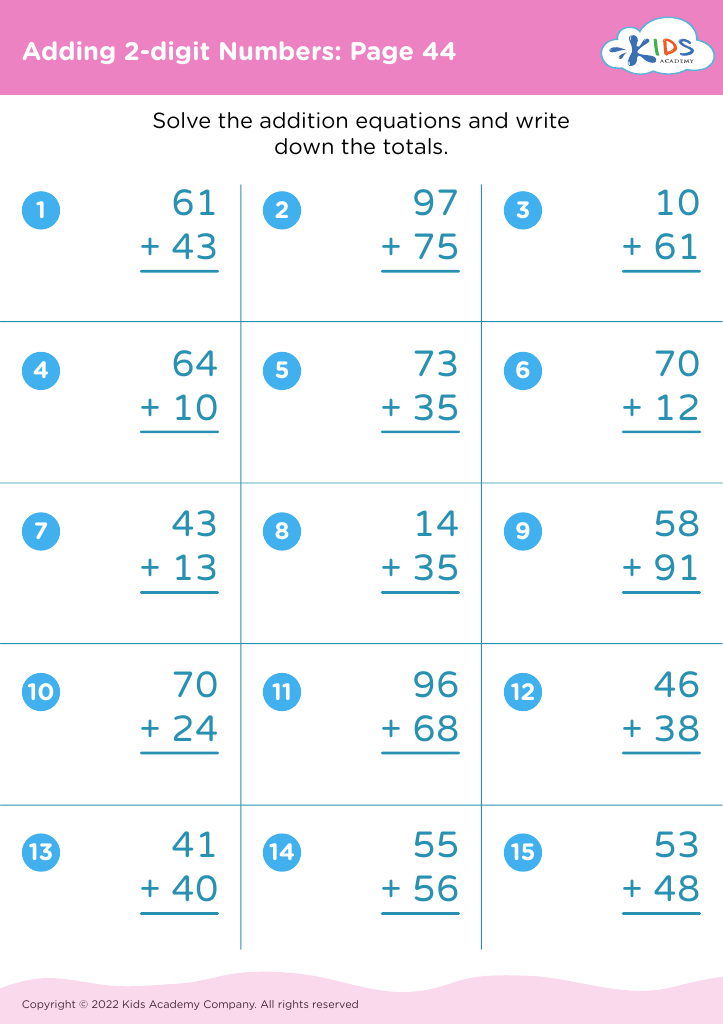
Adding 2-digit Numbers: Page 44

Adding 2-digit Numbers: Page 44

Adding 2-digit Numbers: Page 44
Worksheet
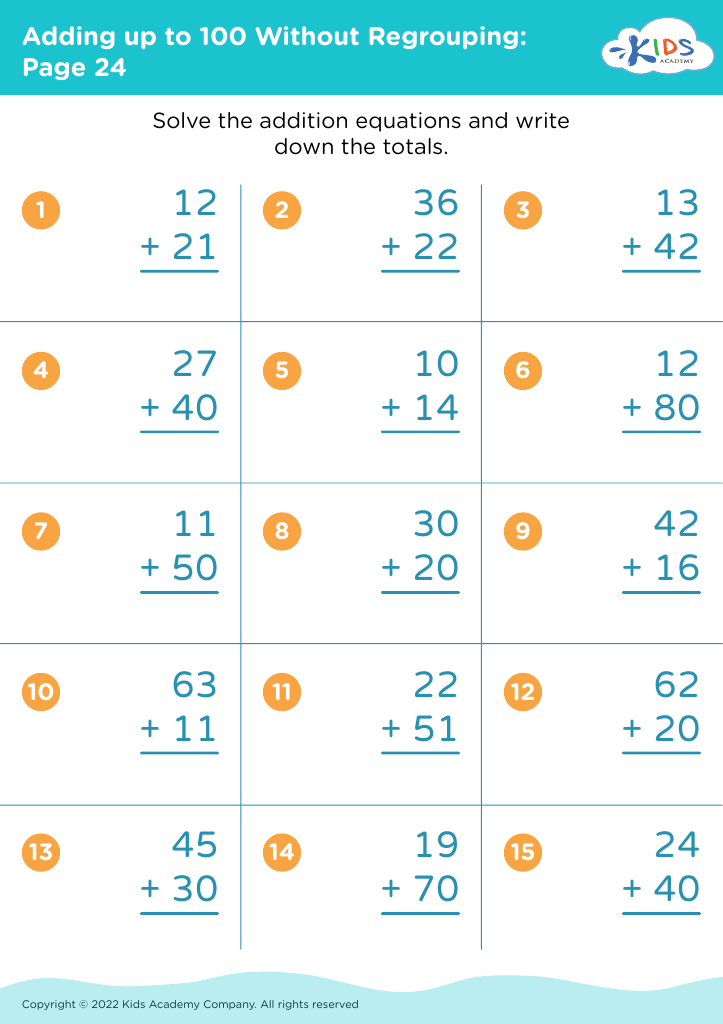
Adding up to 100 Without Regrouping: Page 24
Worksheet
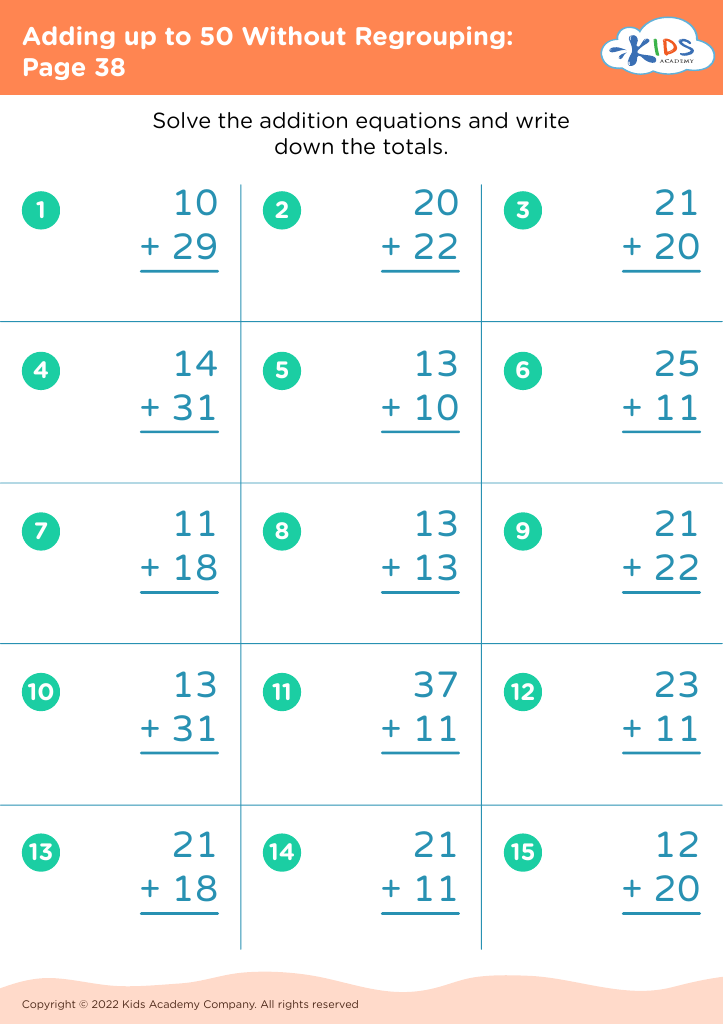
Adding up to 50 Without Regrouping: Page 38
Worksheet
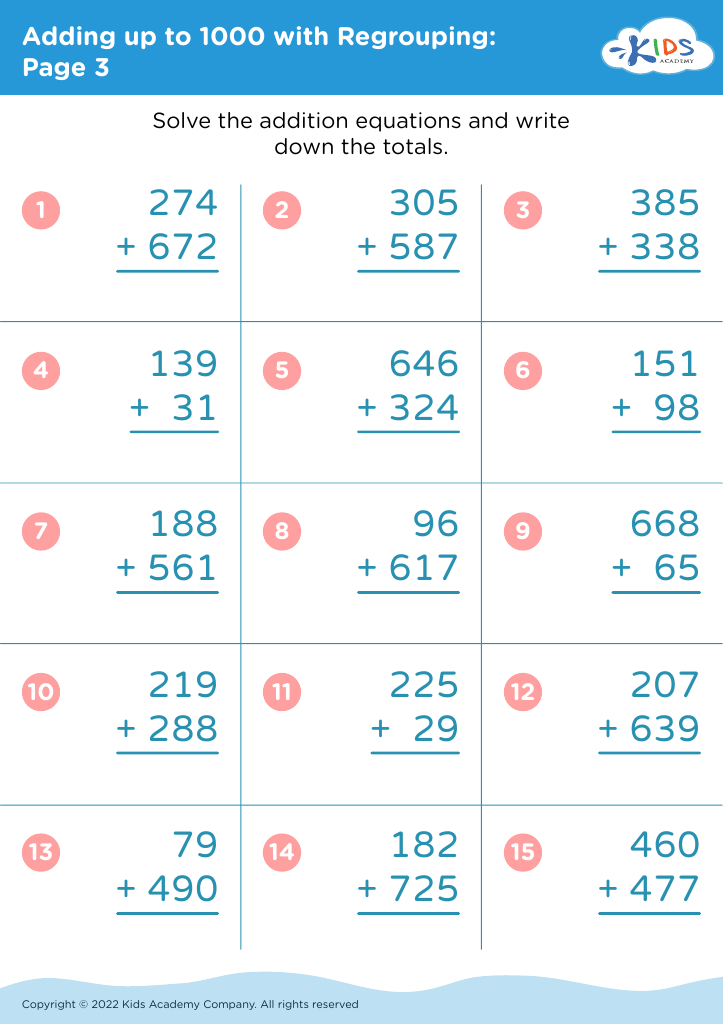
Adding up to 1000 with Regrouping: Page 3
Worksheet
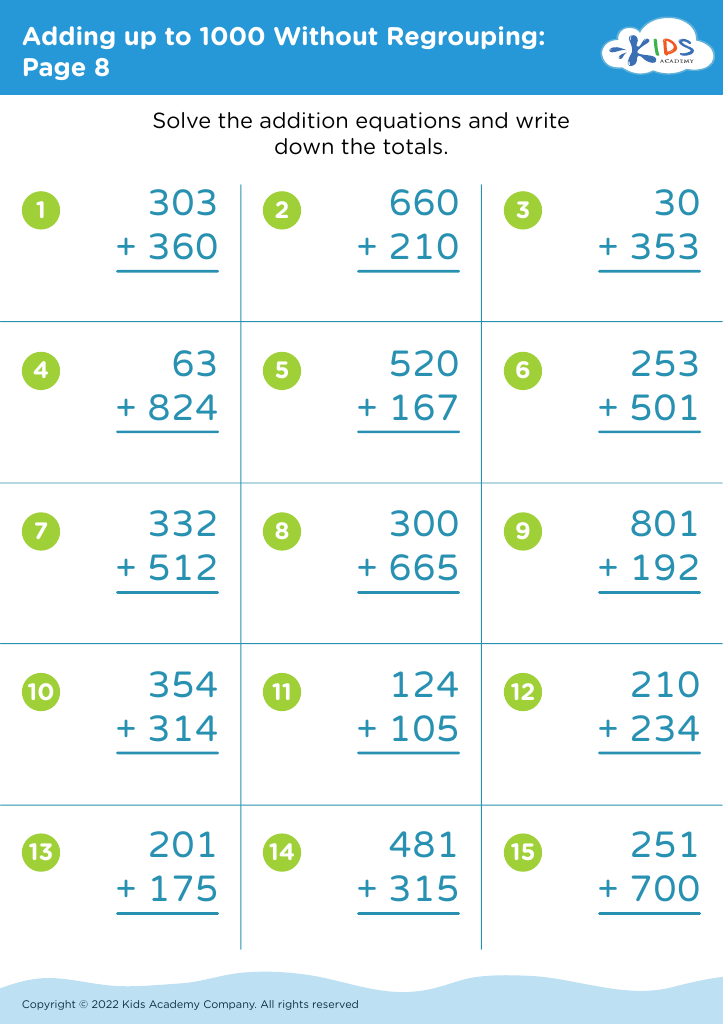
Adding up to 1000 Without Regrouping: Page 8
Worksheet
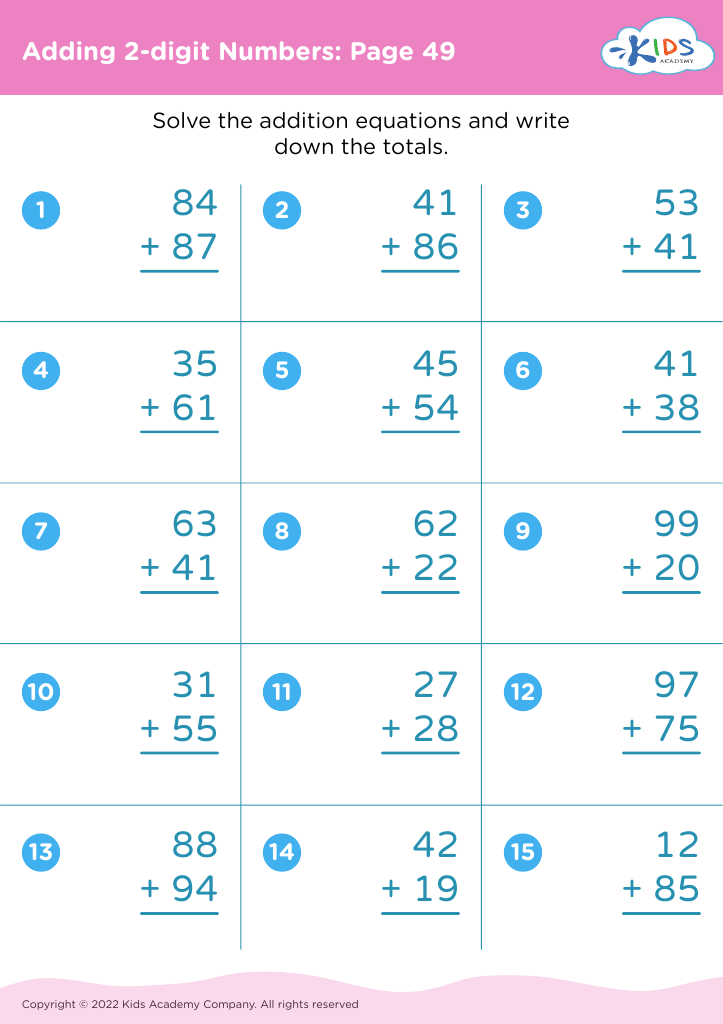
Adding 2-digit Numbers: Page 49

Adding 2-digit Numbers: Page 49

Adding 2-digit Numbers: Page 49
Worksheet
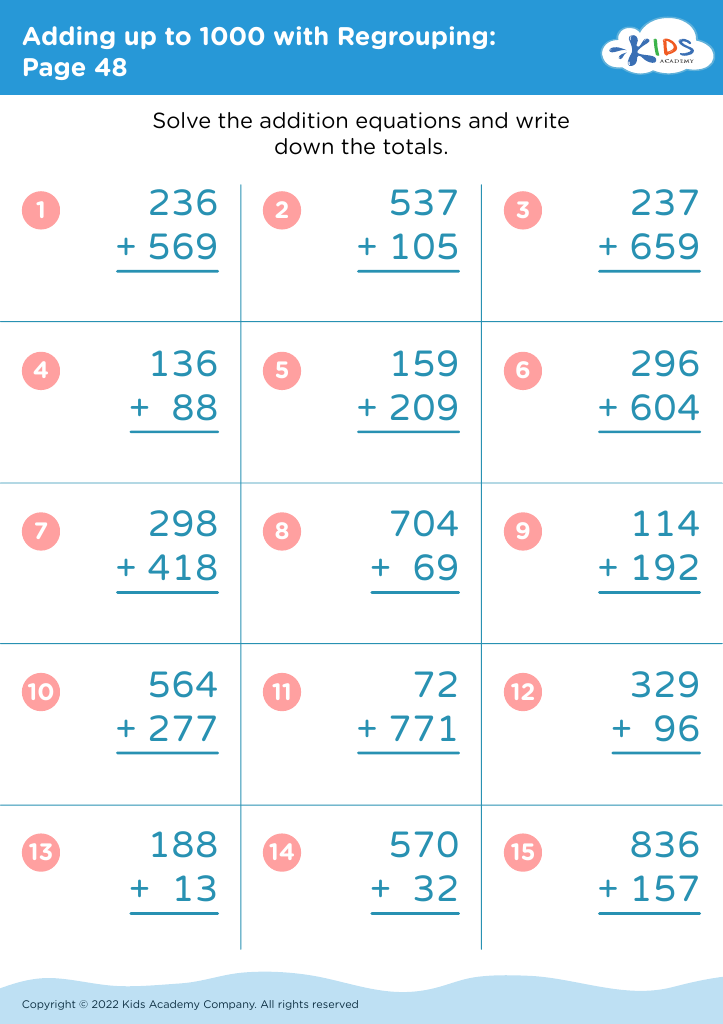
Adding up to 1000 with Regrouping: Page 48
Worksheet
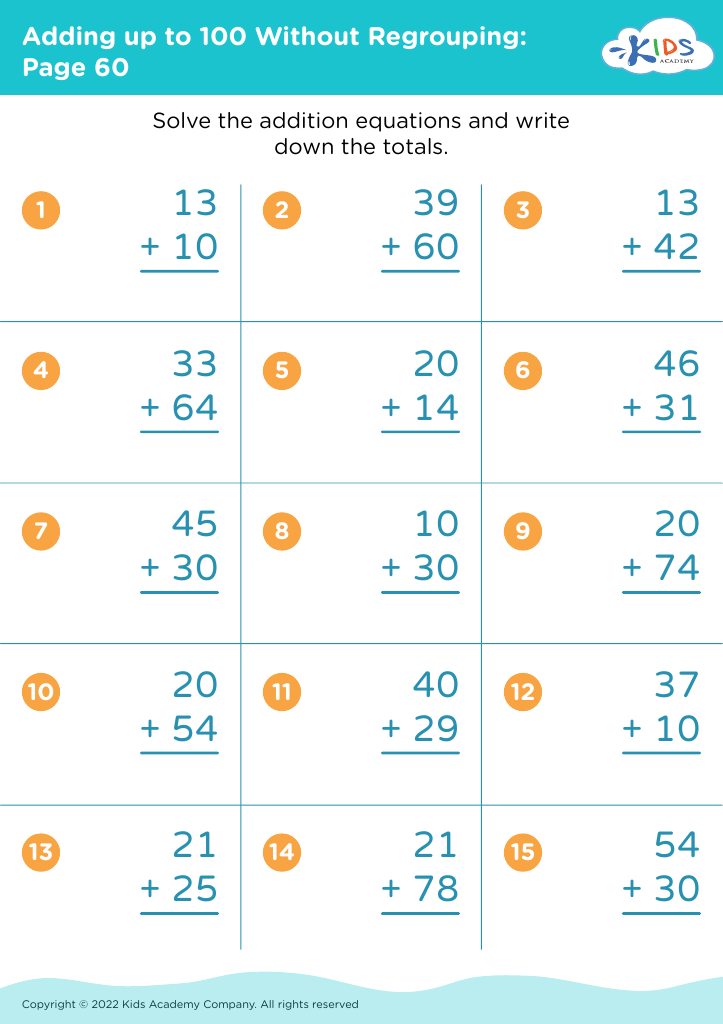
Adding up to 100 Without Regrouping: Page 60
Worksheet


Parents and teachers should prioritize enhancing comprehension of addition and subtraction for children ages 4-7 because these foundational math skills underpin a child's future academic success. At this age, children are in a critical developmental stage, where strong mathematical understanding contributes to overall cognitive growth. Mastery of basic operations fosters confidence, encourages problem-solving abilities, and builds a strong mathematical foundation that students will rely on in more complex topics later on.

Additionally, promoting comprehension rather than rote memorization helps children understand the "why" behind mathematical concepts, making learning meaningful and applicable. This deeper understanding encourages children to engage with mathematics in everyday situations, enhancing their critical thinking skills. Effective support in these early years cultivates a positive attitude towards math, reducing math anxiety as they progress in their education.

Engaging children through interactive and playful methods—such as games, visual tools, and hands-on activities—can help solidify their grasp of addition and subtraction concepts. This comprehensive approach nurtures not just mathematical literacy but also excites a lasting love for learning in general. Ultimately, enhancing comprehension in these core areas puts children on a positive trajectory for lifelong success in mathematics and related disciplines.