Numeracy development Addition & Subtraction Worksheets for Ages 4-7
3 filtered results
-
From - To
Unlock your child's mathematical potential with our engaging Addition & Subtraction Worksheets designed specifically for ages 4-7. These numeracy development resources provide a fun and interactive way for young learners to master basic arithmetic skills. Our worksheets incorporate vibrant visuals and age-appropriate exercises that encourage critical thinking and problem-solving. Children will navigate through colorful addition and subtraction scenarios, ensuring they build a strong foundational understanding of numbers. Ideal for both classroom and home use, these printable worksheets inspire confidence in math while making learning enjoyable. Empower your child’s journey in numeracy today with our thoughtfully crafted worksheets!
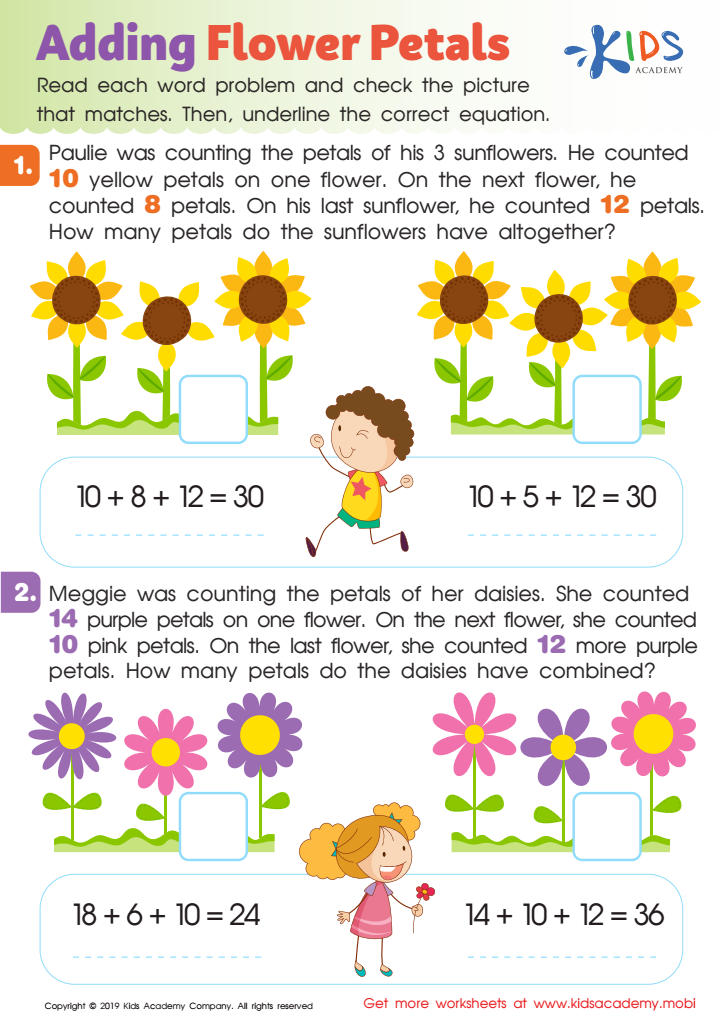
Adding Flower Petals Worksheet
 Assign to My Students
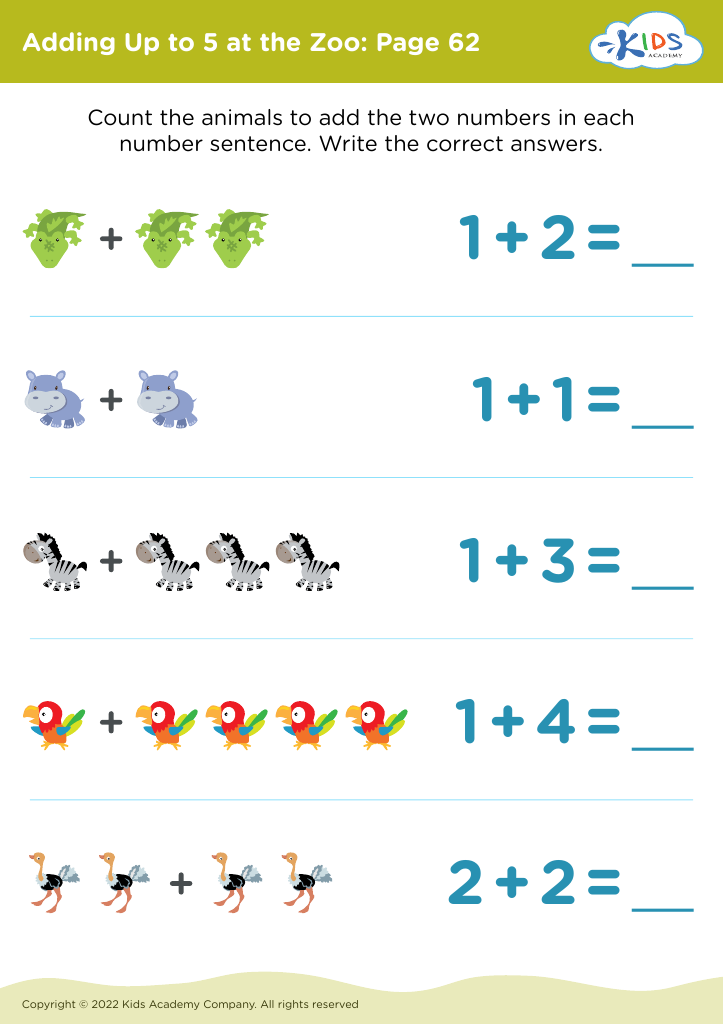
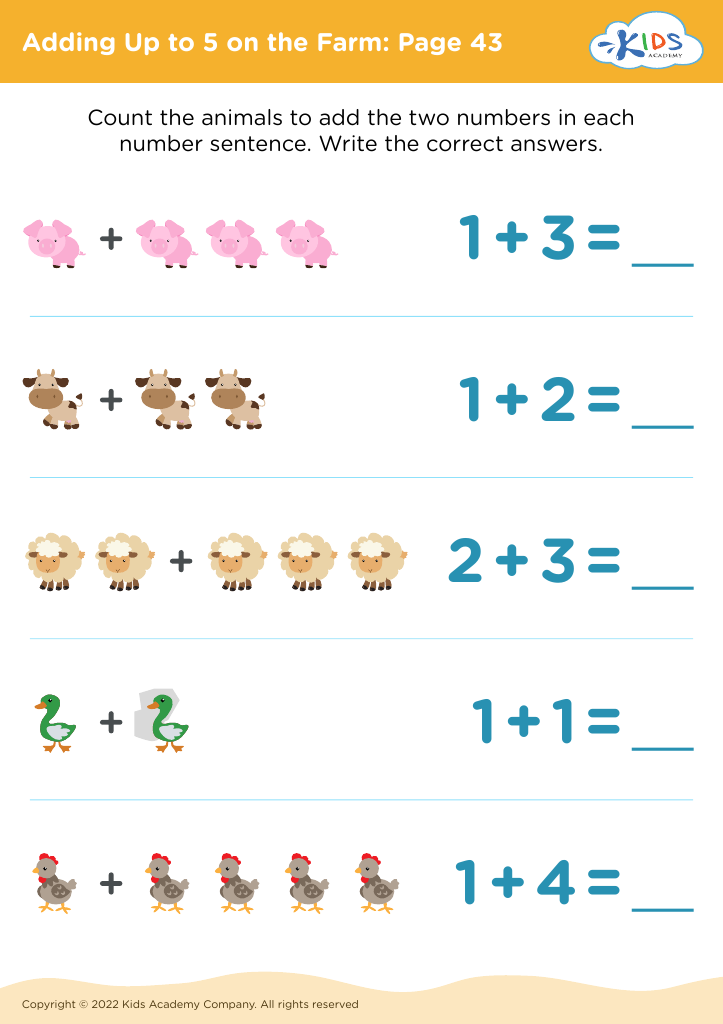








Numeracy development, particularly in addition and subtraction, is vital for children aged 4-7 as it lays the foundation for lifelong mathematical skills. Early exposure to these concepts enables young learners to develop critical thinking and problem-solving abilities, which are essential in everyday life. By mastering basic addition and subtraction, children enhance their cognitive development, learning to recognize patterns, sequence numbers, and understand mathematical relationships.
Parents and teachers play a crucial role in this developmental stage. Engaging children with interactive activities, like counting games or using physical objects for hands-on practice, fosters a positive and enjoyable learning experience. This interaction also builds confidence and reduces math anxiety, encouraging a mindset that embraces challenges rather than shying away from them.
Moreover, early numeracy skills are linked to later academic success. Research shows that a strong foundation in math during these formative years can lead to better performance in higher-level mathematics and affect overall educational attainment. By prioritizing addition and subtraction, parents and teachers not only support children's academic journeys but also equip them with essential skills needed in everyday problem-solving situations, paving the way for future success in various, often unforeseen, contexts.








