Filters

17 filtered results

Clear all filters
Favorites
With answer key
Interactive

17 filtered results

Difficulty Level

Grade


Elevate young learners' math skills with our "Enhance Comprehension Addition Worksheets for Ages 4-7". These thoughtfully designed printables are perfect for building foundational addition skills in a fun and engaging way. Featuring easy-to-follow instructions and delightful illustrations, these worksheets help children develop both accuracy and comprehension. From simple sums to more challenging problems, our resources cater to varying levels of ability, ensuring every child can progress at their own pace. Designed by educational experts, these worksheets not only boost math proficiency but also nurture critical thinking and problem-solving skills. Spark a love for math today with our engaging addition activities!
Check out this FREE Trial Lesson on Addition for age 4-7!

Match Objects that Fit Together

Favorites
With answer key
Interactive
  • 4-7
  • Enhance comprehension
  • Addition
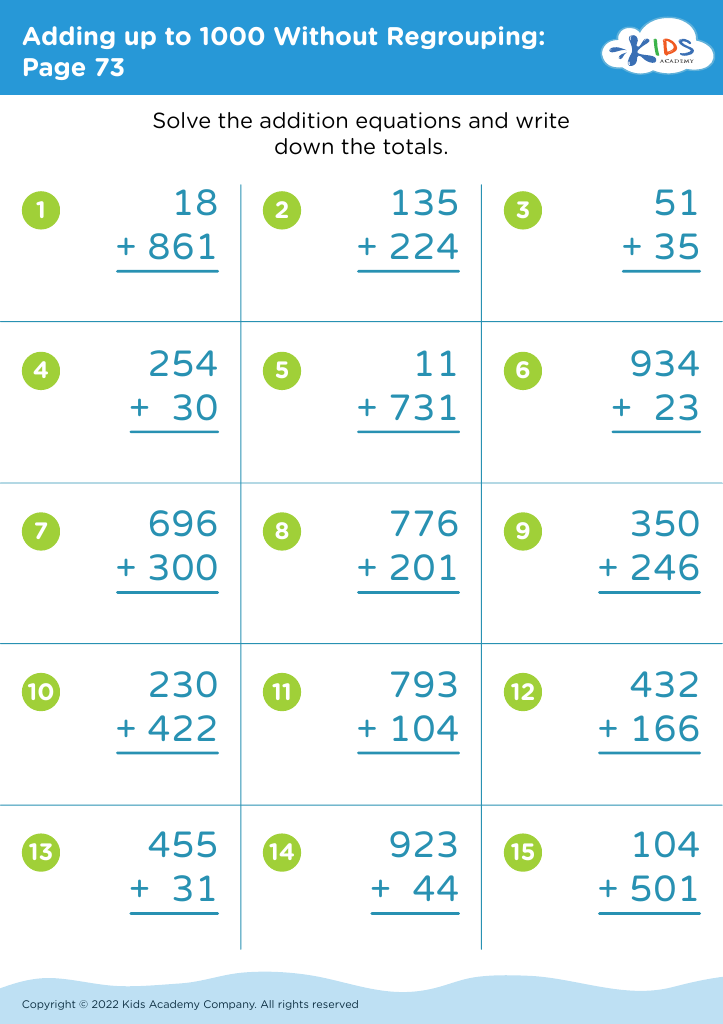
Adding up to 1000 Without Regrouping: Page 73
Worksheet
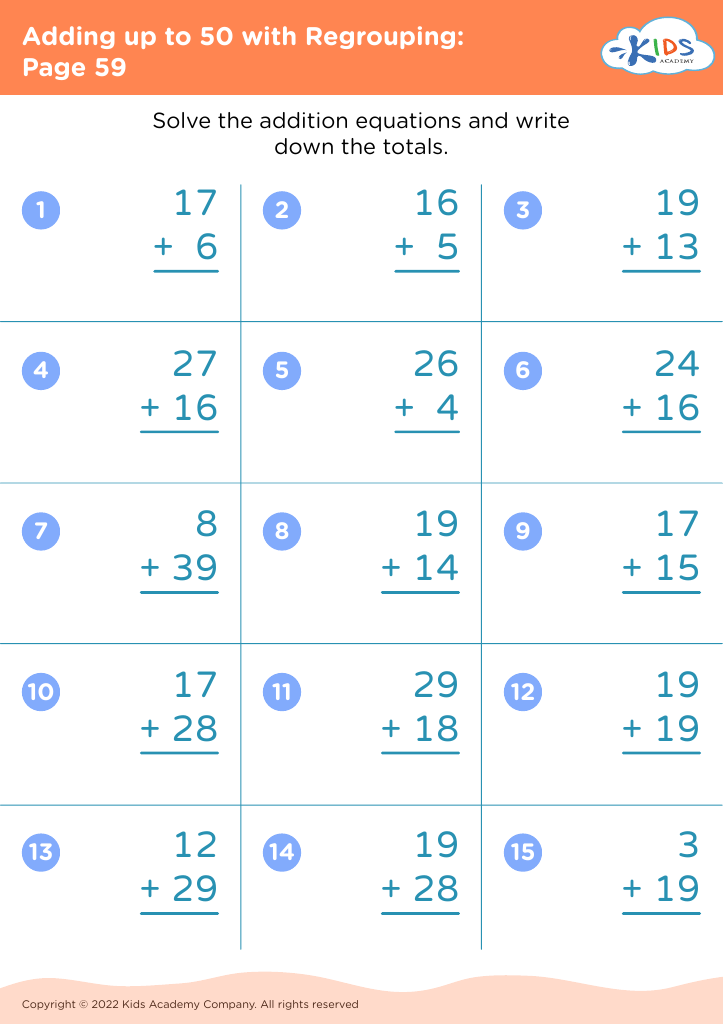
Adding up to 50 with Regrouping: Page 59
Worksheet
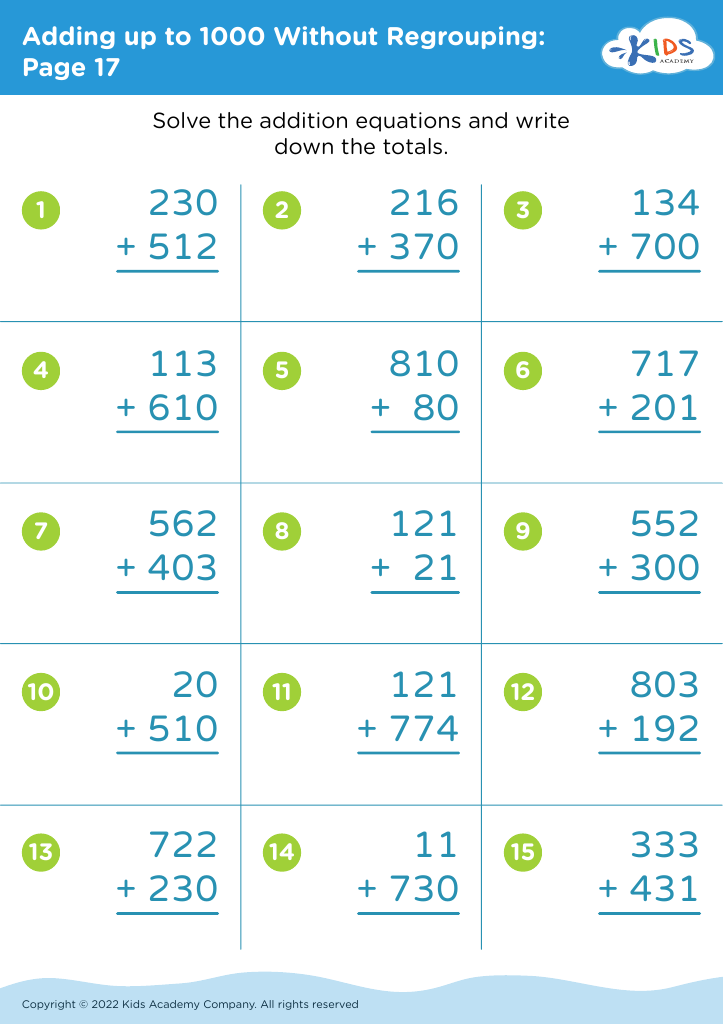
Adding up to 1000 Without Regrouping: Page 17
Worksheet
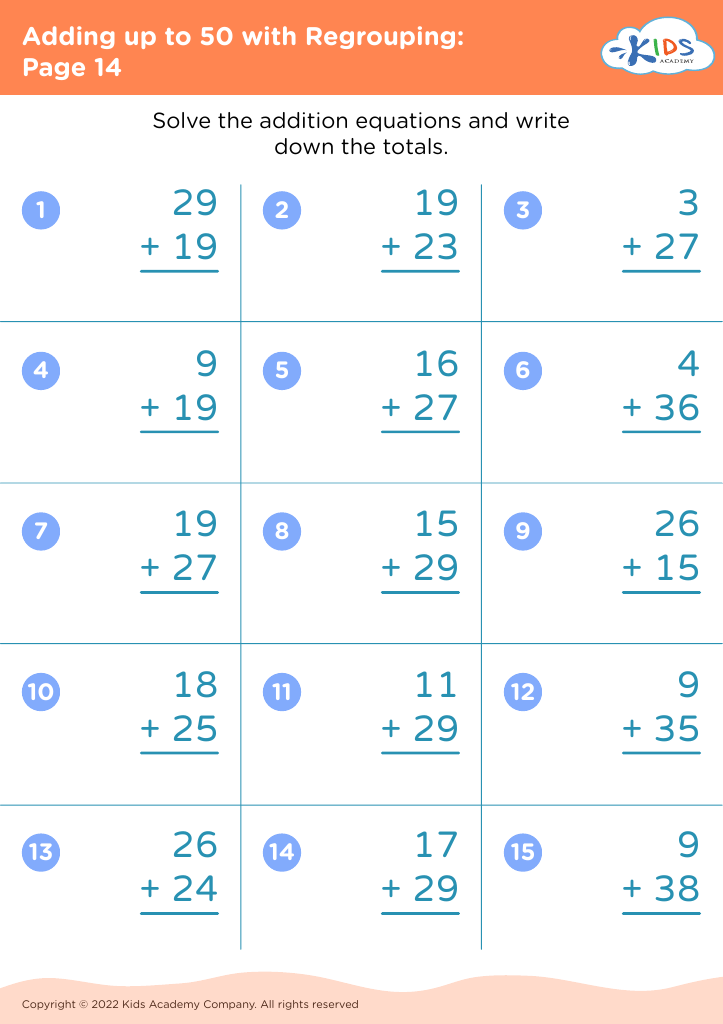
Adding up to 50 with Regrouping: Page 14
Worksheet
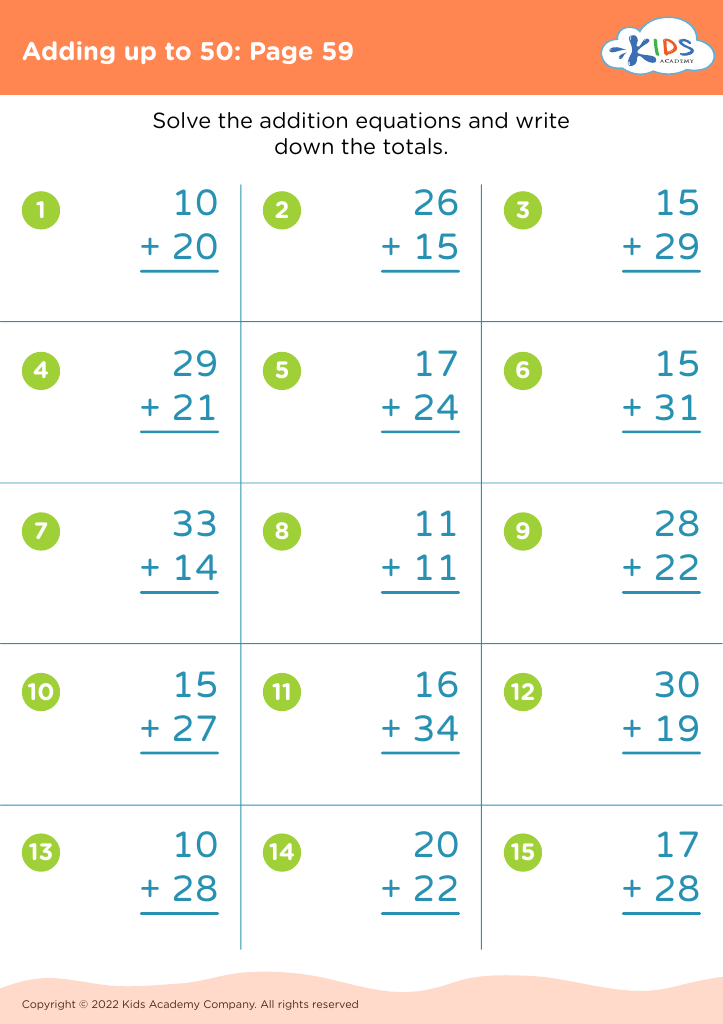
Adding up to 50: Page 59

Adding up to 50: Page 59

Adding up to 50: Page 59
Worksheet
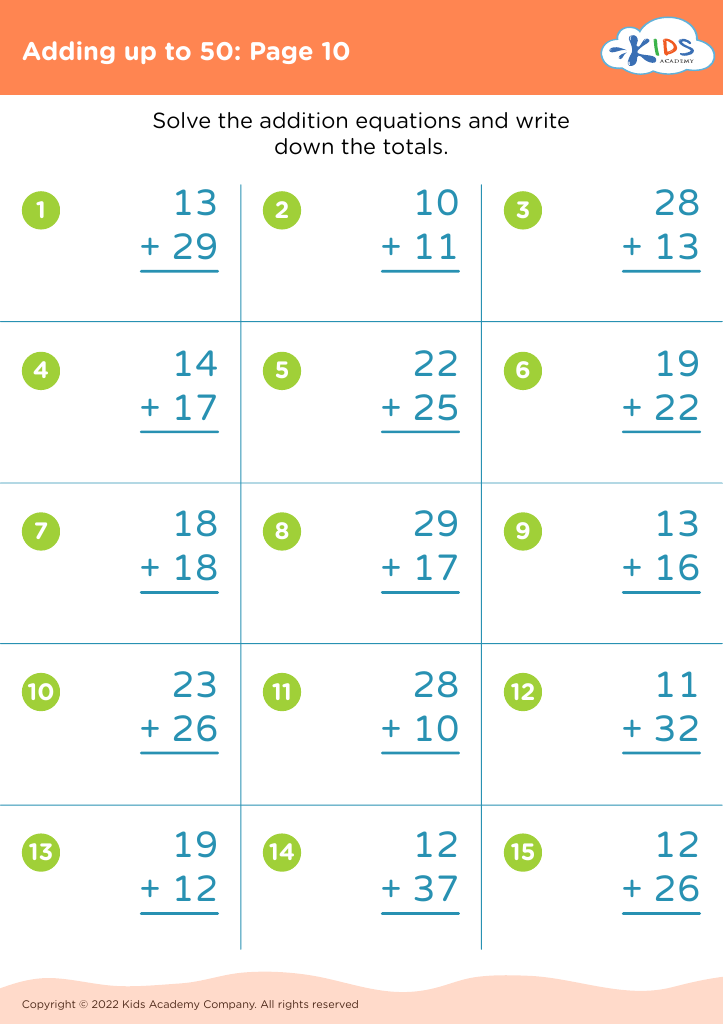
Adding up to 50: Page 10

Adding up to 50: Page 10

Adding up to 50: Page 10
Worksheet
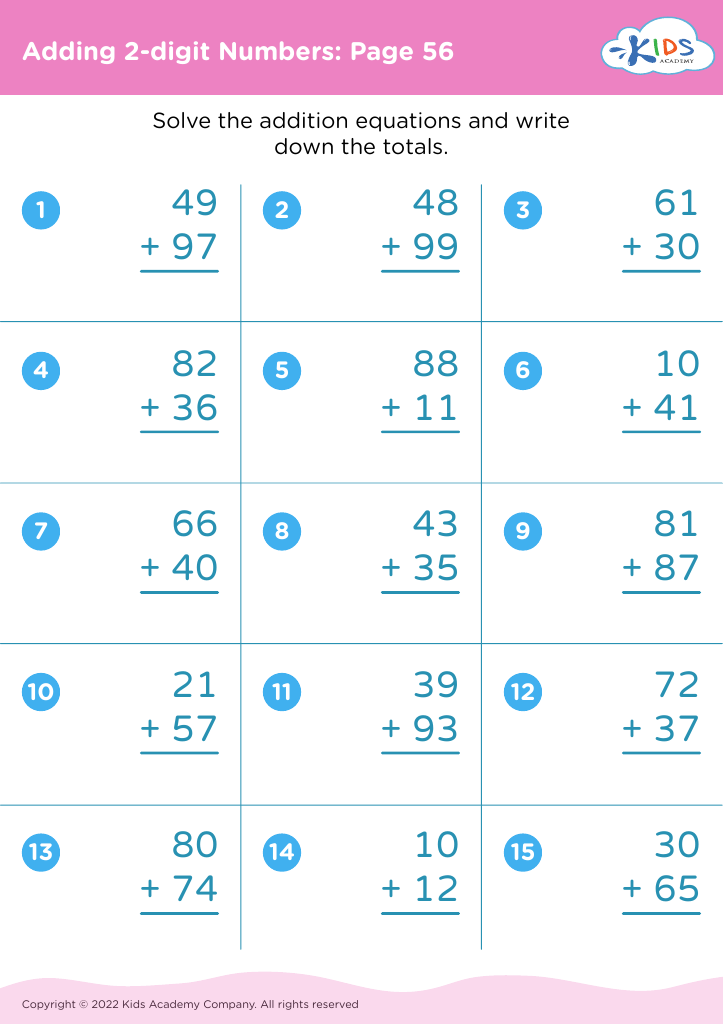
Adding 2-digit Numbers: Page 56

Adding 2-digit Numbers: Page 56

Adding 2-digit Numbers: Page 56
Worksheet
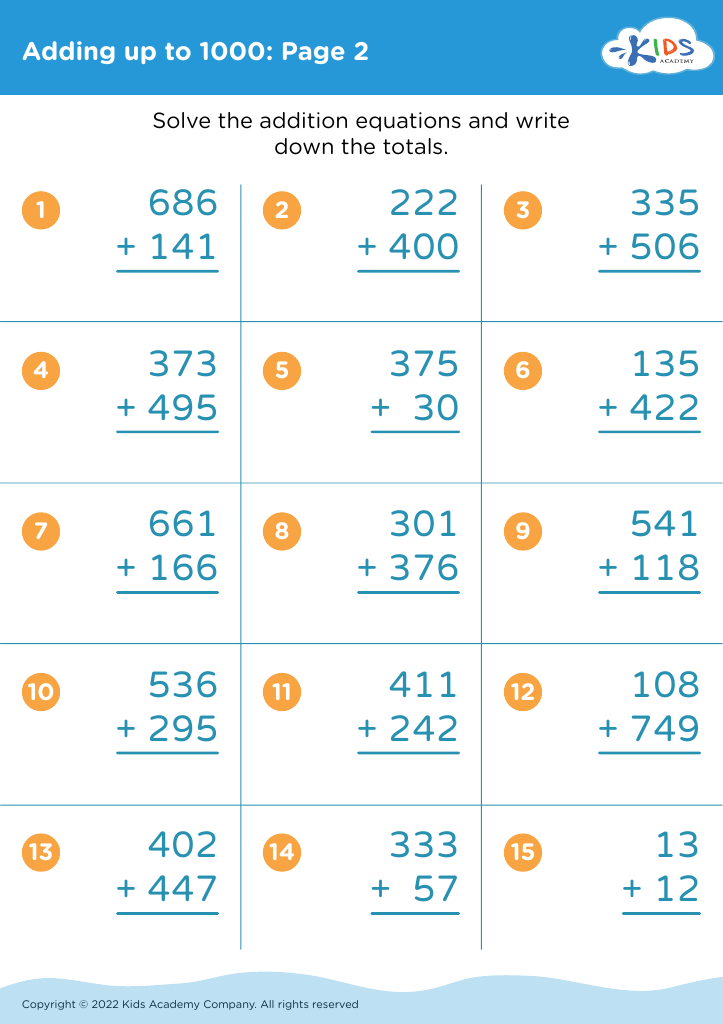
Adding up to 1000: Page 2

Adding up to 1000: Page 2

Adding up to 1000: Page 2
Worksheet
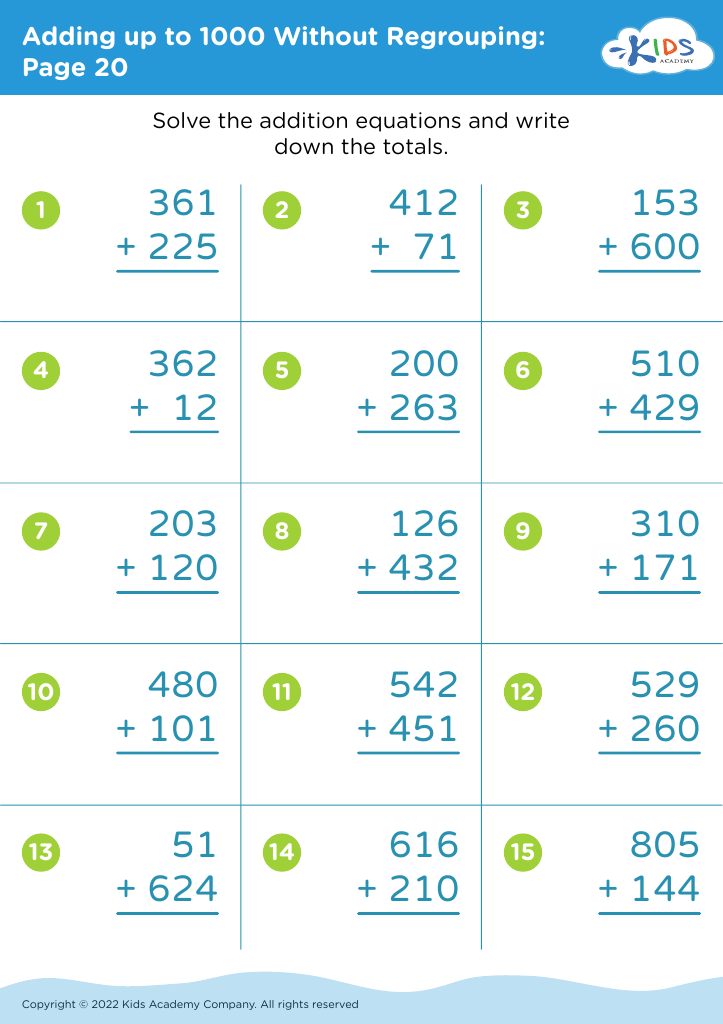
Adding up to 1000 Without Regrouping: Page 20
Worksheet
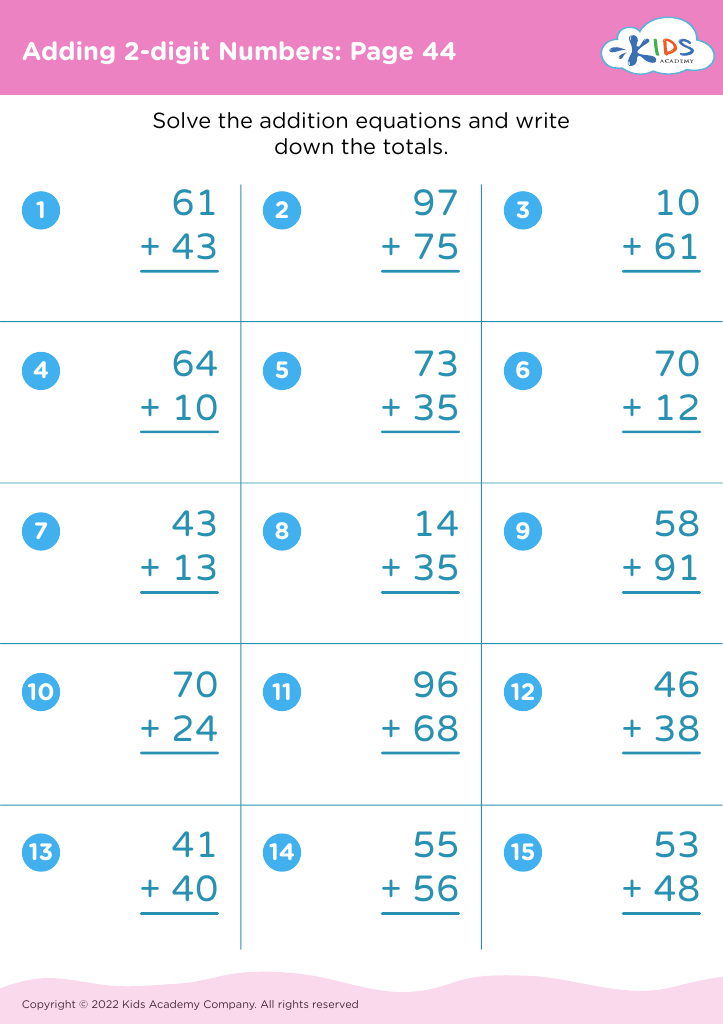
Adding 2-digit Numbers: Page 44

Adding 2-digit Numbers: Page 44

Adding 2-digit Numbers: Page 44
Worksheet
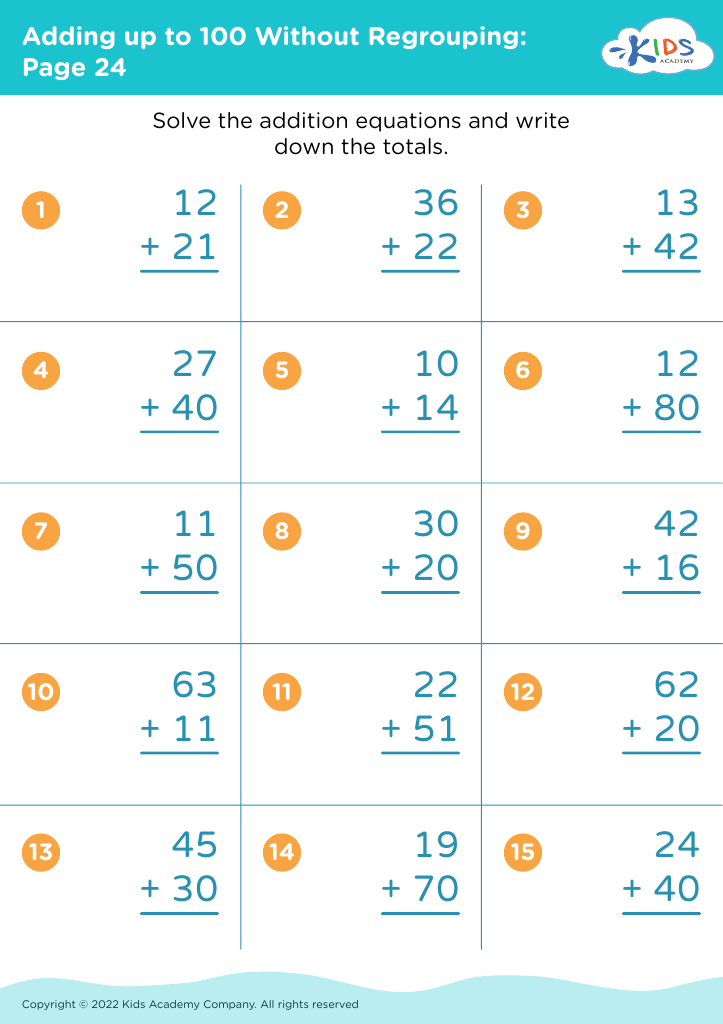
Adding up to 100 Without Regrouping: Page 24
Worksheet
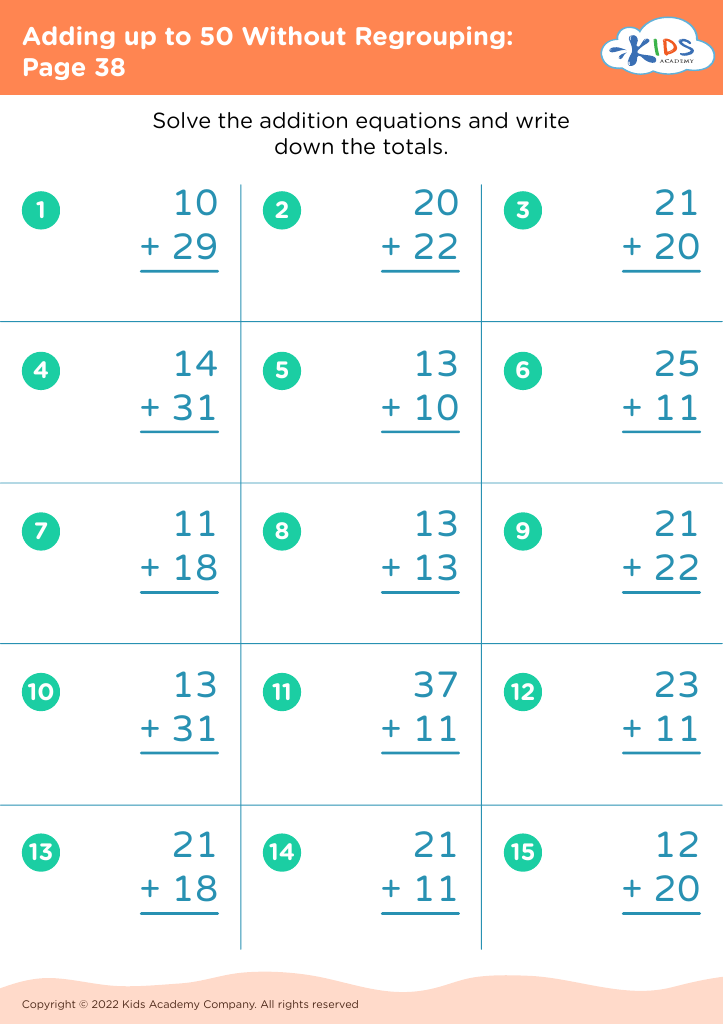
Adding up to 50 Without Regrouping: Page 38
Worksheet
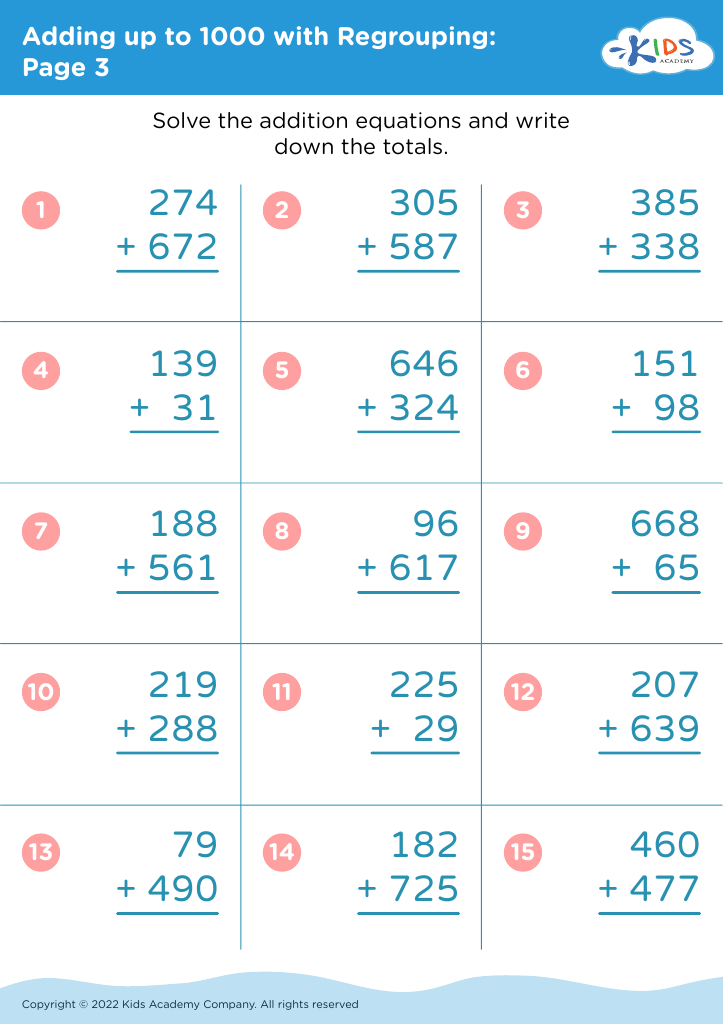
Adding up to 1000 with Regrouping: Page 3
Worksheet
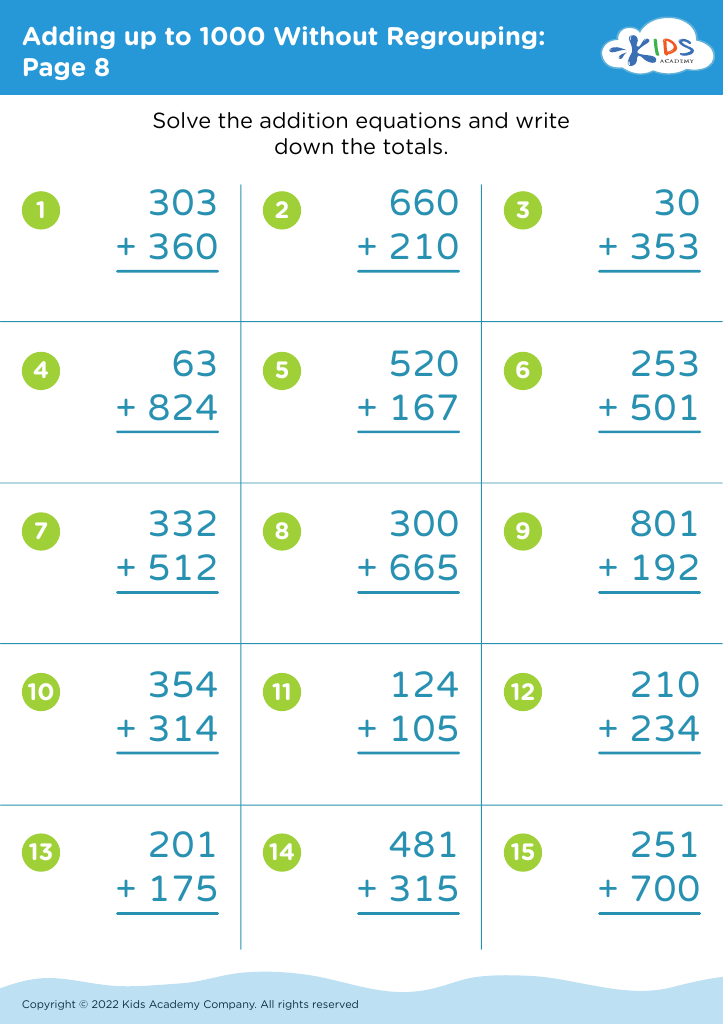
Adding up to 1000 Without Regrouping: Page 8
Worksheet
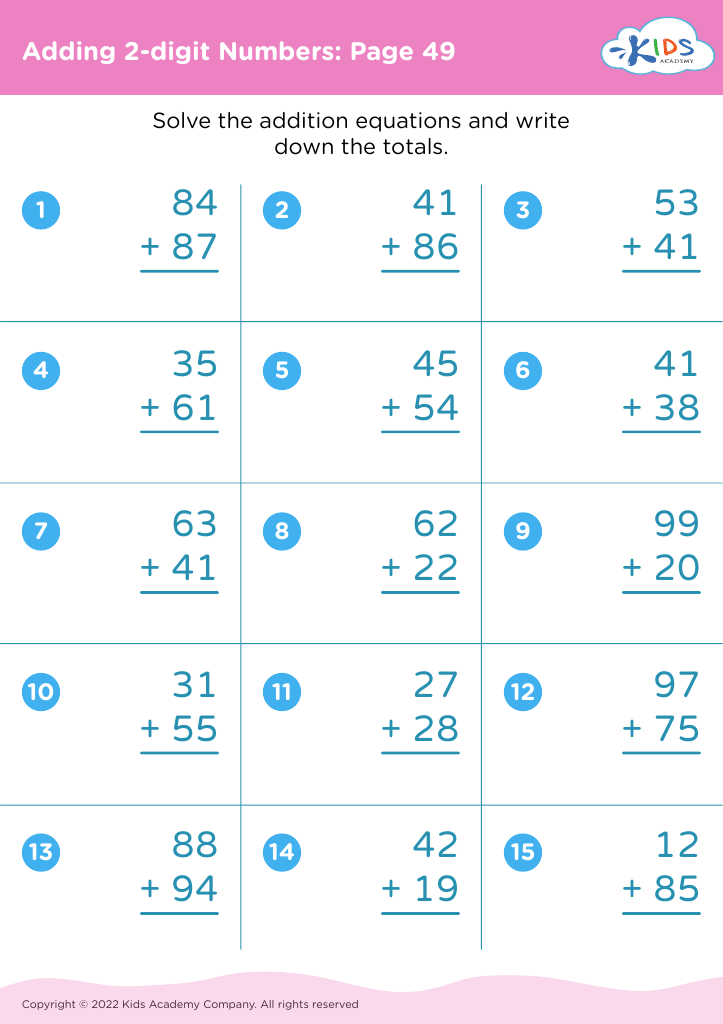
Adding 2-digit Numbers: Page 49

Adding 2-digit Numbers: Page 49

Adding 2-digit Numbers: Page 49
Worksheet
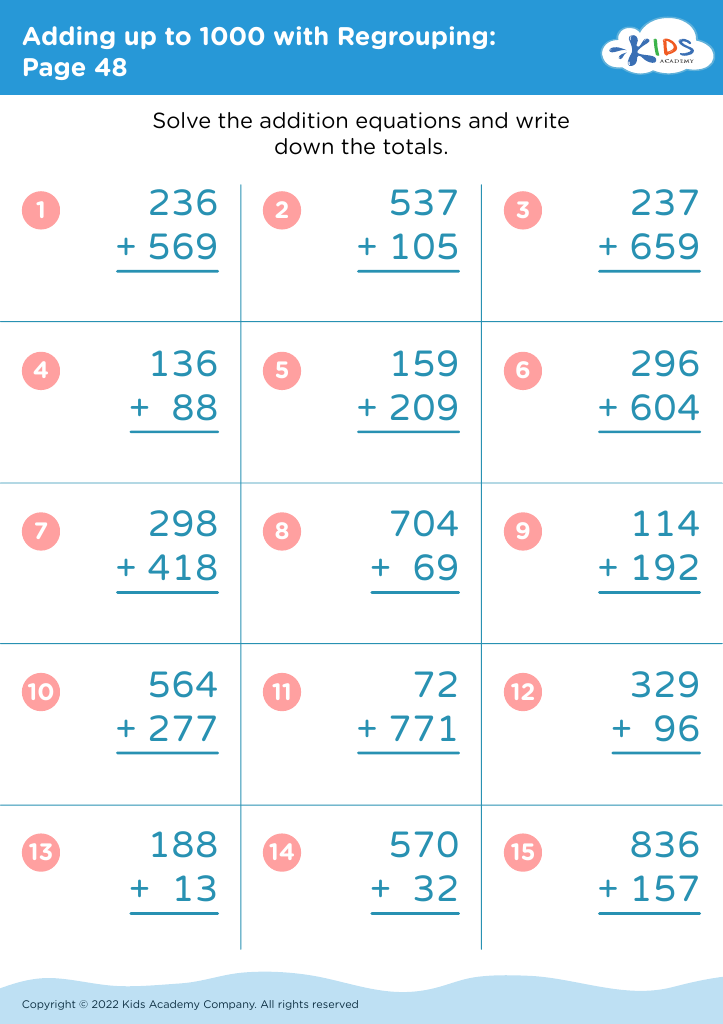
Adding up to 1000 with Regrouping: Page 48
Worksheet
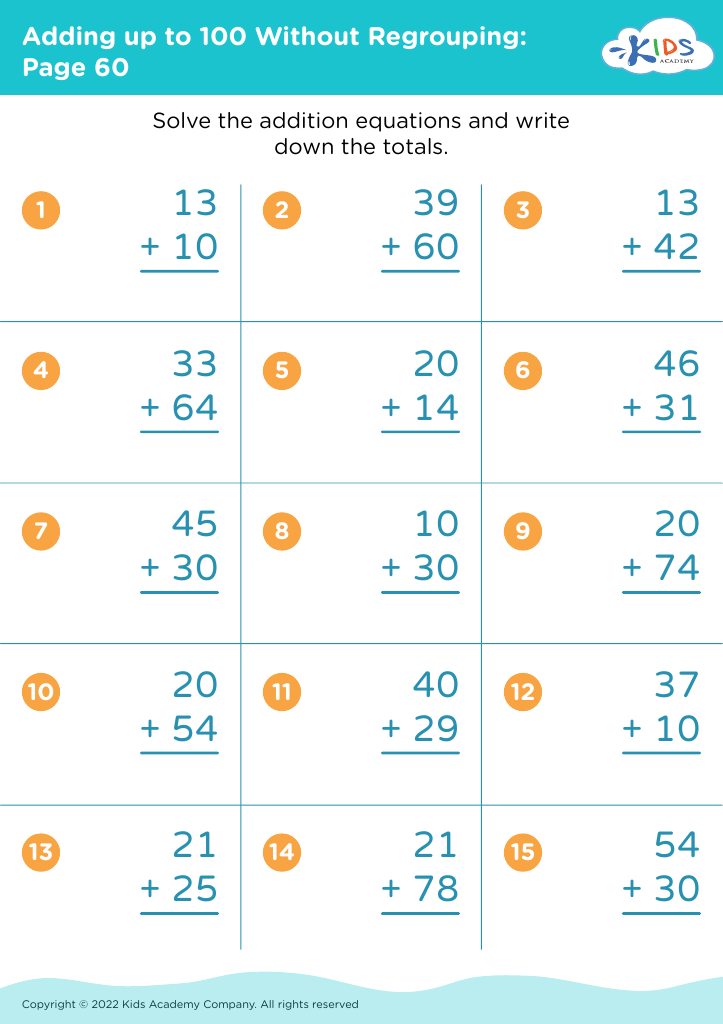
Adding up to 100 Without Regrouping: Page 60
Worksheet


Enhancing comprehension and understanding of addition for children aged 4-7 is essential for several reasons. During these formative years, children's brains are highly adaptable and capable of building fundamental skills that develop into more complex ones. First, a solid grasp of addition lays the groundwork for more advanced mathematical concepts. Without a strong understanding of basic arithmetic, children may struggle with multiplication, division, and higher-level math in later grades.

Moreover, learning addition improves cognitive skills such as problem-solving, logical reasoning, and critical thinking. These skills are transferable across various subjects and everyday situations, boosting overall academic performance and self-confidence. Beyond academics, enhancing comprehension in math fosters a positive attitude toward learning, encouraging lifelong curiosity and intellectual growth.

Socially, cooperative learning activities around addition, like group games or problem-solving tasks, teach children teamwork, patience, and communication. Emotionally, mastering addition provides a sense of achievement, reinforcing perseverance and resilience.

Teachers and parents play crucial roles by creating supportive, engaging environments. Methods such as interactive lessons, manipulatives, and real-world connections make learning addition both fun and meaningful. Prioritizing these early math skills ensures a strong, confident start to a child's educational journey and beyond.