Basic counting skills Geometry Worksheets for Ages 4-7
3 filtered results
-
From - To
Our "Basic Counting Skills Geometry Worksheets for Ages 4-7" are designed to build a strong foundation in math for young learners. Easy-to-understand and engaging, these worksheets combine fundamental counting principles with geometric shapes, helping children recognize patterns, numbers, and shapes. Perfect for ages 4 to 7, these activities support critical thinking, problem-solving, and fine motor skills. They are ideal for at-home practice or classroom reinforcement, making learning fun while fostering a love for math. Start your child on a rewarding educational journey and watch them excel with confidence in their early math skills.
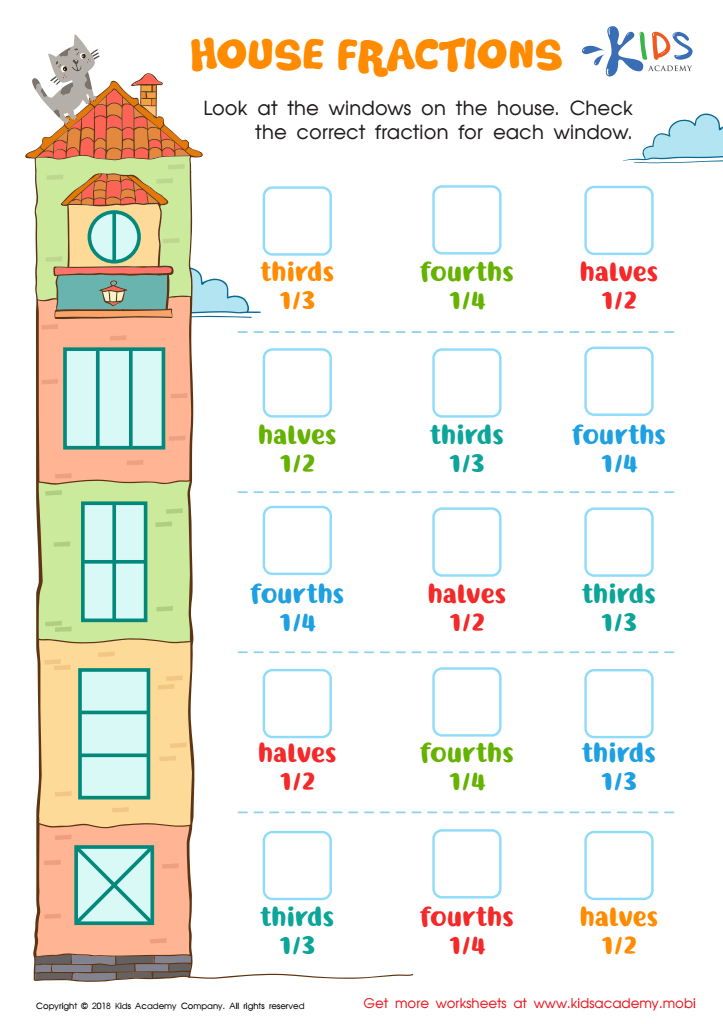
House Fractions Worksheet
 Assign to My Students











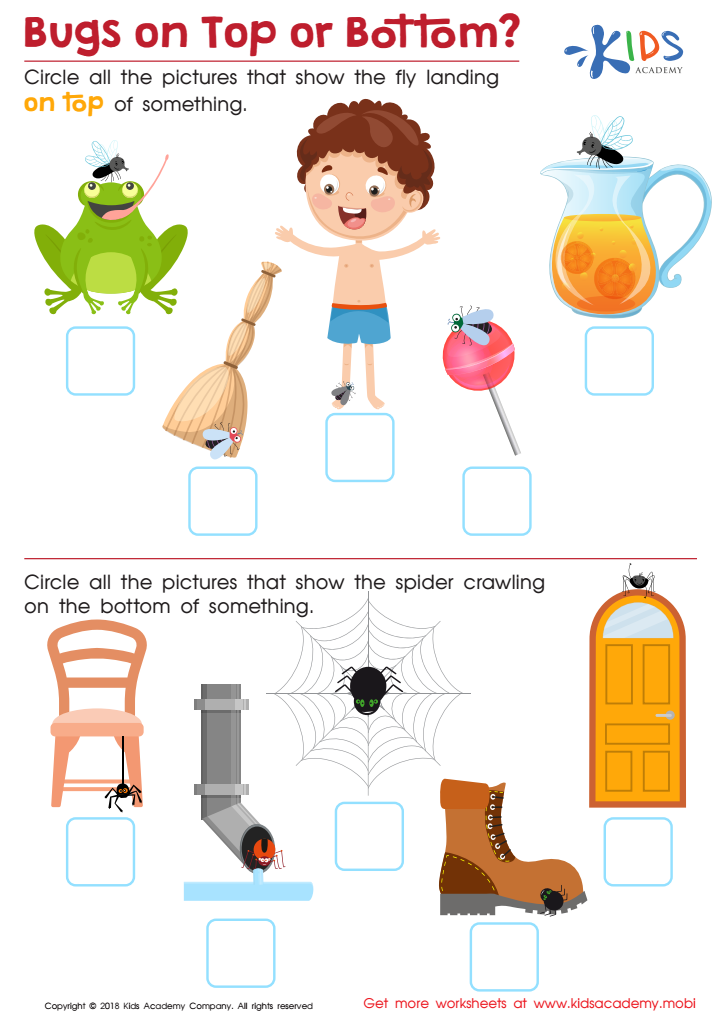
Bugs on Top or Bottom? Worksheet
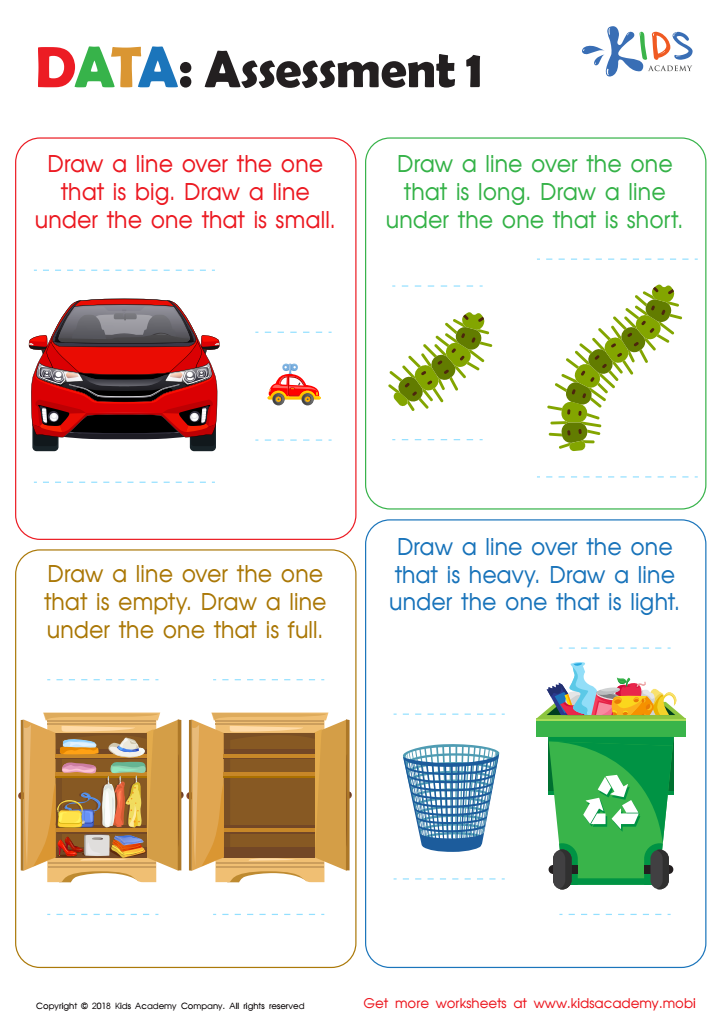
Data: Assessment 1 Worksheet








Basic counting skills and an understanding of geometry are foundational elements in a child’s cognitive development and future academic success. For children aged 4-7, these skills are vital as they set the stage for more complex mathematical concepts and problem-solving abilities. Counting helps children grasp the concept of numbers, quantity, and the systematic nature of mathematics. It is fundamental for developing number sense, which involves recognizing patterns, comparing amounts, and understanding one-to-one correspondence.
Geometry, on the other hand, introduces children to shapes, sizes, spatial relationships, and basic properties of objects. It enhances their spatial awareness, which is critical not only in mathematics but also in everyday activities like navigating their environment or assembling simple puzzles. Early geometry lessons foster visual and cognitive processing skills that are important for subjects such as science, technology, engineering, and art.
Engaging young children in counting games, shape sorting, and simple measurement activities stimulates their curiosity and makes learning fun. This early exposure builds confidence and encourages a positive attitude towards mathematics. Teachers and parents should prioritize these foundational skills to support a child’s holistic development, promote critical thinking, and pave the way for academic achievement and practical life skills.








