Hand-eye Coordination Geometry Worksheets for Ages 4-7
7 filtered results
-
From - To
Enhance your child's learning experience with our Hand-eye Coordination Geometry Worksheets designed for ages 4-7! These engaging worksheets not only introduce essential geometric concepts but also improve motor skills through fun and interactive activities. Each worksheet focuses on shape recognition, spatial awareness, and precise coordination, making learning enjoyable and effective. Perfect for parents and educators seeking to enrich children's education at home or in the classroom, our resources stimulate creativity while reinforcing foundational math skills. Explore a variety of colorful worksheets that promote both hand-eye coordination and geometry comprehension, ensuring your little learners have a solid start in their mathematical journey!
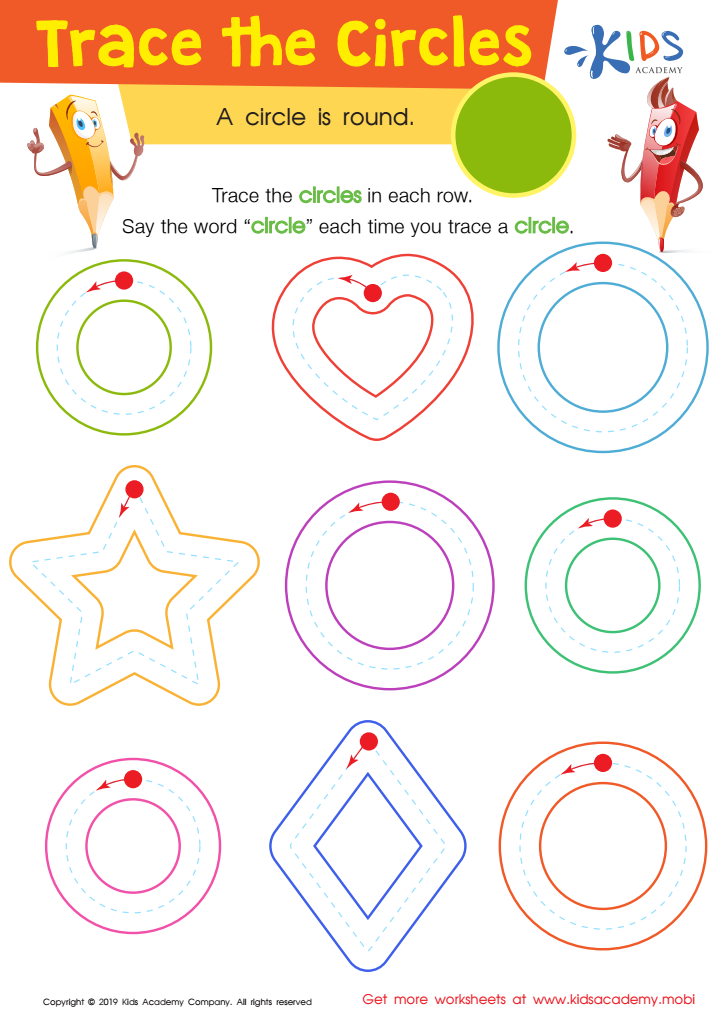
Trace The Circles Worksheet
 Assign to My Students











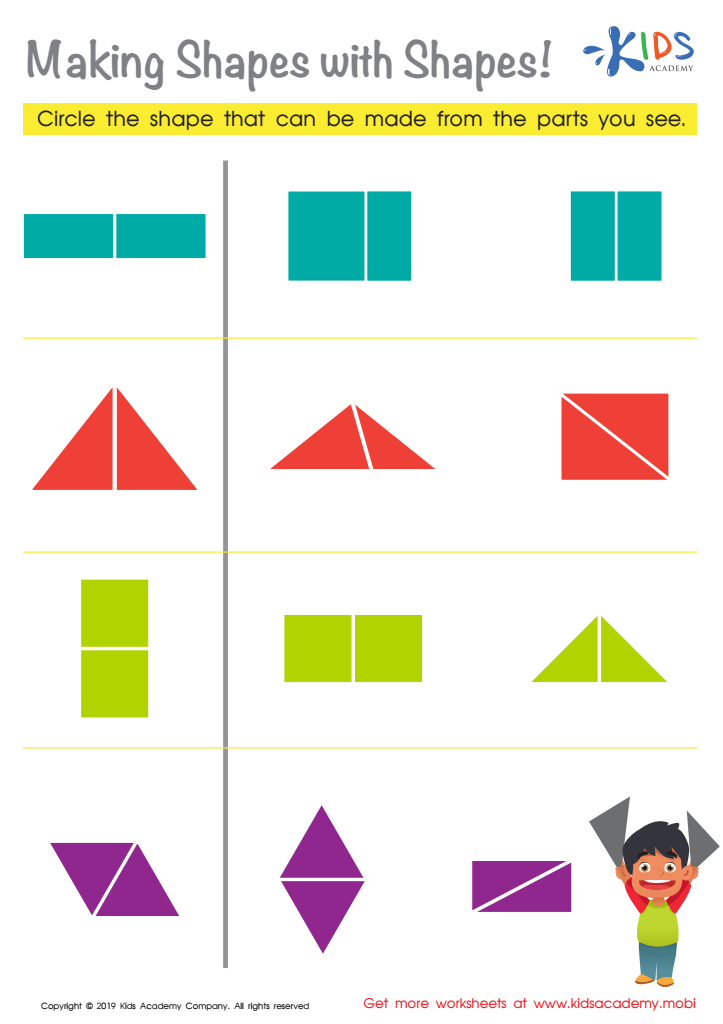
Making Shapes with Shapes Worksheet
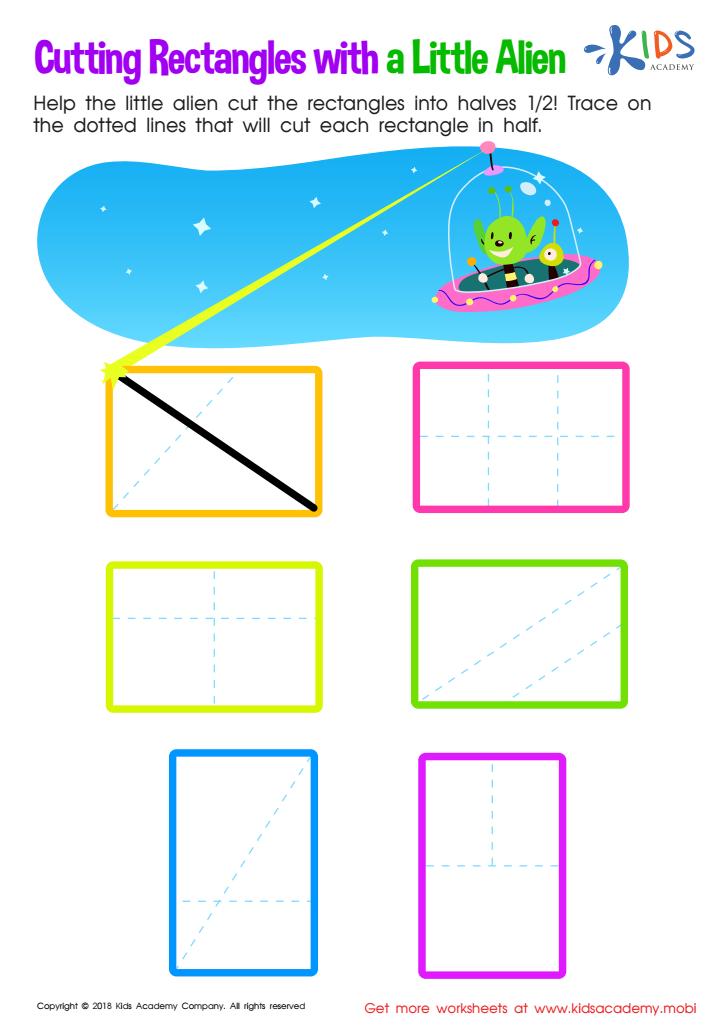
Cutting Rectangles with Alien Worksheet
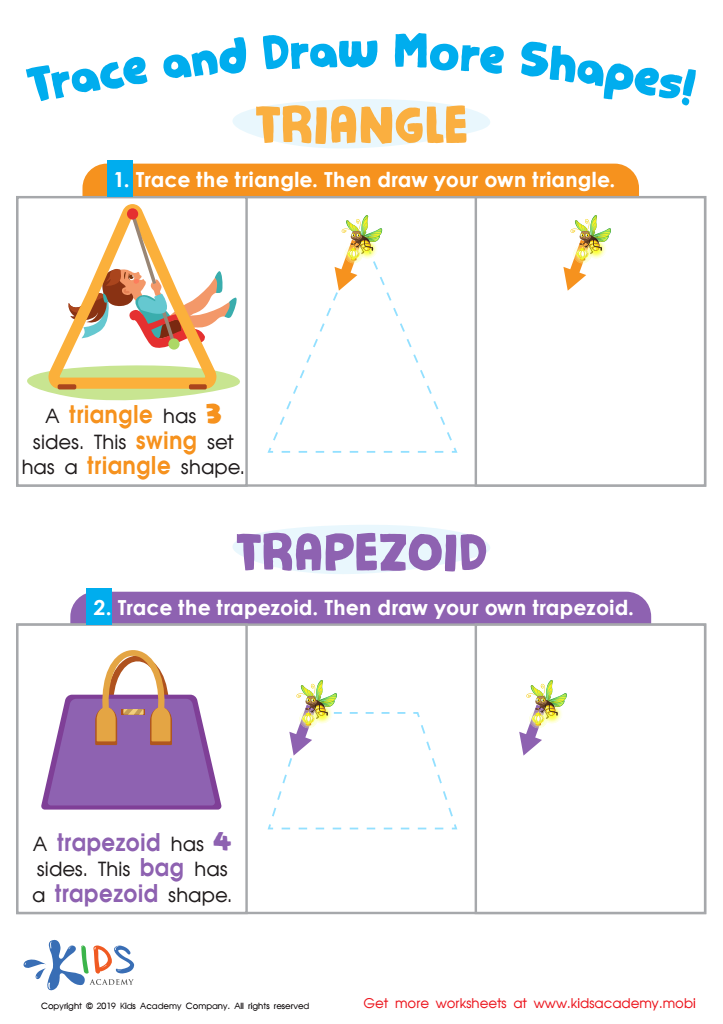
Trace and Draw More Shapes Worksheet
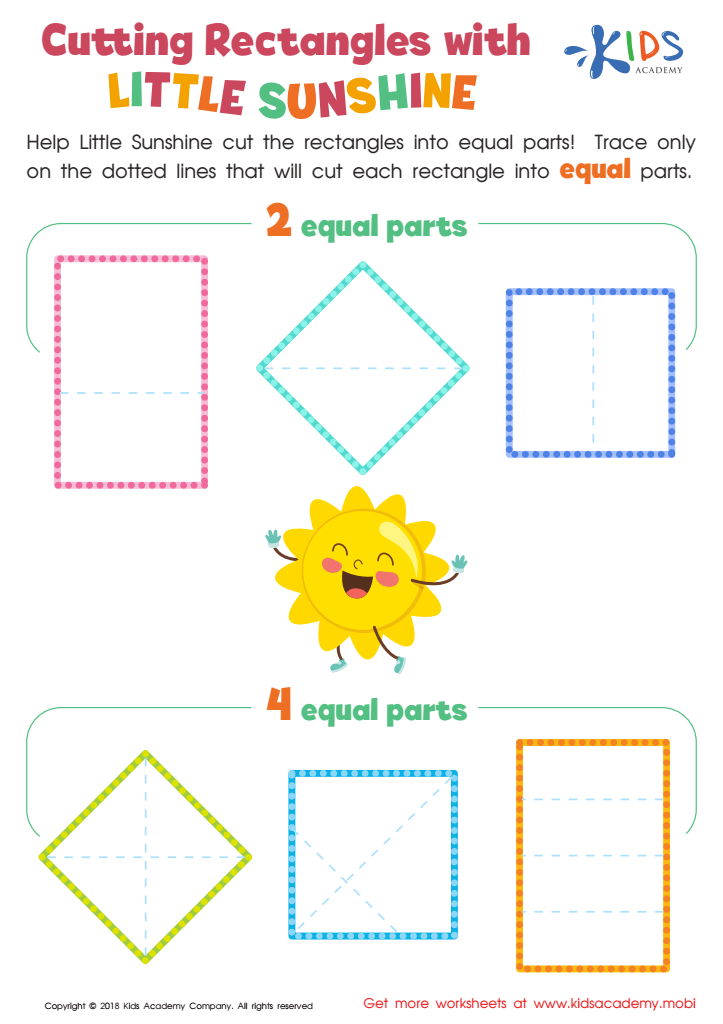
Cutting Rectangles with Little Sunshine Worksheet
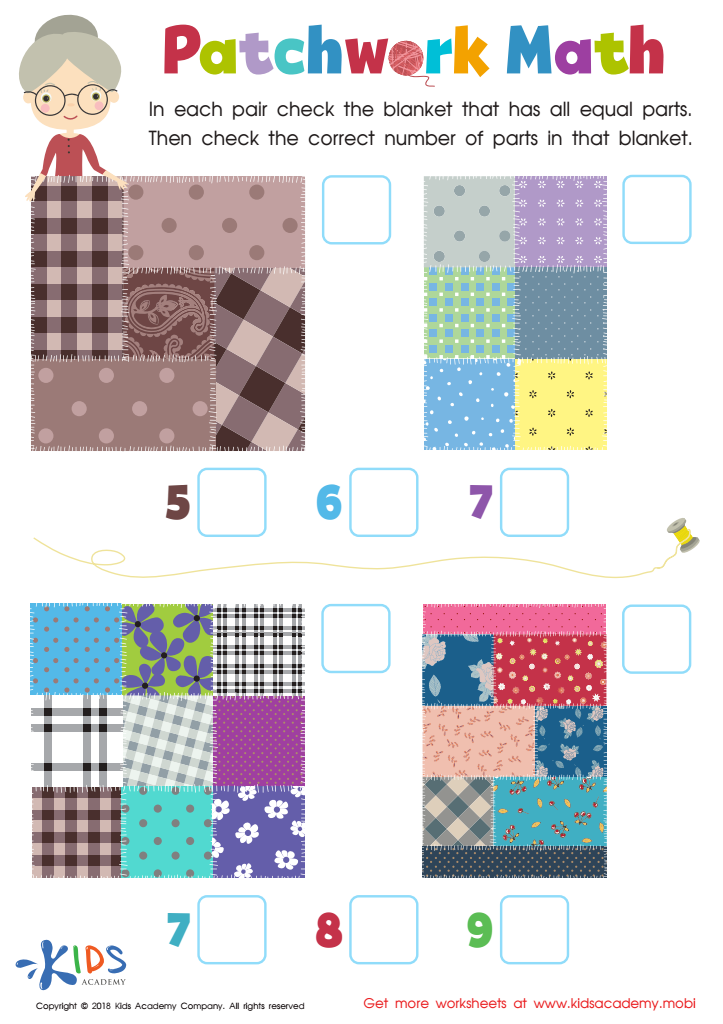
Patchwork Math Worksheet








Hand-eye coordination is a critical skill that significantly influences a child's overall development, particularly in the ages of 4-7. During this stage, children are beginning to refine their motor skills and engage in activities that require precise movements. Focusing on hand-eye coordination through geometry-related activities can enhance spatial awareness, improve problem-solving abilities, and foster creativity. Geometry encourages children to visualize shapes, sizes, and patterns, helping them to relate these concepts to their physical actions.
Engaging in tasks that promote hand-eye coordination, such as building blocks, drawing shapes, or engaging in simple geometry games, allows children to practice important cognitive and physical skills. These activities help develop fine motor skills, which are essential for daily tasks like writing, buttoning clothes, and using tools.
Moreover, fostering strong hand-eye coordination can boost a child's confidence, as they successfully complete complex tasks and navigate their environment effectively. Parents and teachers, therefore, should prioritize activities that incorporate this vital skill to lay a sturdy foundation for the child's future academic and personal success. By nurturing these skills through enjoyable, hands-on learning experiences, adults can help young children develop into capable and well-rounded individuals.








