Logical Reasoning Geometry Worksheets for Ages 4-7
6 filtered results
-
From - To
Discover our engaging Logical Reasoning Geometry Worksheets designed for children ages 4-7! These invaluable resources combine essential geometric concepts with logical reasoning skills, fostering critical thinking and problem-solving abilities in young learners. Our worksheets feature fun, age-appropriate activities that challenge children to explore shapes, patterns, and spatial relationships through interactive tasks. Perfect for both classroom and at-home learning, these worksheets encourage hands-on practice while reinforcing foundational math skills. Let your child develop confidence and enjoy learning through play as they enhance their understanding of geometry! Start building a strong mathematical foundation today with our vibrant and exciting worksheets.
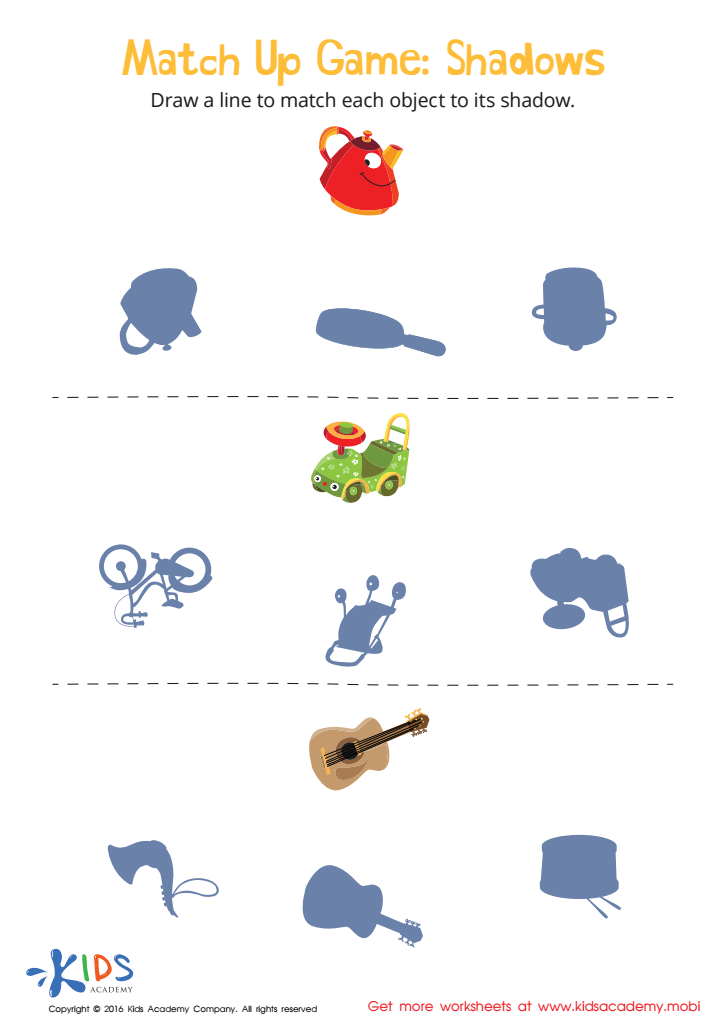
 Assign to My Students











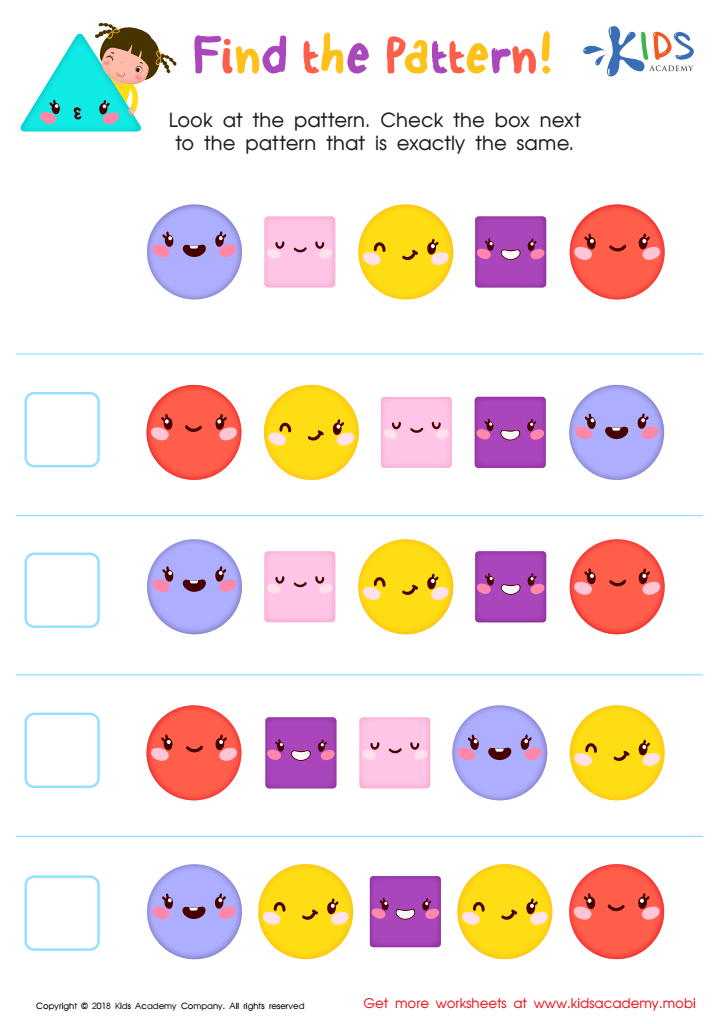
Find the Pattern Worksheet
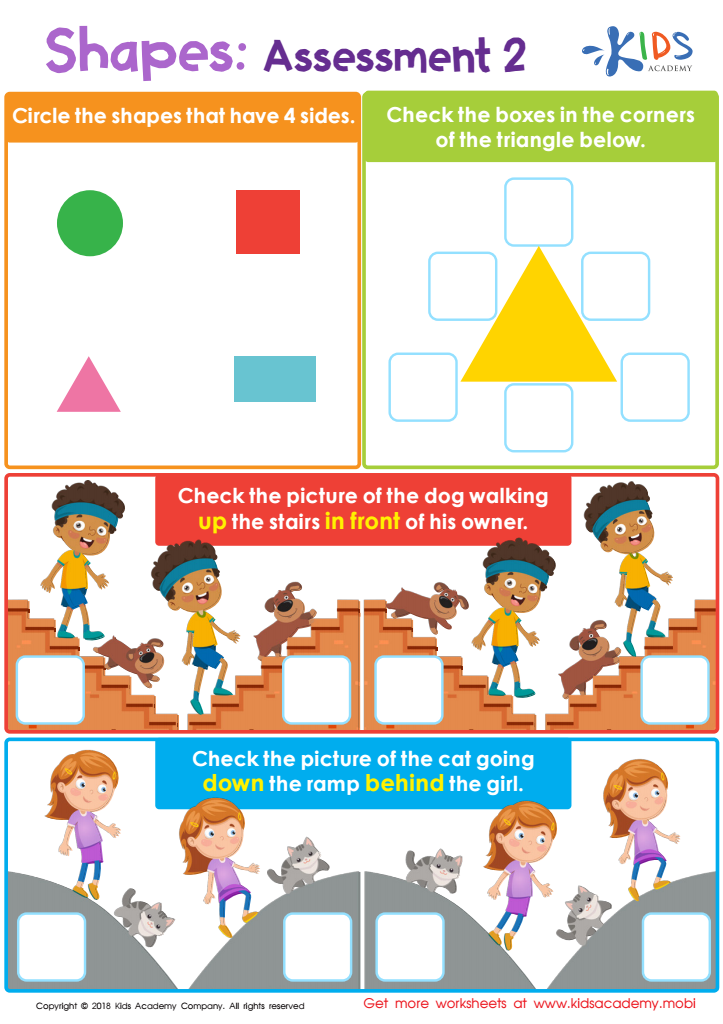
Shapes: Assessment 2 Worksheet
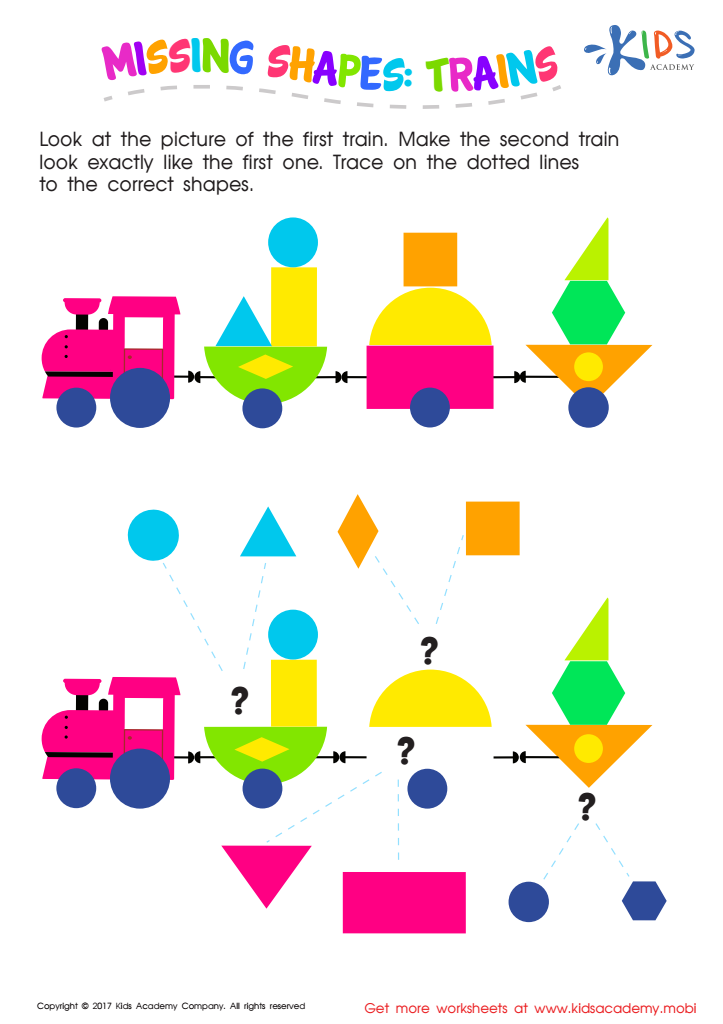
Missing Shapes: Trains Worksheet
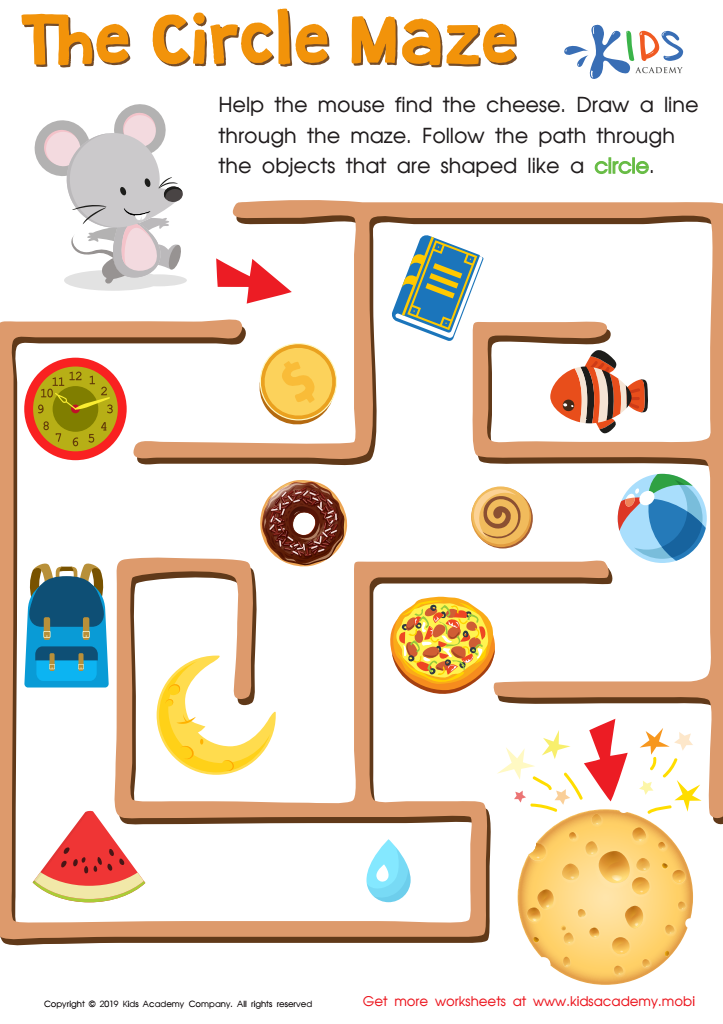
The Circle Maze Worksheet
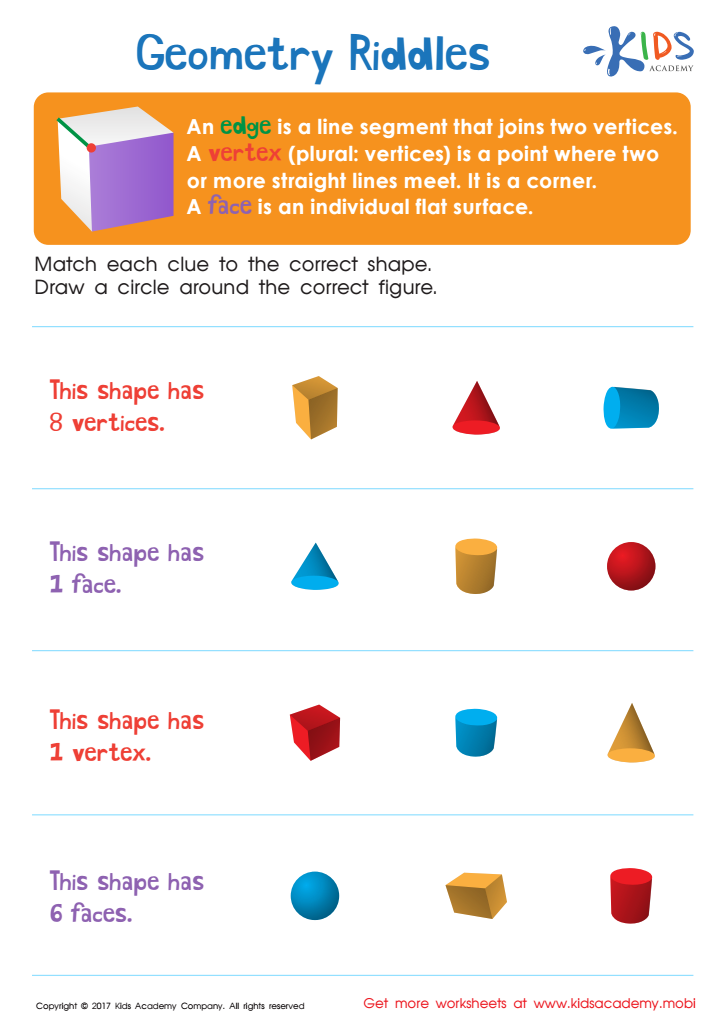
Geometry Riddles Printable








Logical reasoning and geometry are foundational skills that play a crucial role in a child's cognitive development, especially for those aged 4 to 7. During this critical period, children's brains are rapidly developing, making it an ideal time to foster logical thinking and spatial awareness. Engaging in logical reasoning helps them develop problem-solving skills, critical thinking abilities, and the capacity to analyze relationships among various concepts.
Geometry introduces children to shapes, sizes, patterns, and the understanding of space, which is essential for later mathematical learning. When parents and teachers emphasize geometric concepts, they provide opportunities for hands-on learning through games, puzzles, and creative activities that capture young learners’ imaginations. This not only enhances their mathematical foundation but also improves their overall cognitive abilities.
Moreover, strong logical reasoning and geometric skills can enhance children’s performance in other subjects, such as science and reading, as it promotes inference making and comprehensive thinking. By prioritizing these skills, parents and teachers can help children develop a solid intellectual framework, confidence, and a love for learning—assets that serve them well throughout their academic journey and beyond. Investing in these abilities early sets children up for lasting success in an increasingly complex world.








