Problem-solving abilities Geometry Worksheets for Ages 4-7
4 filtered results
-
From - To
Introduce your child to essential problem-solving skills with our engaging Geometry Worksheets designed for ages 4-7. These thoughtfully crafted activities focus on teaching young learners fundamental geometric shapes, their properties, and spatial understanding, all while promoting critical thinking. Perfect for home or classroom use, our worksheets encourage creativity and enhance cognitive abilities through fun, interactive challenges. Watch as your child navigates through shapes, patterns, and practical applications, fostering a love for math from an early age. Empower your little ones to develop their problem-solving prowess with our Geometry Worksheets, making learning an exciting adventure they'll love exploring!
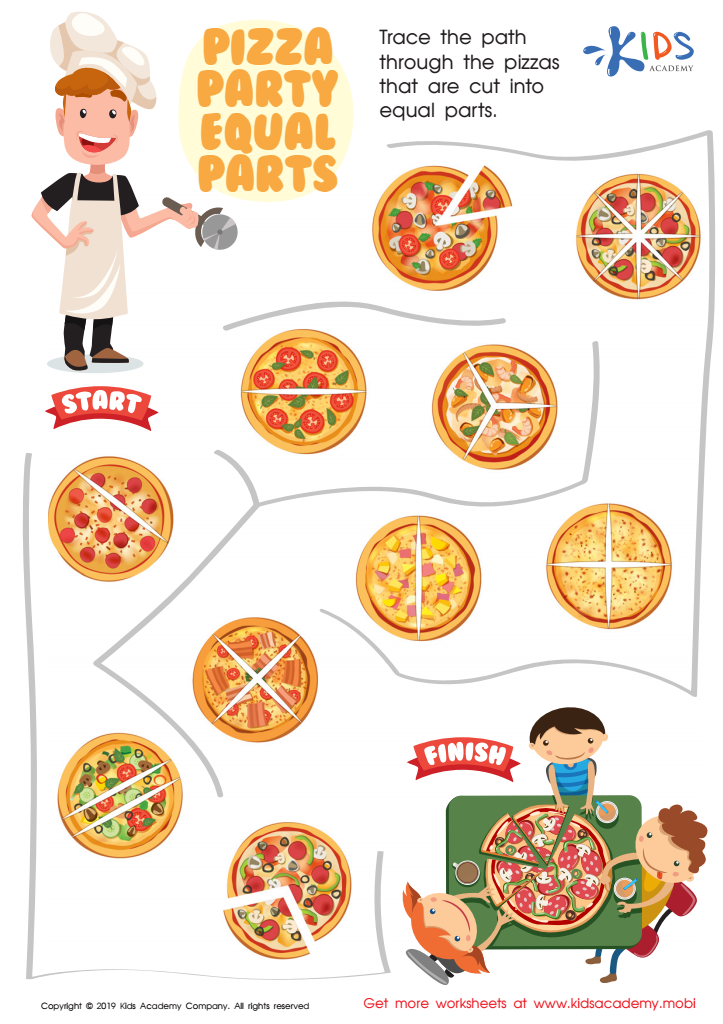
Pizza Party Equal Parts Worksheet
 Assign to My Students











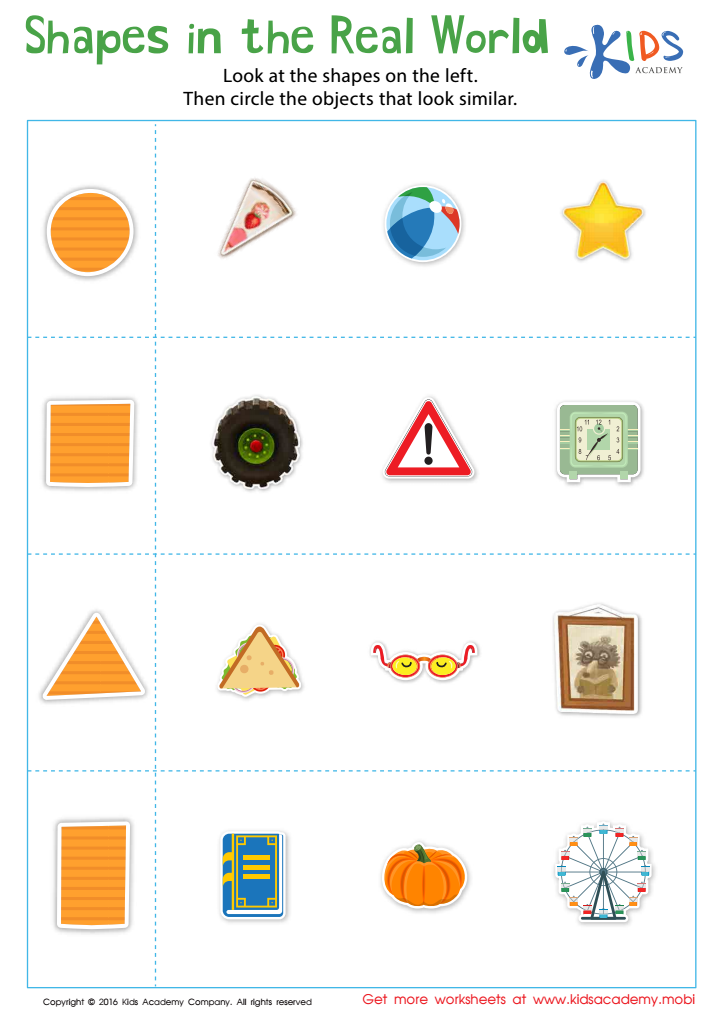
Shapes in the Real World Worksheet
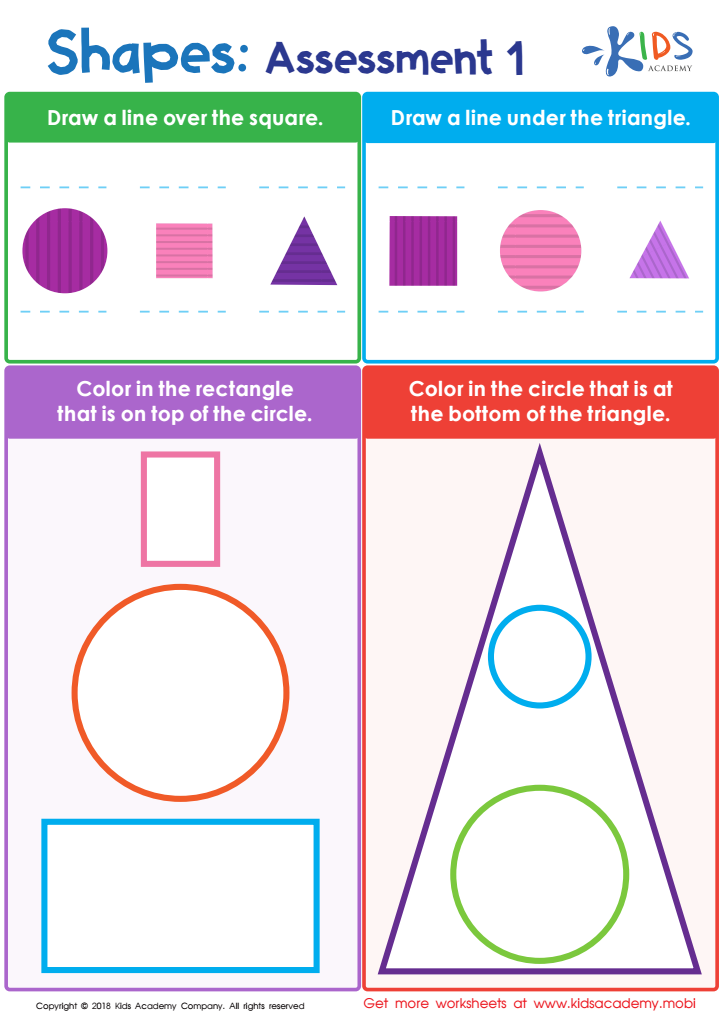
Shapes: Assessment 1 Worksheet
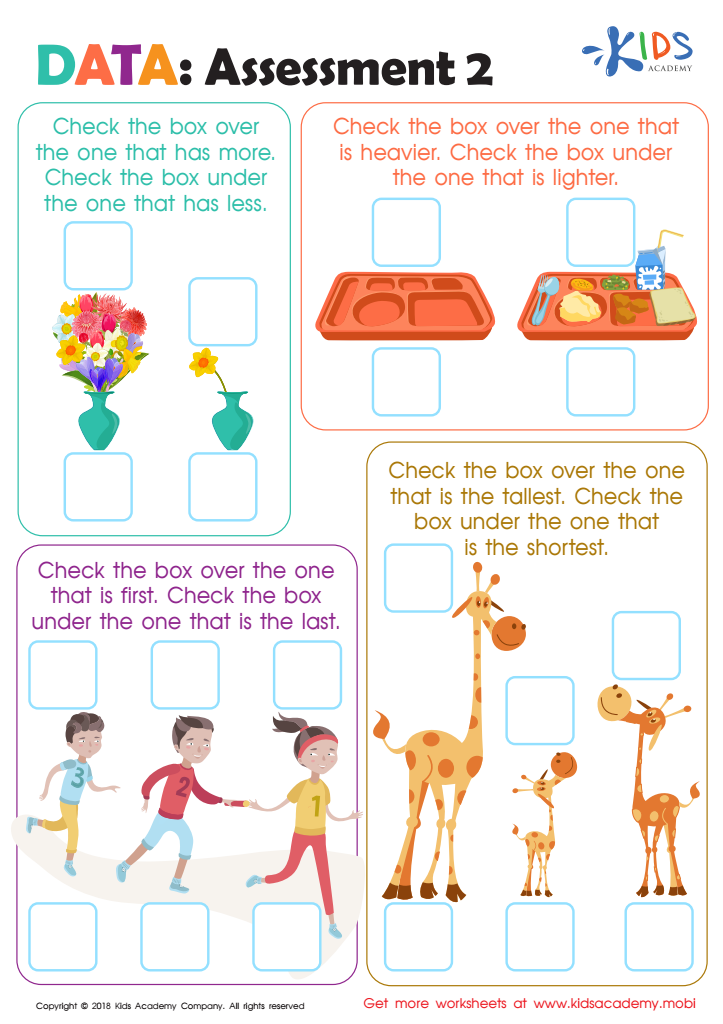
Data: Assessment 2 Worksheet








Parents and teachers should prioritize the development of problem-solving abilities in geometry for children ages 4-7 because these skills are foundational for a wide range of cognitive, social, and academic competencies. At this age, children's brains are highly receptive to new concepts, making it an ideal time to introduce geometry.
First, problem-solving in geometry encourages critical thinking. As children learn to recognize shapes, identify spatial relationships, and understand measurements, they enhance their analytical skills. This ability to analyze and approach challenges systematically builds a strong cognitive framework that benefits future learning in math and science.
Second, geometry promotes creativity and imagination. When students engage in drawing, constructing shapes, or visualizing objects from different perspectives, they cultivate innovative thinking, which is essential in a variety of fields, from art to technology.
Moreover, strong geometry skills support everyday problem-solving. Whether it’s organizing a space, understanding maps, or playing games that require spatial reasoning, these skills have practical applications in children's lives.
Finally, fostering enthusiasm for geometry early on helps instill a positive attitude toward mathematics, setting a lifelong foundation for curiosity and learning. Thus, investing in geometry problem-solving skills is crucial for holistic child development.








