Animal identification Numbers Worksheets for Ages 4-7
4 filtered results
-
From - To
Discover our engaging Animal Identification Numbers Worksheets, designed specifically for ages 4-7. These printable worksheets make learning numbers fun and interactive by combining educational activities with adorable animal illustrations. Children will enhance their numerical skills, learn to count, and improve their ability to recognize and identify numbers through various enjoyable tasks. The worksheets are perfect for preschoolers and early elementary students, fostering a love for learning while developing essential math skills. Ideal for both classroom and home use, these resources support teachers and parents in providing an enriching educational experience. Visit now to make math learning an adventure!
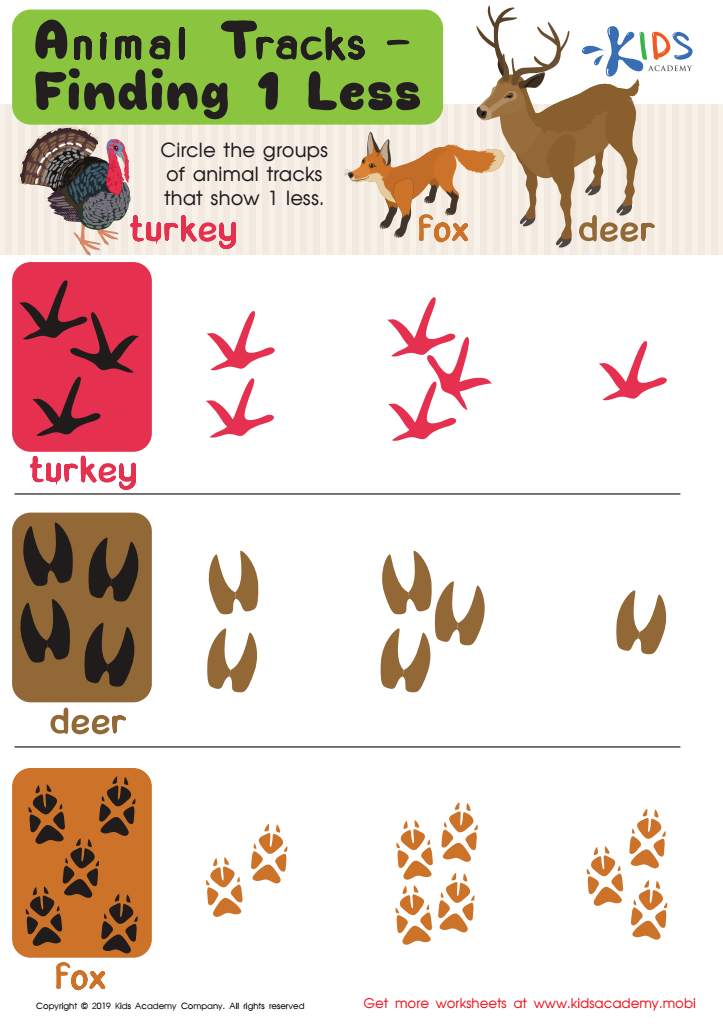
Animal Tracks: Find 1 Less Worksheet
 Assign to My Students
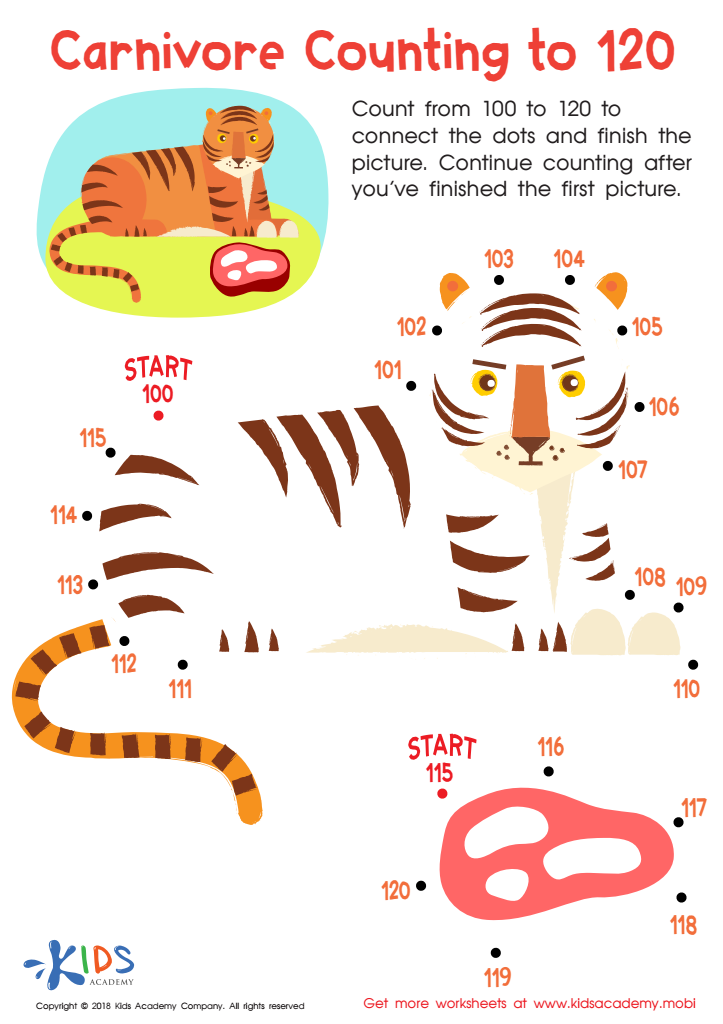
Carnivore Counting to 120 Worksheet
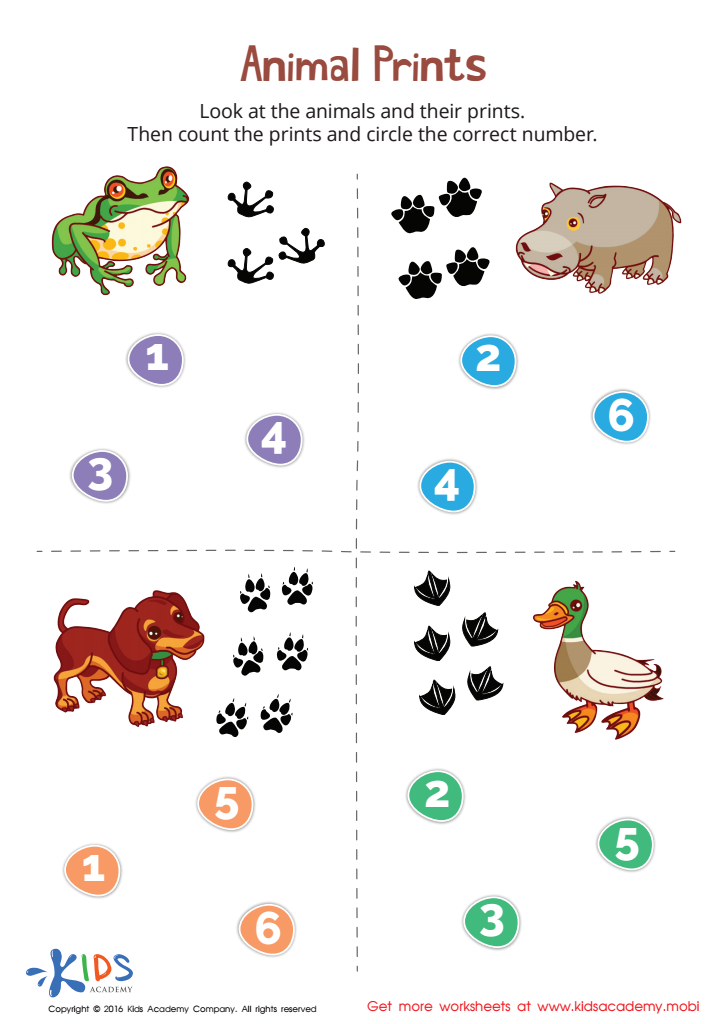
Animal Prints Match-Up Worksheet
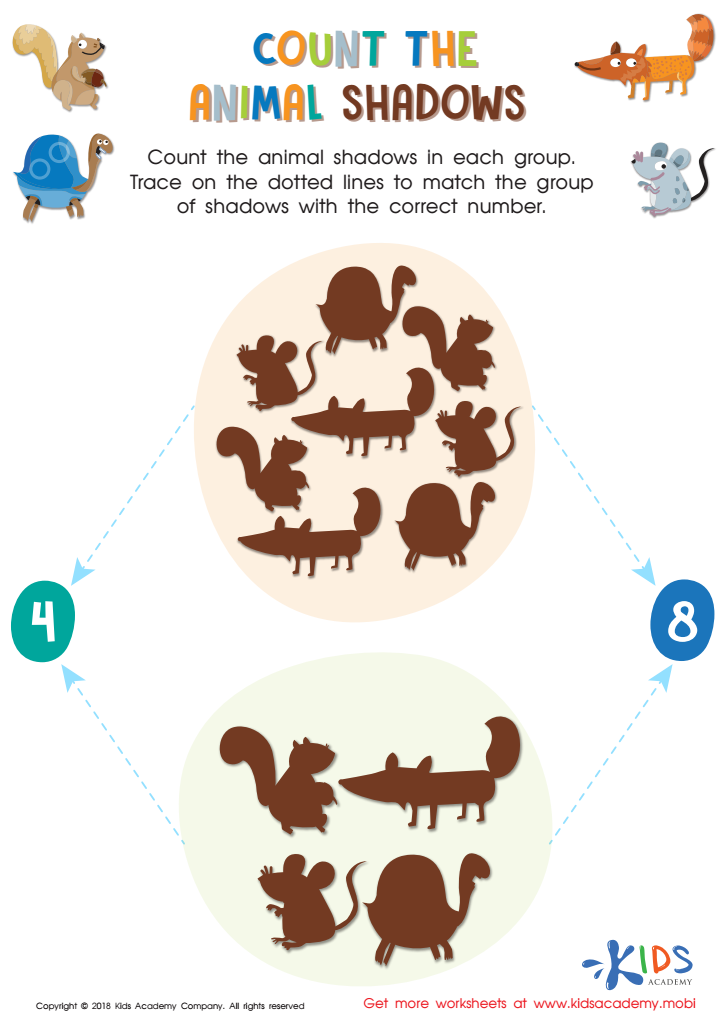
Count the Animal Shadows Worksheet







Caring about Animal Identification Numbers (AINs) for children ages 4-7 can play a crucial role in early development and learning for several reasons. Firstly, AINs offer a structured way to introduce young learners to the concept of categorization, laying a foundational understanding of various species and their unique characteristics. This can foster a sense of curiosity and appreciation for biodiversity, helping children develop an early interest in the natural world.
Furthermore, incorporating AINs in teaching can enhance cognitive skills like memory, attention, and problem-solving. When children learn to associate numbers with specific animals, they practice recognizing patterns and making connections, which are vital for cognitive development.
Lastly, parents and teachers can leverage AIN-based activities to blend learning with play, making education fun and engaging. Interactive games, flashcards, and storybooks that feature AINs can invigorate lessons, holding children's attention longer and increasing information retention.
By integrating AINs into early education, we not only make learning enjoyable but also nurture a generation that is more informed and considerate of animal life, supporting broader educational objectives like empathy, environmental stewardship, and scientific literacy.








