Basic Counting Numbers Worksheets for Ages 4-7
3 filtered results
-
From - To
Discover our engaging "Basic Counting Numbers Worksheets for Ages 4-7" designed to make early math learning fun and interactive! These carefully crafted worksheets help young learners grasp fundamental counting skills from 1 to 20, using vibrant illustrations and simple exercises. Perfect for home or classroom use, our activities promote number recognition, enhance fine motor skills, and build a strong foundation for future math success. Ideal for preschoolers and kindergarteners, these printable resources cater to different learning styles, ensuring that every child can enjoy and benefit from them. Boost your child's confidence in math with our essential counting worksheets!
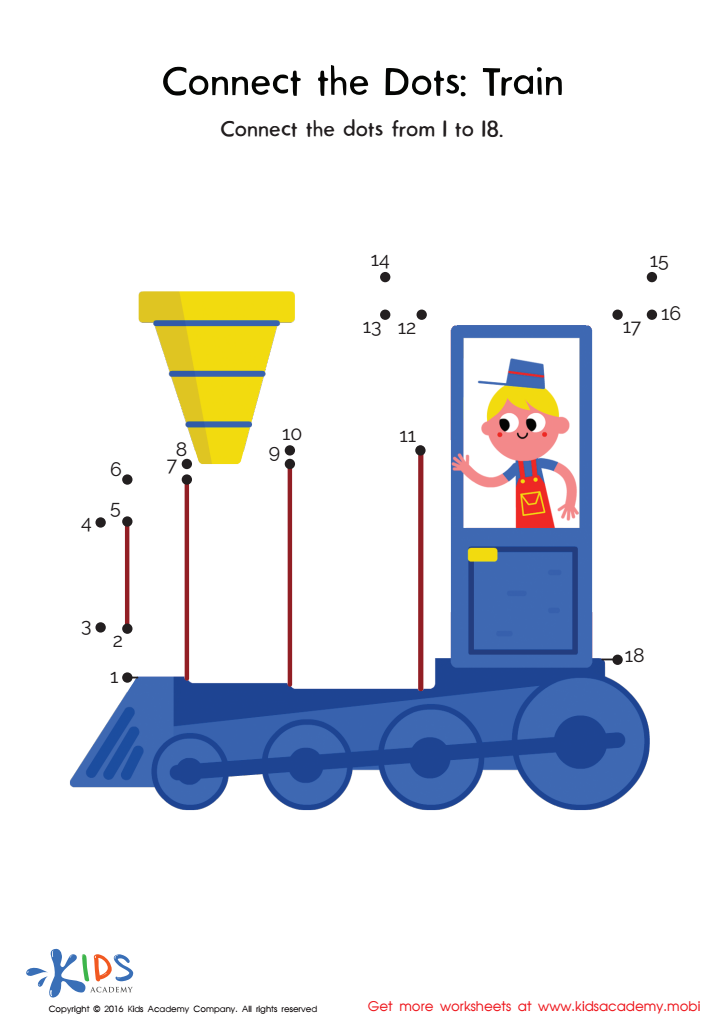
 Assign to My Students
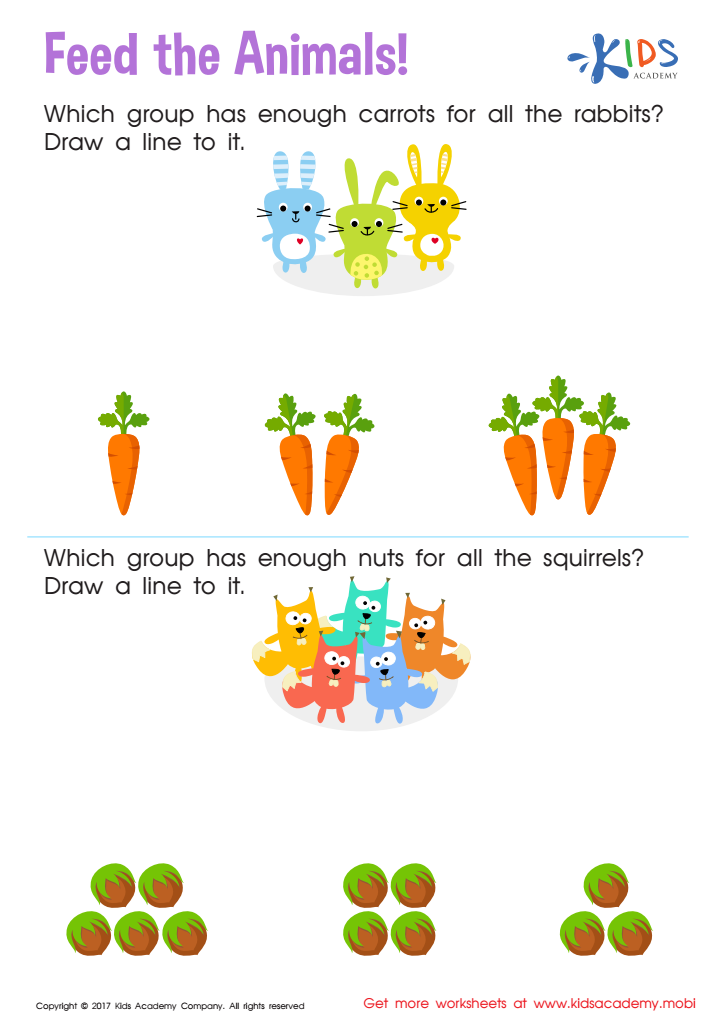
Count and Match: Feed the Animals Worksheet
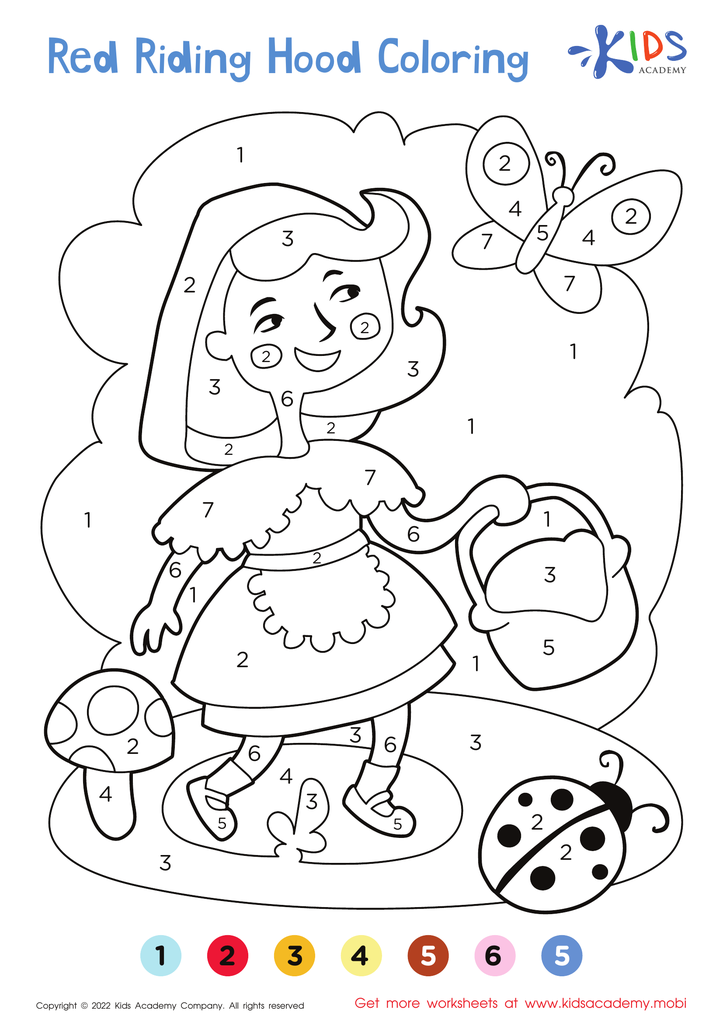
Little Red Riding Hood – Coloring by Numbers








Counting is one of the fundamental building blocks of mathematics and is crucial for young children's cognitive development. For ages 4-7, mastering basic counting numbers—a sequence of numbers starting from 1, 2, 3, and onward—is essential for several reasons. Firstly, it lays the groundwork for more sophisticated mathematical concepts, including addition, subtraction, multiplication, and division. These early numeracy skills are critical for academic success in later years.
Secondly, counting has practical applications in daily life, helping children understand quantities, measure distances, and manage time. From counting toys to recognizing numbers on a clock, these skills are used frequently, making everyday activities more manageable and meaningful.
Moreover, the ability to count fosters a child's confidence and independence. When children can count, they feel more competent in various settings—be it in the classroom, at home, or during playtime. This, in turn, promotes a positive attitude towards learning and exploration.
Good counting skills are also closely linked with language development. As children learn to count, they expand their vocabulary and improve their ability to follow sequences, both of which are crucial for reading and writing.
In essence, for parents and teachers, encouraging basic counting skills paves the way for a child's holistic development, both academically and socially.








