Understanding subtraction Numbers Worksheets for Ages 4-7
4 filtered results
-
From - To
"Understanding Subtraction Numbers Worksheets for Ages 4-7" are carefully crafted to introduce your child to the world of subtraction. These engaging worksheets are designed to build foundational math skills through fun and interactive exercises. Each worksheet guides young learners step-by-step, making subtraction easy to grasp. Perfect for preschool through early elementary, these worksheets help children, ages 4 to 7, visualize and solve subtraction problems. By practicing with these worksheets, your child will strengthen their number sense, boost confidence, and develop essential math skills for future success. Explore and download today to support your child's learning journey!
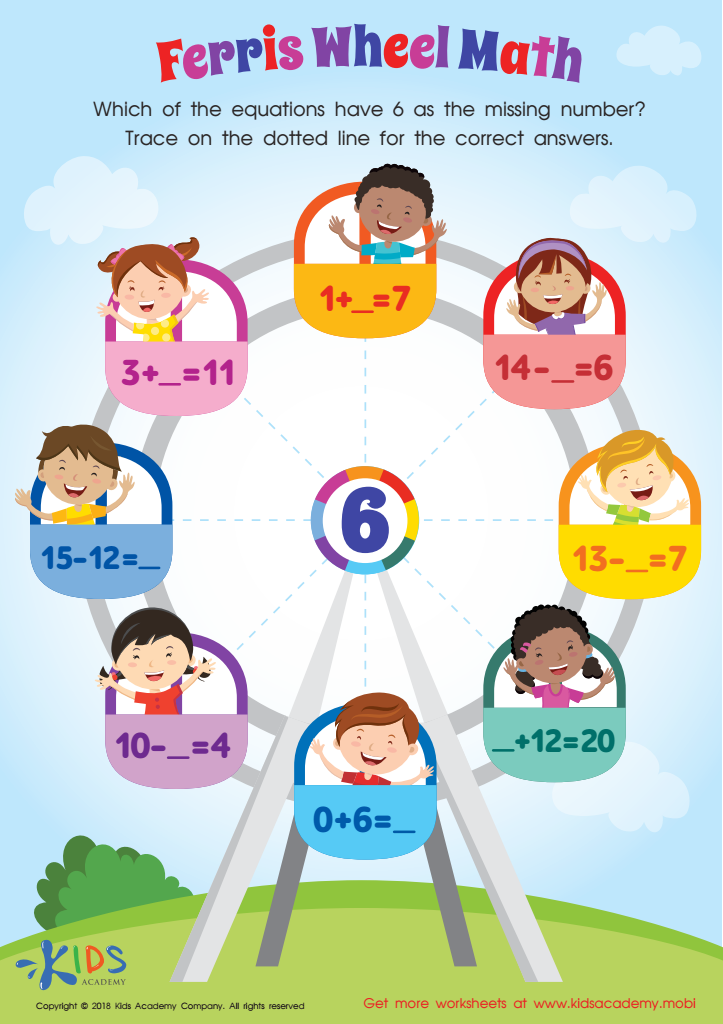
Missing Number: Ferris Wheel Math Worksheet
 Assign to My Students
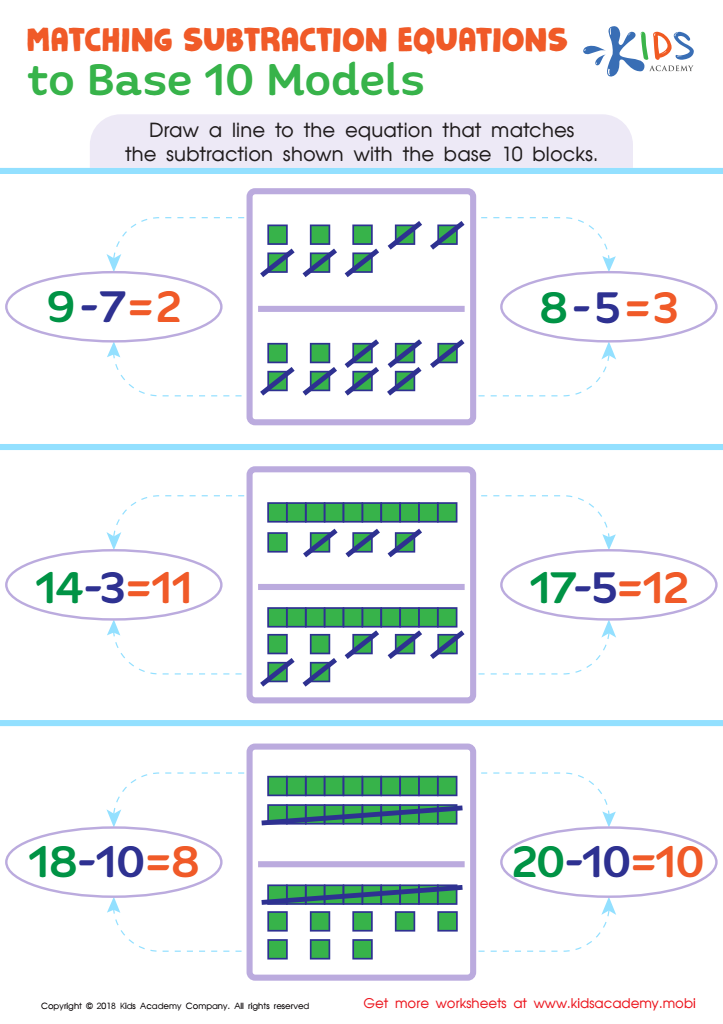
Matching Subtraction Equations To Base 10 Models Worksheet
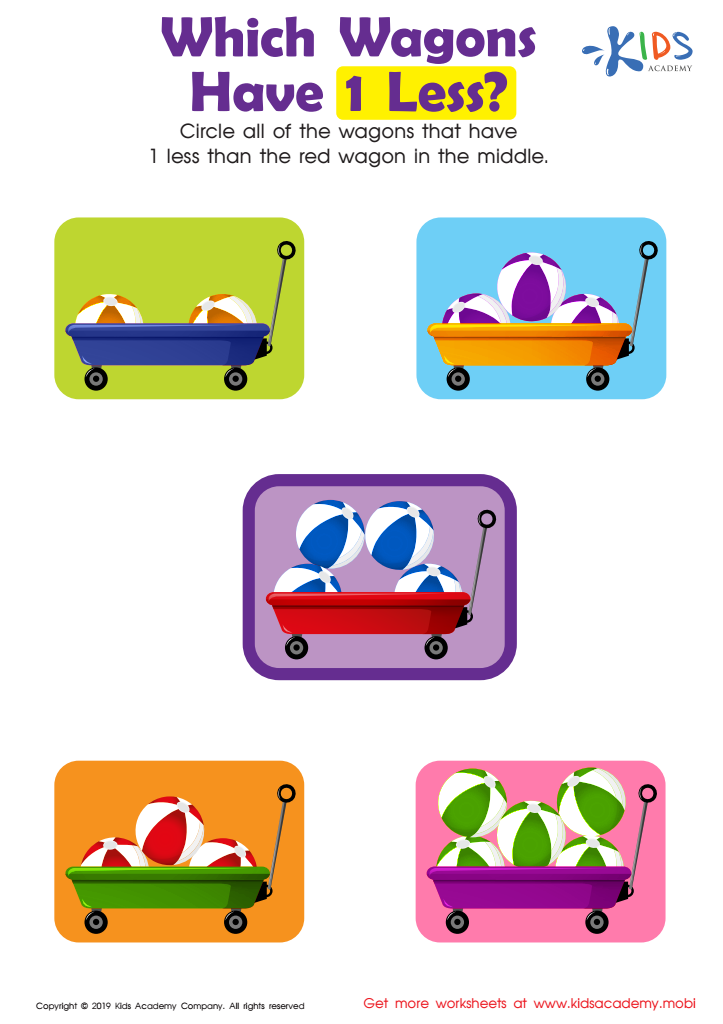
Which Wagons Have 1 Less? Worksheet
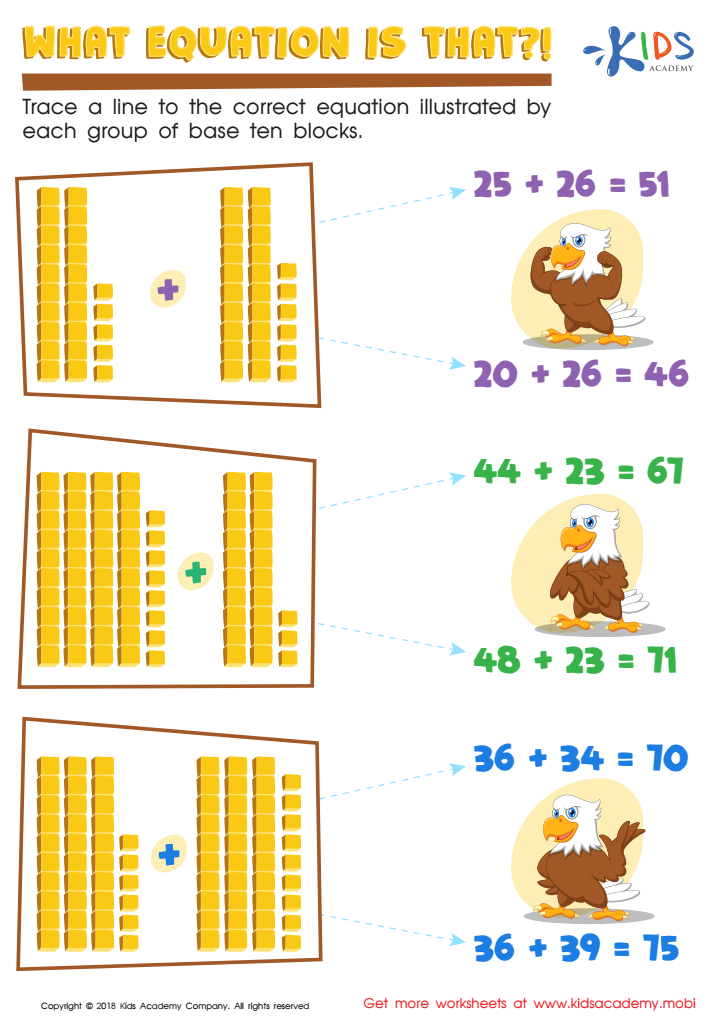
What Equation Is That? Worksheet






Understanding subtraction at an early age is crucial for children aged 4-7 because it forms the foundation for future mathematical learning. Subtraction teaches kids how to handle concepts of take-away, comparison, and difference, which are essential for everyday problem solving. Grasping these concepts early helps develop logical thinking and analytical skills, boosting overall cognitive development.
For teachers, ensuring students understand subtraction solidifies their comprehension of basic arithmetic, making advanced math topics more accessible later on. Without a firm grasp of subtraction, students may struggle with higher-level math concepts, which could lead to long-term academic challenges.
For parents, being involved in their child’s learning journey fosters a supportive learning environment. When parents understand the importance of subtraction, they can provide the right encouragement and resources at home, reinforcing classroom teachings. This collaborative effort between home and school cultivates a well-rounded educational experience.
Overall, focusing on understanding subtraction for young children builds a strong mathematical foundation, ensuring they are equipped with the necessary skills to succeed academically and developing the confidence needed for lifelong learning.








