Check out this FREE Trial Lesson on Math for age 4-7!

Exactly the Same, or Not

Favorites
With answer key
Interactive
  • 4-7
  • Basic Addition Skills
  • Math
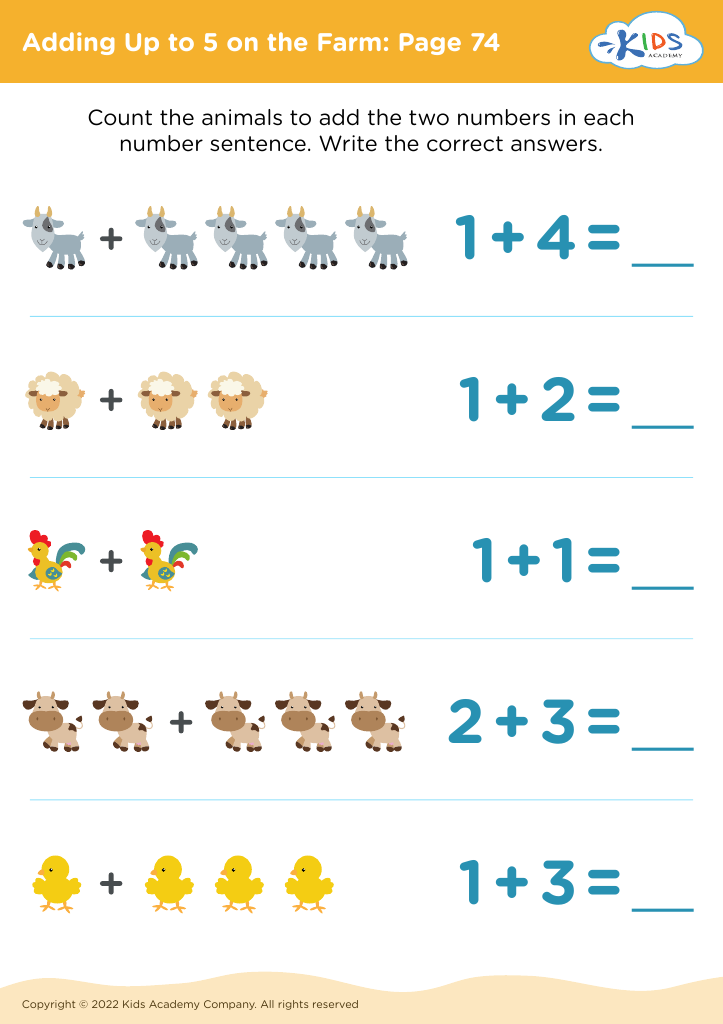
Adding Up to 5 on the Farm: Page 74
Worksheet
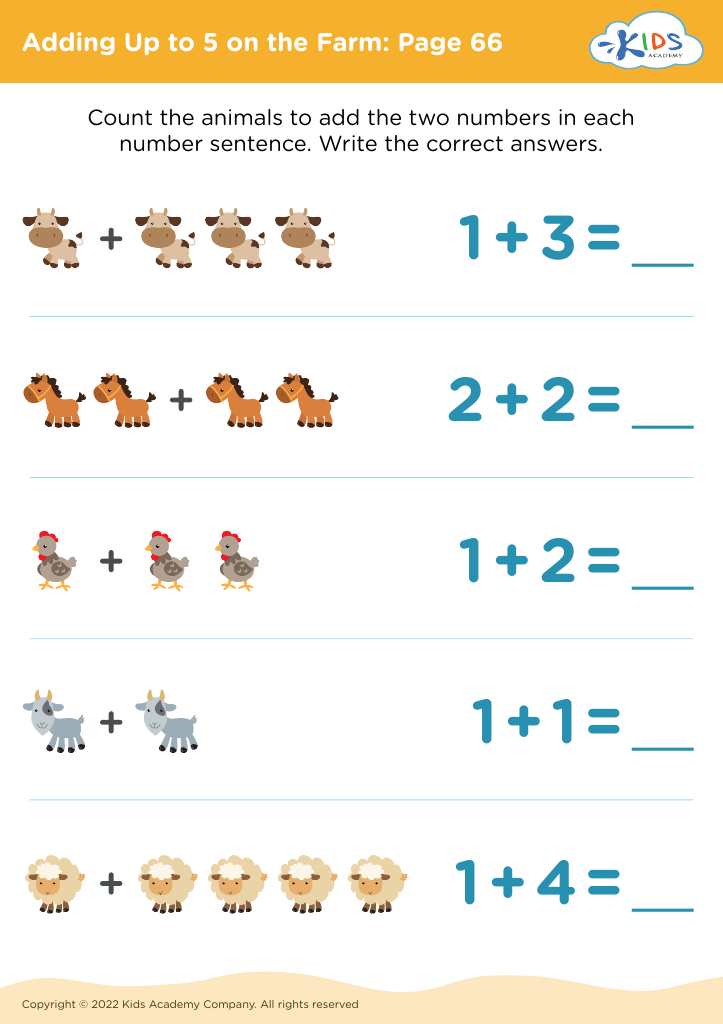
Adding Up to 5 on the Farm: Page 66
Worksheet
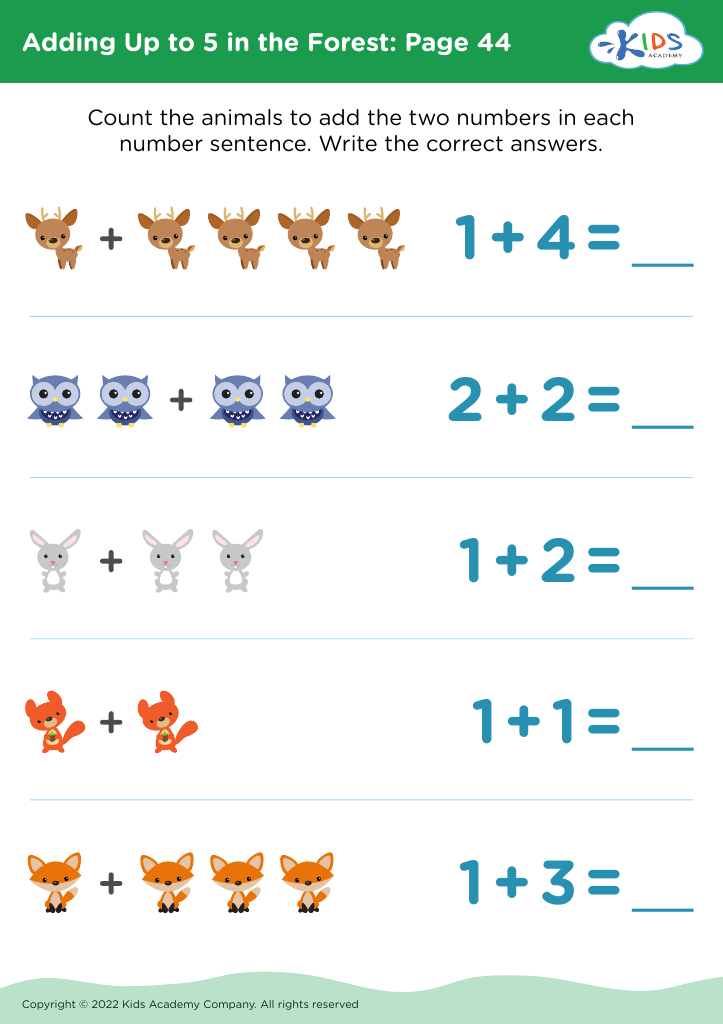
Adding Up to 5 in the Forest: Page 44
Worksheet
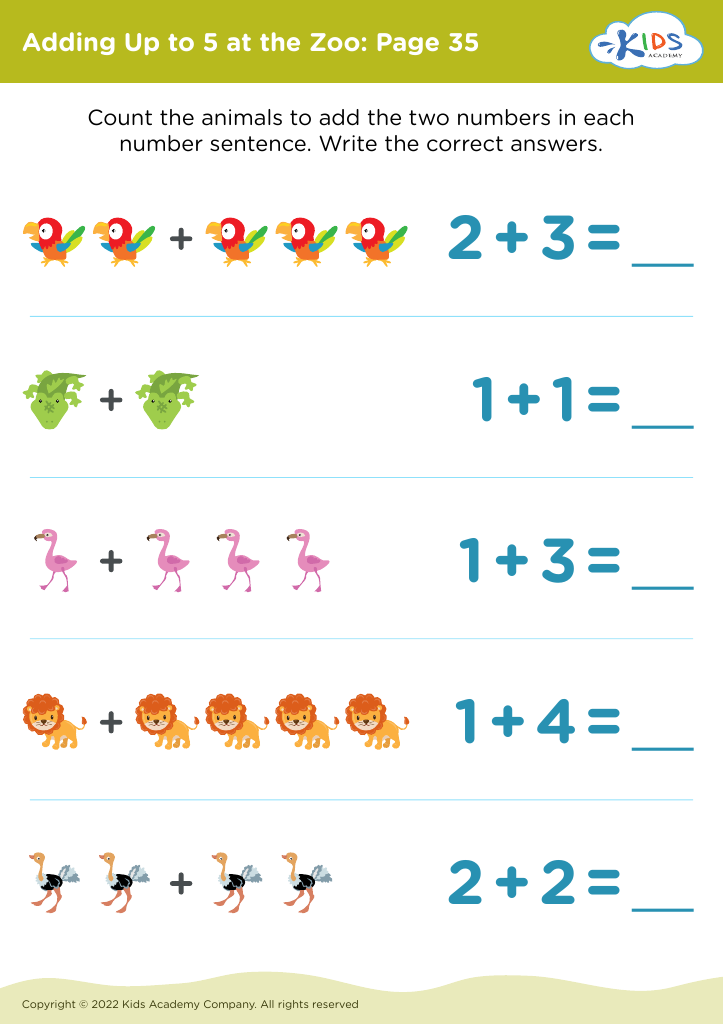
Adding Up to 5 at the Zoo: Page 35
Worksheet
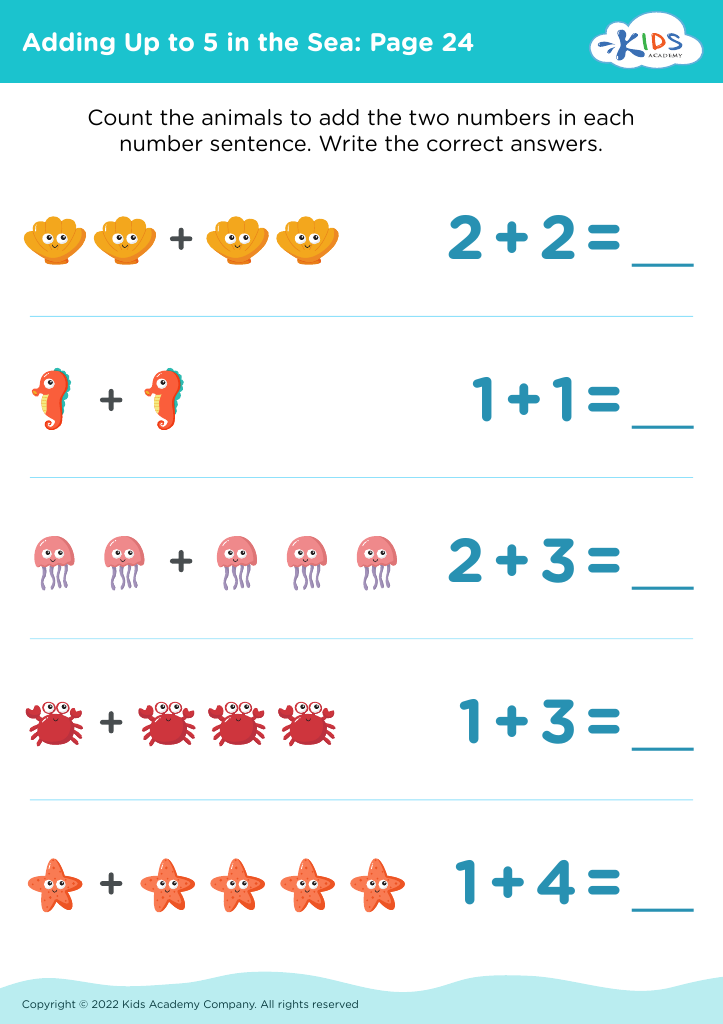
Adding Up to 5 in the Sea: Page 24
Worksheet
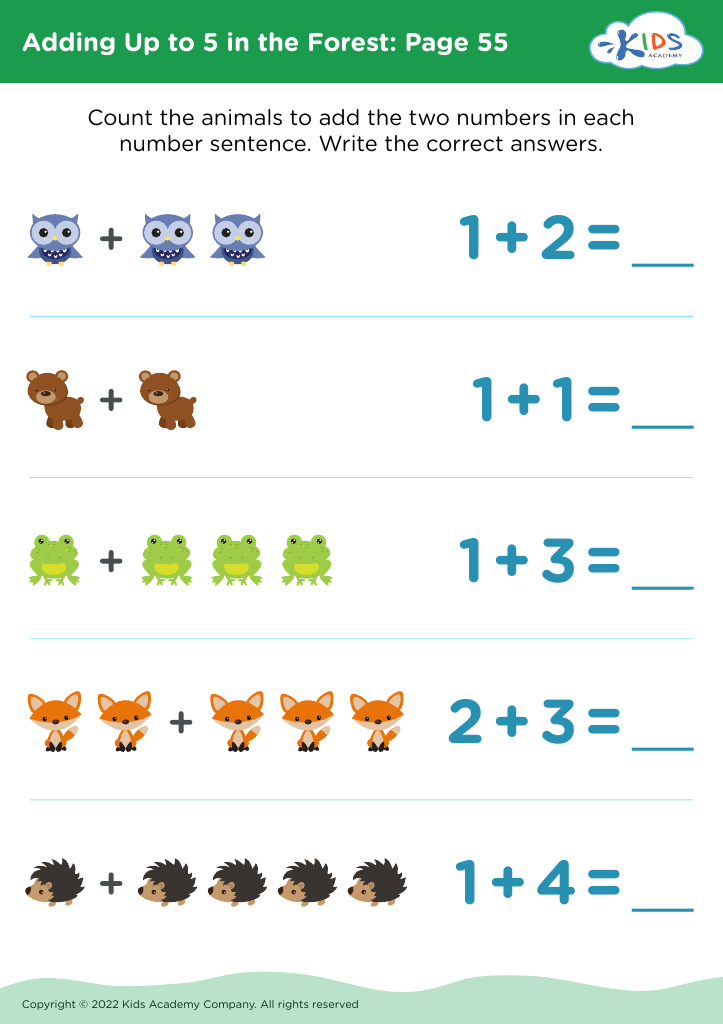
Adding Up to 5 in the Forest: Page 55
Worksheet
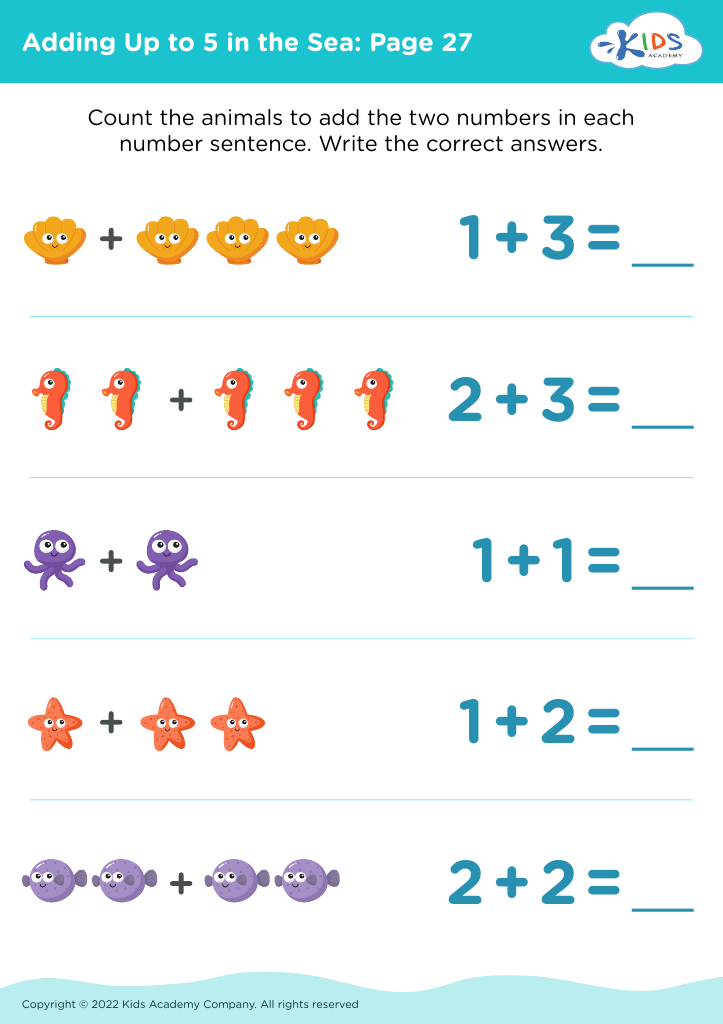
Adding Up to 5 in the Sea: Page 27
Worksheet
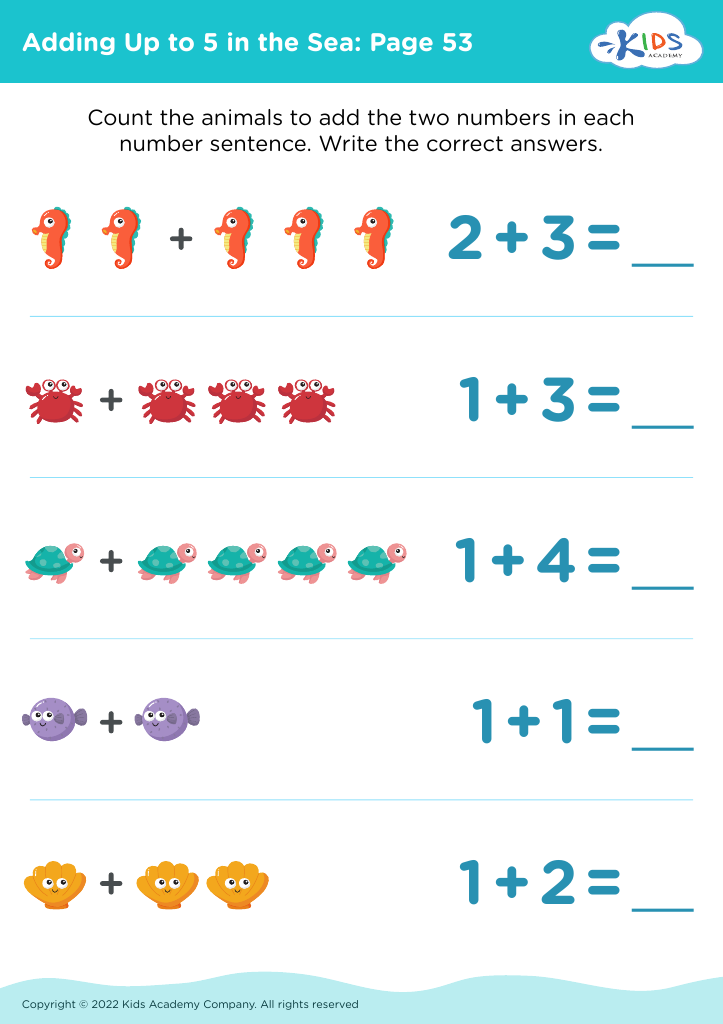
Adding Up to 5 in the Sea: Page 53
Worksheet
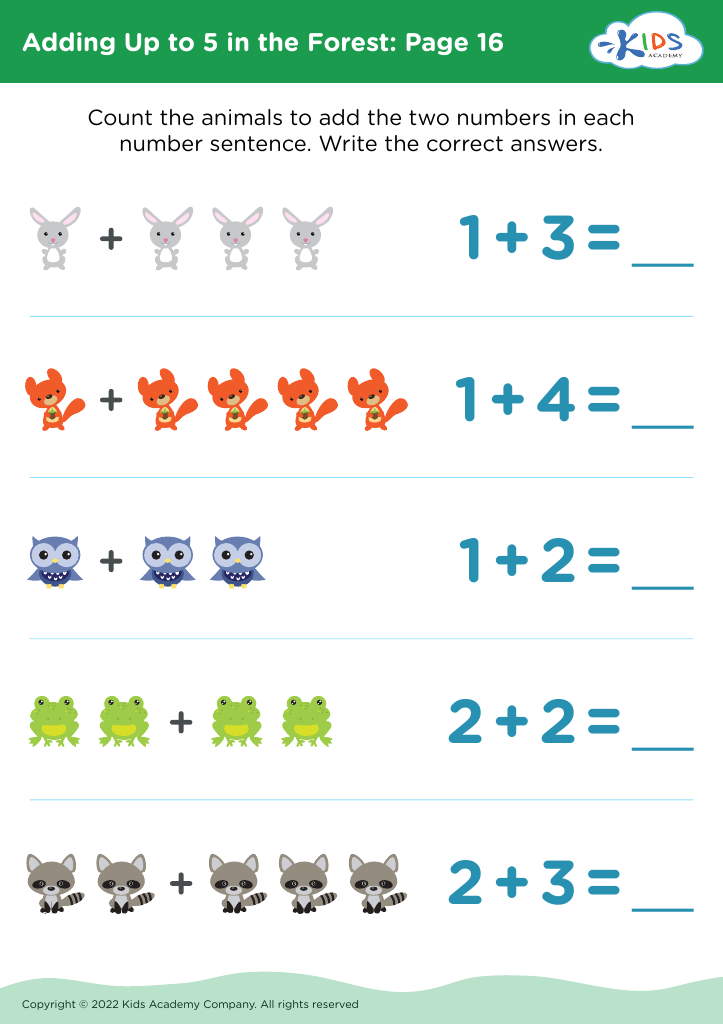
Adding Up to 5 in the Forest: Page 16
Worksheet
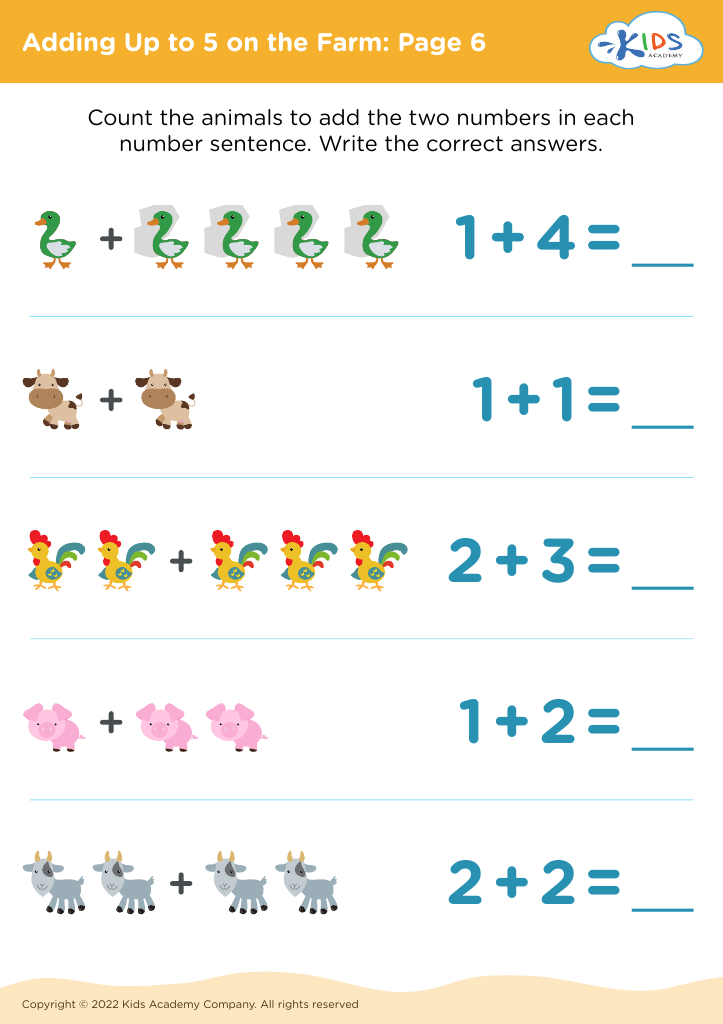
Adding Up to 5 on the Farm: Page 6
Worksheet
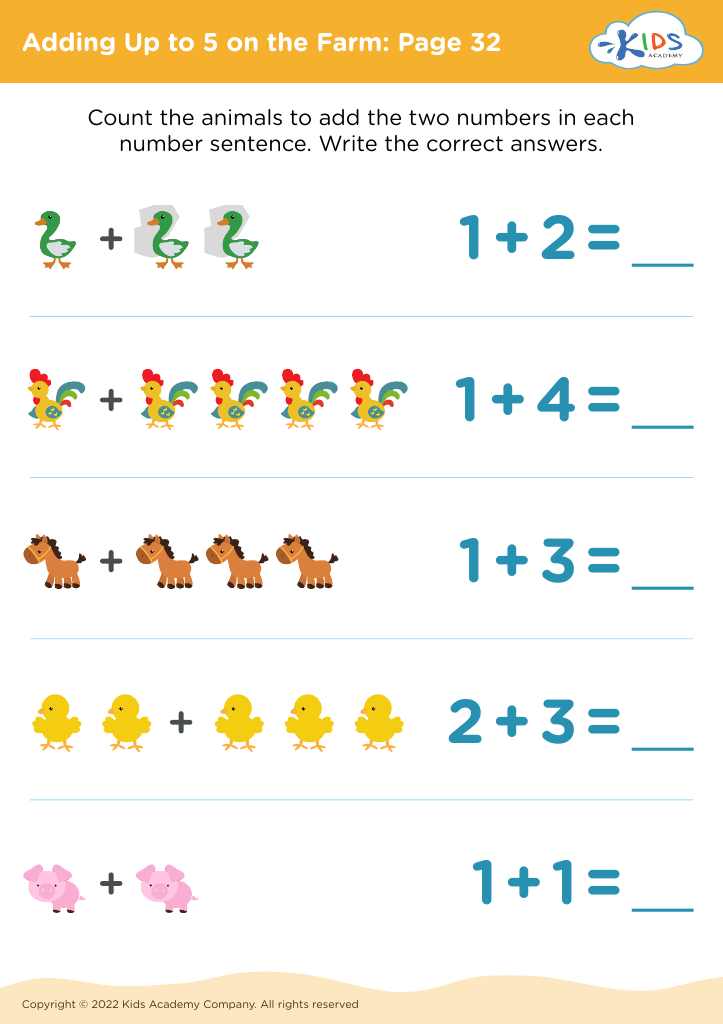
Adding Up to 5 on the Farm: Page 32
Worksheet
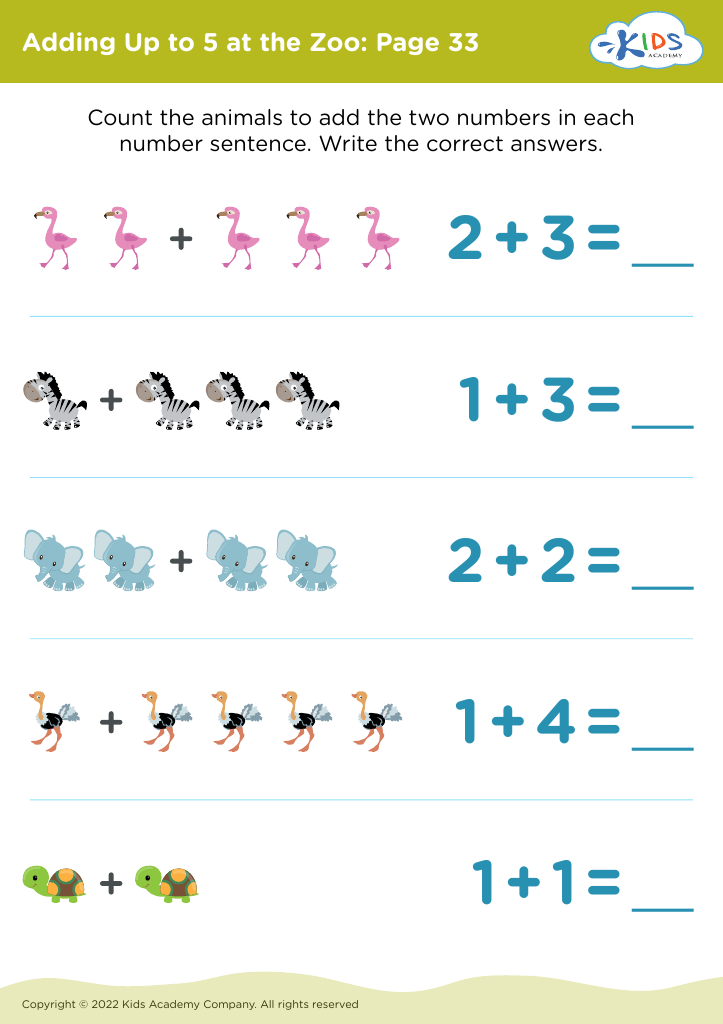
Adding Up to 5 at the Zoo: Page 33
Worksheet
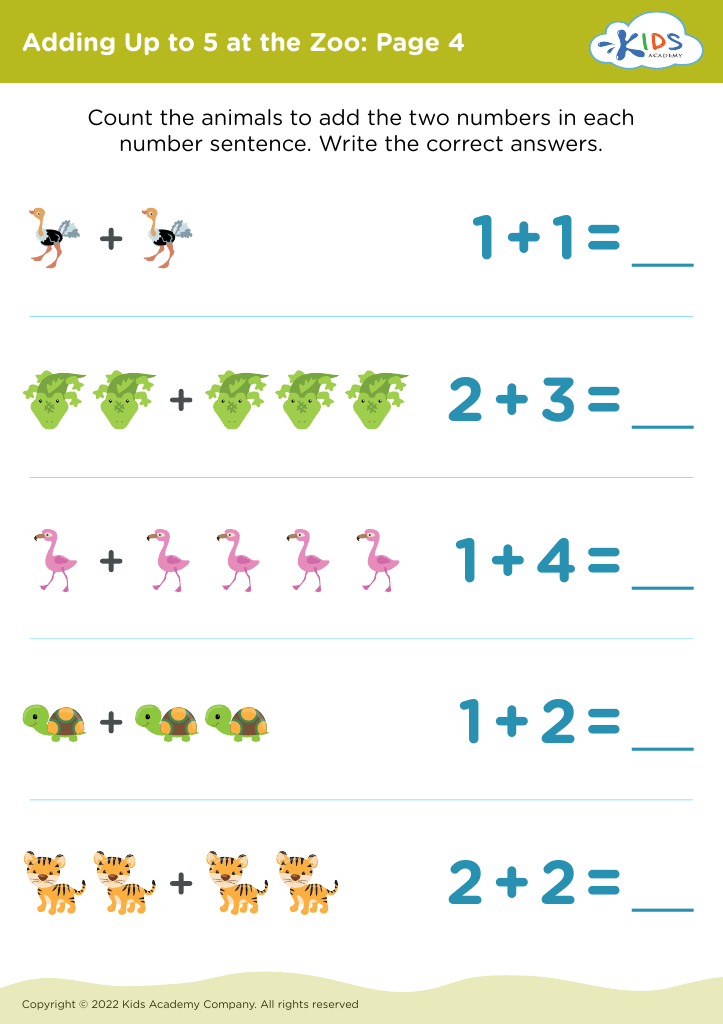
Adding Up to 5 at the Zoo: Page 4

Adding Up to 5 at the Zoo: Page 4

Adding Up to 5 at the Zoo: Page 4
Worksheet
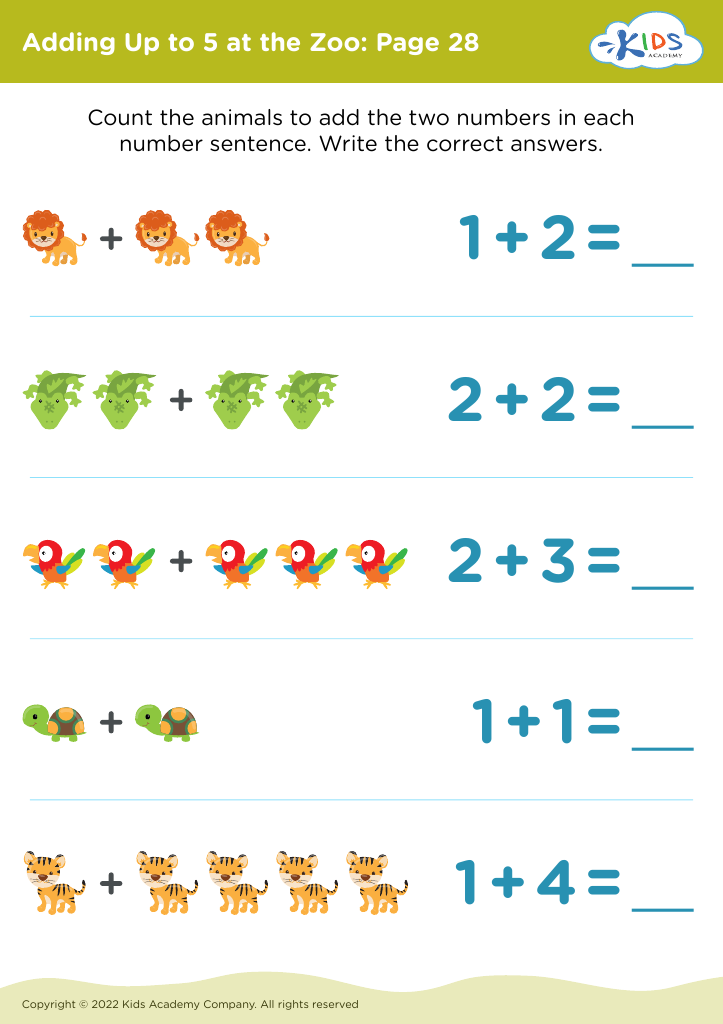
Adding Up to 5 at the Zoo: Page 28
Worksheet
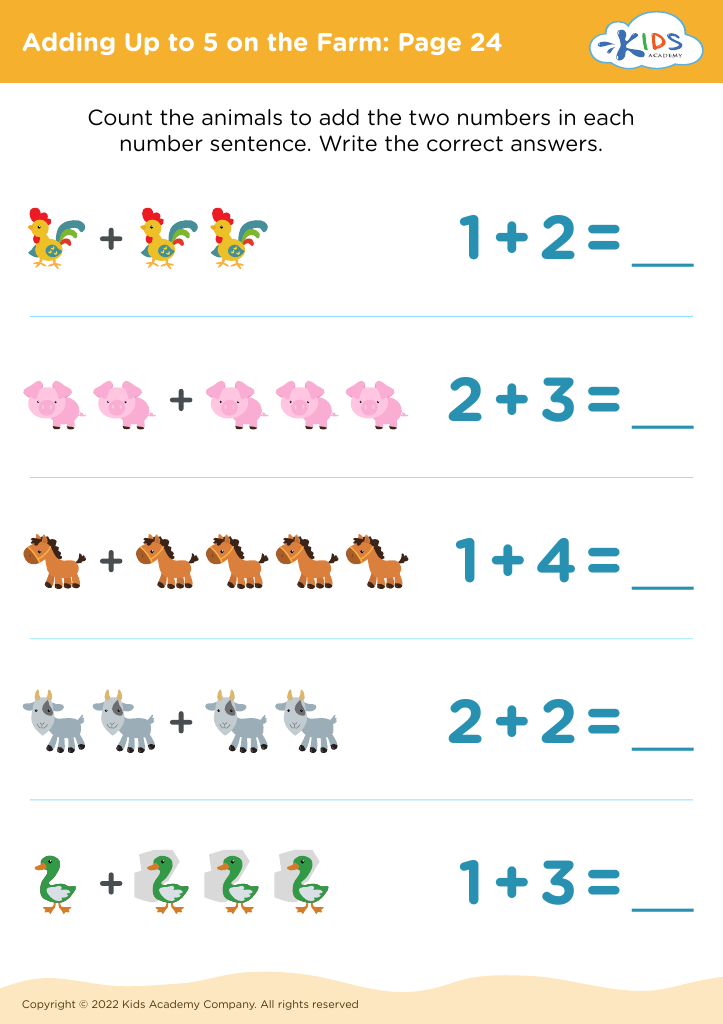
Adding Up to 5 on the Farm: Page 24
Worksheet
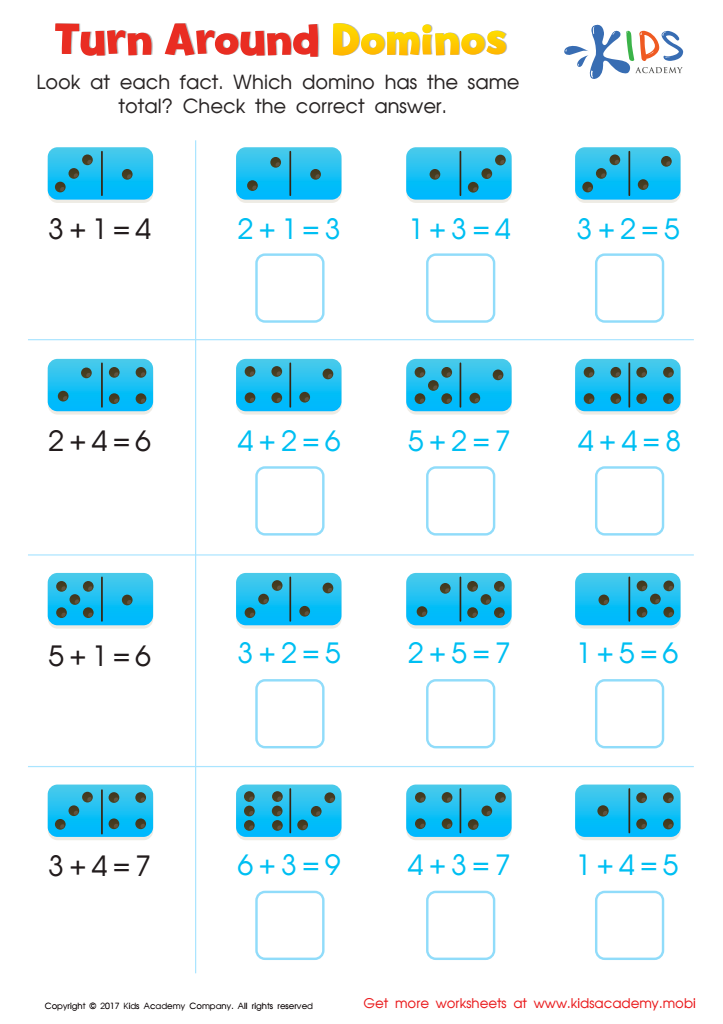
Turn Around Dominos Worksheet

Turn Around Dominos Worksheet

Encourage your child to flex their mental muscles with this math worksheet. Look through the left side's dominos and their values and then check the three boxes on the right. Ask your child if any of the right box's dominos are similar. This requires focus and careful observation.
Turn Around Dominos Worksheet
Worksheet
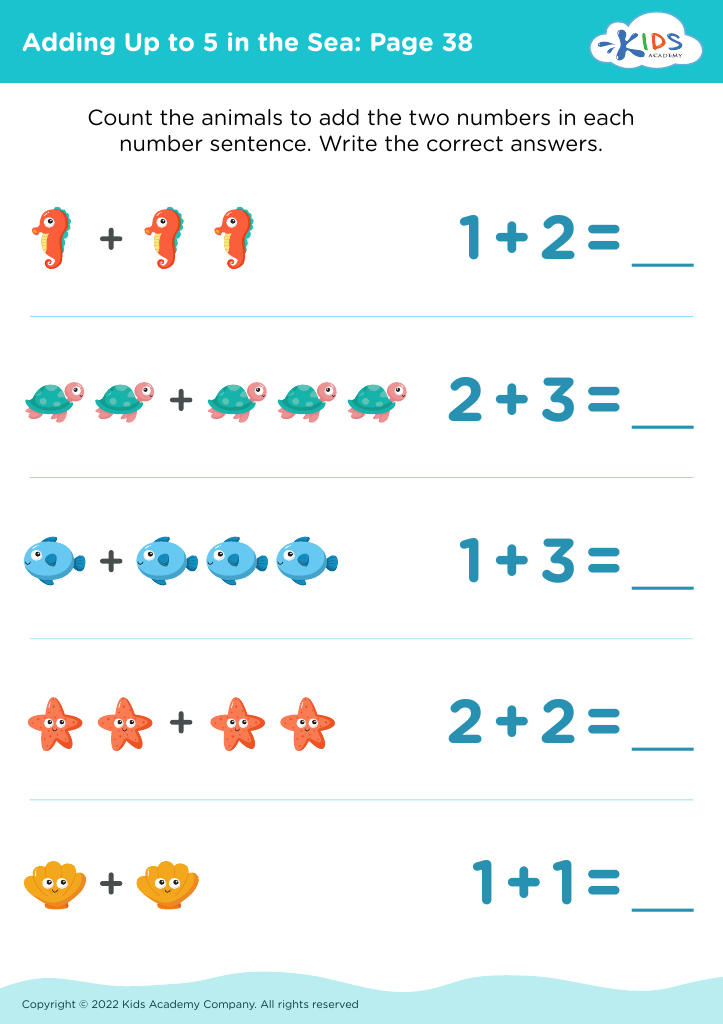
Adding Up to 5 in the Sea: Page 38
Worksheet
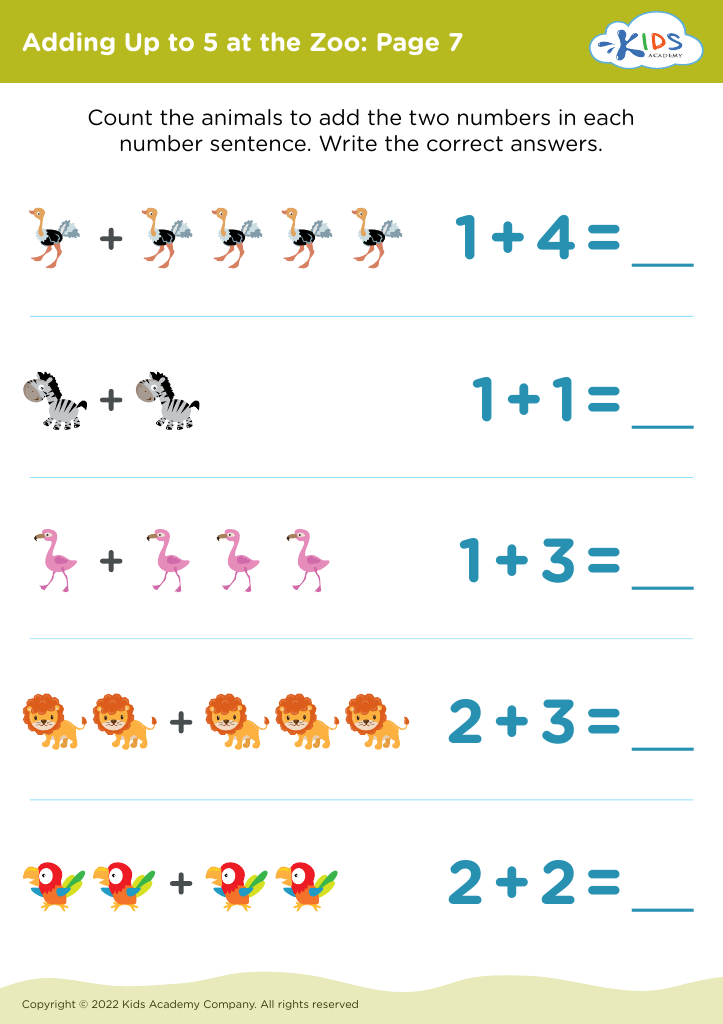
Adding Up to 5 at the Zoo: Page 7

Adding Up to 5 at the Zoo: Page 7

Adding Up to 5 at the Zoo: Page 7
Worksheet
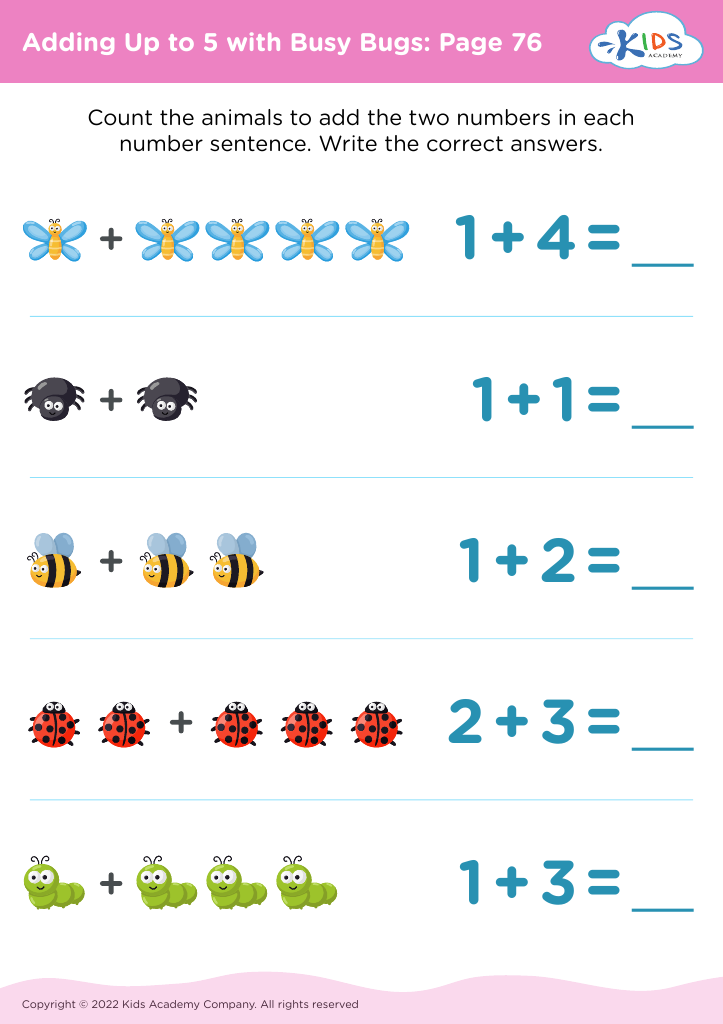
Adding Up to 5 with Busy Bugs: Page 76
Worksheet
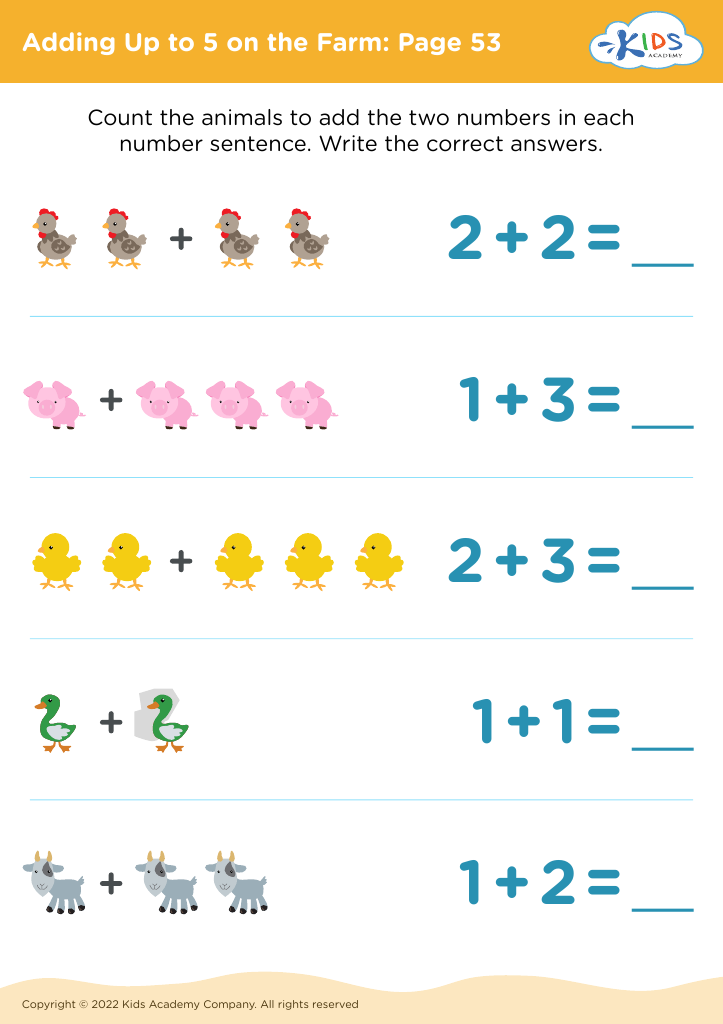
Adding Up to 5 on the Farm: Page 53
Worksheet
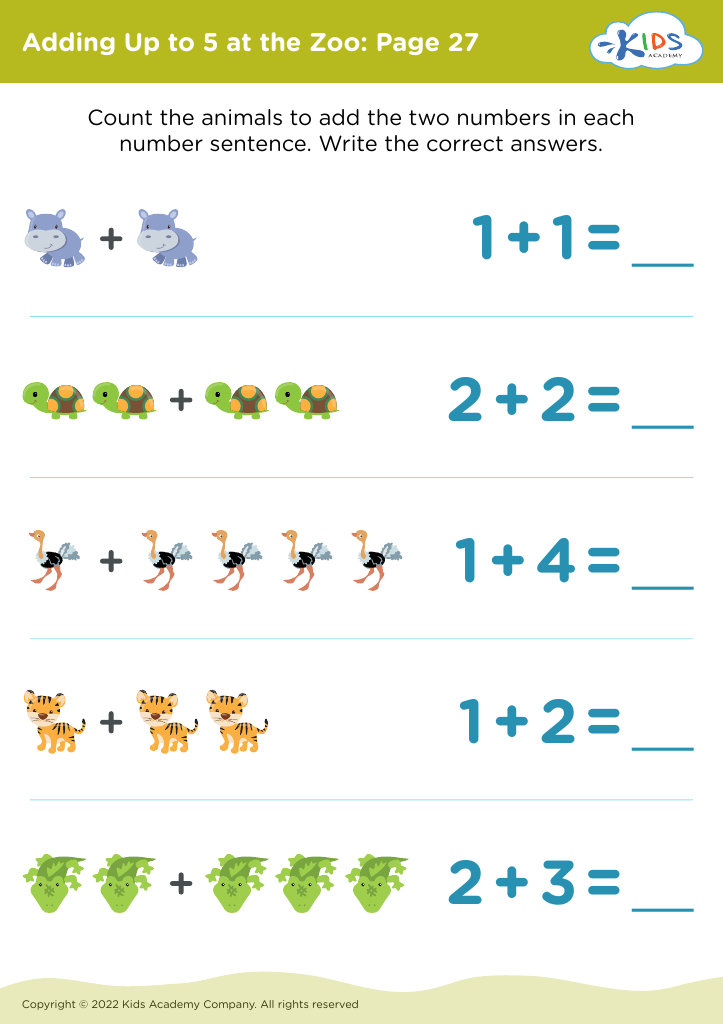
Adding Up to 5 at the Zoo: Page 27
Worksheet
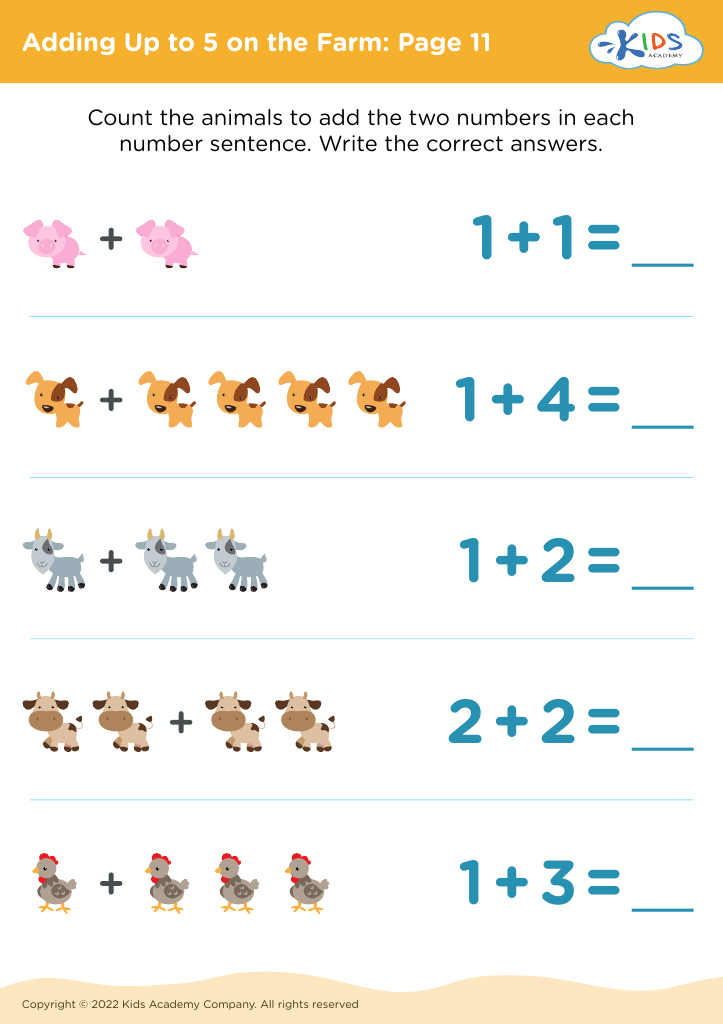
Adding Up to 5 on the Farm: Page 11
Worksheet
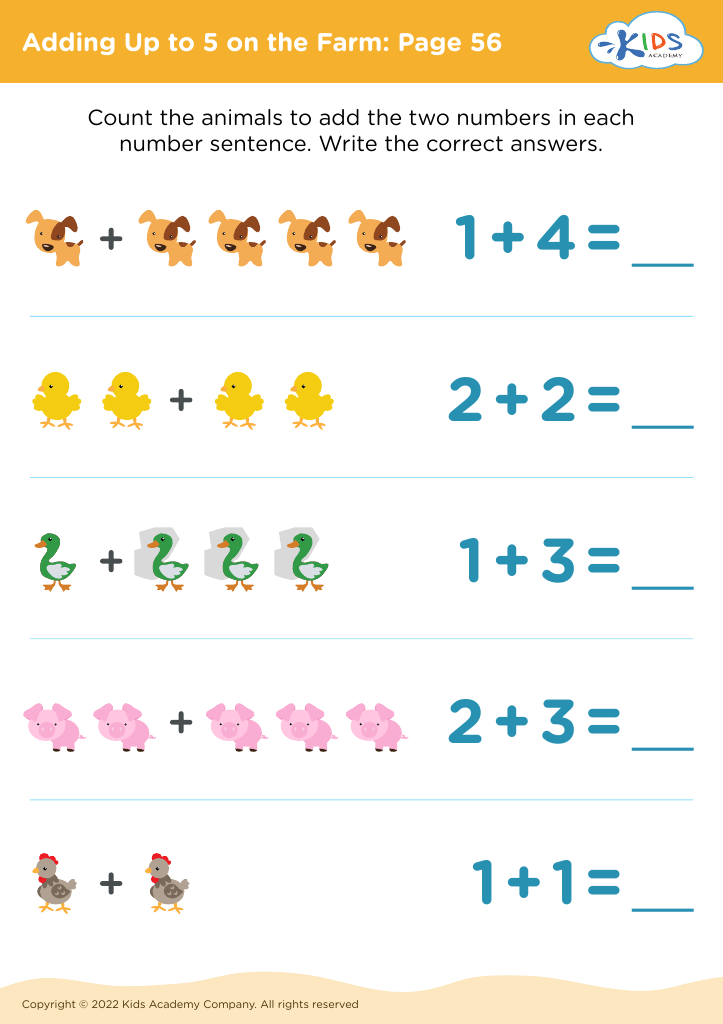
Adding Up to 5 on the Farm: Page 56
Worksheet
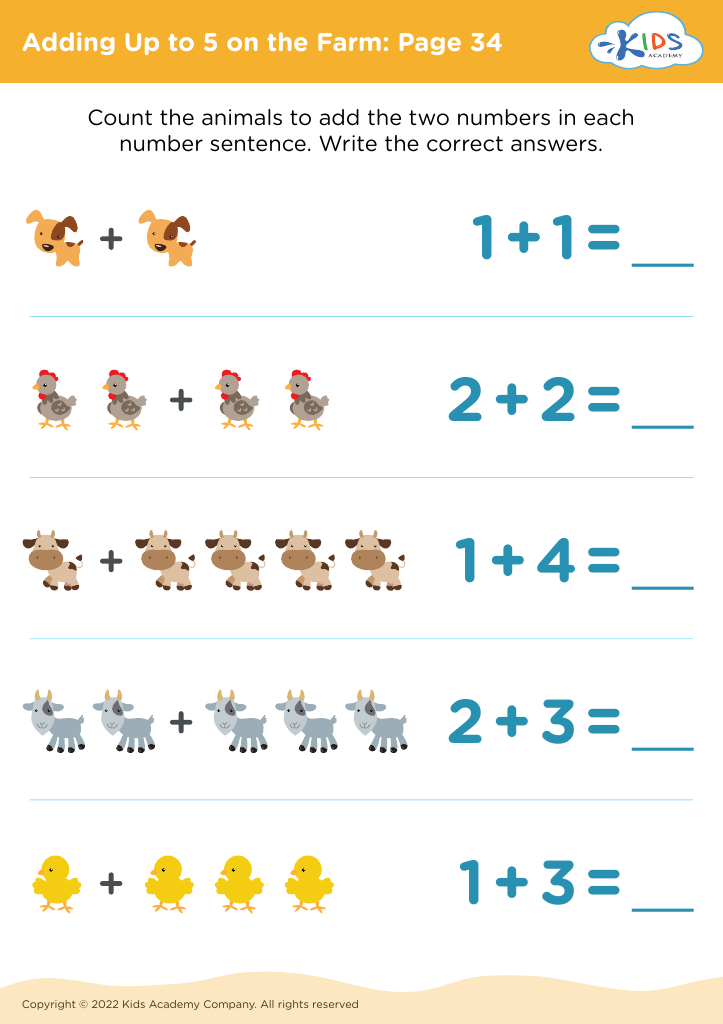
Adding Up to 5 on the Farm: Page 34
Worksheet


Basic addition skills form a foundational element of a child's math education, especially between the ages of 4-7. This stage is crucial as it sets the groundwork for more complex mathematical concepts and problem-solving techniques that children will encounter later in their academic journey. Understanding basic addition helps develop critical thinking and logical reasoning skills. As children start recognizing patterns and relationships between numbers, they become better equipped to approach a variety of important tasks, both in and out of the classroom.

For parents and teachers, focusing on basic addition helps ensure a smoother learning progression. It boosts a child's confidence, making them more apt to engage in and enjoy math-related activities. Moreover, learning addition at an early age aids in everyday scenarios, such as counting objects, understanding time, and measuring quantities. These practical applications not only enhance a child's cognitive development but also foster a sense of independence and competence.

Investing time in teaching basic addition also supports children's social-emotional development. Success in these fundamental skills can encourage a positive attitude towards learning and perseverance. Early achievements in mathematics can provide a solid base for future success, making it essential for parents and teachers to nurture these skills in the formative years.