Comparing object weights Math Worksheets for Ages 4-7
3 filtered results
-
From - To
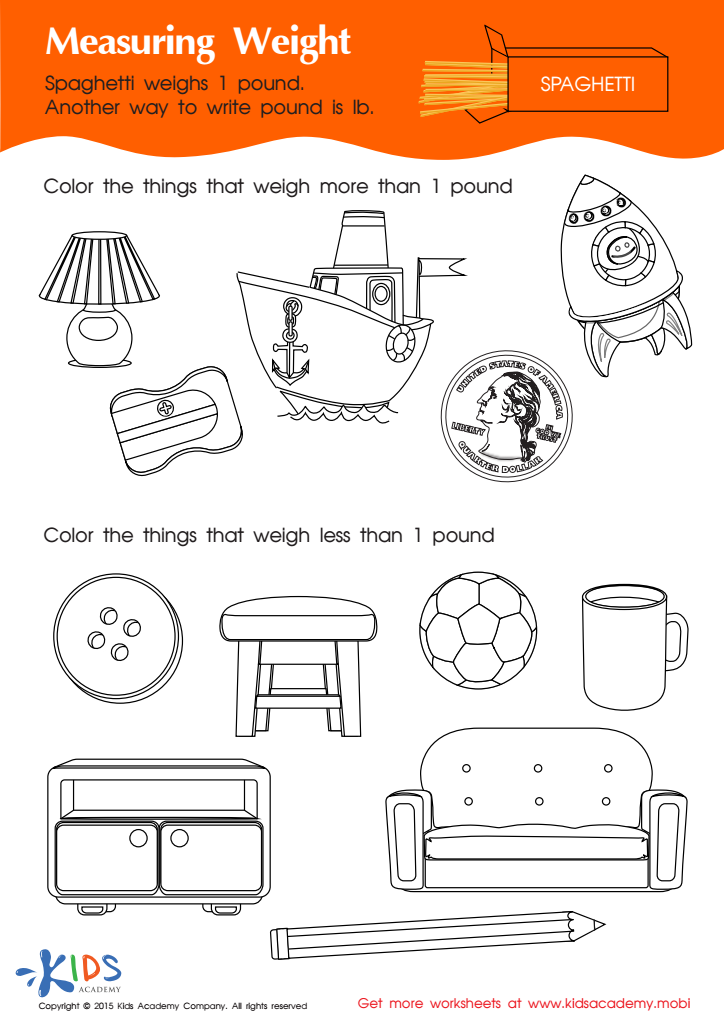
Introduce young learners to the fundamentals of weight comparison with our "Comparing Object Weights Math Worksheets" designed for ages 4-7. Through engaging, hands-on activities, children will practice comparing the weights of different objects, understanding heavier and lighter concepts. These worksheets, correlated with early learning standards, are perfect for building critical thinking skills and foundational math knowledge. Each activity is carefully crafted to be both educational and entertaining, making learning weights fun! Ideal for at-home practice or classroom use, these printable resources support cognitive development and encourage young mathematicians. Prepare your child for academic success with our expertly designed worksheets.
 Assign to My Students
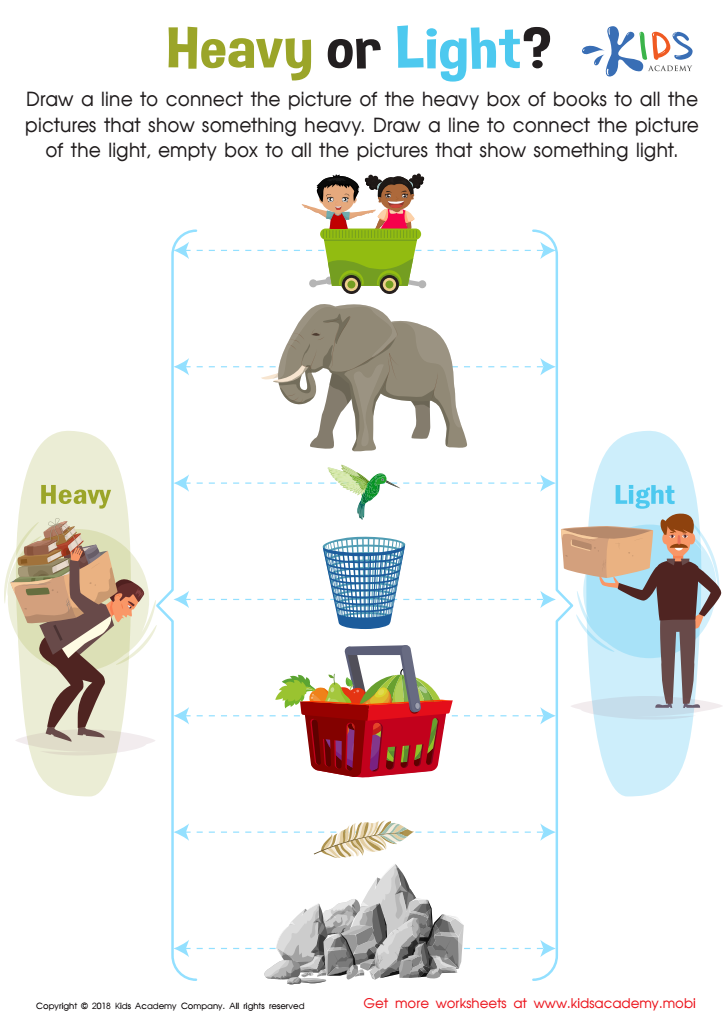
Heavy or Light? Worksheet
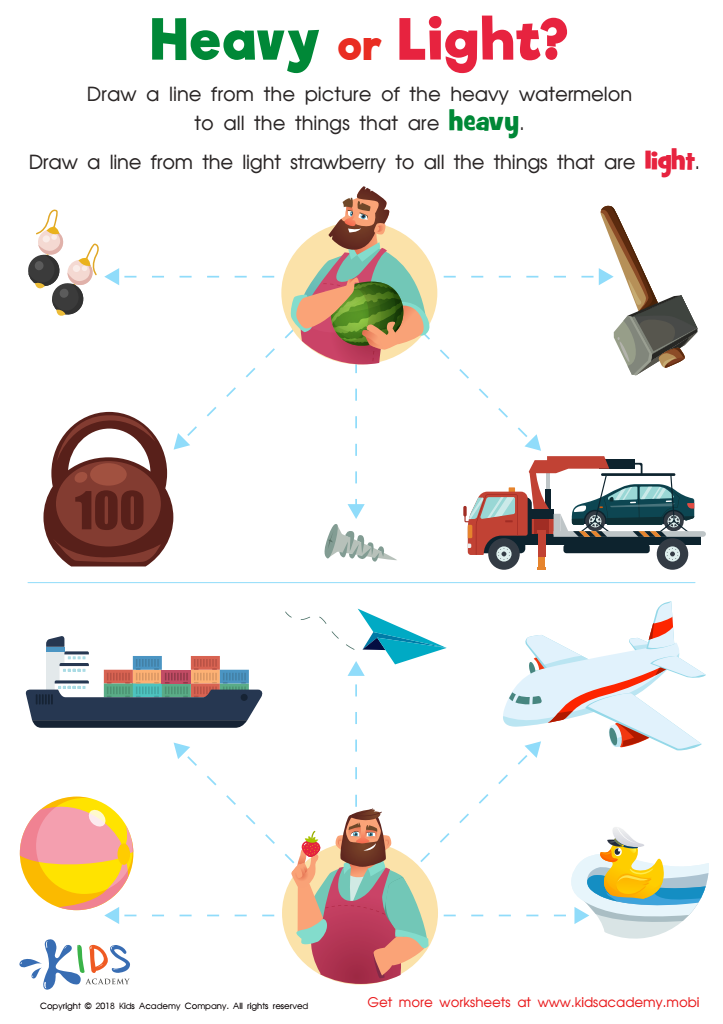
Heavy or Light? Worksheet



.jpg)

.jpg)

Comparing object weights is a fundamental math concept that can greatly influence the cognitive and developmental growth of children ages 4-7. This foundational skill lays the groundwork for a variety of mathematical and scientific principles they will encounter later. By learning to compare weights, children start to grasp the concepts of measurement, estimation, and balance, all of which are crucial for their overall academic development.
Moreover, engaging in weight comparison activities boosts critical thinking and problem-solving skills. Children learn to observe, predict, describe, and reason about the world around them, enhancing their natural curiosity and investigative tendencies. For instance, when they lift two objects and describe which one is heavier, they practice using comparative language and develop an understanding of informational text, both verbal and non-verbal.
Furthermore, hands-on activities, where kids use scales or other tools, foster fine motor skills and hand-eye coordination. Weighing objects can transform abstract math into a tactile and visual experience, making learning more engaging and fun. Beyond academic skills, such interactions encourage social skills as children often work in pairs or groups, promoting cooperative learning and effective communication.
In essence, caring about comparing object weights fosters a holistic approach to early childhood education that addresses intellectual, motor, and social development, preparing children for more complex academic challenges in the future.








