Fraction visualization Math Worksheets for Ages 4-7
8 filtered results
-
From - To
Unlock your child's mathematical potential with our engaging Fraction Visualization Math Worksheets, designed specifically for ages 4-7. These interactive worksheets introduce young learners to the concept of fractions through colorful illustrations and hands-on activities. With a variety of exercises, children will visualize and grasp important fraction concepts, including halves, thirds, and quarters, while building their confidence in math. Ideal for home or classroom use, our worksheets encourage critical thinking and problem-solving skills. Help your child develop a solid foundation in math that will support their future learning journey. Explore our collection today and make learning fractions fun and enjoyable!
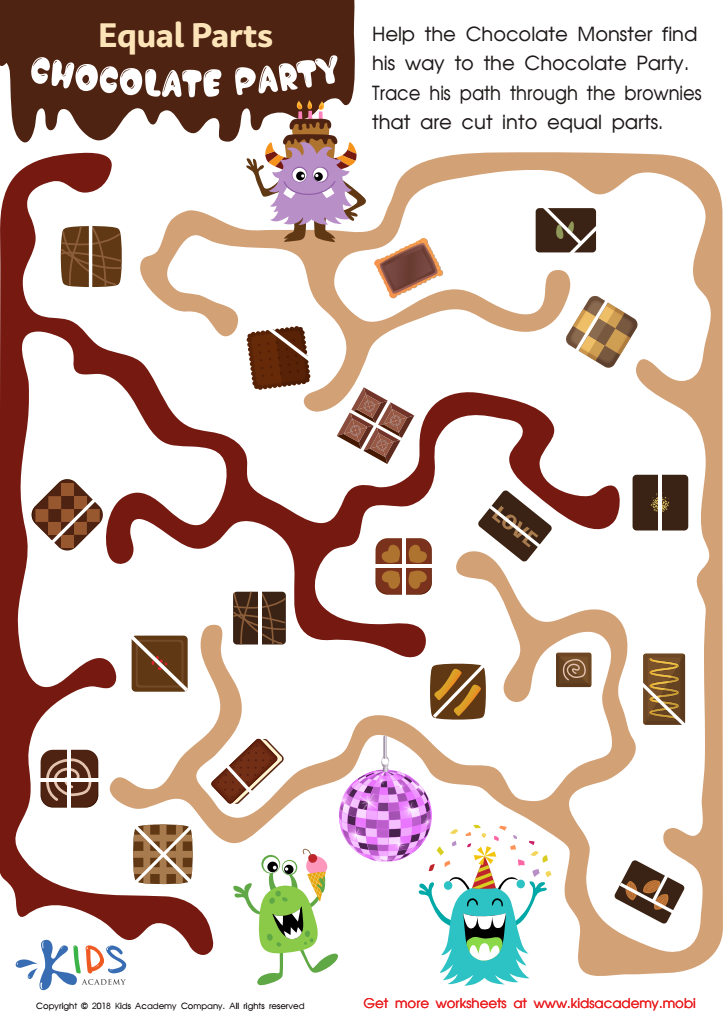
Equal Parts: Chocolate Party Worksheet
 Assign to My Students
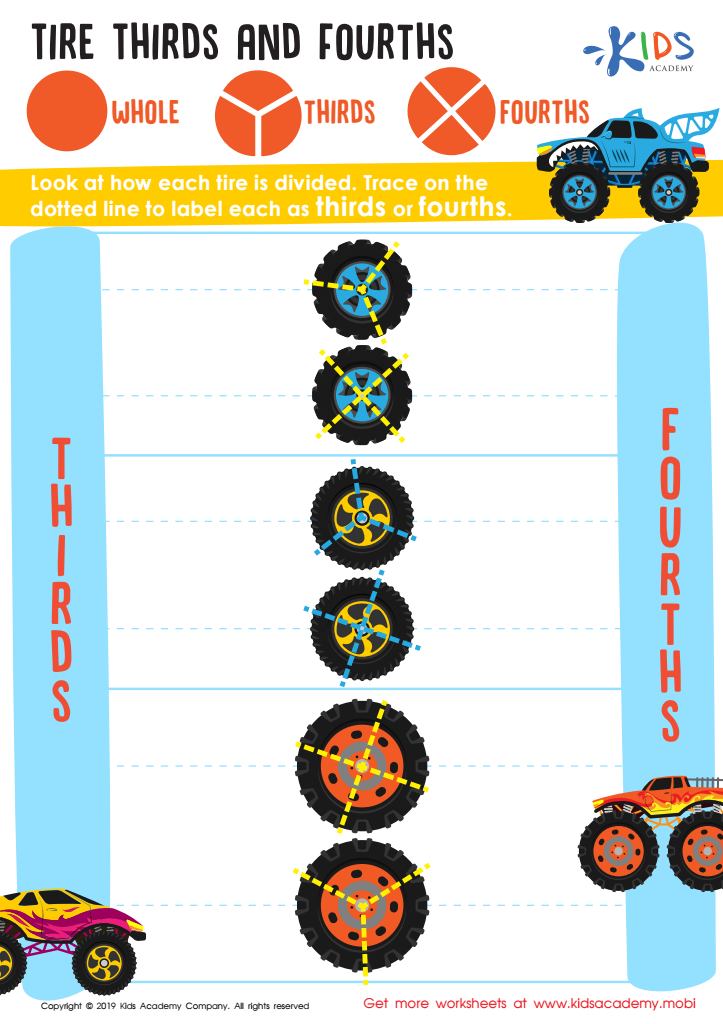
Tire Thirds and Fourths Worksheet
Bubbling Over Worksheet
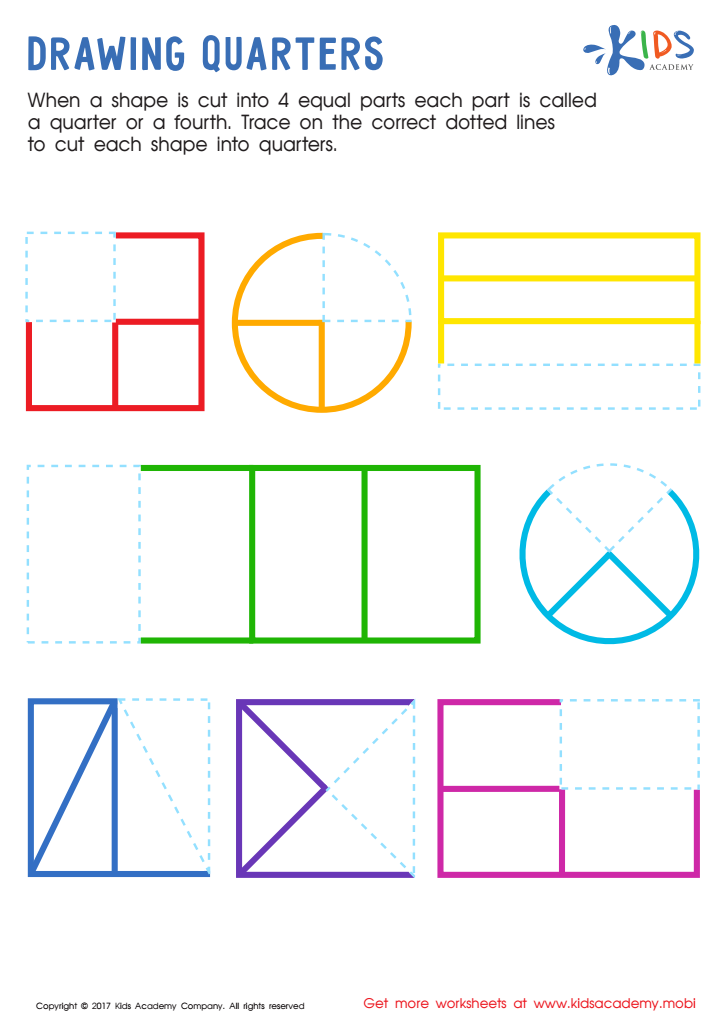
Drawing Quarters Worksheet
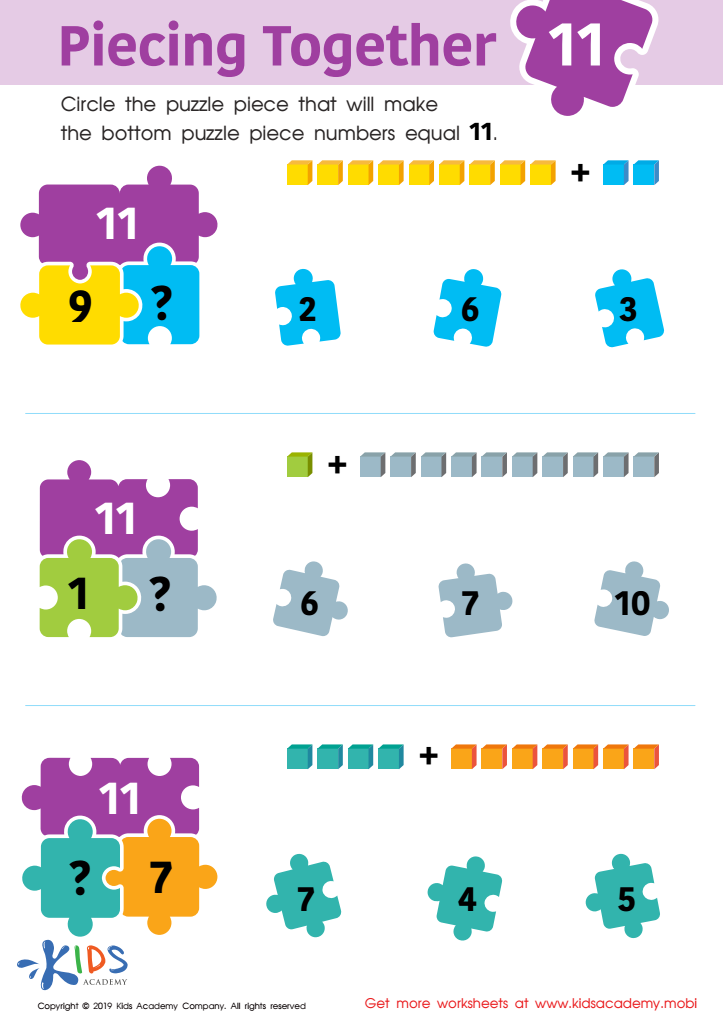
Piecing Together 11 Worksheet
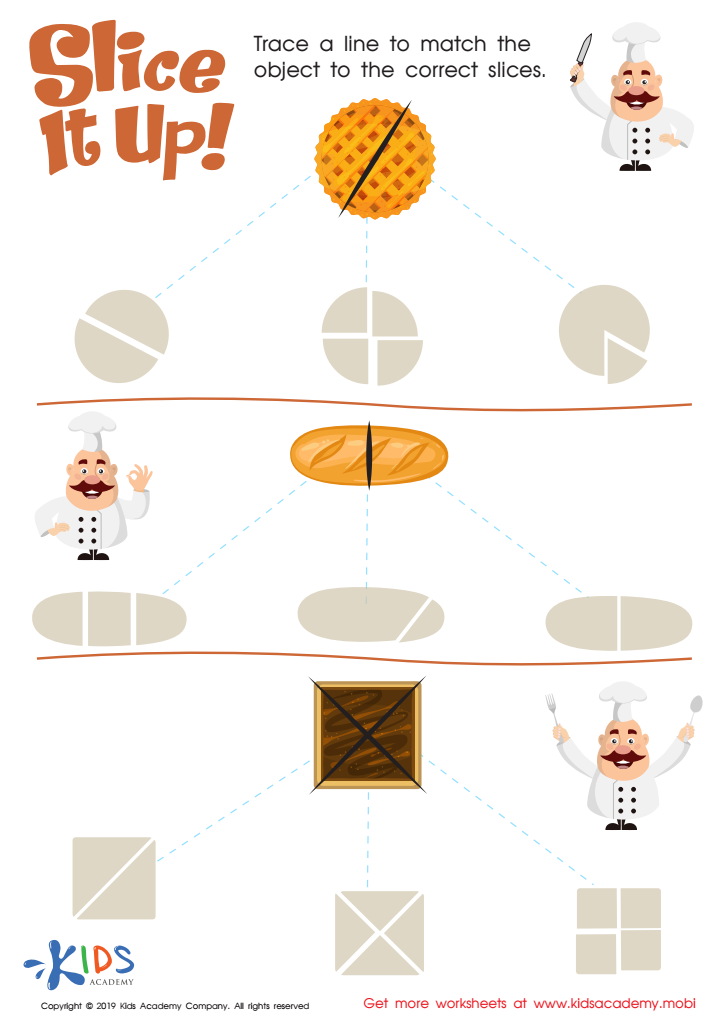
Slice It Up Worksheet
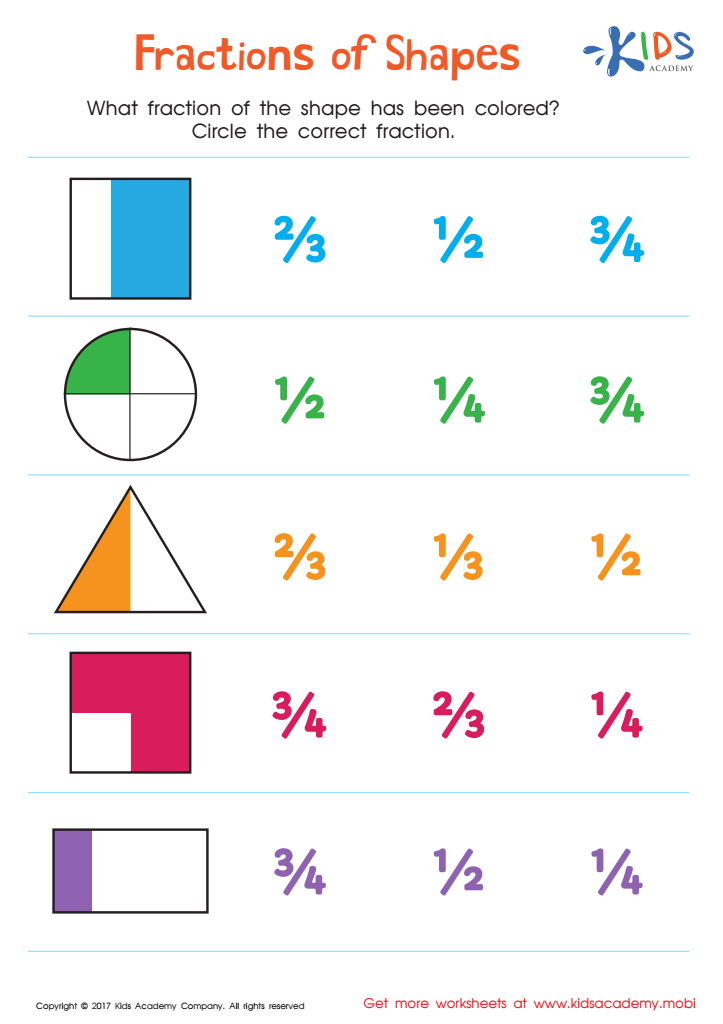
Fractions of Shapes: Math Concept Worksheet








Fraction visualization is a crucial mathematical concept for young learners aged 4-7, and parents and teachers should prioritize it for several reasons. First, visualizing fractions fosters a foundational understanding of part-and-whole relationships, helping children grasp the underlying principles of mathematics rather than merely memorizing operations. Engaging with visual tools, such as fraction circles, bars, or pie charts, allows children to see how different fractions represent portions of a whole, which enhances comprehension.
Second, early exposure to fraction visualization boosts problem-solving and critical-thinking skills. By interacting with tangible representations, children are encouraged to explore, compare, and manipulate fractions, promoting analytical reasoning. This hands-on experience nurtures confidence and enthusiasm for mathematics as they discover the diverse applications of fractions in real-life scenarios.
Additionally, visualizing fractions makes abstract ideas more concrete, catering to the varying learning styles of young children. Some might grasp concepts better through pictures, while others benefit from tactile experiences. This holistic approach can lead to improved academic outcomes and a positive attitude towards math. Ultimately, introducing fraction visualization at an early age equips children with essential tools for future mathematical success and helps lay the groundwork for lifelong learning.








