Visual perception Matching Worksheets for Ages 4-7
5 filtered results
-
From - To
Enhance your child's visual perception skills with our engaging Matching Worksheets designed for ages 4 to 7. These worksheets provide a fun and interactive way for young learners to develop important cognitive abilities, such as recognizing patterns, shapes, and colors. Each activity promotes critical thinking and encourages children to make connections between similar images. Perfect for use in the classroom or at home, our visually stimulating worksheets help foster concentration and attention to detail while keeping learning enjoyable. Support your child's early development with these essential tools that pave the way for academic success in math and beyond!
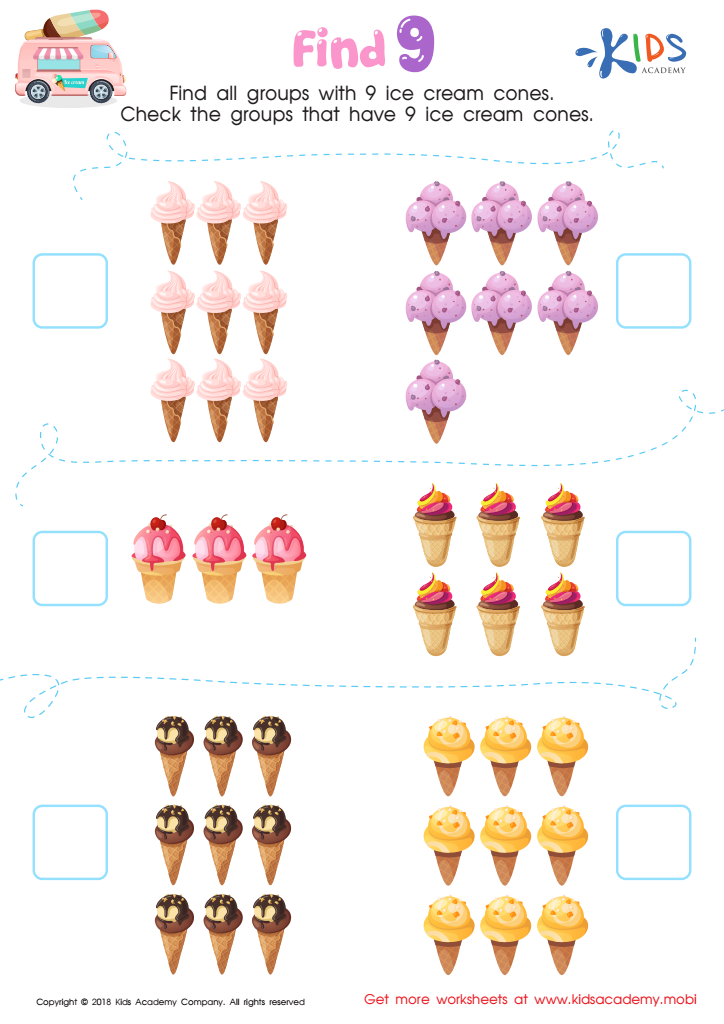
Find 9 Worksheet
 Assign to My Students
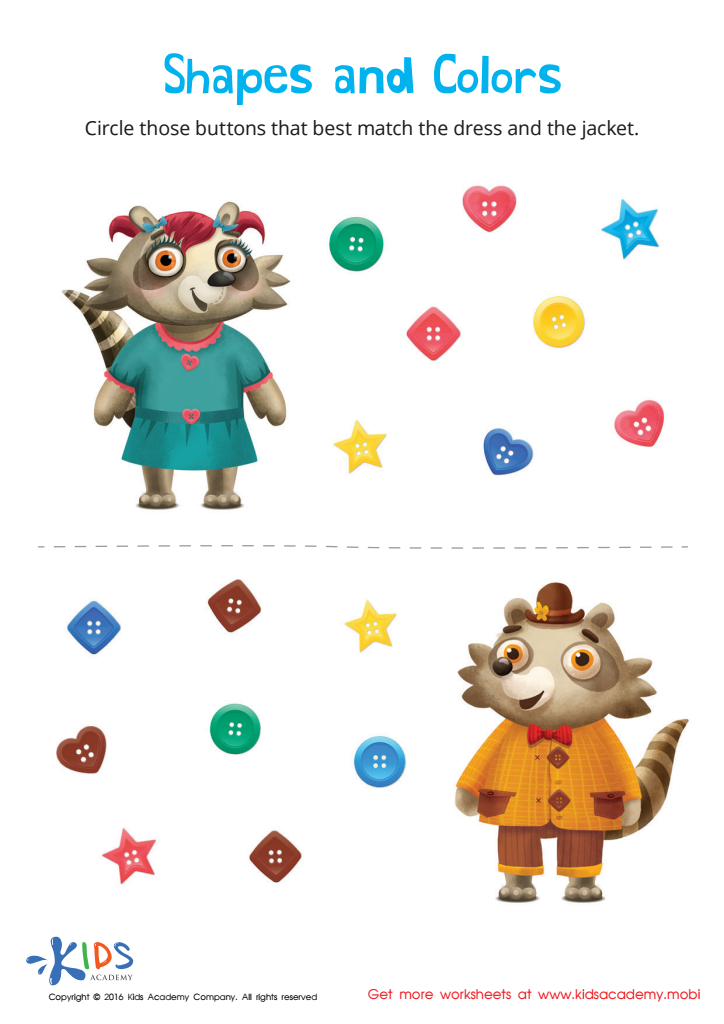
Matching: Shapes and Colors Worksheet
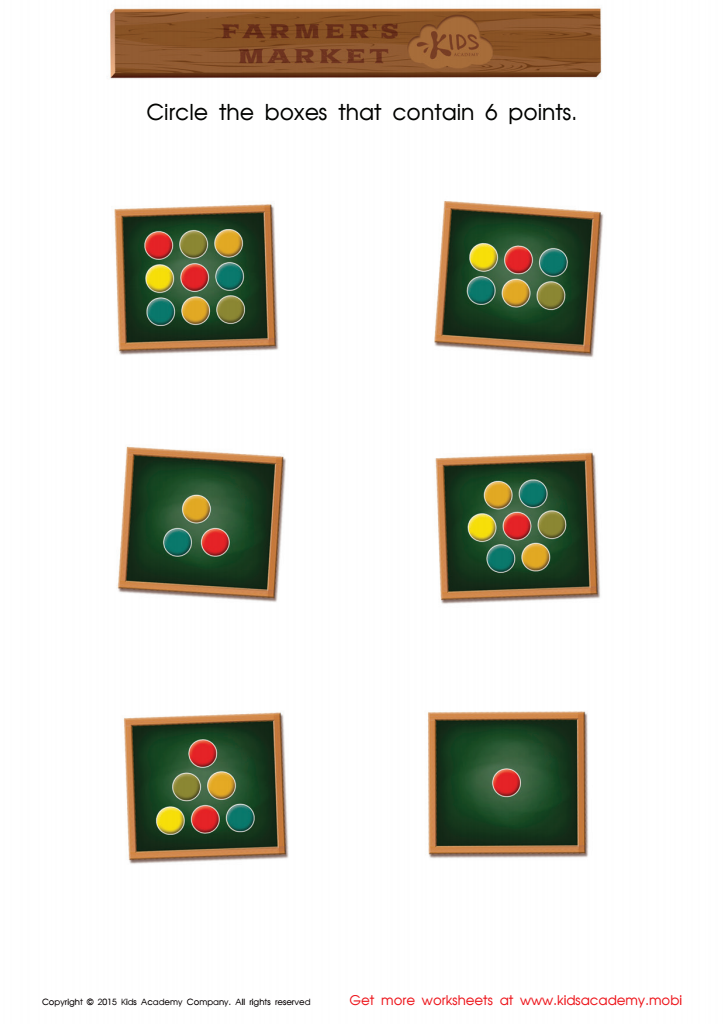
Count and Match Points 6 Math Worksheet
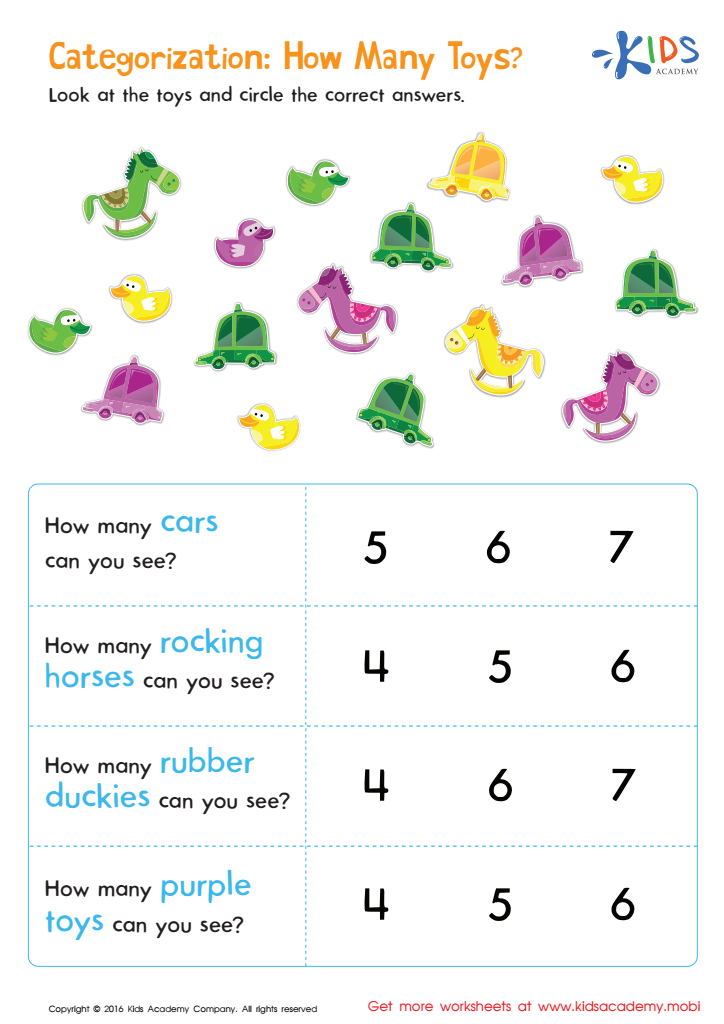
Classifying Toys by Type and Color Sorting Worksheet
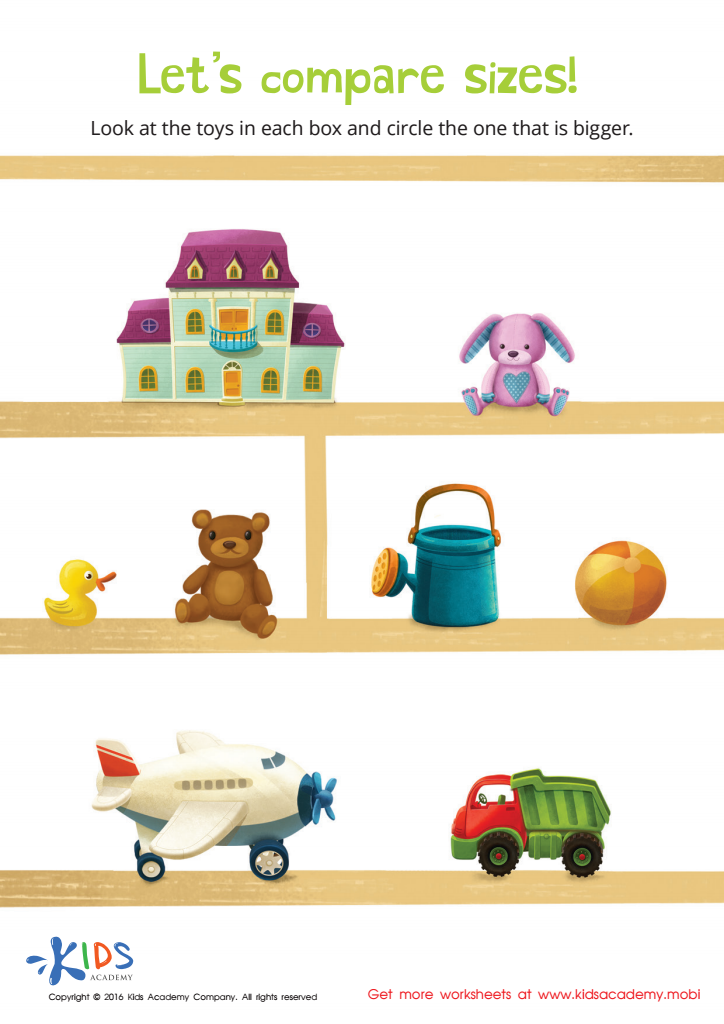
Classifying by Size Sorting Worksheet








Visual perception matching is a critical developmental skill for children aged 4-7 that supports their learning and everyday functioning. This skill involves recognizing and matching visual elements, which lays the groundwork for various academic and life skills. For parents and teachers, understanding its importance can lead to enhanced educational strategies and supportive activities.
Children with strong visual perception skills can more easily identify shapes, colors, and patterns, which are essential for tasks like reading, writing, and math. For example, they can recognize letters and numbers, helping them to succeed in early literacy and numeracy. Additionally, these skills promote spatial awareness and navigation, enabling children to better understand their environment.
Promoting visual perception matching activities, such as puzzles, sorting games, or matching cards, helps engage children and strengthen these vital skills in a fun and interactive way. For educators, incorporating these activities into the curriculum supports differentiated learning, catering to various skill levels within a classroom.
Ultimately, fostering strong visual perception skills not only enhances academic performance but also builds confidence and independence in children, setting a positive foundation for their future learning and social interactions. Parents and teachers play a pivotal role in nurturing these skills, making it essential for them to prioritize visual perception matching during this critical developmental stage.








