Numbers up to 100 Worksheets for Ages 4-7 - Page 3
51 filtered results
-
From - To
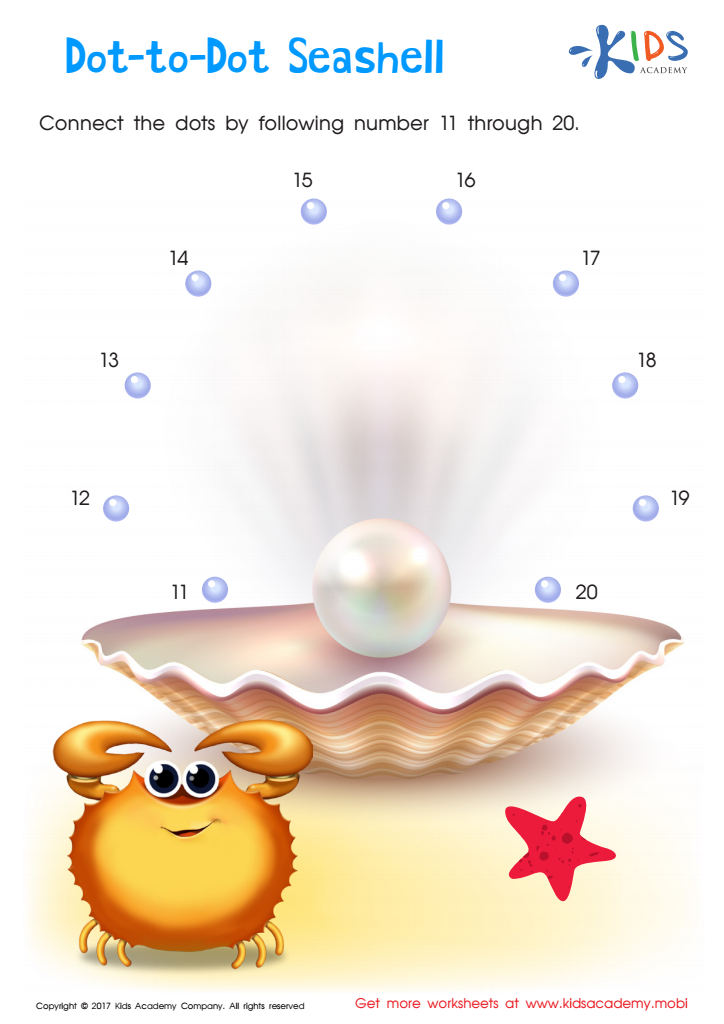
Ordering 11–20: Dot–to–dot Seashell Printable
 Assign to My Students
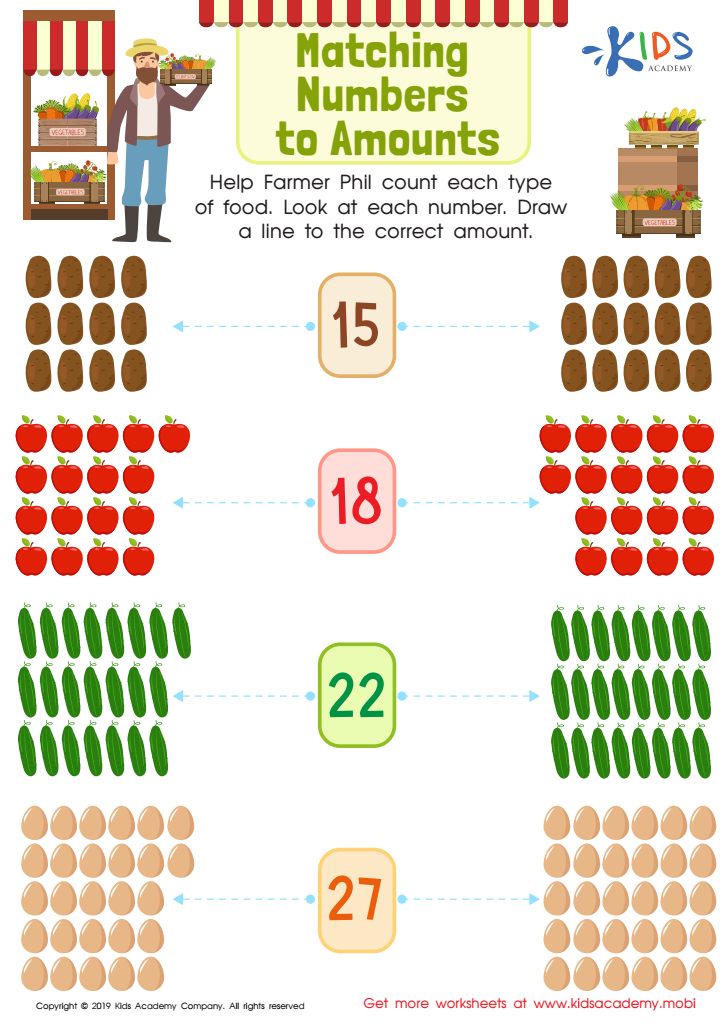
Matching Numbers to Amounts Worksheet

Counting on the City Skyline: Dot-to-Dot Worksheet








Understanding numbers up to 100 is crucial for children aged 4-7, forming the foundation of their mathematical skills and overall cognitive development. Mastery of these numbers enables young learners to recognize, count, and understand basic arithmetic, skills essential for everyday life. By engaging with numbers, children enhance their problem-solving abilities, logical thinking, and decision-making skills.
For parents and teachers, fostering numerical literacy in this age group ensures that children can confidently navigate future mathematical concepts. It supports their ability to tackle more complex ideas, including addition, subtraction, and eventual multiplication and division. Moreover, early engagement with numbers aids in building self-esteem and a positive attitude toward math, helping to reduce anxiety around this subject later on.
Additionally, familiarity with numbers up to 100 encourages the development of important life skills, such as financial literacy, time management, and spatial awareness. Furthermore, interactive activities incorporating numbers can create enjoyable learning experiences, strengthening the parent-teacher-child relationship. Ultimately, prioritizing numerical understanding in children lays the groundwork for academic success and nurtures a lifelong love of learning. This early introduction equips them to thrive in an increasingly numeral-driven world.