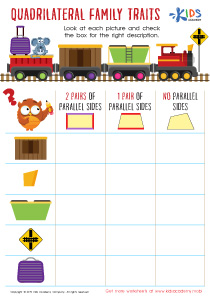
Cognitive Development Tracing Shapes Worksheets for Ages 4-7
4 filtered results
-
From - To
Enhance your child's cognitive development with our specially designed Tracing Shapes Worksheets for ages 4-7. These fun and educational printables help children recognize and trace different shapes, boosting their fine motor skills and hand-eye coordination. Each worksheet provides engaging activities that build early math skills, reinforce patterns, and improve spatial awareness. Perfect for preschool and early elementary students, these worksheets make learning exciting and effective. Give your little one the foundation for academic success with our expertly crafted cognitive development resources, ensuring a bright and confident start in school!
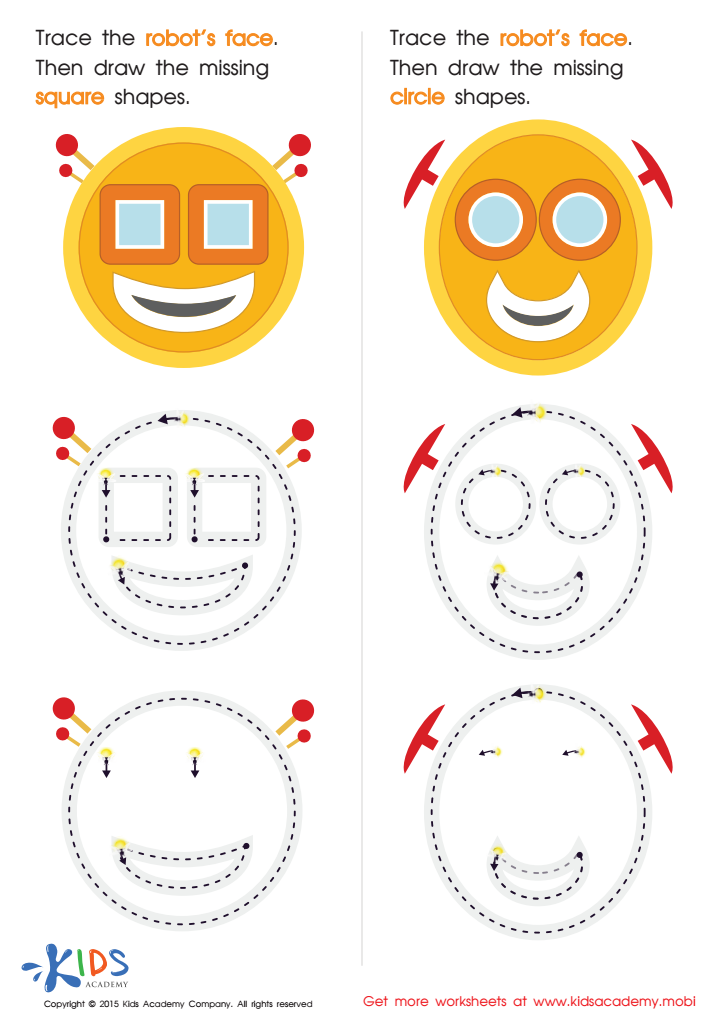
Practicing to Draw Circles And Squares Printable
 Assign to My Students
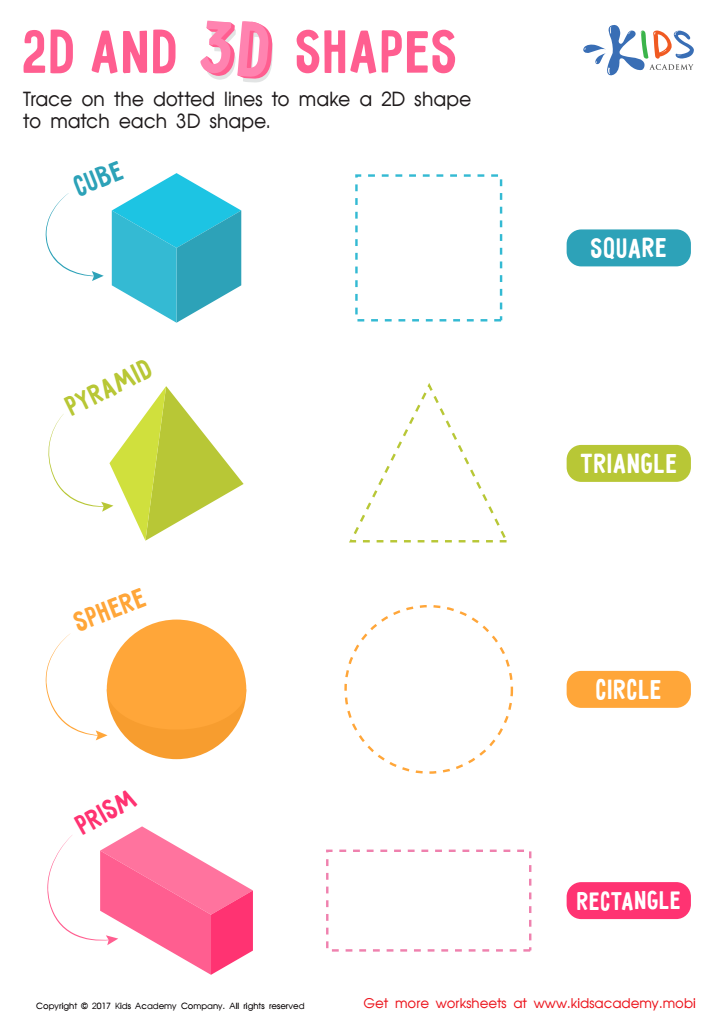
2D and 3D Shapes Worksheet
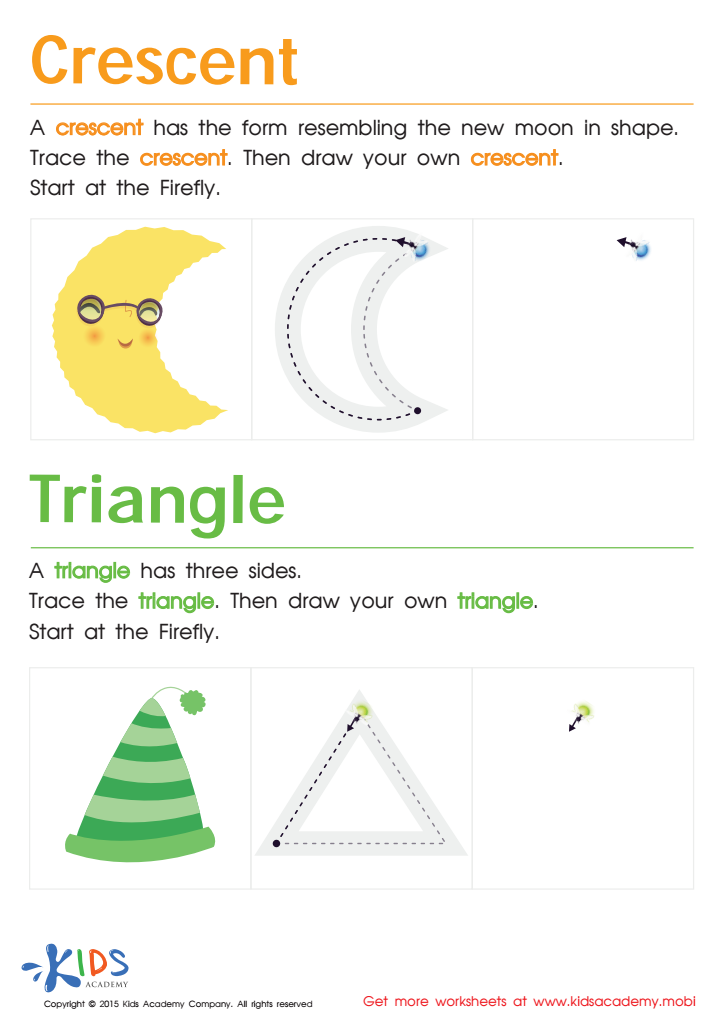
Learning to Draw Crescents And Triangles Worksheet
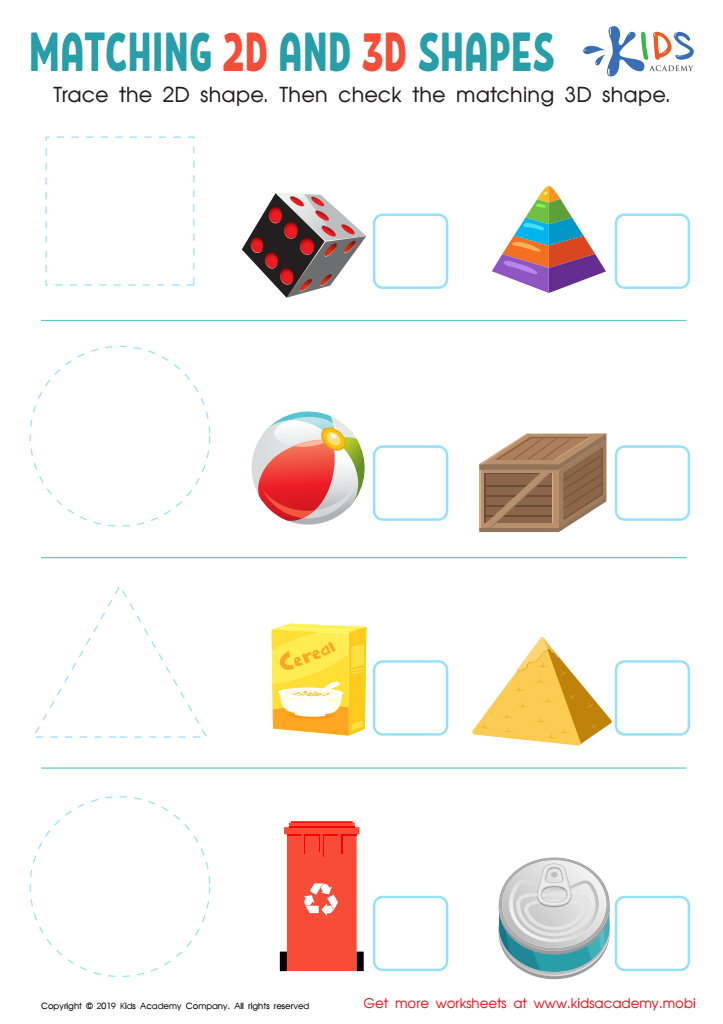
Matching 2D and 3D Shapes Worksheet








Cognitive development is a crucial aspect of early childhood, and activities like tracing shapes play a significant role in enhancing these capabilities for children aged 4-7. Parents and teachers should prioritize this activity because it helps develop fine motor skills and hand-eye coordination, which are essential for writing and other daily tasks. Tracing shapes requires control and precision, encouraging children to focus and improve their concentration.
Additionally, tracing shapes enhances spatial awareness and visual perception, helping children understand the relationship between different objects and their positions. This foundational skill is vital for problem-solving and navigating the world around them. As children trace, they also become familiar with geometric concepts and vocabulary, laying the groundwork for future mathematical learning.
Cognitive processes such as memory, attention, and problem-solving are also stimulated during shape-tracing activities. As children repeatedly trace shapes, they are exercising their memory and reinforcing neural pathways that support cognitive functioning. Moreover, the activity instills a sense of accomplishment and builds confidence, encouraging a positive attitude towards learning.
Parents and teachers can thus support holistic development by integrating shape-tracing into play and learning, ensuring children build essential skills that will aid them in more complex tasks as they grow.