Problem-Solving Skills Tracing Shapes Worksheets for Ages 4-7
4 filtered results
-
From - To
Enhance your child's problem-solving abilities with our engaging "Tracing Shapes Worksheets" designed for ages 4-7. These printable worksheets encourage young learners to refine their shape recognition and fine motor skills while navigating fun challenges. As children trace various shapes, they develop critical thinking and spatial awareness, essential components of early math readiness. Our user-friendly designs make learning enjoyable and interactive, providing an excellent opportunity for parents and educators to engage with children. Foster a love for learning and boost confidence in problem-solving through our thoughtfully crafted tracing activities that prepare kids for future academic success. Explore our collection today!
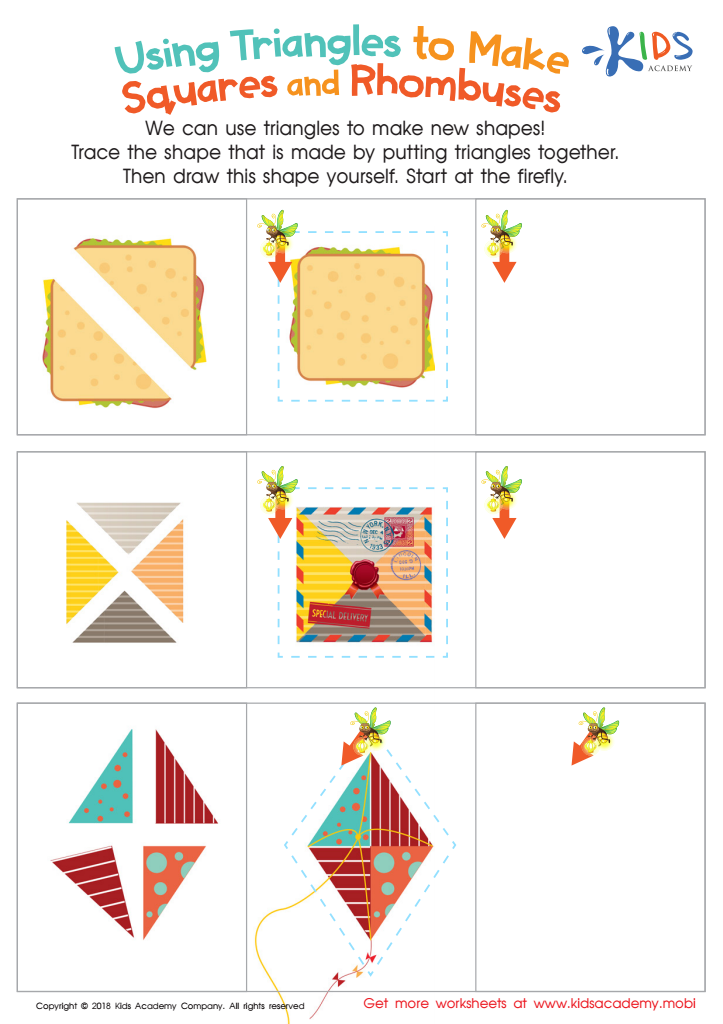
Using Triangles to Make Squares and Rhombuses Worksheet
 Assign to My Students
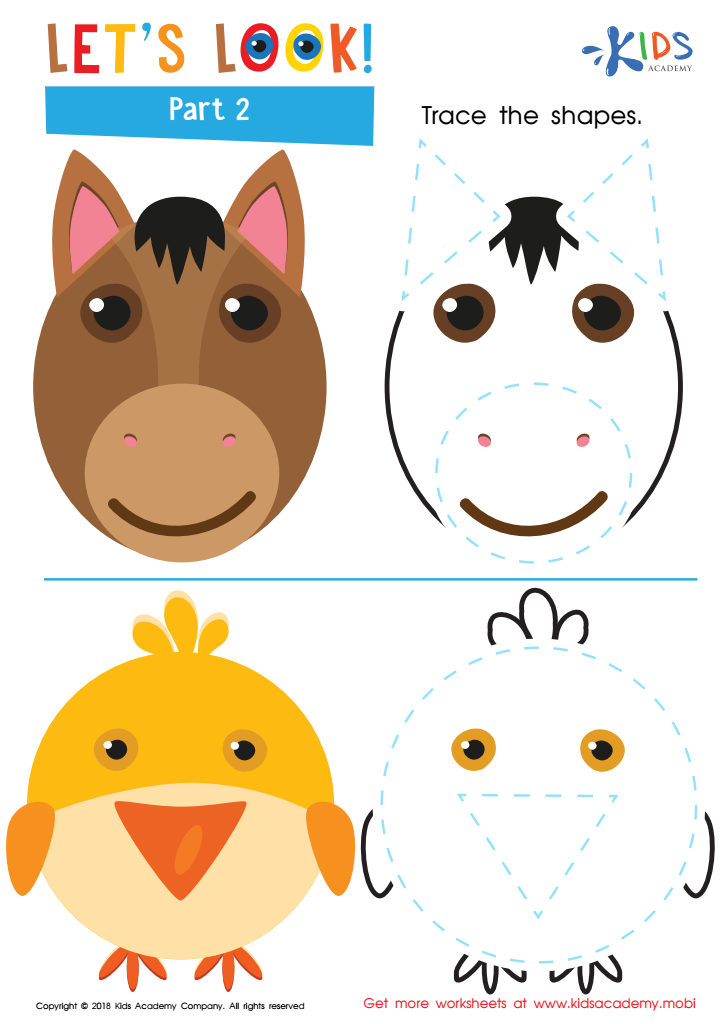
Let's Look! Part 2 Worksheet
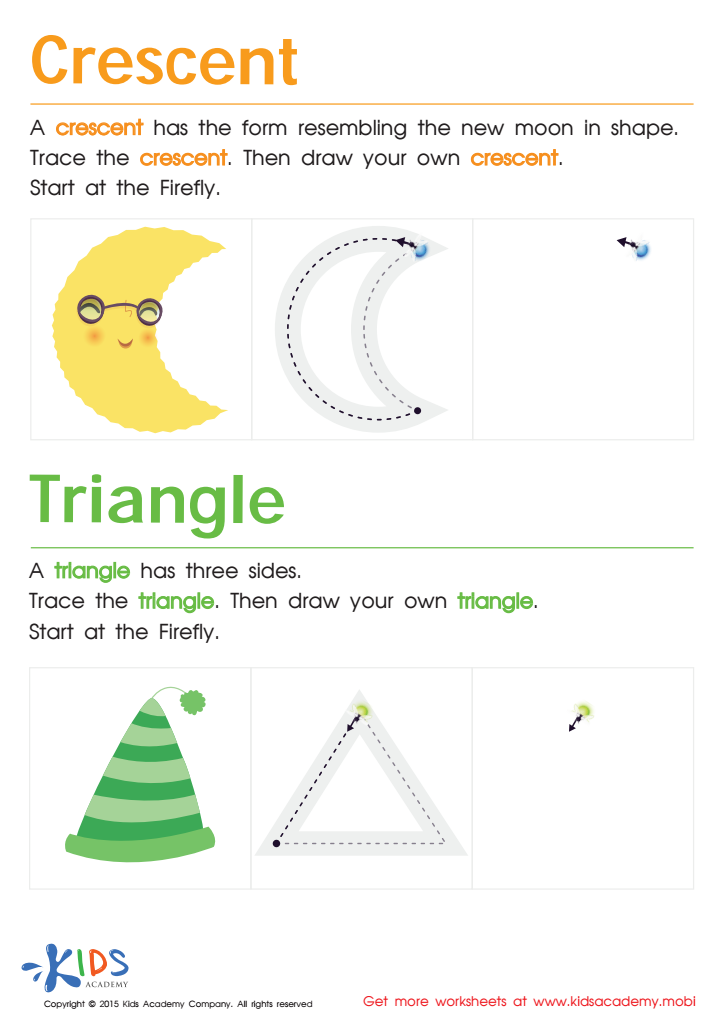
Learning to Draw Crescents And Triangles Worksheet
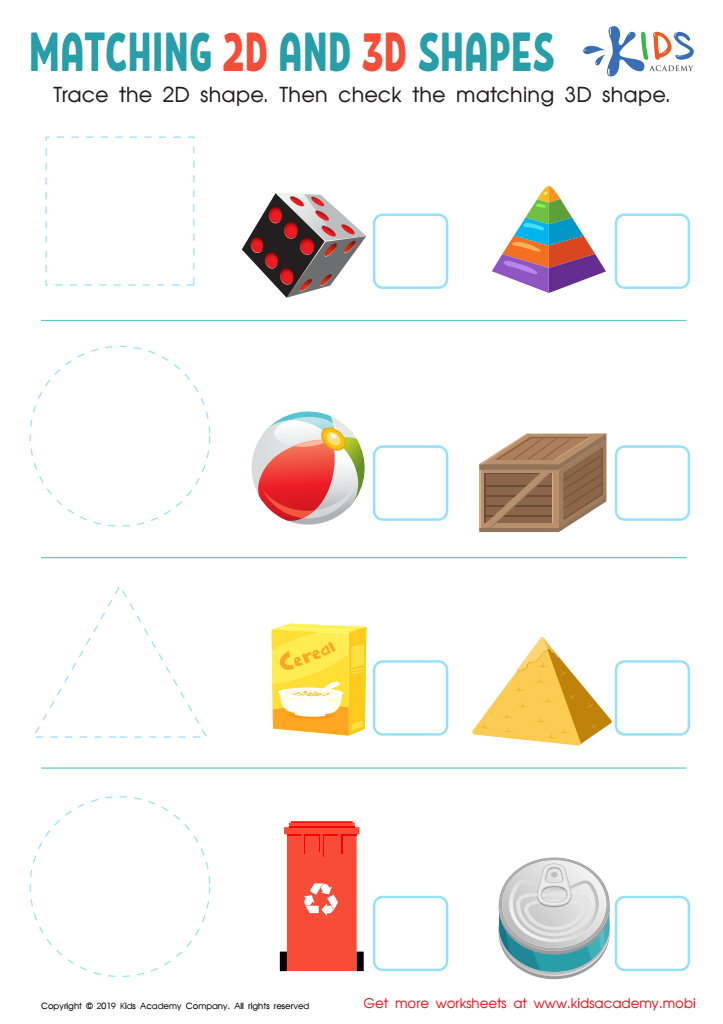
Matching 2D and 3D Shapes Worksheet








Problem-solving skills, particularly as they relate to tracing shapes for children aged 4 to 7, are fundamental to a child's cognitive and social development. At this age, kids are not only learning about shapes but also beginning to understand spatial relationships, fine motor skills, and the concept of persistence in overcoming challenges. Engaging in shape tracing provides an enjoyable yet structured way for children to practice these essential skills.
Parents and teachers should care about these activities because they foster critical thinking abilities. As children trace shapes, they learn to observe, predict, and analyze—the building blocks of problem-solving. This hands-on approach promotes cognitive flexibility as children figure out how to maneuver their materials, enhancing their creativity. Additionally, these activities can improve focus and patience, as children must concentrate on completing a task.
Moreover, shape tracing can be a collaborative effort. Parents and teachers can engage with children, fostering communication and social skills. This interaction also helps adults observe a child's progress and tailor support accordingly. By prioritizing problem-solving skills through activities like tracing shapes, parents and teachers can set the groundwork for lifelong learning and exploration, equipping children with the confidence to navigate future challenges.