Animal recognition Reading Worksheets for Ages 4-7
5 filtered results
-
From - To
Welcome to our Animal Recognition Reading Worksheets, specially designed for children aged 4-7! These worksheets provide an engaging way for young learners to explore the world of animals while developing their reading skills. Each activity focuses on identifying animals, enhancing vocabulary, and improving comprehension through fun, interactive exercises. From colorful illustrations to captivating stories, your child will enjoy learning about diverse creatures. Ideal for homeschool, classroom settings, or supplementary learning, our worksheets are perfect for nurturing early literacy skills in a playful manner. Dive into the adventure of animal recognition and watch your child flourish in reading!
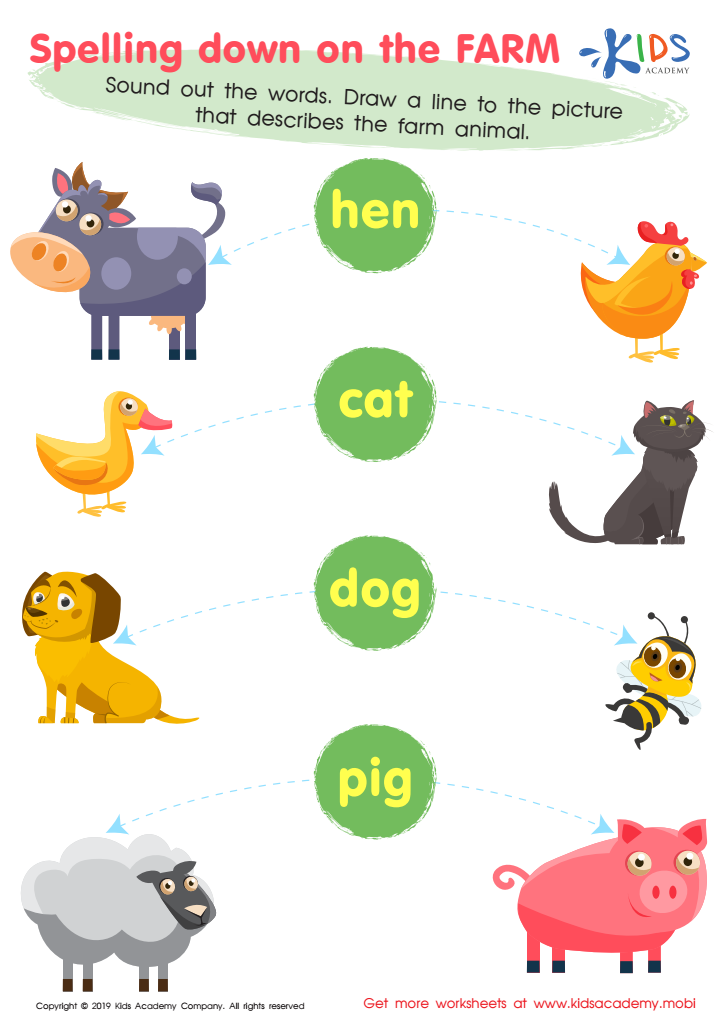
Spelling Down on the Farm Worksheet
 Assign to My Students
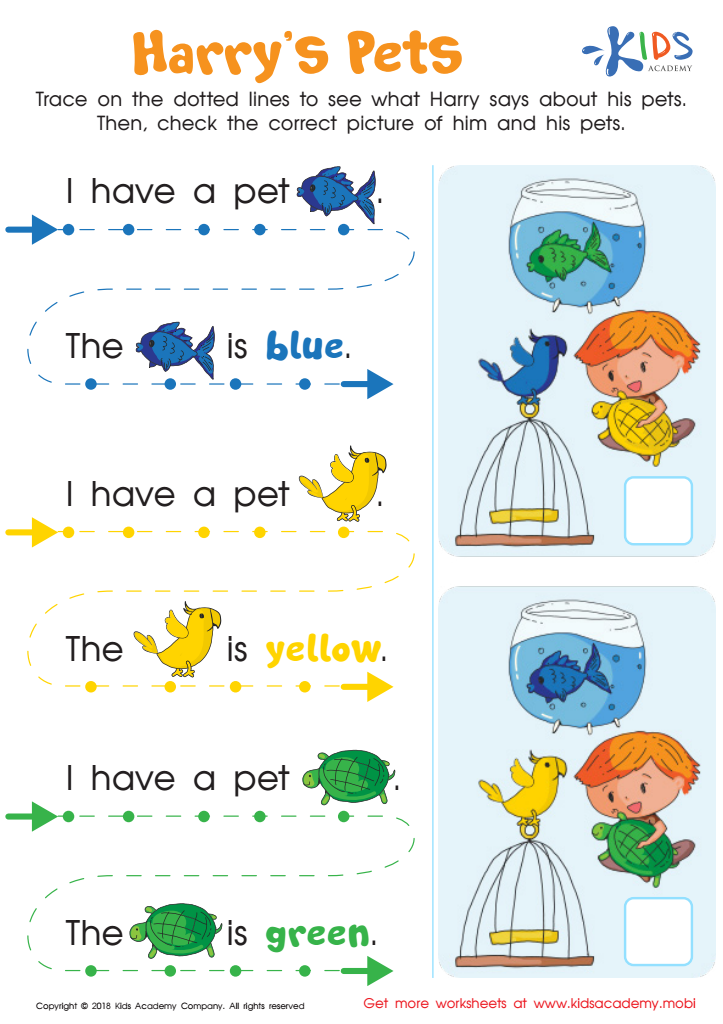
Read from Left to Right: Harry's Pets Worksheet
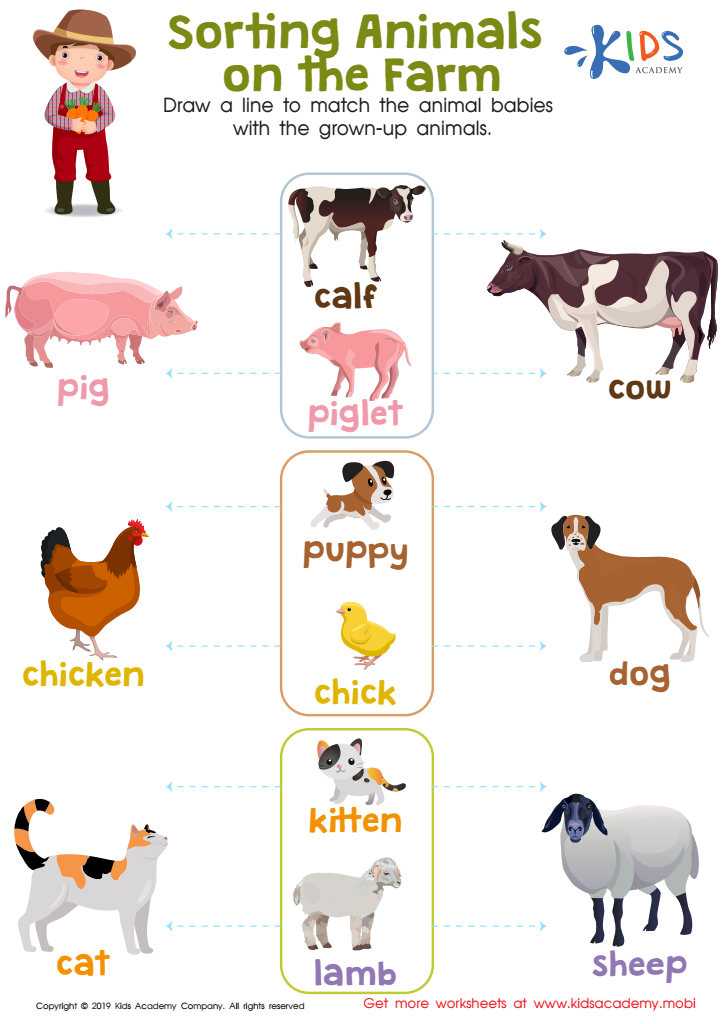
Sorting Animals on the Farm Worksheet
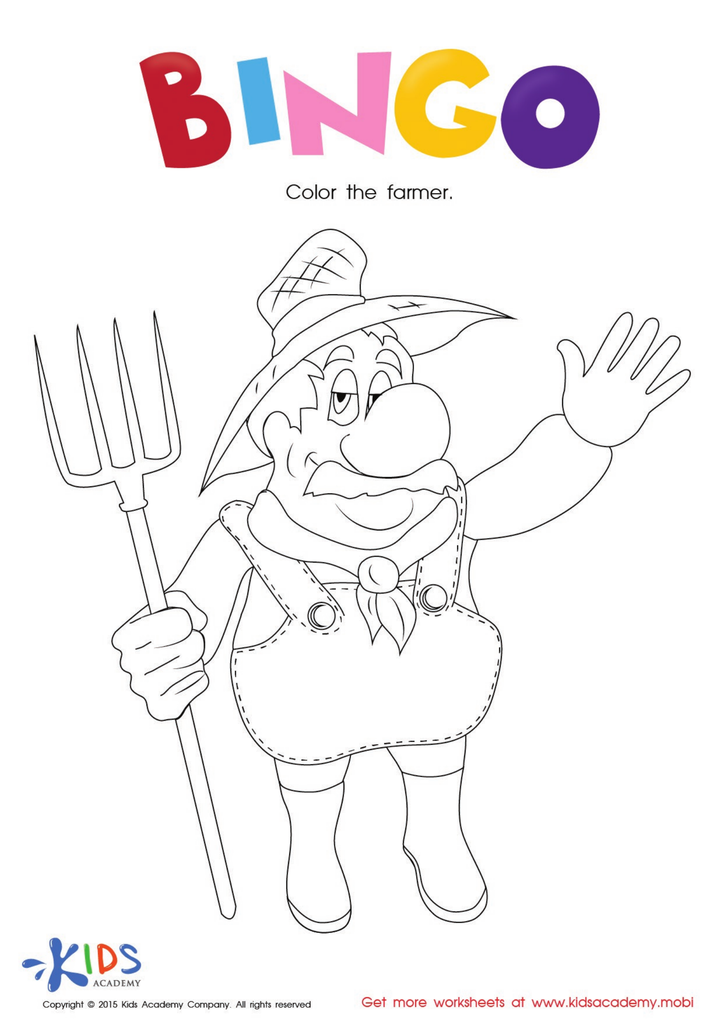
The Bingo Song: Coloring The Farmer Worksheet
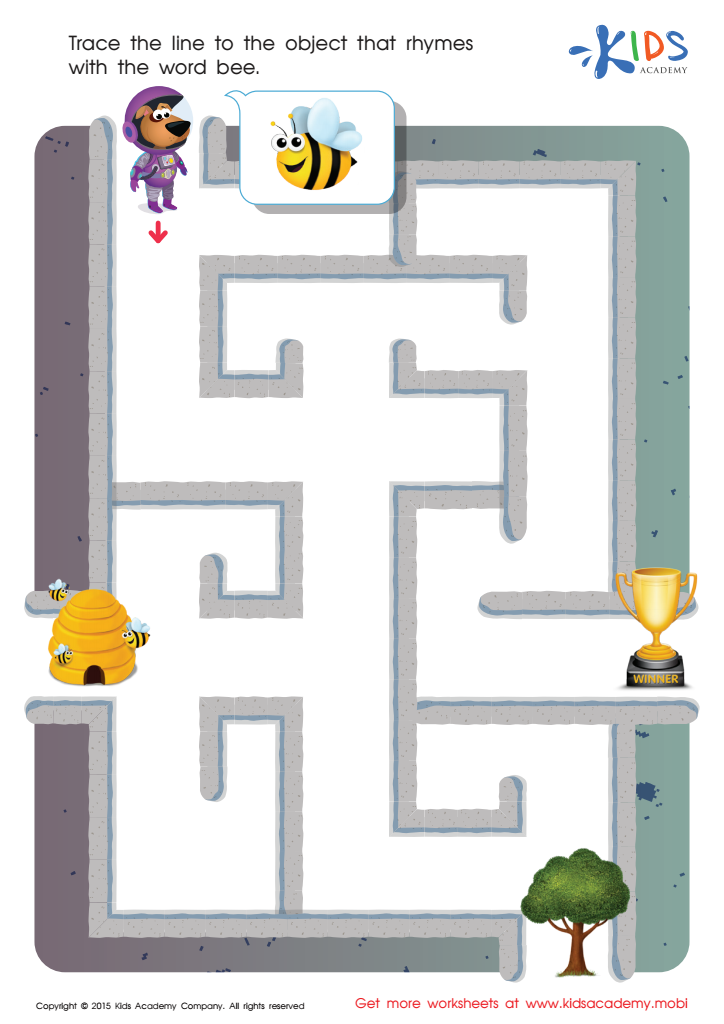
Bee Rhyming Words Worksheet








Animal recognition reading is essential for children aged 4-7 for several reasons. First, it supports early literacy development, fostering vocabulary growth as children learn the names, characteristics, and habitats of various animals. This foundational language skill is crucial as it enhances their ability to comprehend stories and express themselves.
Second, animal recognition promotes cognitive development. By associating animals with their respective environments and behaviors, children engage in critical thinking and observation. They learn to categorize, compare, and contrast different animals, which nurtures their analytical skills.
Furthermore, animal recognition reading can ignite a child's sense of wonder and curiosity about nature and the world around them. This not only encourages a love for reading but also instills a sense of responsibility and awareness regarding environmental conservation and animal welfare.
Lastly, animal-related themes often feature prominently in literature for young children, making it a relatable and enjoyable subject. Stories that revolve around animals help develop empathy and emotional understanding, as children connect with the characters and their experiences. By prioritizing animal recognition reading, parents and teachers equip children with essential cognitive, emotional, and social skills that will benefit them throughout their lives.








