
Develop critical thinking Reading Worksheets for Ages 4-7
6 filtered results
Difficulty Level
Grade
Age
-
From - To
Subject
Activity
Standards
Introducing our "Develop Critical Thinking Reading Worksheets for Ages 4-7," designed to nurture young minds and build essential skills. These engaging worksheets combine fun activities with strategic reading exercises that prompt children to analyze, question, and reason. Perfect for early learners, each sheet fosters comprehension, inference, and analytical abilities, all while making reading an enjoyable adventure. Tailored for ages 4-7, our resources encourage curiosity and cognitive growth, laying a strong foundation for future learning. Equip your child with the tools to think critically and understand deeper contexts in their reading journey. Discover our comprehensive collection today!
Favorites
With answer key
Interactive
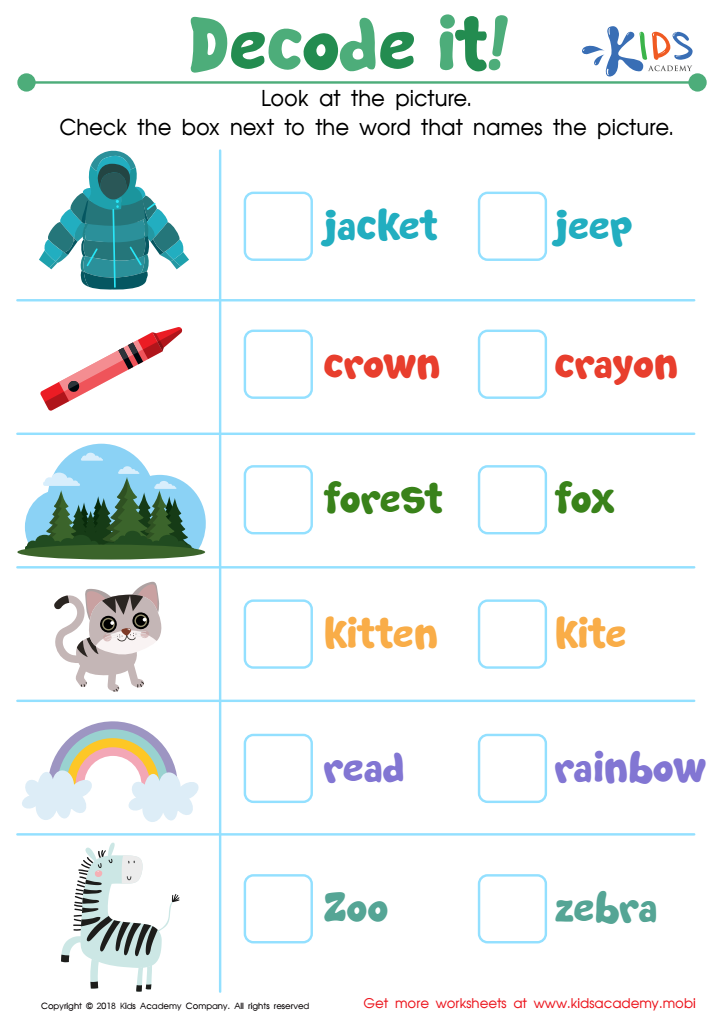
Reading: Decode It Worksheet
Look at the picture and circle the word that names it. This exercise helps kids practice picture cues and decoding words, with the same beginning sound. It builds their fluency and comprehension, giving them the skills to read unfamiliar words.
 Assign to My Students
Reading: Decode It Worksheet
Worksheet
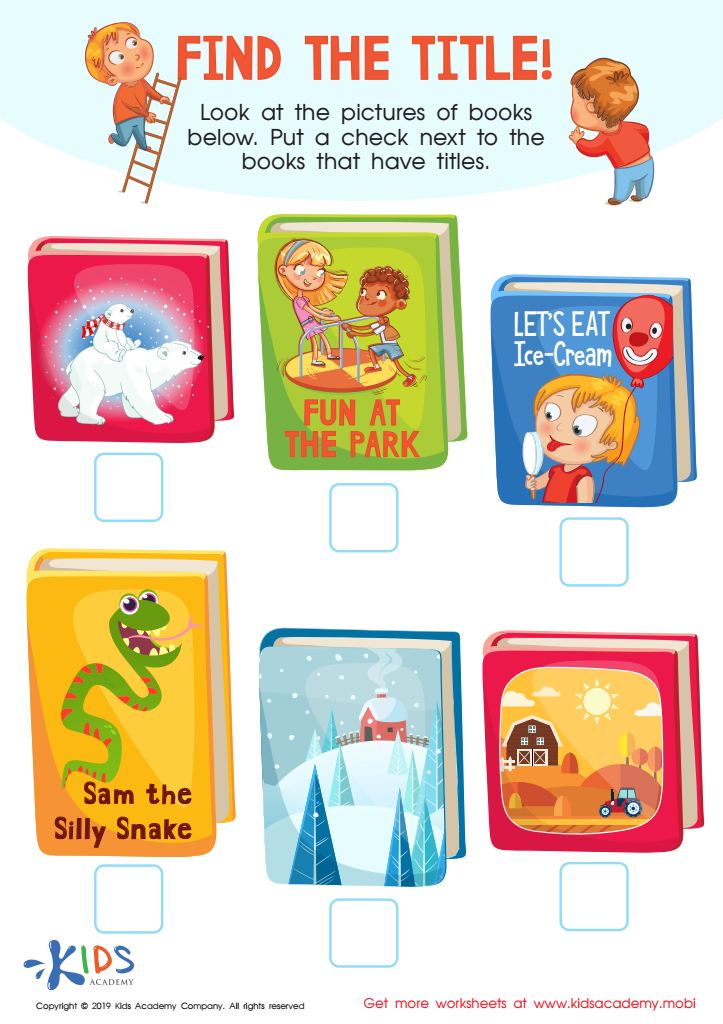
Find the Title Worksheet
Help your kids to identify the colors of the books on this worksheet. Ask them to spot the differences between the six books, such as which ones have titles printed on their covers. Ask them to put a check next to the books with titles. This activity will promote your kids' thinking skills.
Find the Title Worksheet
Worksheet

Fox Rhyming Words Worksheet
Can your child rhyme a fox? Listen carefully and see if it's sun, beans, or ox! Help your child recognize rhymes with a pencil or crayon maze. Travel from the dog to the picture that rhymes. This worksheet builds pre-reading skills - a great way to learn!
Fox Rhyming Words Worksheet
Worksheet
Join Kids Academy for Free
Who is primarily going to use this learning content?








Developing critical thinking through reading for young children aged 4-7 is crucial, as it lays the foundation for their cognitive growth and future learning success. At this formative stage, children are highly receptive to new ideas and ways of thinking. By engaging with stories and text, they learn to question, analyze, and make connections between concepts, which are essential skills for problem-solving and decision-making throughout their lives.
When parents and teachers prioritize critical thinking in reading, they are not just teaching children to read words but to understand and interact with the content. This deep level of engagement enhances comprehension and retention of information. For instance, asking open-ended questions about a story encourages children to predict outcomes, explain characters' motives, and articulate their own thoughts and feelings. These activities challenge them to think beyond the obvious and fosters an inquisitive mindset.
Additionally, early exposure to critical thinking through reading promotes language development and improves focus and listening skills. As children verbalize their thoughts and understandings, they become more articulate and confident in expressing themselves. These foundational skills translate into better academic performance and healthier social interactions.
Overall, nurturing critical thinking in reading at an early age benefits children's intellectual and emotional development, equipping them with the tools necessary for lifelong learning and success.








