Identification skills Reading Worksheets for Ages 4-7
3 filtered results
-
From - To
Enhance your child's reading journey with our Identification Skills Reading Worksheets for ages 4-7! These engaging resources are designed to develop essential skills, such as recognizing letters, words, and sounds, fostering early literacy. Our worksheets incorporate vibrant illustrations and interactive activities to keep your young learners excited and motivated. Perfect for use at home or in the classroom, each worksheet targets key concepts that promote word identification and comprehension. Build a solid foundation in reading with our easy-to-follow exercises, making learning both fun and effective. Discover the joy of reading and empower your child with crucial identification skills today!
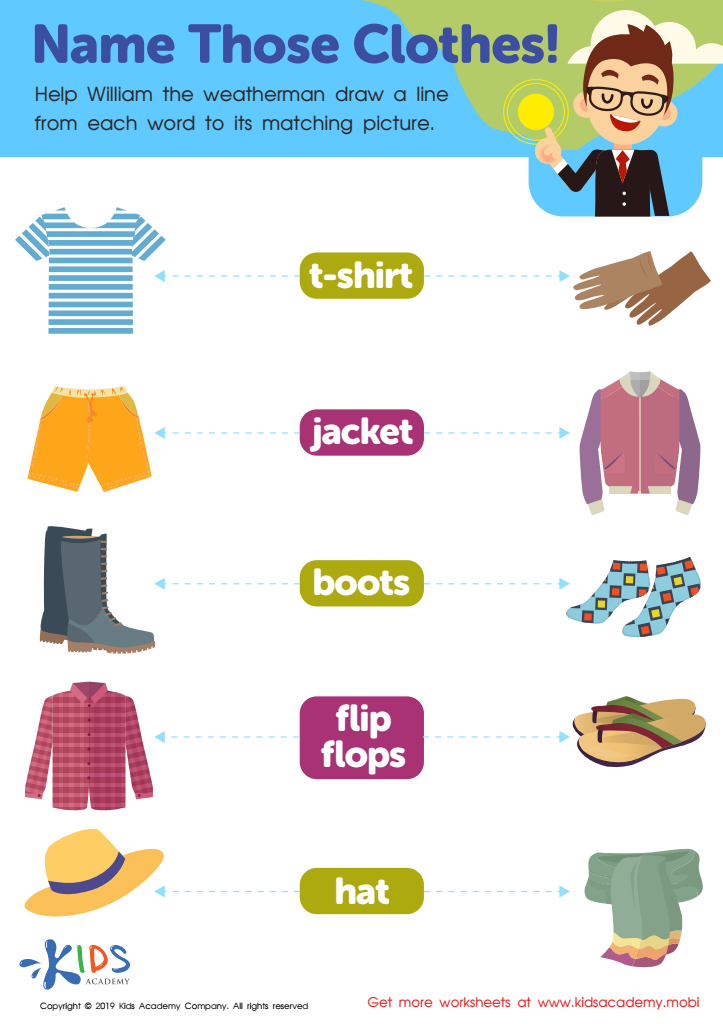
Name Those Clothes Worksheet
 Assign to My Students
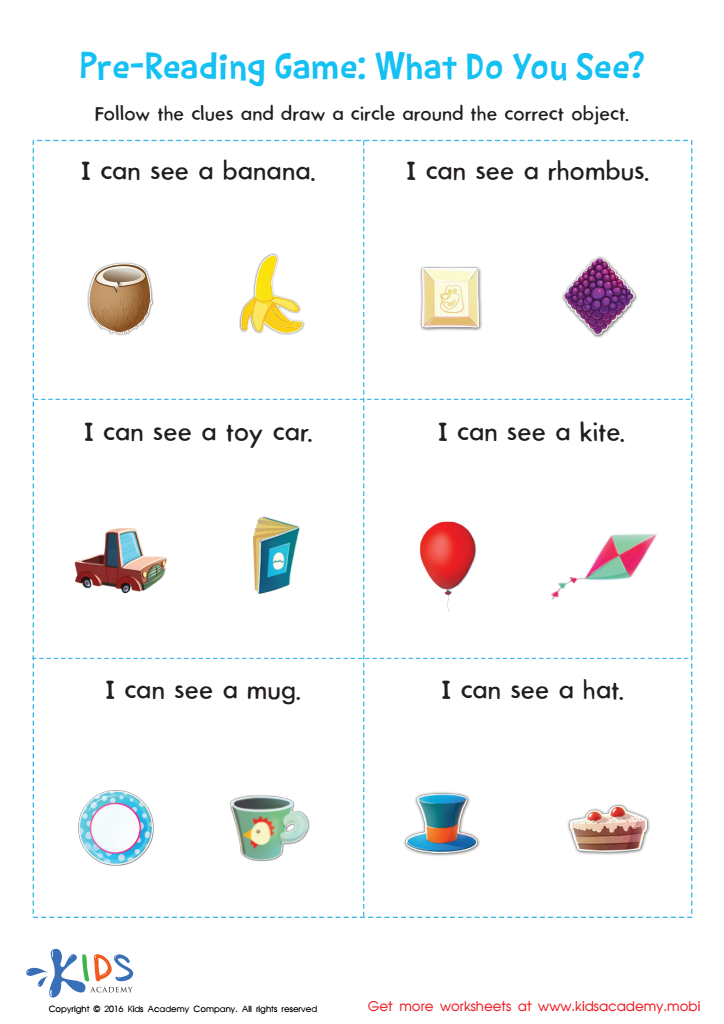
Pre–reading Worksheet: What Do You See?
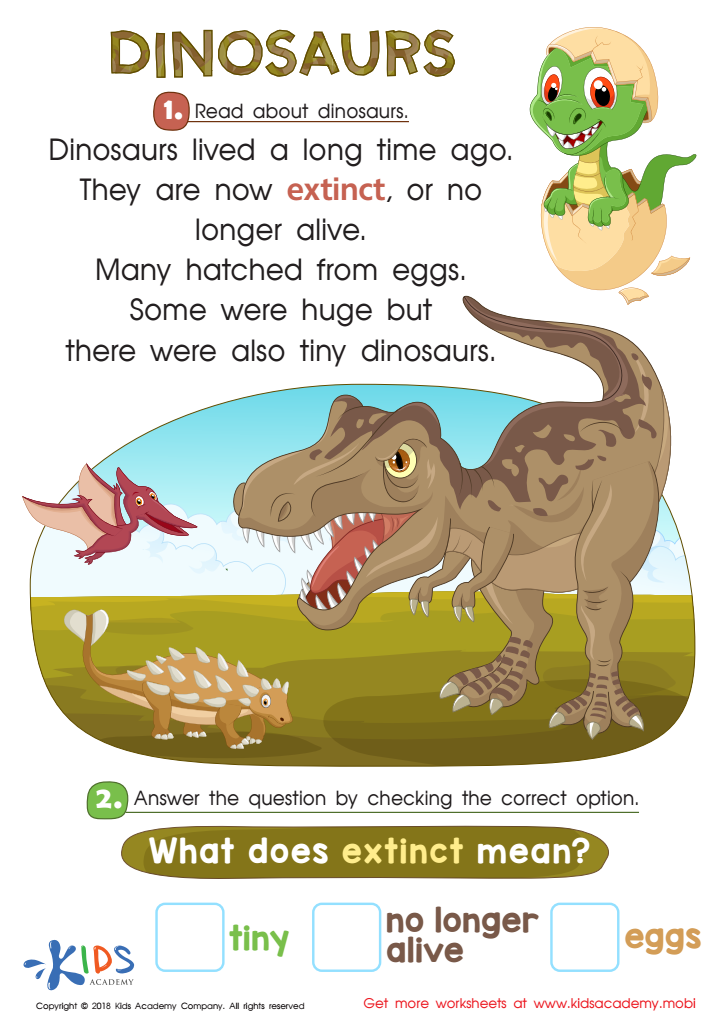
Dinosaurs Worksheet




.jpg)



Identification skills reading for children aged 4-7 are crucial because they serve as the foundation for literacy development. At this stage, children begin to recognize letters, sounds, and eventually words, which forms the basis of their reading abilities. Parents and teachers should prioritize fostering these skills, as they enhance phonemic awareness—the understanding that spoken words are made up of individual sounds. This awareness is essential for the ability to decode words, leading to improved reading fluency and comprehension.
Moreover, strong identification skills contribute to increased confidence and motivation in young readers. When children can easily recognize letters and sounds, they are more likely to engage with texts, participate in reading activities, and develop a love for reading. Early exposure to these skills can also reduce future literacy-related difficulties, establishing a positive trajectory in a child's academic journey.
Additionally, promoting identification skills at this age can enhance overall cognitive development. Children learn to pay attention to detail, improve memory retention, and foster critical thinking by connecting sounds with letters and words. Consequently, teachers and parents should actively support and nurture these skills to equip children with the tools they need for lifelong success in reading and learning.








