
Phonics recognition Reading Worksheets for Ages 4-7
5 filtered results
Difficulty Level
Grade
Age
-
From - To
Subject
Activity
Standards
Engage young learners with our Phonics Recognition Reading Worksheets designed for ages 4-7! These interactive and fun worksheets promote early literacy by helping children identify letter sounds, decode words, and understand phonetic patterns. Each worksheet is crafted to boost phonemic awareness and foster a love for reading. With a variety of activities, including matching games, tracing exercises, and word searches, children will build essential reading skills in an enjoyable way. Perfect for home or classroom use, our worksheets provide valuable practice that encourages confidence and fluency. Explore our collection today and watch your child’s reading abilities soar!
Favorites
With answer key
Interactive
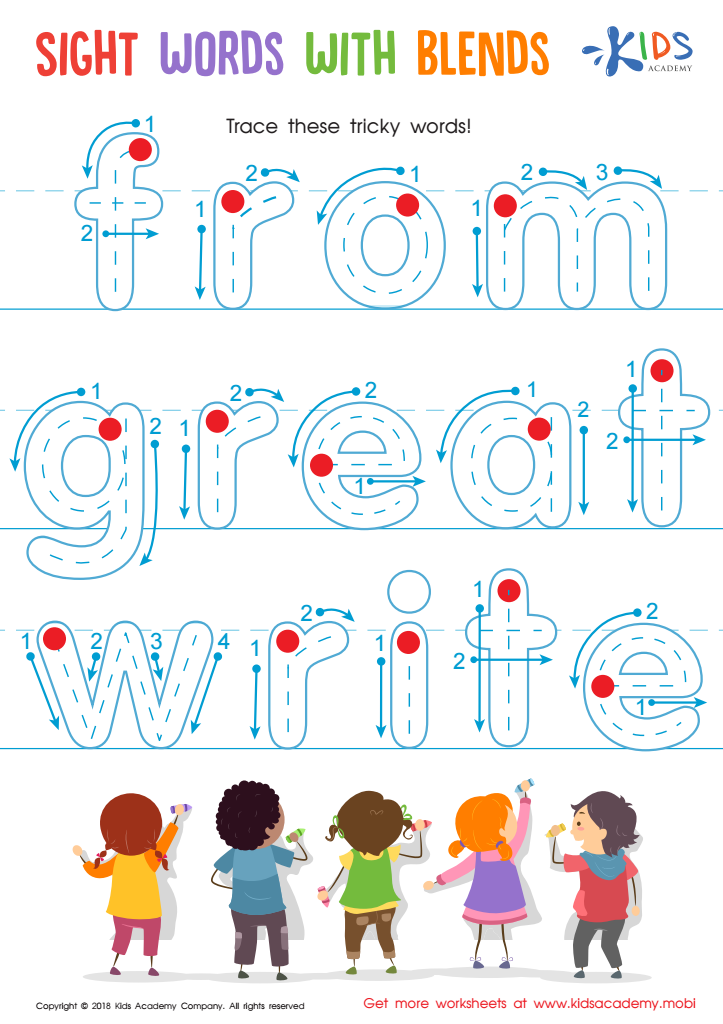
Sight Words with Blends Worksheet
This free PDF lets your children trace and write sight words with tricky blends. The guide numbers help them start from the top, building fine motor skills and enhancing sight word vocab. It's a great way to give your kids a solid foundation for reading!
 Assign to My Students
Sight Words with Blends Worksheet
Worksheet
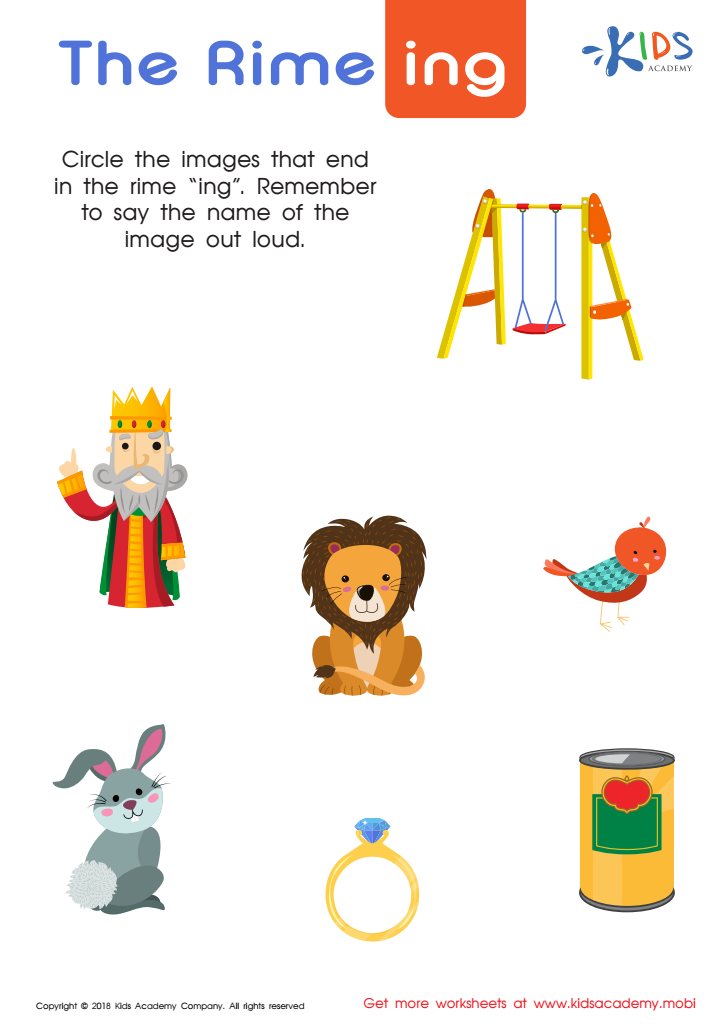
The Rime "ing" Worksheet
Teach children about word families and build their spelling and writing strategies with this colorful PDF worksheet. It features familiar pictures for children to name, encouraging them to circle those that end in "ing". This engaging activity will help develop reading skills in a fun way.
The Rime "ing" Worksheet
Worksheet
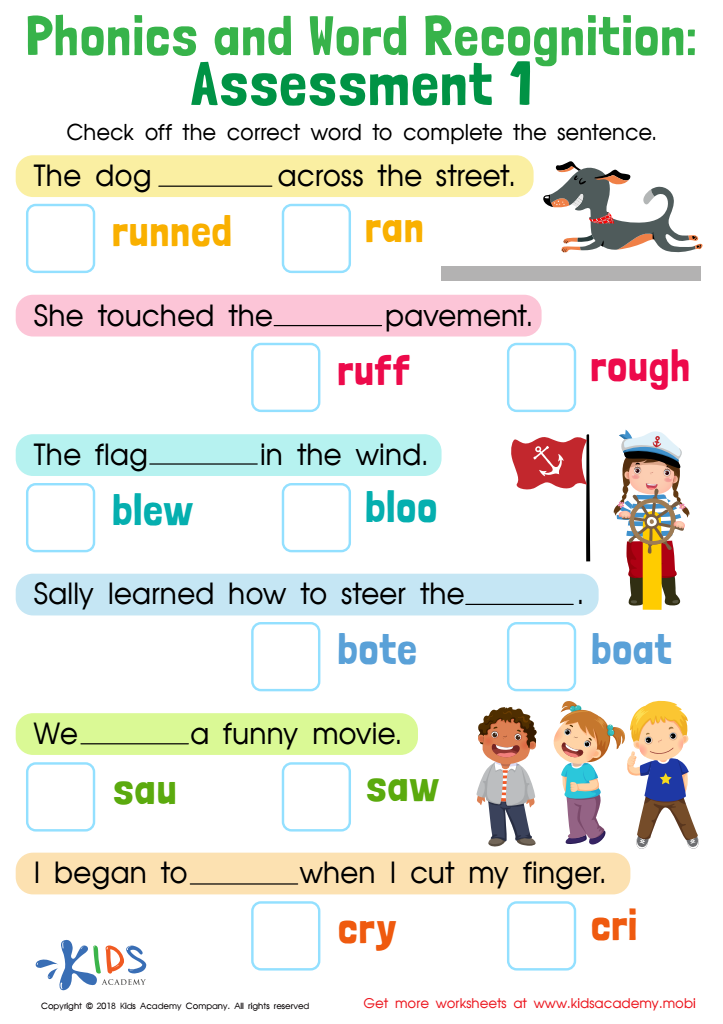
Phonics and Word Recognition: Assessment 1 Worksheet
This worksheet tests phonetics and word recognition. Students should be familiar with past tense verbs. Read incomplete sentences, then read multiple options and help students select the correct one.
Phonics and Word Recognition: Assessment 1 Worksheet
Worksheet
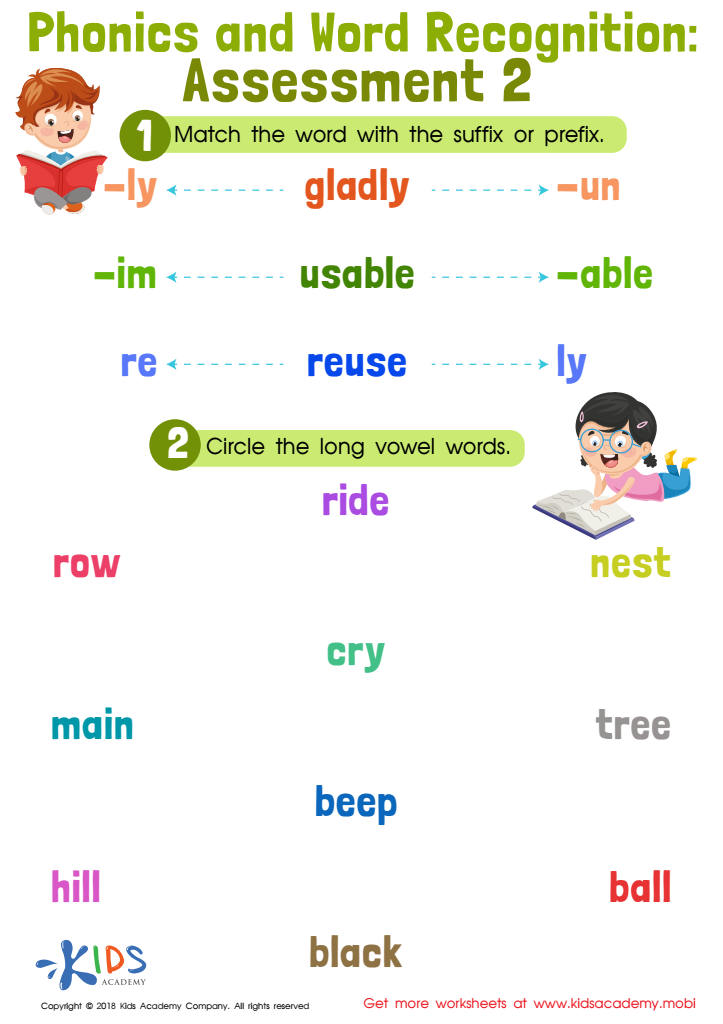
Phonics and Word Recognition: Assessment 2
Give kids common examples of suffixes and prefixes, such as "un-," "unhappy," "ness," "happyness." Ask them to match each word in the word recognition exercise to the correct suffix or prefix. Test phonetic understanding by having them circle the long vowel sounds.
Phonics and Word Recognition: Assessment 2
Worksheet
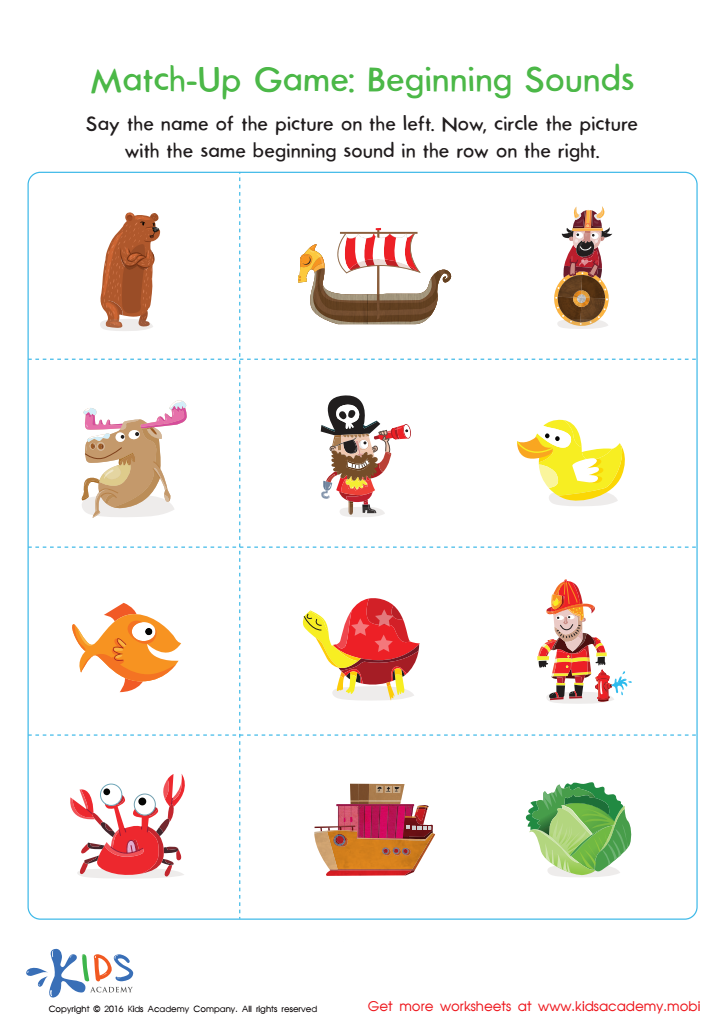
Match–Up Game: Beginning Sounds Worksheet
Start today with this beginning sounds match-up printable!
Teach your child to solve problems mentally with this beginning sounds match-up printable. They'll learn to categorize pictures based on phonics rules, developing mental stamina and focus. It's an important step for recognizing sounds and letters in print, building a foundation for reading and spelling. Start today and take your child's skills to the next level!
Match–Up Game: Beginning Sounds Worksheet
Worksheet
Join Kids Academy for Free
Who is primarily going to use this learning content?








Phonics recognition is a fundamental aspect of early literacy that every parent and teacher should prioritize for children aged 4-7. At this stage, children are developing essential reading skills that will impact their academic success and lifelong learning. Phonics is the method of teaching reading by correlating sounds with letters or groups of letters. This skill enables children to decode words, which fosters independent reading and enhances comprehension.
Understanding phonics helps children to recognize patterns in language, improving their ability to sound out unfamiliar words. This approach builds confidence and motivation, encouraging a love for reading. Moreover, phonics lays the groundwork for spelling and writing, enabling clear communication.
In addition to academic benefits, strong reading skills contribute to broader cognitive development. Children who can read proficiently are more likely to engage with diverse learning materials, fostering creativity and critical thinking.
Supporting phonics recognition helps bridge the gap for struggling readers, ensuring children receive the necessary guidance to thrive. By emphasizing phonics, parents and teachers can create a stronger foundation for literacy, benefiting children both in school and beyond, while fostering a love for reading that lasts a lifetime.








