
Phonics Skills Reading Worksheets for Ages 4-7
10 filtered results
Difficulty Level
Grade
Age
-
From - To
Subject
Activity
Standards
Unlock the world of reading for your child with our Phonics Skills Reading Worksheets, designed for ages 4-7. Engaging and interactive, these worksheets build a strong phonics foundation by blending fun activities, such as matching letters with sounds, identifying word patterns, and simple read-alouds. Perfect for early learners, our worksheets enhance literacy skills, boost confidence, and make learning an enjoyable journey. Tailored to fit any child’s pace and ability, they provide essential practice for beginner readers. Set your child on the path to reading success with our expertly crafted phonics worksheets!
Favorites
With answer key
Interactive
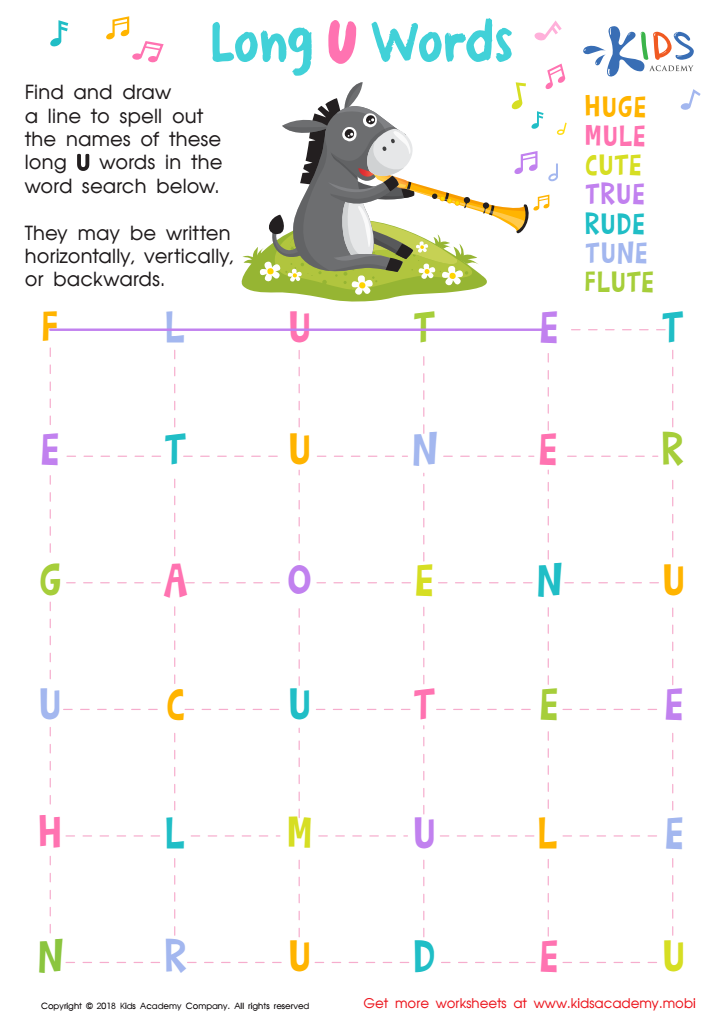
Long /u/ Words Worksheet
Your child needs to learn phonetics to enunciate and differentiate words. This fun worksheet encourages them to find and draw lines connecting the long 'U' words in the word search. Help them read the words on the right side of the picture, then look for them in the word search (horizontally, backwards or vertically).
Long /u/ Words Worksheet
Worksheet
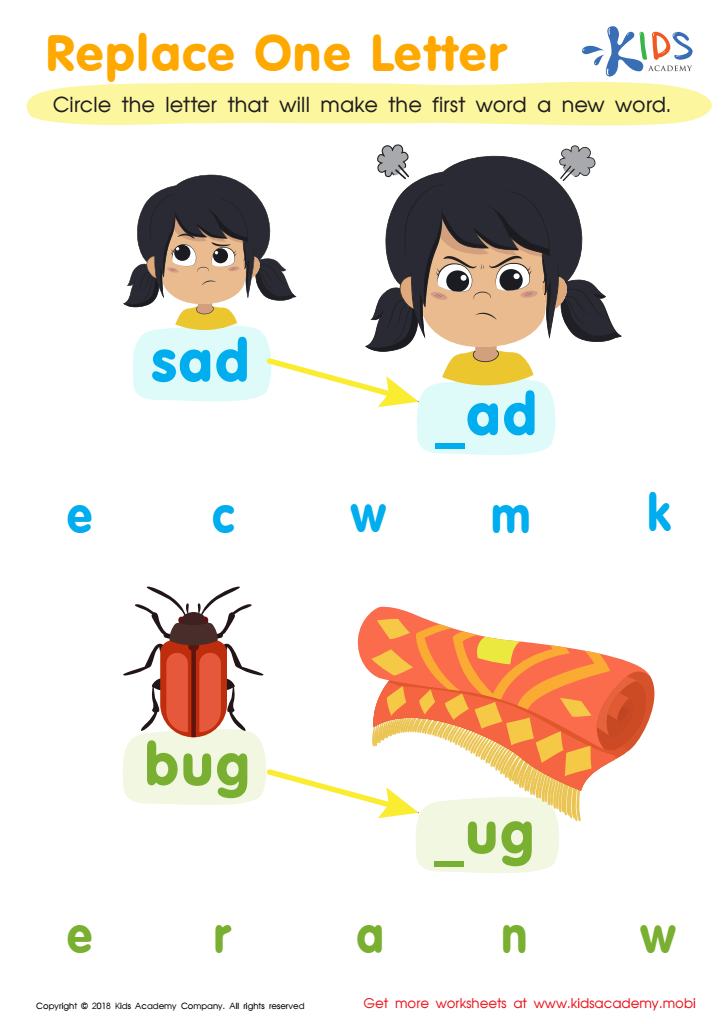
Replace One Letter Worksheet
Emerging readers will practice switching initial consonants to create new words with this fun PDF worksheet. They'll use picture clues, learn about onset letters and work on their fine motor skills as they circle the right letter for each "ad" and "ug" word family.
Replace One Letter Worksheet
Worksheet
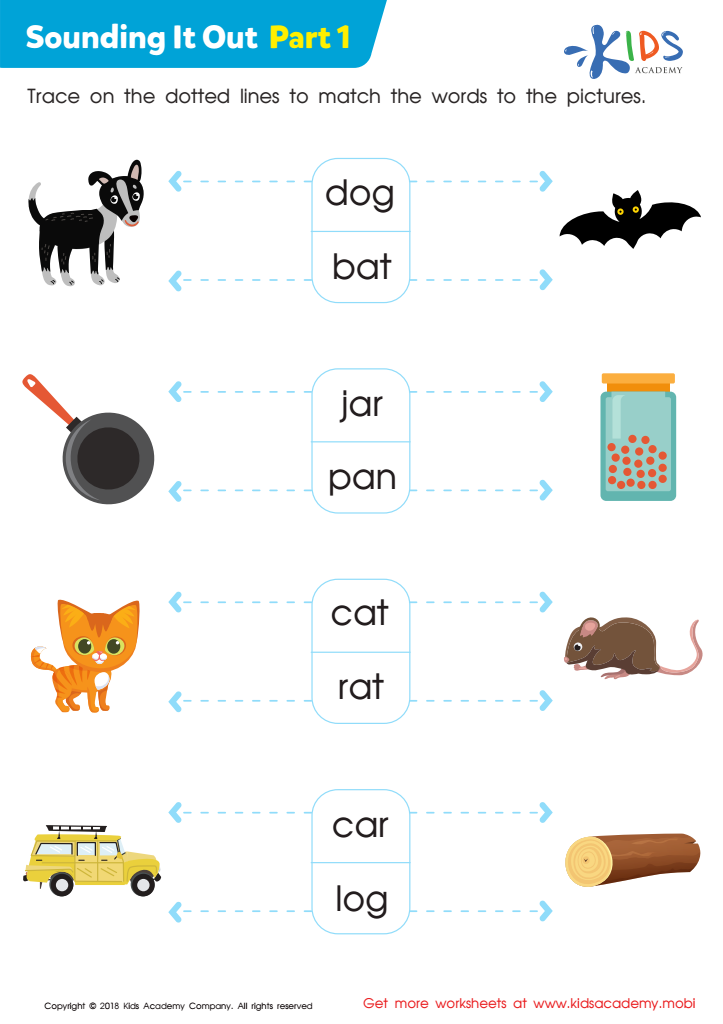
Sounding it Out: Part 1 Worksheet
Help kids learn to read with this fun worksheet! Kids use picture clues to sound out words and trace the dotted lines to match each word to its corresponding image. Stimulating and interactive, this printable is a great way for little learners to practice phonics.
Sounding it Out: Part 1 Worksheet
Worksheet
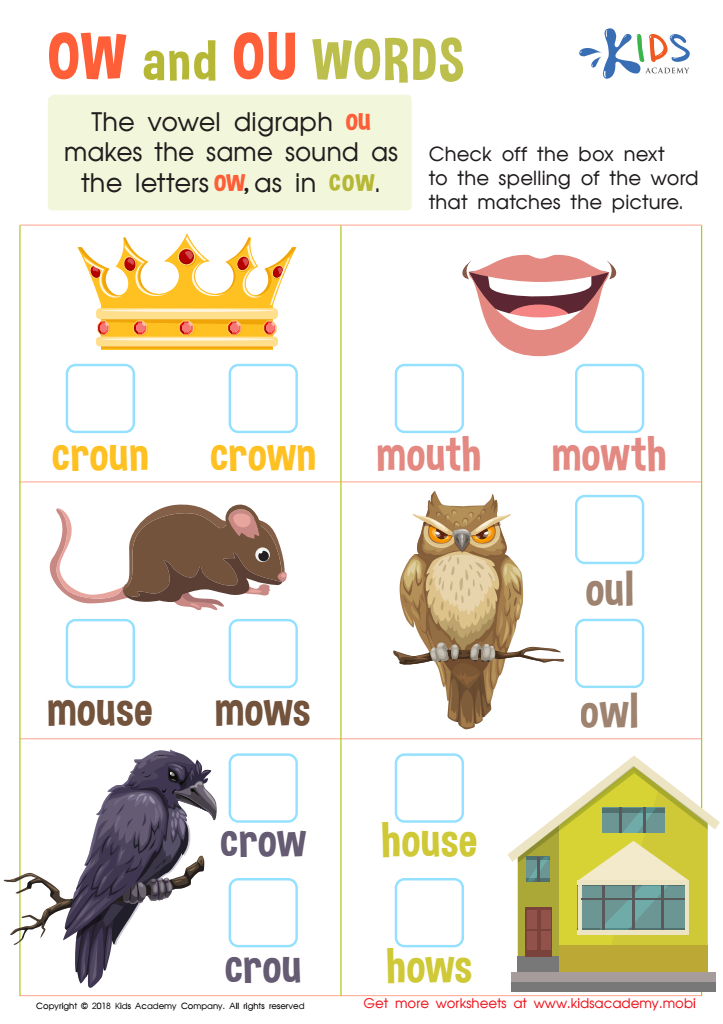
Reading: OW and OU Words Worksheet
Help your kids learn phonetics! Explain the different sounds and long/short variations. Emphasize that some vowel sounds are the same, e.g. ou = ow in cow. For practice, have them read aloud the words in the worksheet and check the box next to the spelling that matches the picture.
Reading: OW and OU Words Worksheet
Worksheet
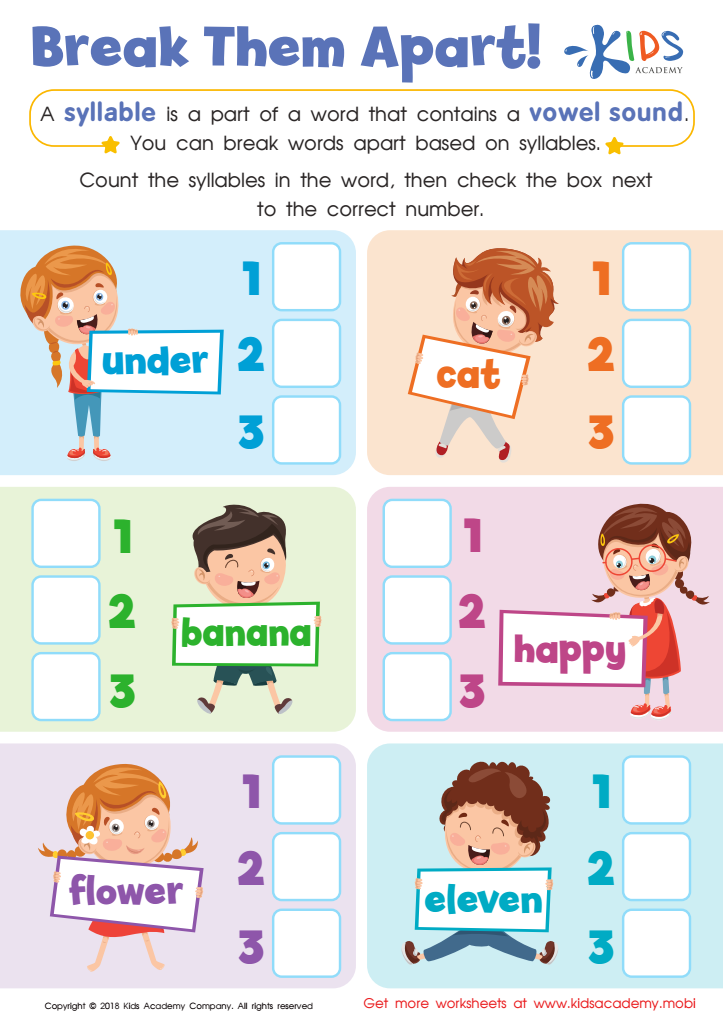
Reading: Break Them Apart Worksheet
See if students understand syllables with this fun worksheet. It teaches them that a syllable is a word part with a vowel sound. Kids read each word and choose how many parts it has. Doing this often helps them decode new words and gain confidence.
Reading: Break Them Apart Worksheet
Worksheet
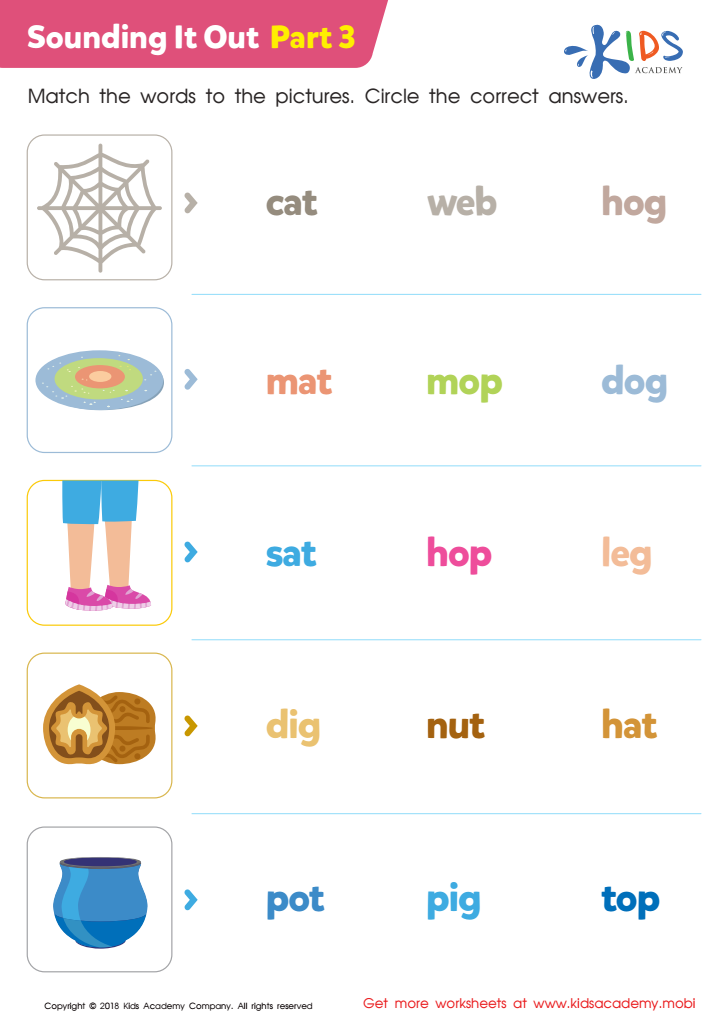
Sounding it Out: Part 3 Worksheet
Once Parts 1 and 2 are complete, this printable phonics worksheet will help kids take their reading skills to the next level! As they gain confidence, give them hints less often and direct their attention to three words in a row. Ask them to read and circle the correct word to complete!
Sounding it Out: Part 3 Worksheet
Worksheet
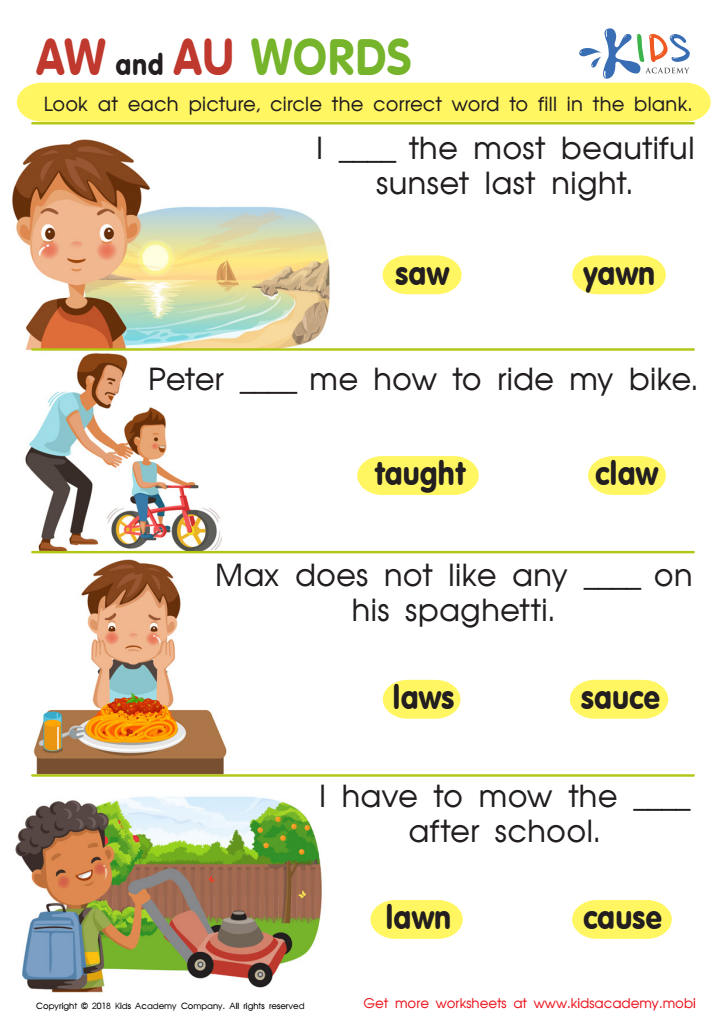
Reading: AW and AU Words Worksheet
This worksheet helps kids recognize that /au/ and /aw/ can make the same sound. Students read sentences and pick the correct word with one of the digraphs. Understanding digraphs improves decoding and reading fluency. Perfect for reading and phonics classes.
Reading: AW and AU Words Worksheet
Worksheet
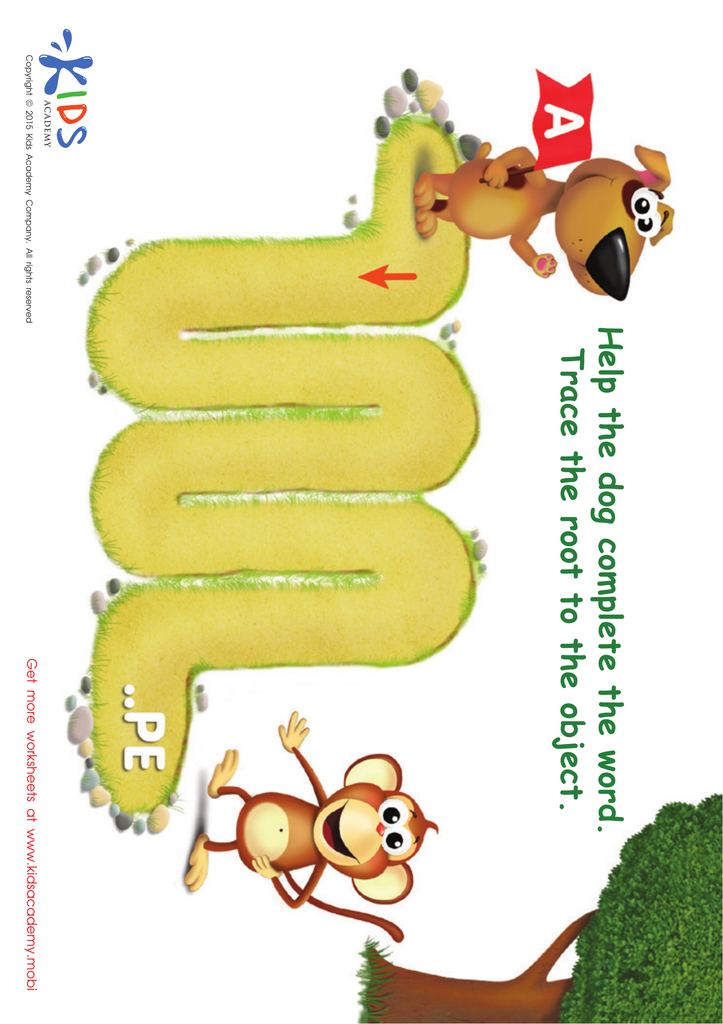
Long Vowel Sound A Worksheet Worksheet
Help our adorable dog by completing the word he's holding a flag for! Use the picture as a clue to read the word. This PDF worksheet will help early learners with pre-reading and phonics skills. For an added challenge, have your child write the word on the page near the path they drew. Be sure to talk about what the long vowel A sounds like for the best results.
Long Vowel Sound A Worksheet Worksheet
Worksheet
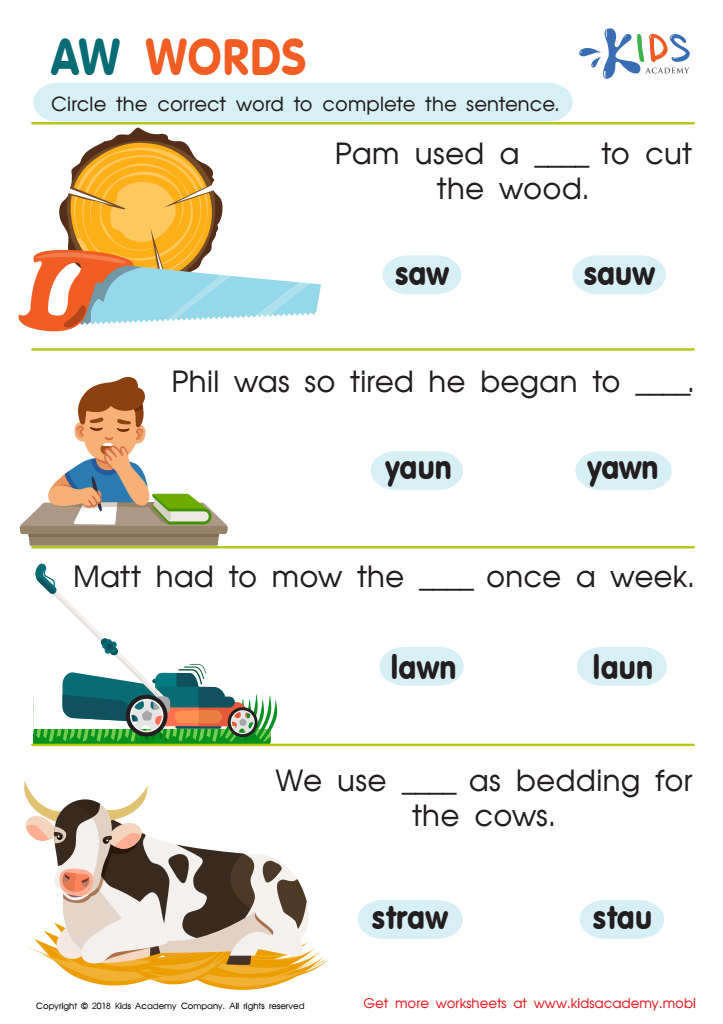
Reading: AW Words Worksheet
Practice decoding the /aw/ digraph with this printable. Students read sentences and select the word with the correct spelling to complete each one. Note, /aw/ is sometimes spelled /au/, so this worksheet helps prevent confusion. Have fun, and practice hard!
Reading: AW Words Worksheet
Worksheet

Long and Short E Worksheet
This fun printout makes learning phonics enjoyable for Grade 3 students. Get them to read the words “tree” and “bed” to recognize the different sounds of the letter “E”. After hearing the words they can color the words and the pictures to understand differences between long and short vowels.
Download (PDF)
 Assign to My Students
Assign to My Students
Long and Short E Worksheet
Worksheet
Join Kids Academy for Free
Who is primarily going to use this learning content?




.jpg)



Phonics skills are fundamental building blocks for reading, especially for young children aged 4-7. During these formative years, children's brains are developing rapidly, making it an optimal time to introduce phonics, which is the relationship between letters and sounds. Understanding phonics helps children decode words, enhancing their ability to read fluently and accurately.
When children grasp phonics skills, they become more confident readers. This confidence can spill over into other areas of learning, making them more eager and willing to explore new subjects. Early success in reading also contributes to a positive attitude toward school and education in general.
Parents and teachers should prioritize phonics because it lays the groundwork for more advanced literacy skills, such as comprehension and critical thinking. Without a strong phonics foundation, children are likely to encounter difficulties as texts become more complex. This can lead to frustration and a decline in their interest and motivation to read.
Moreover, strong reading skills enable children to access a broader range of information and experiences. By investing time in phonics education, parents and teachers are not just teaching children to read—they are opening doors to a world of knowledge, creativity, and lifelong learning. Therefore, the importance of phonics skills for children in this age group cannot be overstated.








