Map reading skills Science Worksheets for Ages 4-7
1 filtered results
-
From - To
Discover our engaging map reading skills science worksheets designed for children ages 4-7! Perfect for young learners, these worksheets help develop essential map-reading abilities through fun and interactive activities. Students will explore concepts such as direction, location, and simple symbols while enhancing their observational skills. Our thoughtfully crafted resources support early childhood development, making learning both enjoyable and effective. Whether at home or in the classroom, these worksheets encourage curiosity about the world around them while fostering a foundational understanding of geography. Start your little explorers on their journey to becoming confident map readers today!
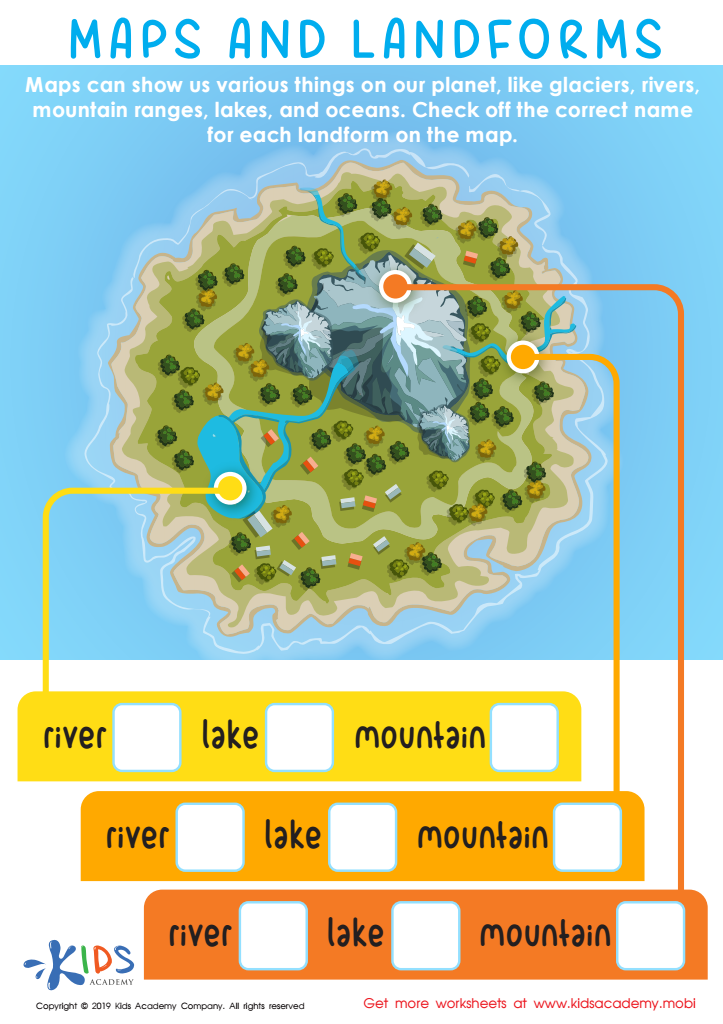
Maps and Landforms Worksheet
 Assign to My Students







Parents and teachers should prioritize map reading skills in children ages 4-7 because these skills are foundational for cognitive development and spatial awareness. Learning to read maps helps children enhance their critical thinking and problem-solving abilities as they interpret symbols, scale, and direction. This skill fosters independence, as children begin to understand how to navigate their surroundings and plan routes, building confidence in their decision-making.
Moreover, map reading integrates science concepts such as geography and environmental awareness. Teaching young learners about maps introduces them to different landforms, distances, and locations, promoting curiosity about the world. Engaging with maps encourages observational and inquiry skills, which are essential for scientific literacy.
Additionally, incorporating map reading into play can make learning enjoyable, using real-world contexts through treasure hunts or simple navigation tasks that spark children's imaginations. As they actively engage with maps, they develop a sense of belonging and an appreciation for their environment, leading to lifelong skills in analysis and critical reflection. In essence, investing time in developing map reading skills nurtures a holistic approach to education, ensuring a well-rounded learning experience for young children.







