Understanding pollination Science Worksheets for Ages 4-7
3 filtered results
-
From - To
Dive into the world of flowers and bees with our "Understanding Pollination Science Worksheets for Ages 4-7". These engaging worksheets bring the fascinating process of pollination to life, helping young learners grasp how bees and other pollinators contribute to plant reproduction. Designed to foster curiosity and scientific thinking, each activity is age-appropriate, colorful, and fun, guiding children through interactive exercises that illustrate the journey of pollen from flower to flower. Perfect for both classroom and home learning, these worksheets are an excellent way to introduce the wonders of nature to early learners.
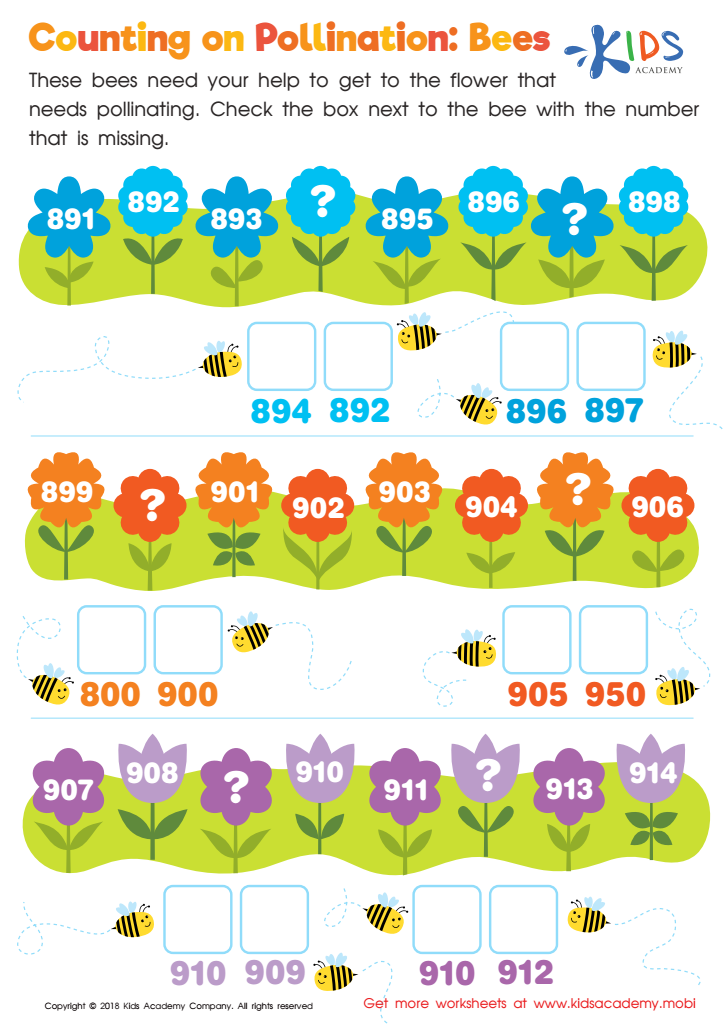
Counting on Pollination: Bees Worksheet
 Assign to My Students
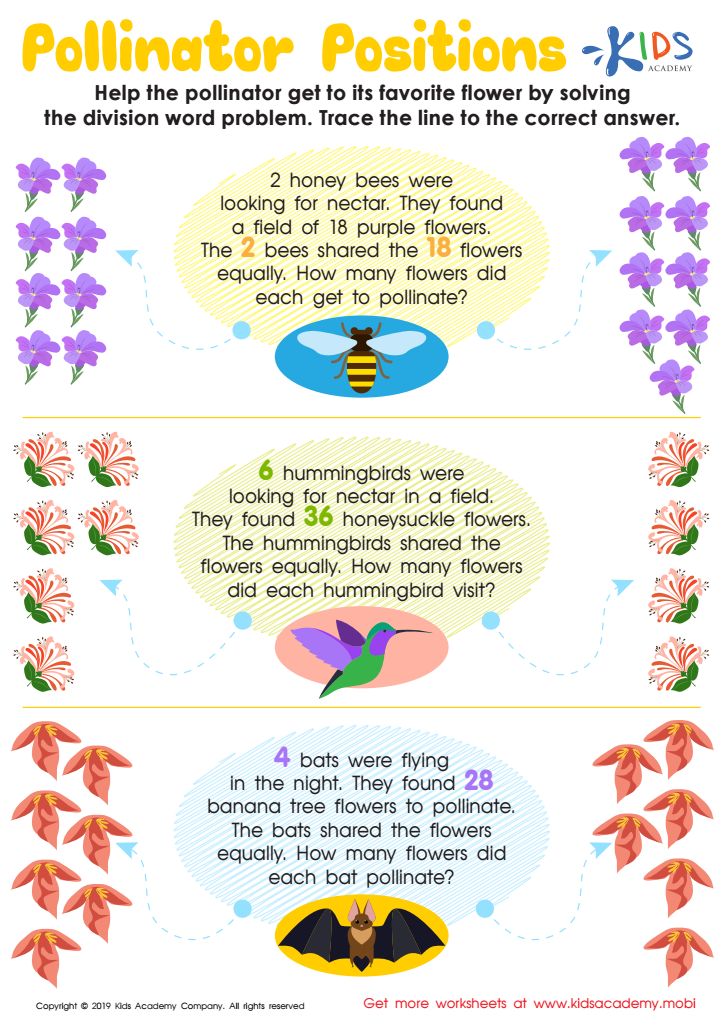
Pollinator Positions Worksheet
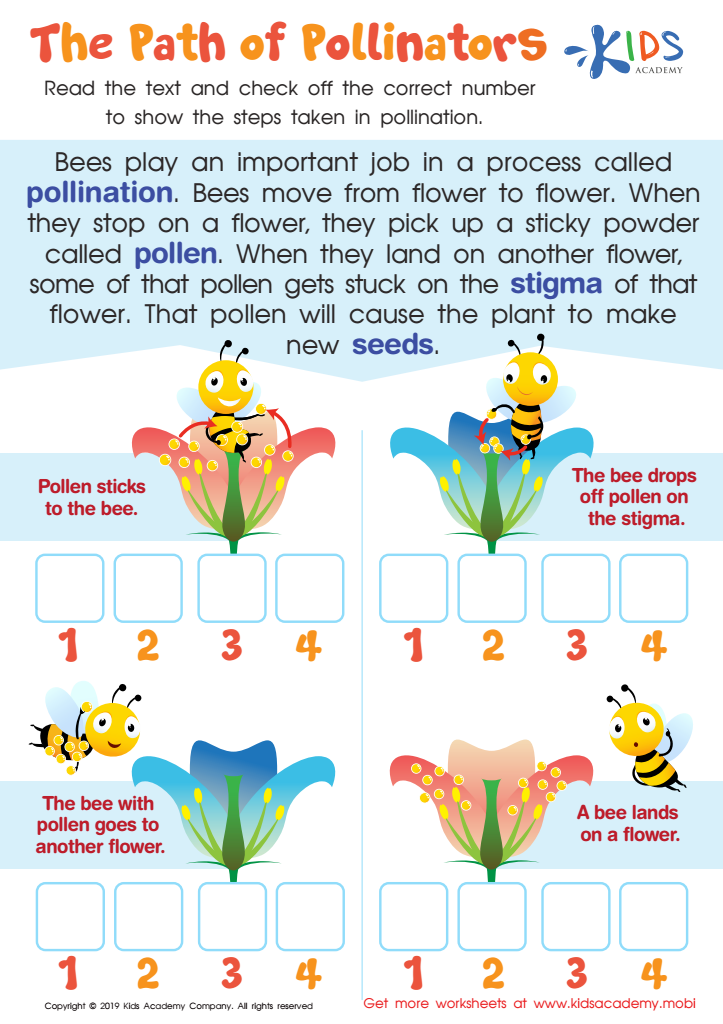
The Path of Pollinators Worksheet







Understanding pollination science is pivotal for children ages 4-7 as it fosters their early interest in the natural world and sustainable living. This foundational knowledge promotes environmental stewardship by illustrating the intricate relationships within ecosystems, such as the role of bees, butterflies, and other pollinators in the growth of fruits, vegetables, and flowers. When young children grasp these concepts, they develop a connection to nature that can inspire lifelong appreciation and conservation efforts.
Moreover, learning about pollination supports cognitive development. It enhances observational skills as children learn to identify different pollinators and the flowers they visit. It encourages curiosity and critical thinking about complex processes in nature, aligning well with STEM (Science, Technology, Engineering, and Mathematics) education goals. Embedding these lessons early contributes to better academic performance and a solid understanding of biology and ecology.
Finally, involving parents and teachers in this education means modeling positive attitudes towards the environment. Children look up to adults, so when parents and teachers show enthusiasm and concern for pollinators and plants, it reinforces the importance of those ideas. By promoting responsibility and care for living organisms in a hands-on, engaging manner, we nurture informed, empathetic future caretakers of our planet.







