Animal Classification Plants and Animals Worksheets for Ages 4-7
5 filtered results
-
From - To
Explore our engaging "Animal Classification Plants and Animals Worksheets" designed for ages 4-7! These printable worksheets from Kids Academy introduce young learners to the exciting world of animal and plant classification. With fun activities and colorful visuals, children will learn to differentiate between a variety of animals and plants, understanding their unique characteristics and habitats. Perfect for early science education, these worksheets help develop critical thinking and observational skills, fostering a love for nature and science. Ideal for classroom or home use, spark curiosity in your little explorers today! Download now and start the adventure.
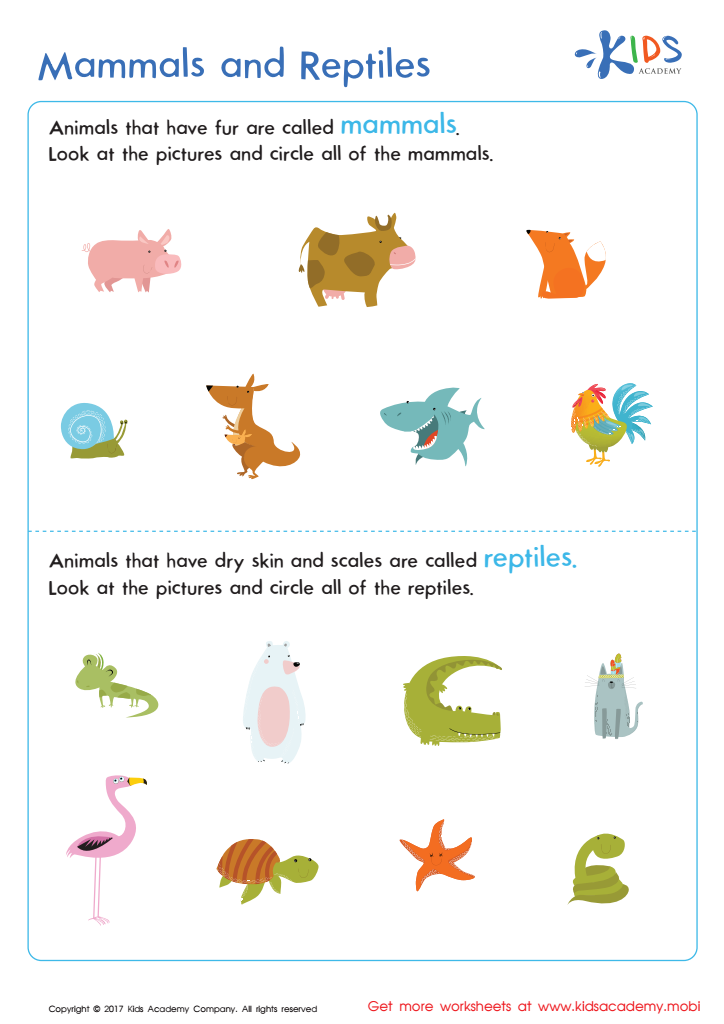
Mammals and Reptiles Worksheet
 Assign to My Students

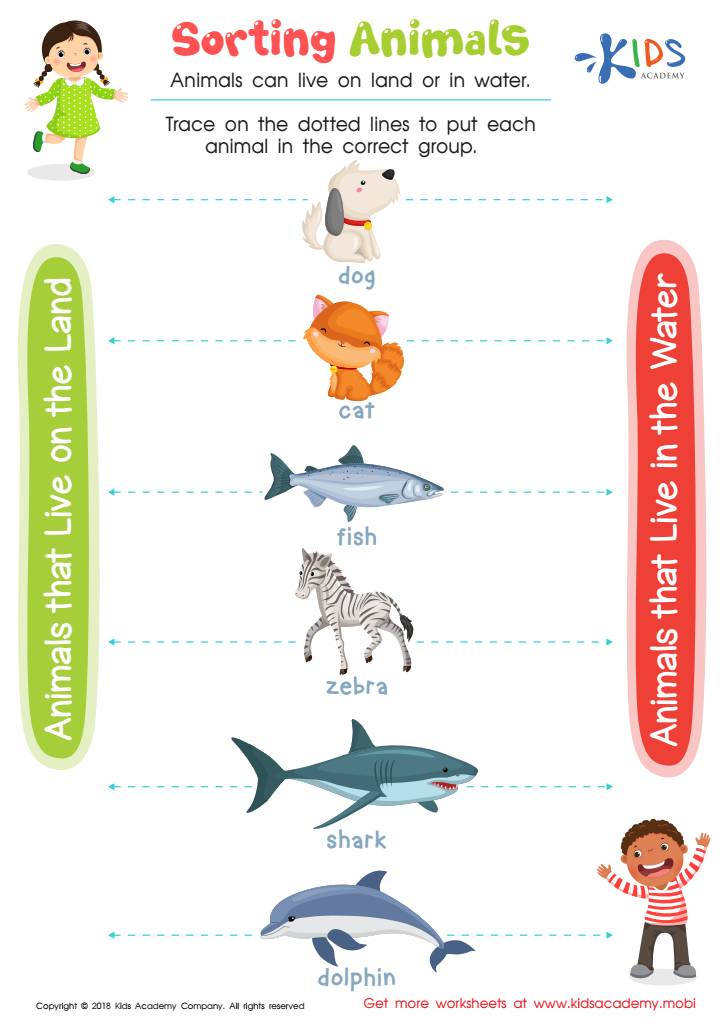
Sorting Animals Worksheet
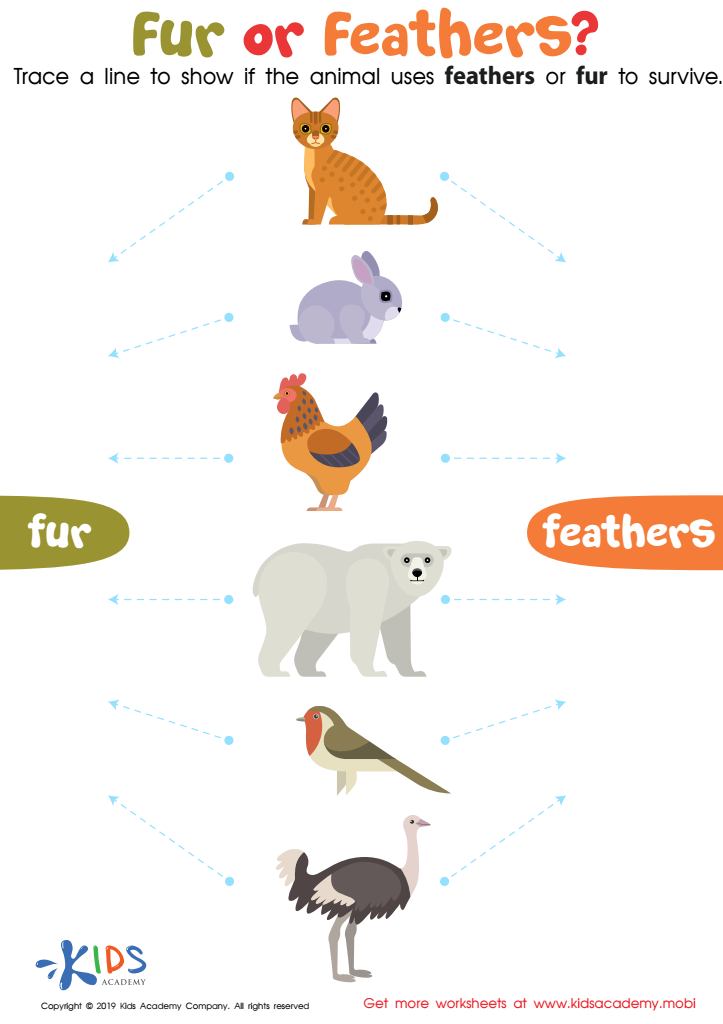
Fur or Feathers? Worksheet
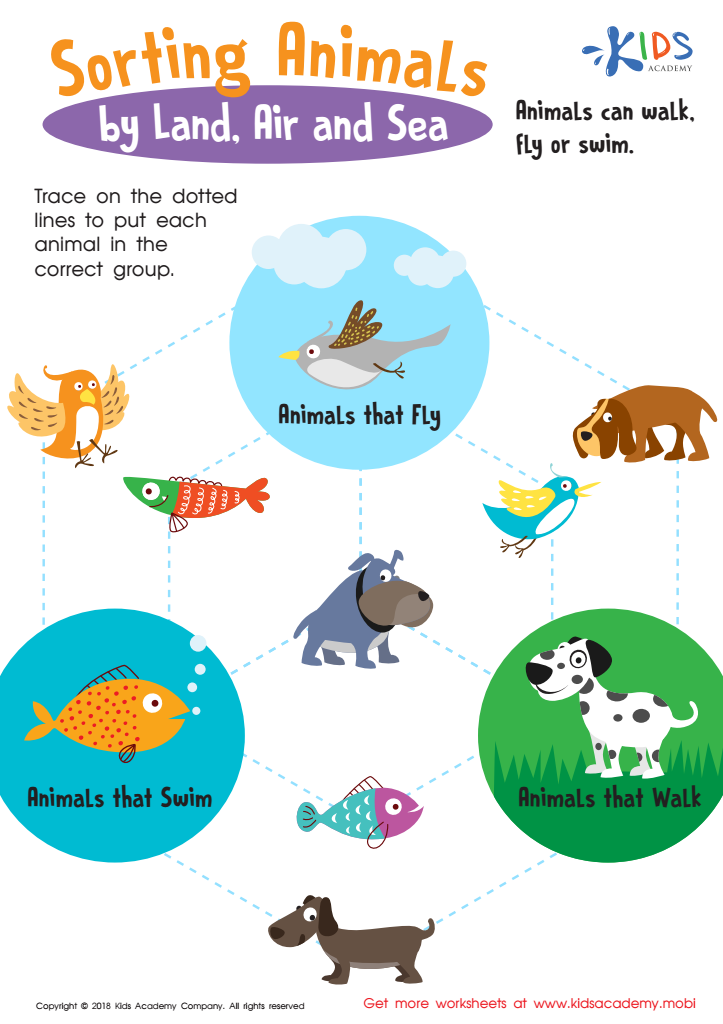
Sorting Animals by Land, Air and Sea Worksheet
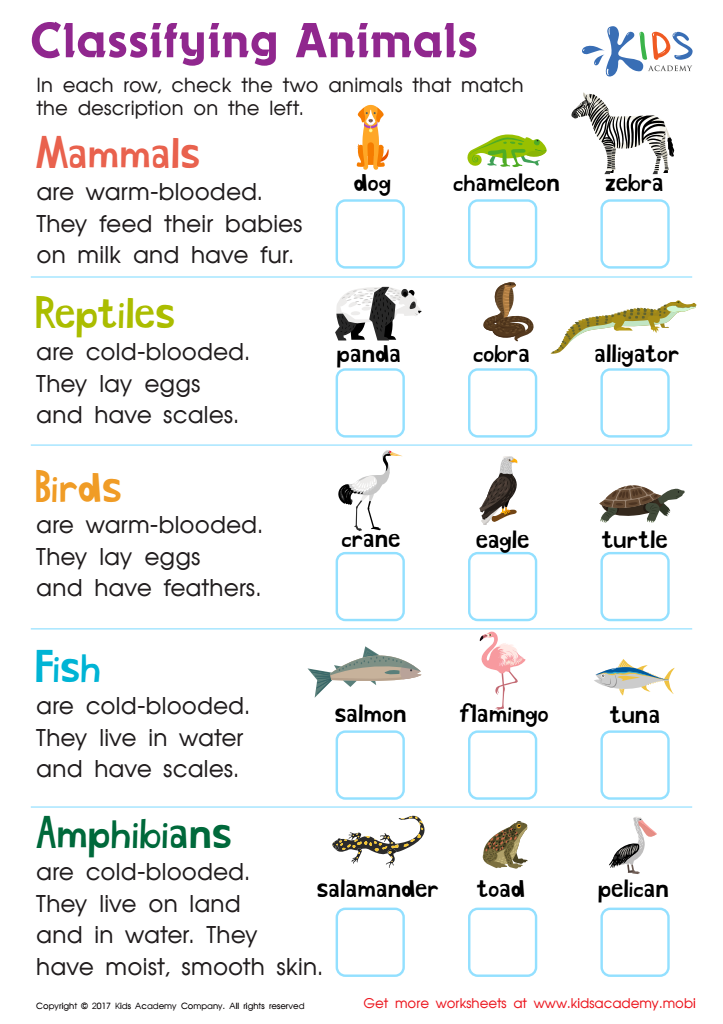
Classifying Animals Worksheet








Understanding animal classification and the differences between plants and animals is crucial for young children as it forms the foundation for their future learning in science and nature. For children aged 4-7, introducing these concepts early fosters curiosity, critical thinking, and a love for the natural world.
Firstly, learning about animal classification enhances cognitive development. It helps children learn to categorize, compare, and identify different species, sharpening their observational and analytical skills. Kids begin to understand patterns, such as differentiating animals based on their habitats, diets, and physical characteristics.
Secondly, understanding the differences between plants and animals is essential for appreciating biodiversity. Children are naturally curious and asking questions like "Why doesn't a tree move?" or "How does a fish breathe underwater?" guides them toward scientific inquiry and knowledge.
Moreover, early exposure to these topics promotes environmental awareness and responsibility. When children understand the variety of life forms and their roles in the ecosystem, they become more inclined to appreciate and protect their environment.
Parents and teachers play a pivotal role in nurturing this interest through engaging activities, hands-on experiences, and interactive learning methods, ensuring that children develop a well-rounded understanding and respect for all living things.








