Animal recognition Plants and Animals Worksheets for Ages 4-7
6 filtered results
-
From - To
Discover the joy of learning with our "Animal Recognition: Plants and Animals Worksheets for Ages 4-7". Tailored to engage young minds, these printable worksheets help children identify and differentiate between various animals. Each worksheet is designed to enhance observation skills, promote critical thinking, and encourage curiosity about the natural world. Children will love the vibrant illustrations and interactive activities that make learning fun and effective. Explore our easy-to-use resources and watch your child's knowledge and confidence grow as they learn about the amazing animals around them. Perfect for parents and teachers seeking quality educational materials.
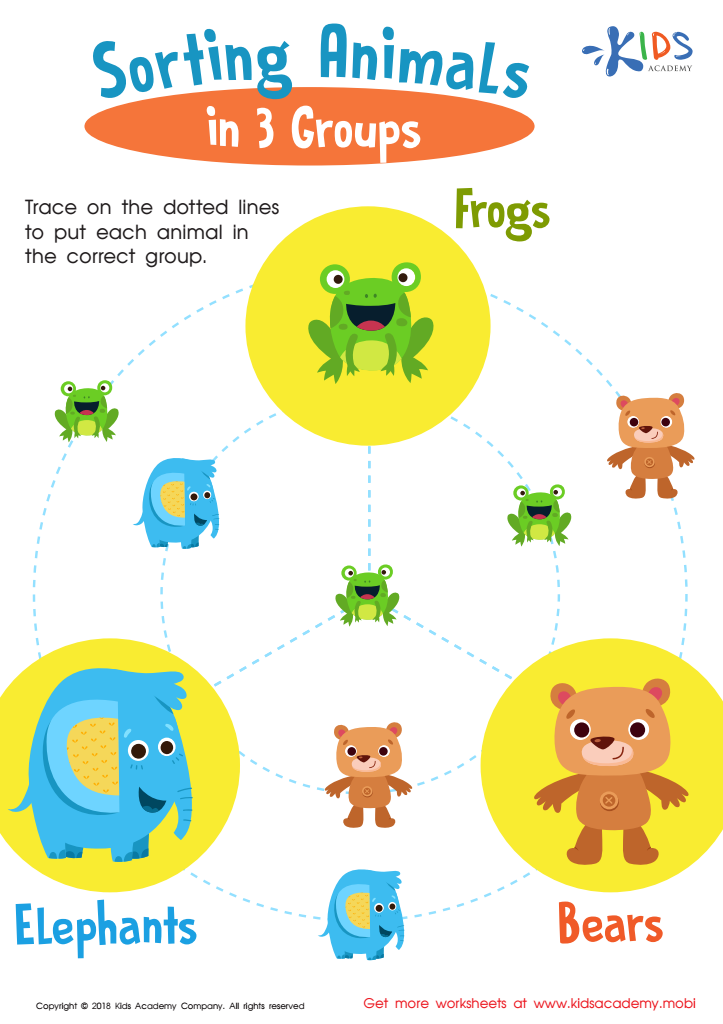
Sorting Animals in 3 Groups Worksheet
 Assign to My Students
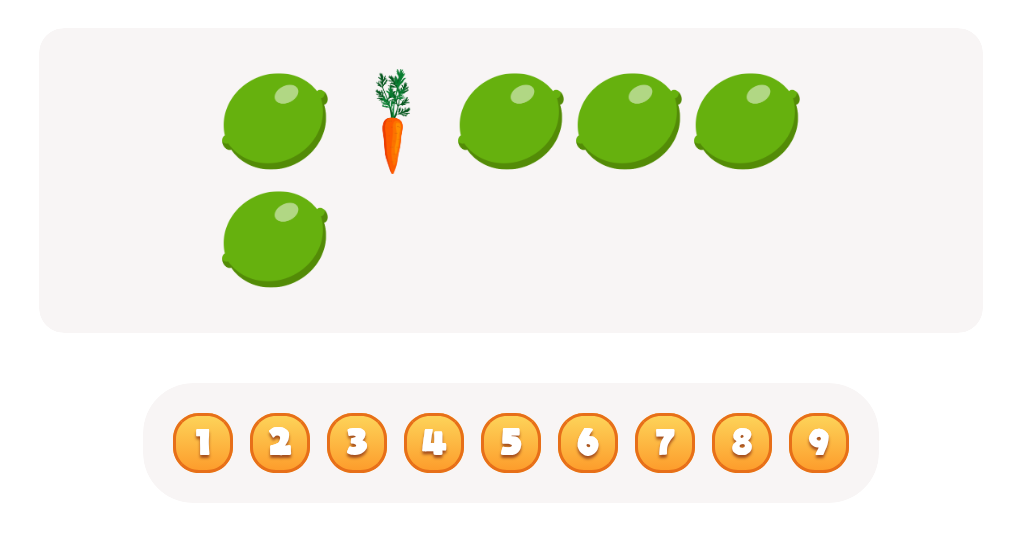

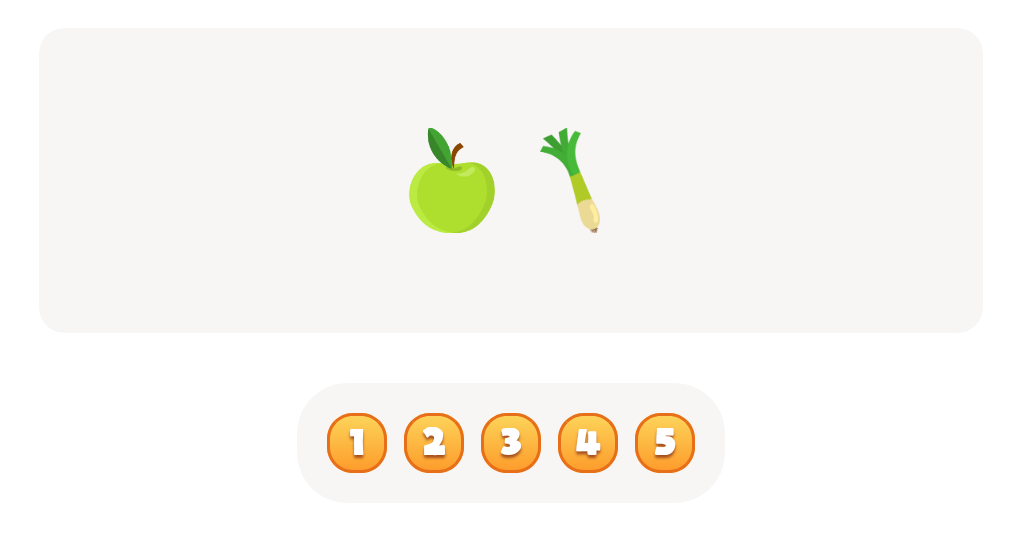
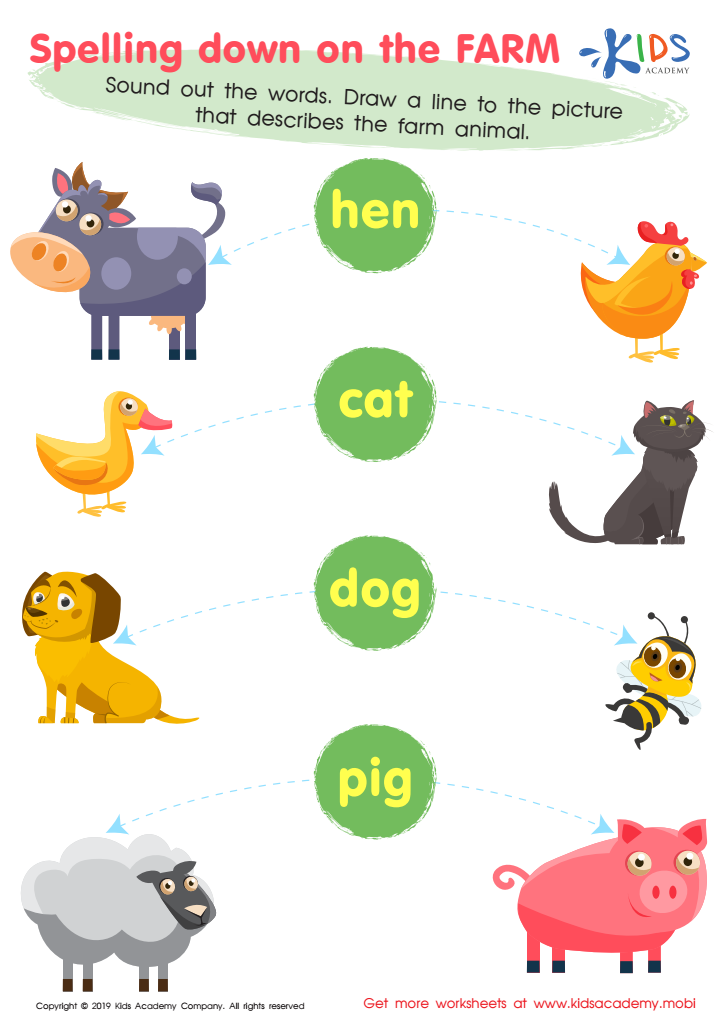
Spelling Down on the Farm Worksheet
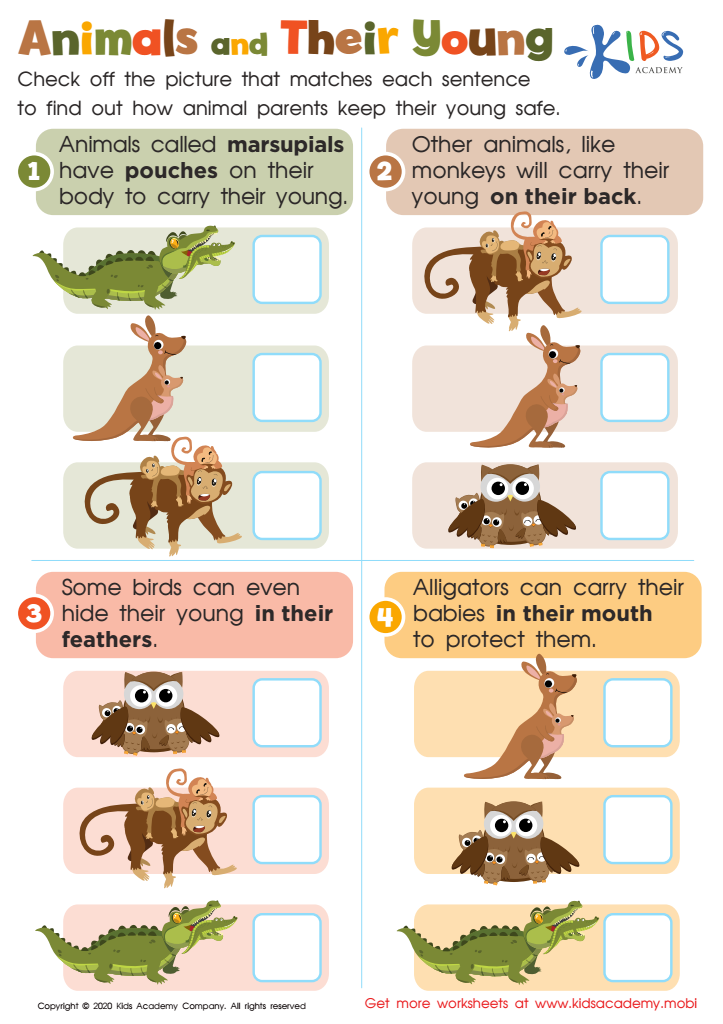
Animals and Their Young Worksheet
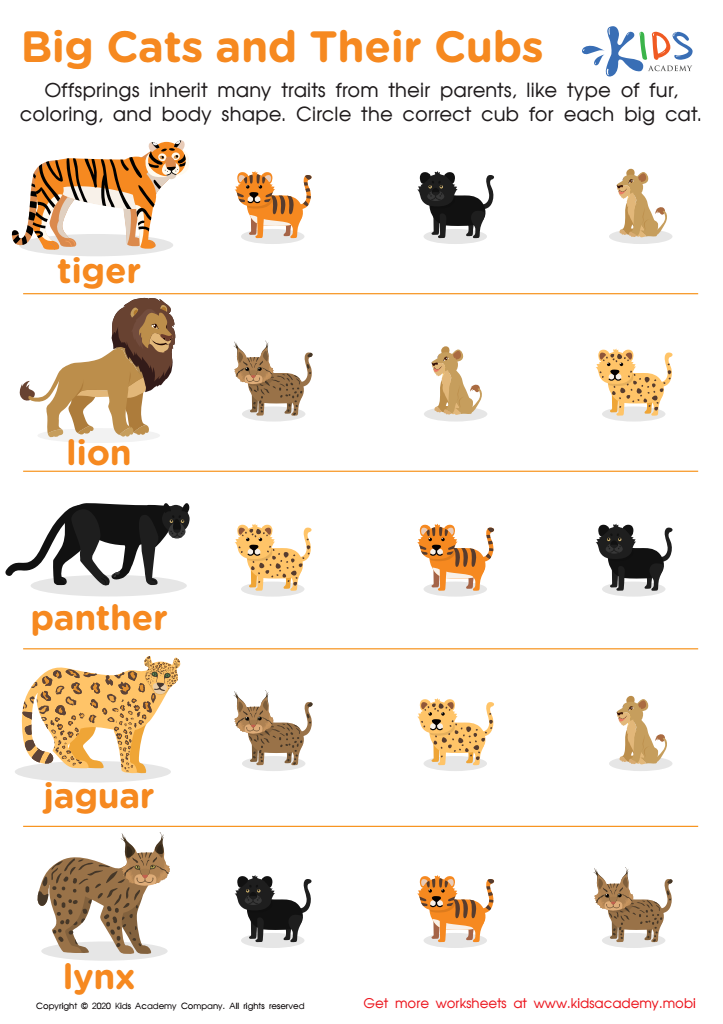
Big Cats and Their Cubs Worksheet
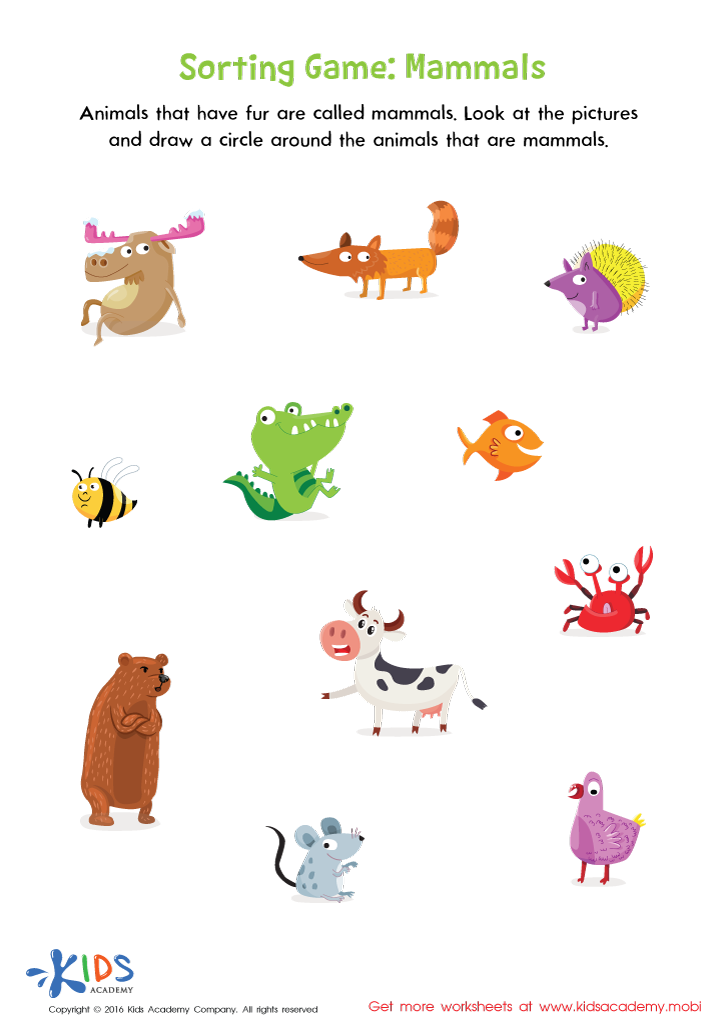
Mammals Sorting Worksheet
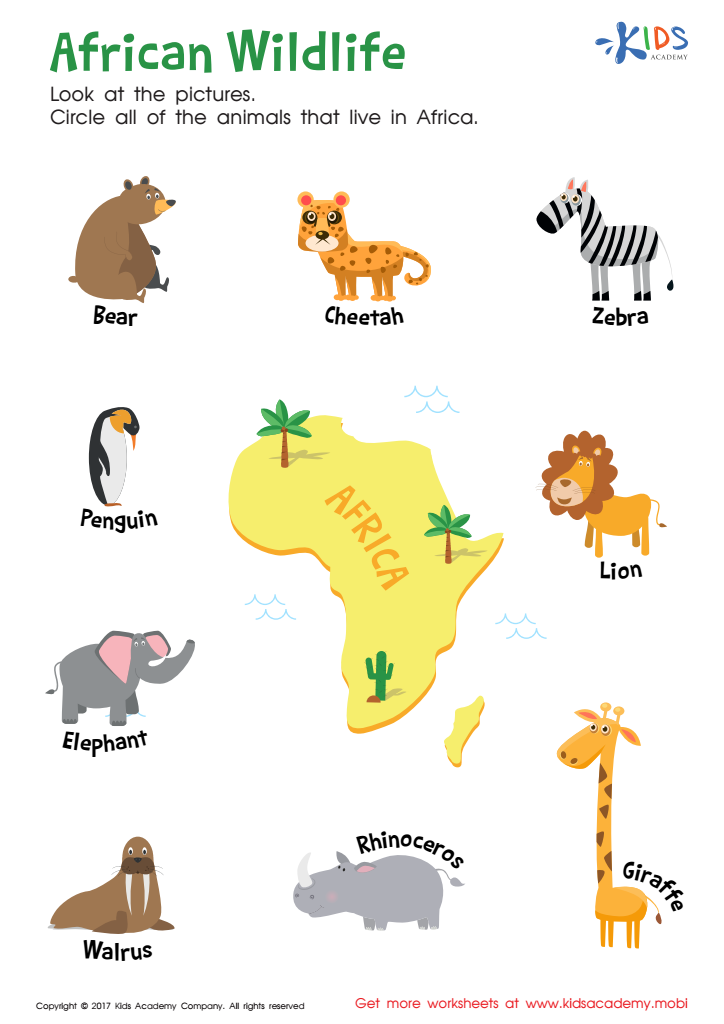








Understanding animal recognition and the differences between plants and animals is fundamental for children aged 4-7 as they explore the world around them. Parents and teachers should emphasize this knowledge because it builds a foundation for biological sciences and fosters a sense of curiosity about nature.
Firstly, distinguishing between animals and plants helps children develop critical thinking and observation skills. Recognizing characteristics like movement in animals or growth in plants teaches children to use their senses and aids cognitive development.
Moreover, early exposure to biology strengthens children's environmental awareness. They'll learn to appreciate biodiversity, understanding that different living things have distinct roles in our ecosystem. This appreciation can grow into a lifelong respect for nature and foster responsible behavior towards conservation and sustainability.
Additionally, familiarizing young children with various animals and plants can spark an interest in science. Engaging activities such as nature walks, drawing, or storytelling can make learning interactive and fun, fostering a love of learning in general.
Lastly, discussing plants and animals often dovetails with holistic educational goals, like improving language skills through new vocabulary and enhancing social-emotional learning as children express care and empathy towards living things. Early education on these topics helps shape well-rounded, informed, and curious individuals.