
Understanding life cycles Plants and Animals Worksheets for Ages 4-7
6 filtered results
Difficulty Level
Grade
Age
-
From - To
Subject
Activity
Standards
Discover the fascinating world of life cycles with our "Understanding Life Cycles: Plants and Animals Worksheets" designed specifically for ages 4-7. These engaging worksheets introduce young learners to the essential concepts of growth and development in both plants and animals. Through vibrant illustrations and interactive activities, children will explore the stages of life from seed to flower or egg to adult. Our resources are tailored to support early science education, spark curiosity, and promote critical thinking skills. Perfect for home or classroom use, these worksheets make learning about life cycles fun and accessible for young minds. Ideal for foundational knowledge in biology!
Favorites
With answer key
Interactive
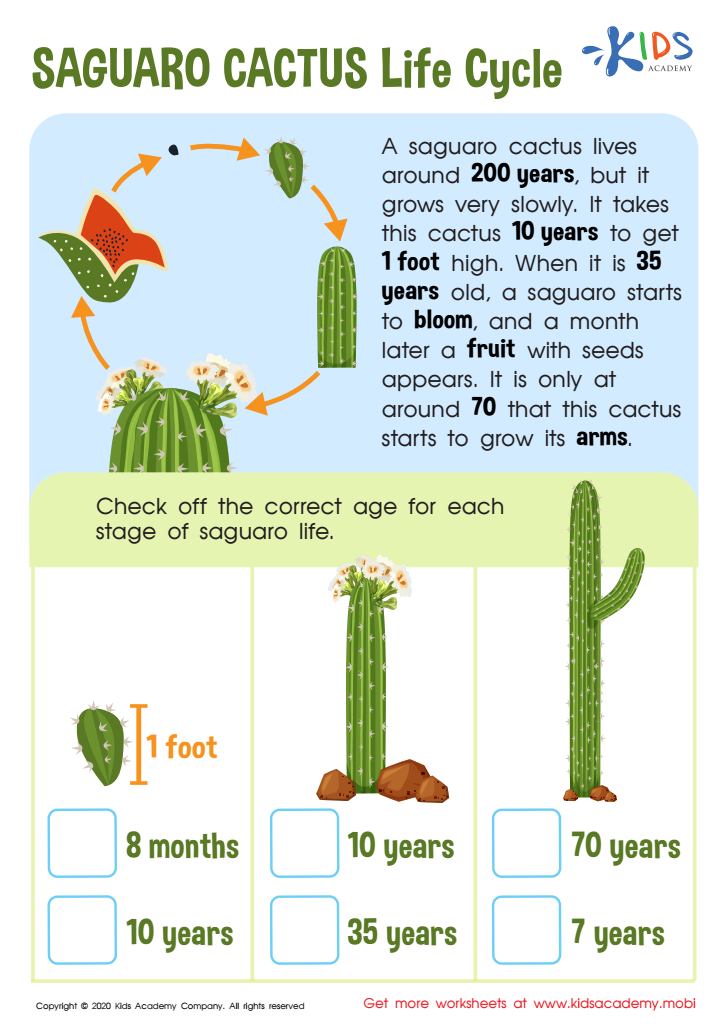
Saguaro Cactus Life Cycle Worksheet
Teach your child about the saguaro cactus, which takes 35 years to bloom and can live up to twice the lifespan of a human! Print this free PDF worksheet to engage learners with an interesting passage. Check off the correct answers to reflect their learning!
 Assign to My Students
Saguaro Cactus Life Cycle Worksheet
Worksheet

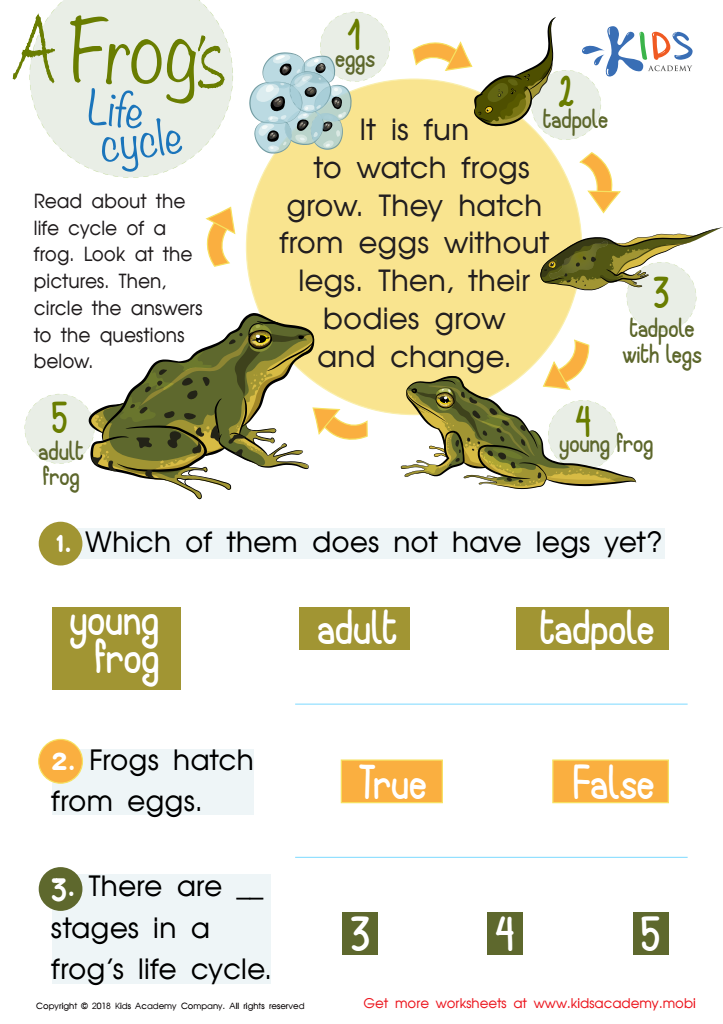
A Frog’s Life Cycle Worksheet
Encourage your kids to learn about frogs! Ask them to tell you some features, then read and discuss the text that explains the frog's life cycle. Show them the pictures to help them visualize it. Finish by helping them answer the questions at the bottom of the worksheet.
A Frog’s Life Cycle Worksheet
Worksheet
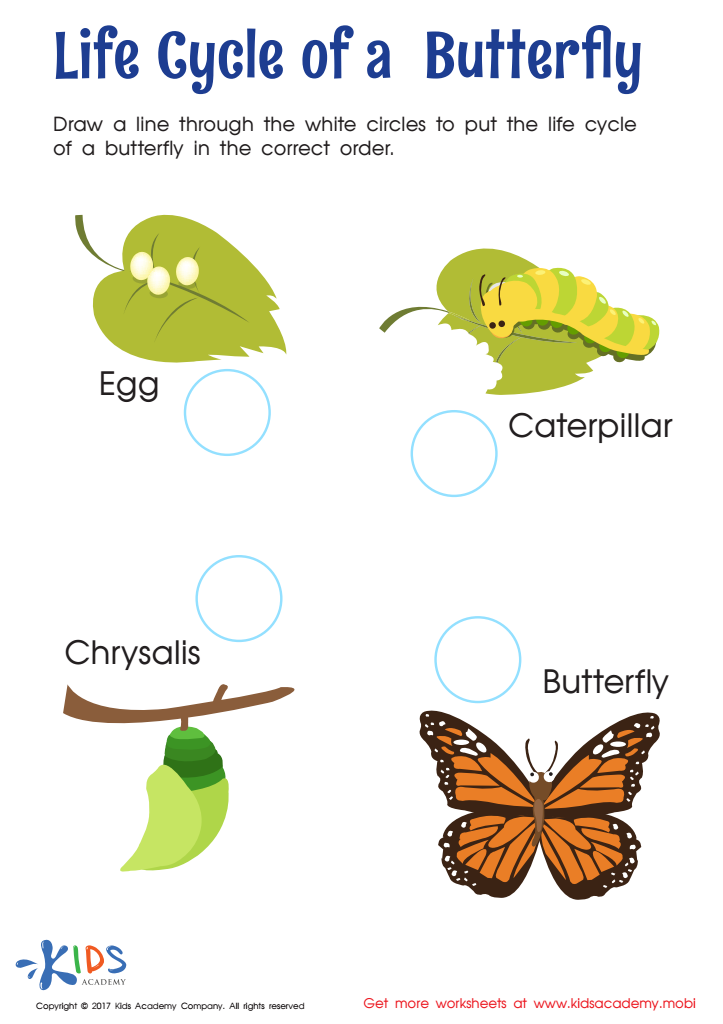
Life Cycle of Butterfly Worksheet
Kids Academy offers an exciting activity – a Life Cycle of a Butterfly Worksheet PDF. It shows four stages in the lifecycle of a butterfly with vivid pictures. Kids put the stages in the correct order to study the lifecycle.
Life Cycle of Butterfly Worksheet
Worksheet
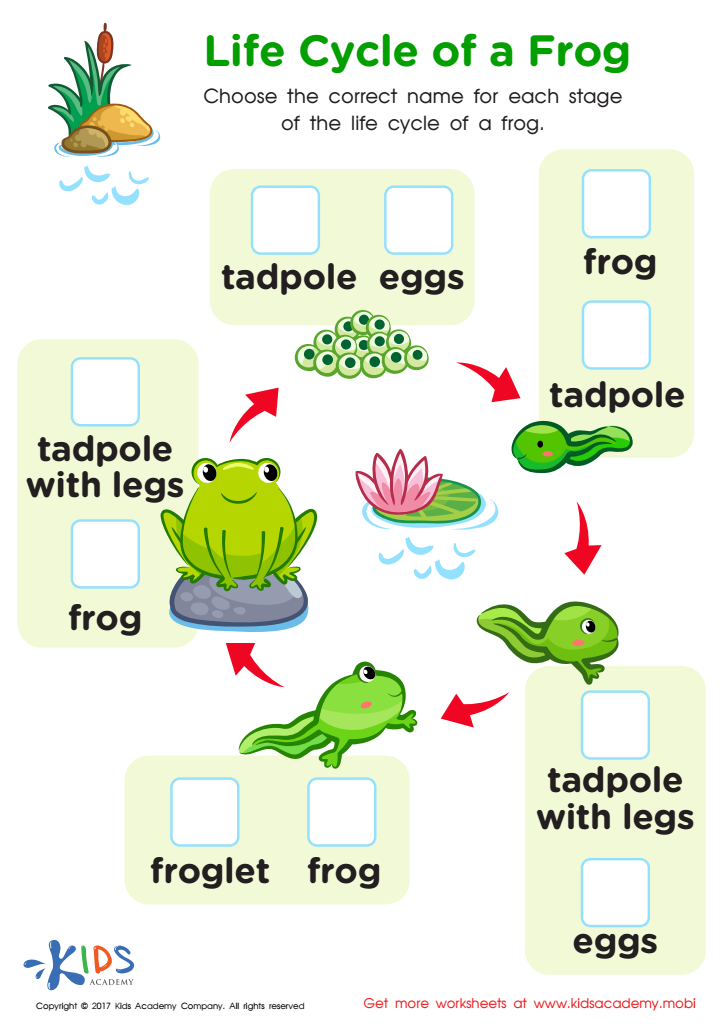
Life Cycle Frog Printable
Kids can explore the life cycle of frog with this fun worksheet! Draw lines from one stage to the next to follow the transformation from tadpole to frog and learn about the cycle of life.
Life Cycle Frog Printable
Worksheet
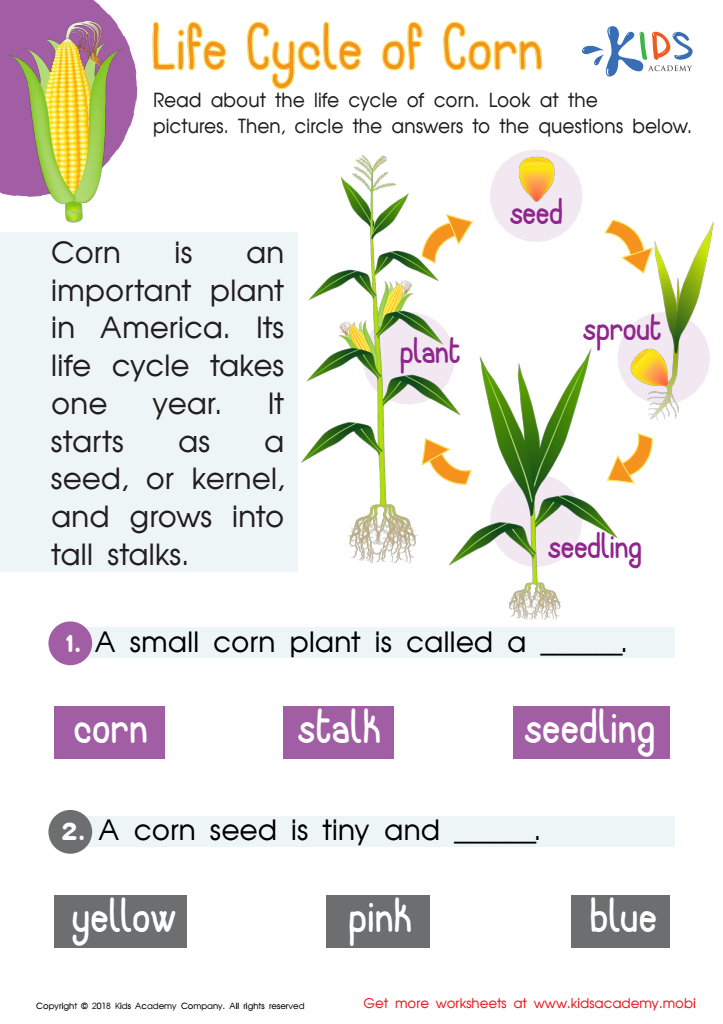
Life Cycle of Corn Worksheet
Help your kids learn about corn! Ask them what foods it's used to make. Read this worksheet and look at the pictures to learn the life cycle of corn. Then, have them circle the answers to the questions at the bottom. Corn is an important crop for farmers, used to make many foods we eat today.
Life Cycle of Corn Worksheet
Worksheet
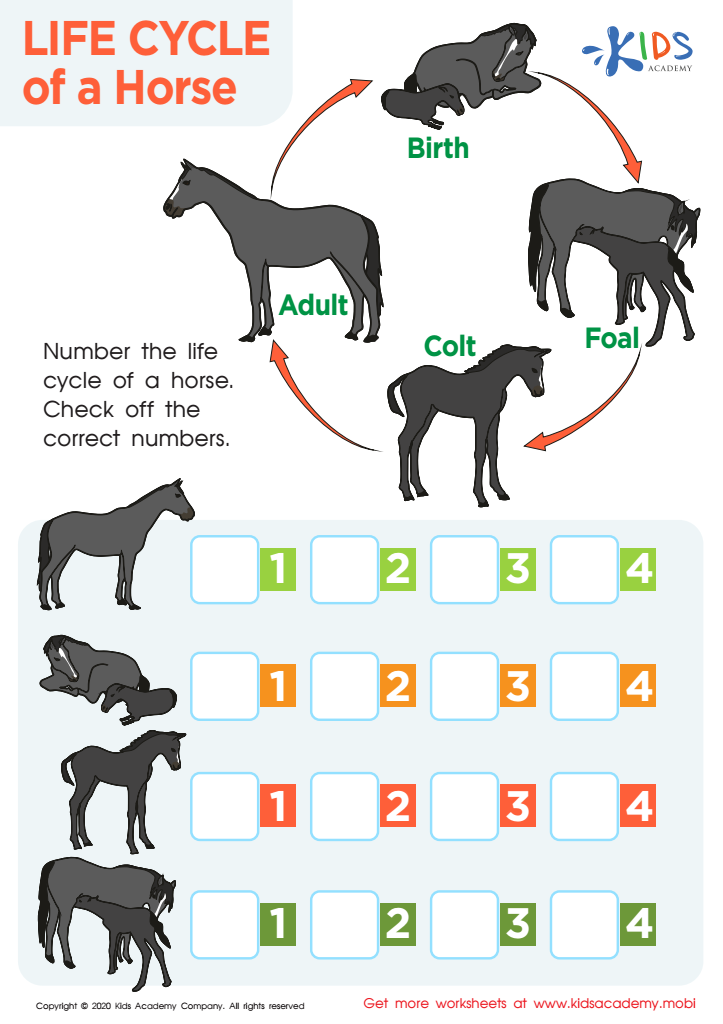
Life Cycle of a Horse Worksheet
Kids Academy's science worksheet on horses' lifecycles offers an engaging way for kids to learn! They'll study the diagram and label each stage of life, from birth to adulthood, and then number the pictures to mark the correct sequence. Fun and educational - a perfect way to get your kids learning!
Life Cycle of a Horse Worksheet
Worksheet
Join Kids Academy for Free
Who is primarily going to use this learning content?






Understanding life cycles in plants and animals is crucial for children aged 4-7, as it introduces them to essential concepts about growth, change, and the interconnectedness of living things. By exploring life cycles, children develop foundational scientific knowledge that fosters curiosity and encourages observation of the natural world around them. This understanding cultivates a sense of awe about nature and enhances their ability to appreciate biodiversity.
Fostering early science education helps build critical thinking and problem-solving skills. Learning about life cycles empowers children to ask questions, make predictions, and draw conclusions based on their observations. Additionally, it nurtures empathy and respect for living organisms, as children grasp the importance of caring for animals and plants within their environments.
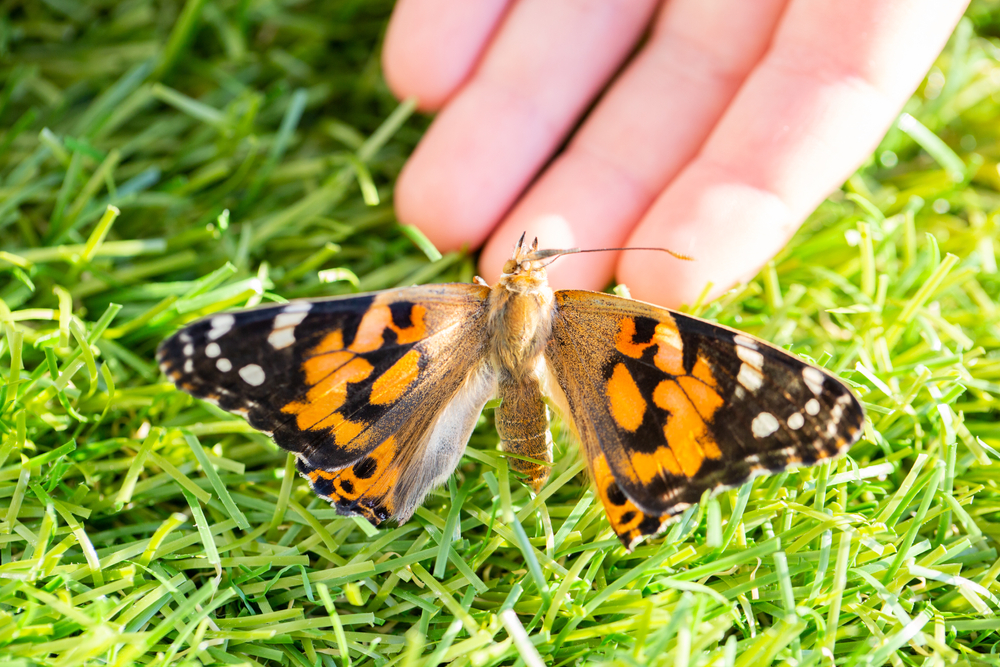
For parents and teachers, integrating life cycle education offers rich opportunities for hands-on experiences, promoting interactive learning through gardening, observing insects, or watching the metamorphosis of a butterfly. Such activities not only support cognitive development but also strengthen emotional bonds as children engage as a family or class in exploration.
Ultimately, caring about life cycles equips children with knowledge that supports environmental awareness and responsibility, forming a foundation for becoming informed and conscientious stewards of the planet.








