
Observational skills Space Worksheets for Ages 4-7
3 filtered results
Difficulty Level
Grade
Age
-
From - To
Subject
Activity
Standards
Enhance your child's observational skills with our engaging Space Worksheets designed for ages 4-7. These carefully curated activities promote exploration and curiosity about the universe while honing important skills like attention to detail and critical thinking. Each worksheet encourages young learners to observe, compare, and draw conclusions about space-related topics, such as planets, stars, and rockets. Perfect for at-home learning or classroom use, our worksheets offer fun and interactive ways for kids to develop their observational abilities while nurturing a love for science. Download now and watch your child's fascination with space and learning grow!
Favorites
With answer key
Interactive
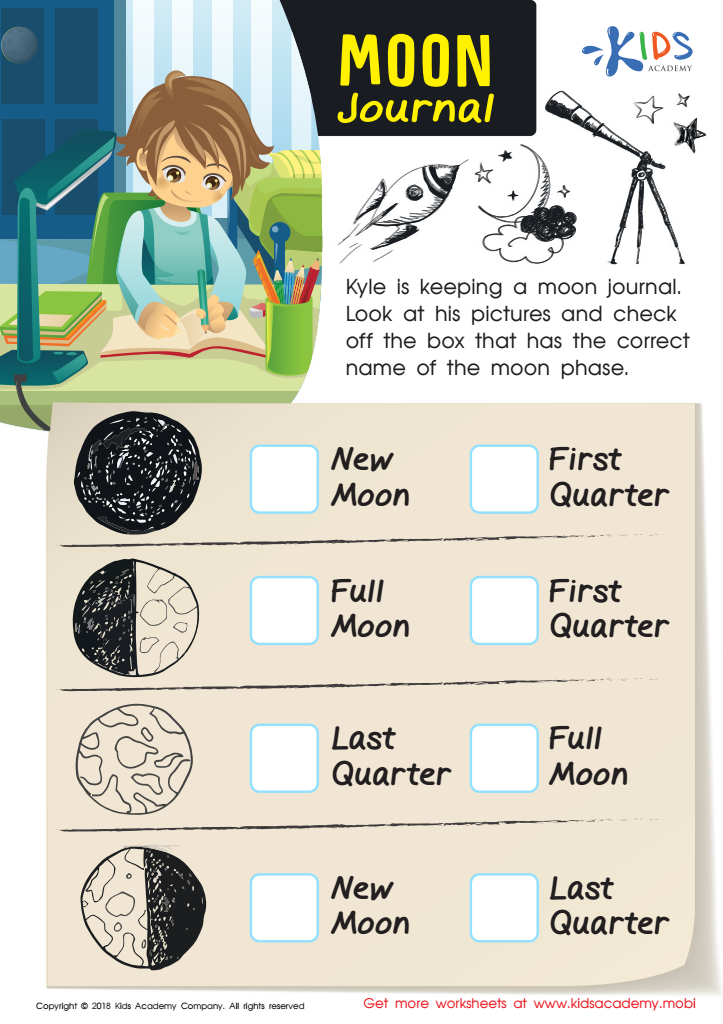
Moon Journal Worksheet
Observe the moon and its 8 phases with your child by downloading this free PDF worksheet from Kids Academy! Review the moon phases with them then help them label Kyle's moon journal. Select the right moon phase for each picture to complete the page!
 Assign to My Students
Moon Journal Worksheet
Worksheet
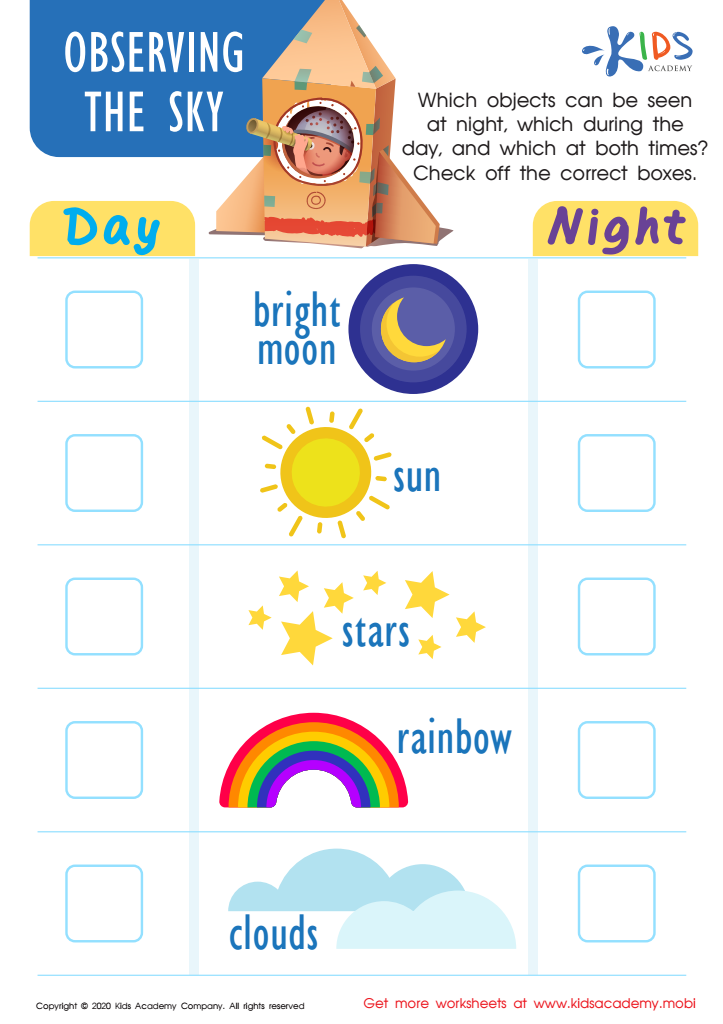
Observing the Sky Worksheet
Look up to the sky and observe day and night objects! See a rainbow or some clouds by day and stars and the moon at night. Help your little learner review this science concept with Kids Academy's fun and colorful worksheet. Have them sort and check off the objects seen by day or night, going down the column in the center.
Observing the Sky Worksheet
Worksheet
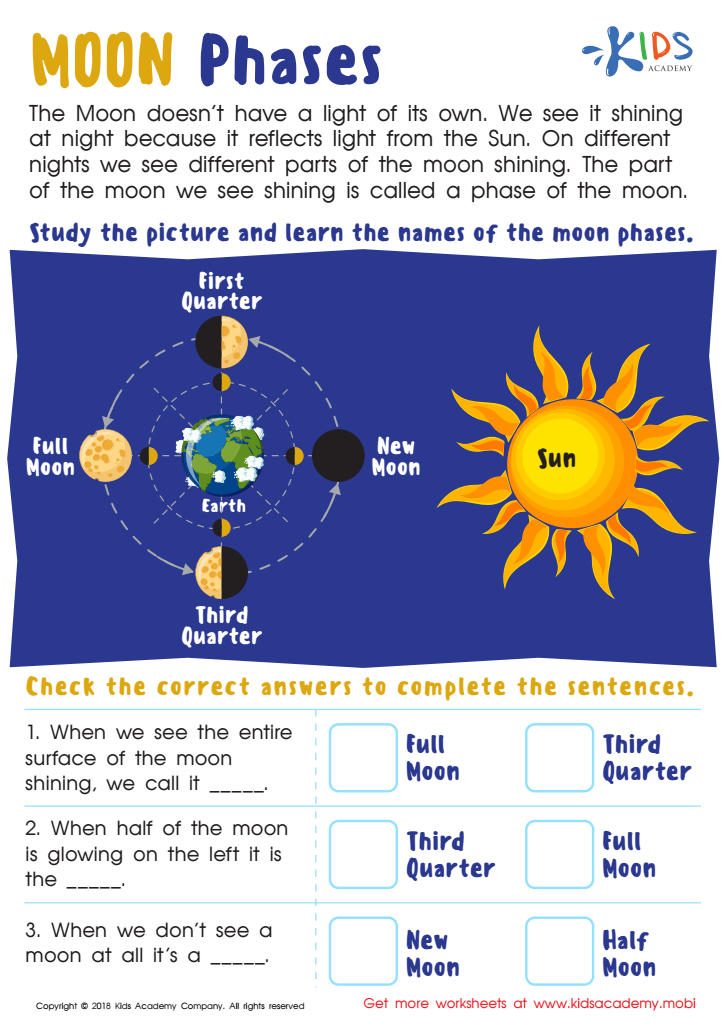
Moon Phases Worksheet
Gaze up at the night sky and the moon's appearance may change from night to night. Encourage your child to learn more about the sun, the moon, and space with this science worksheet. Have them read the text then study the picture. Finally, read the sentences and check the answers to identify the moon's phases.
Moon Phases Worksheet
Worksheet
Join Kids Academy for Free
Who is primarily going to use this learning content?




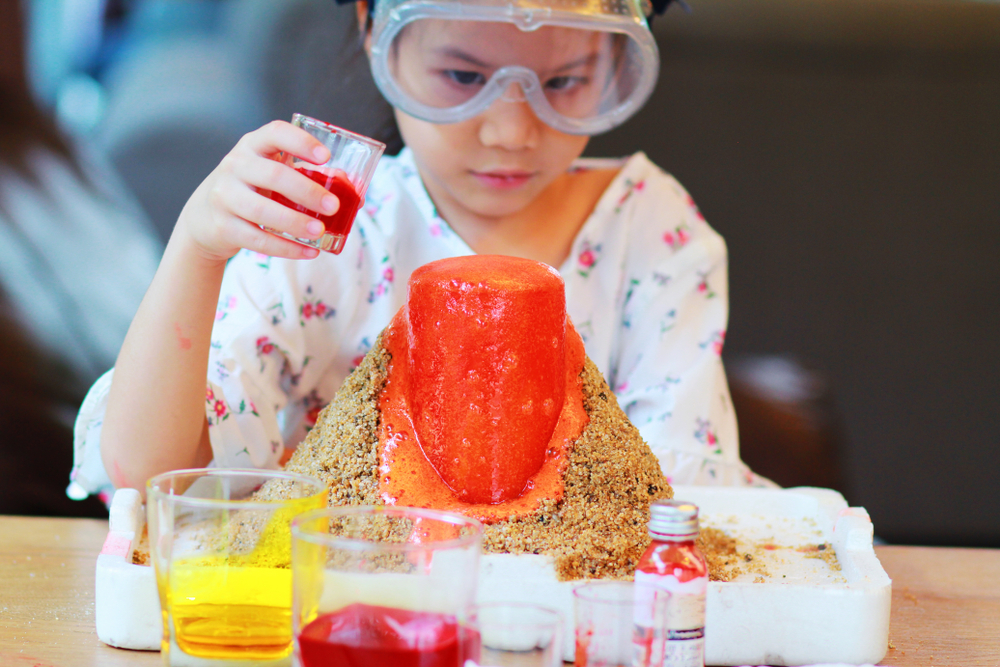

Developing observational skills in children aged 4-7 is crucial for their cognitive, social, and emotional growth. This developmental stage is characterized by a natural curiosity about the world, and fostering this curiosity through structured observational activities can significantly enhance their learning experiences.
Firstly, observational skills lay the foundation for critical thinking and problem-solving, enabling children to notice patterns, make connections, and develop hypotheses about their environment. When children learn to observe carefully, they become better thinkers capable of analyzing situations and making informed decisions.
Secondly, enhancing observational skills promotes emotional intelligence. Children learn to notice and interpret social cues from their peers, leading to improved communication and empathy. This is vital for building healthy relationships and resolving conflicts.
Additionally, observational experiences encourage children to express their thoughts and feelings, boosting their language skills and confidence in sharing perspectives. Parents and teachers who prioritize these skills create an enriching environment where children feel valued and encouraged to explore.
Ultimately, fostering observational skills empowers children to become active learners, equipping them with essential tools that will serve them throughout their education and beyond. Investing in these skills is investing in their future success and well-being.







