
Problem-Solving Skills Weather Worksheets for Ages 4-7
3 filtered results
Difficulty Level
Grade
Age
-
From - To
Subject
Activity
Standards
Unlock the skies of creativity with our "Problem-Solving Skills Weather Worksheets" designed specifically for ages 4-7! These interactive resources engage young learners in fun and educational activities that promote critical thinking and decision-making. Through relatable weather scenarios, children explore essential problem-solving techniques, practicing skills like evaluating options and identifying solutions. Each worksheet is colorful and age-appropriate, ensuring that kids remain motivated while enhancing their understanding of weather concepts. Ideal for home or classroom use, our worksheets make learning about weather both enjoyable and intellectually stimulating. Help your child grow their problem-solving skills in a captivating and educational way!
Favorites
With answer key
Interactive
 Assign to My Students
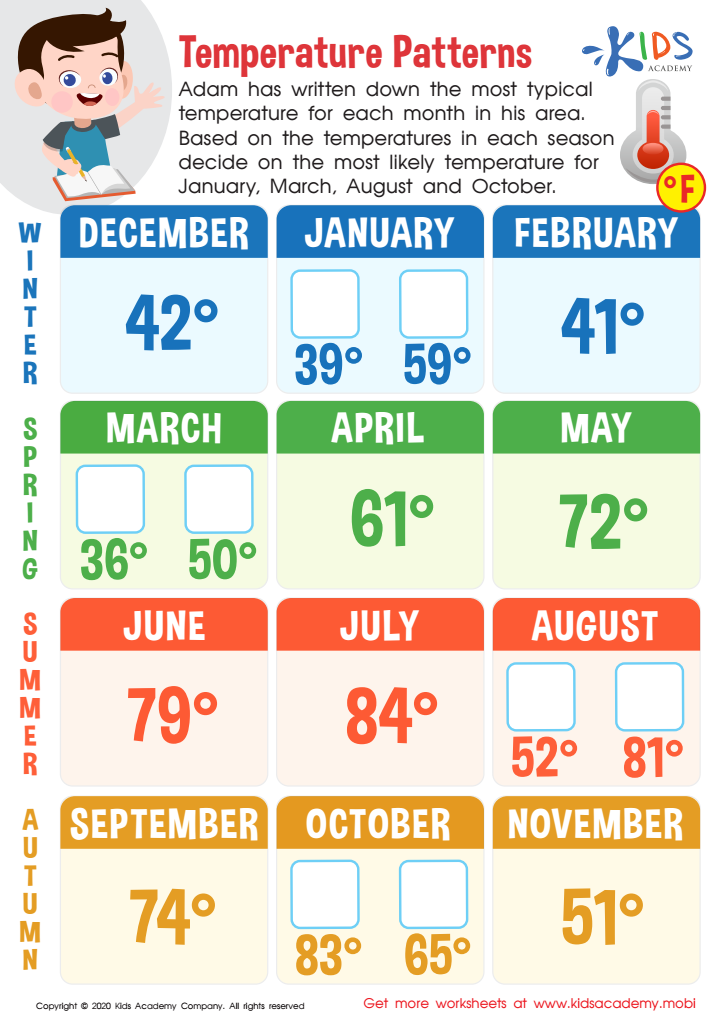
Temperature Patterns Worksheet
Adam has recorded temperatures in his area. Help your child use the data to predict temperatures for one month in each season. Check the box next to the correct temperature for each row in this worksheet. In America, temperatures vary by climate and season - colder in winter, hotter in summer.
Temperature Patterns Worksheet
Worksheet
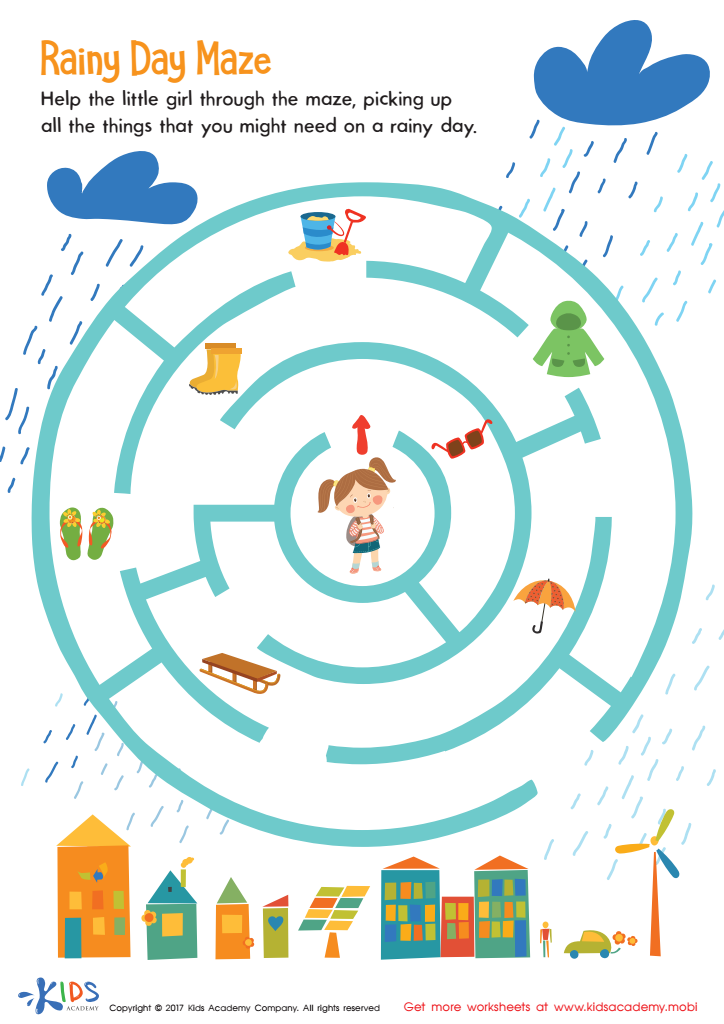
Rainy Day Maze Worksheet
Help your child use critical and problem solving skills to choose the right items! With this fun rainy day worksheet, they'll have a blast helping the character in the maze while learning about weather. Let’s get started!
Rainy Day Maze Worksheet
Worksheet
Join Kids Academy for Free
Who is primarily going to use this learning content?








Problem-solving skills are essential for the development of children aged 4-7, making them a crucial focus for both parents and teachers. At this age, children are naturally curious and eager to explore their environment, which creates a perfect opportunity to nurture their ability to tackle challenges. Enhancing problem-solving skills builds a robust foundation for lifelong learning. These skills are vital not only in academic settings but are equally important in social interactions and daily decision-making.
When children engage in problem-solving activities, they develop critical thinking and creativity. They learn to analyze situations, think logically, and consider multiple solutions, which promotes independence and self-esteem. Furthermore, these skills improve their ability to communicate, collaborate, and empathetically view others' perspectives—key components of emotional intelligence.
Teachers can integrate problem-solving exercises into the curriculum through games, puzzles, and group projects, fostering an enriching learning environment. Parents can extend this learning at home, encouraging their children to think through dilemmas they face in everyday life. By fostering problem-solving skills early, parents and teachers equip children with essential tools that empower them to navigate both academic challenges and personal relationships effectively throughout their lives.







