Weather Vocabulary Weather Worksheets for Ages 4-7
3 filtered results
-
From - To
Discover our engaging "Weather Vocabulary Worksheets for Ages 4-7" designed to help young learners grasp weather-related terms easily. These printable worksheets from Kids Academy introduce children to weather vocabulary through fun activities, like matching games, drawing exercises, and fill-in-the-blanks. Ideal for early grade teachers and parents, these resources will enhance your child’s understanding of weather while developing their reading, writing, and critical thinking skills. Start exploring today and make learning about weather fun and interactive for your young meteorologists!
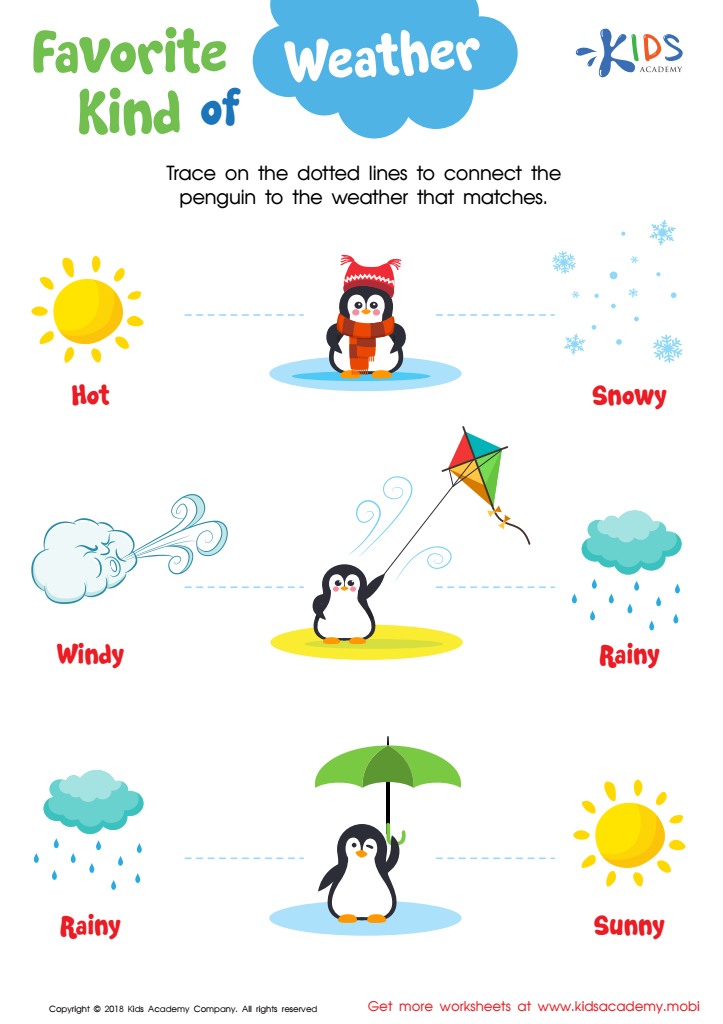
Favorite Kind of Weather Worksheet
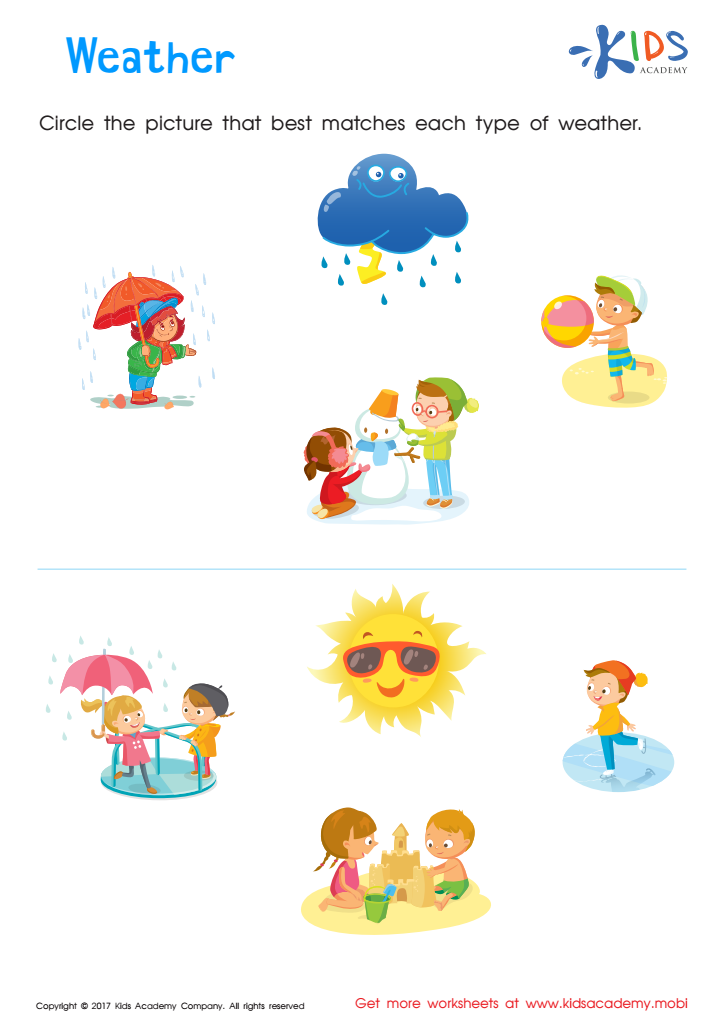
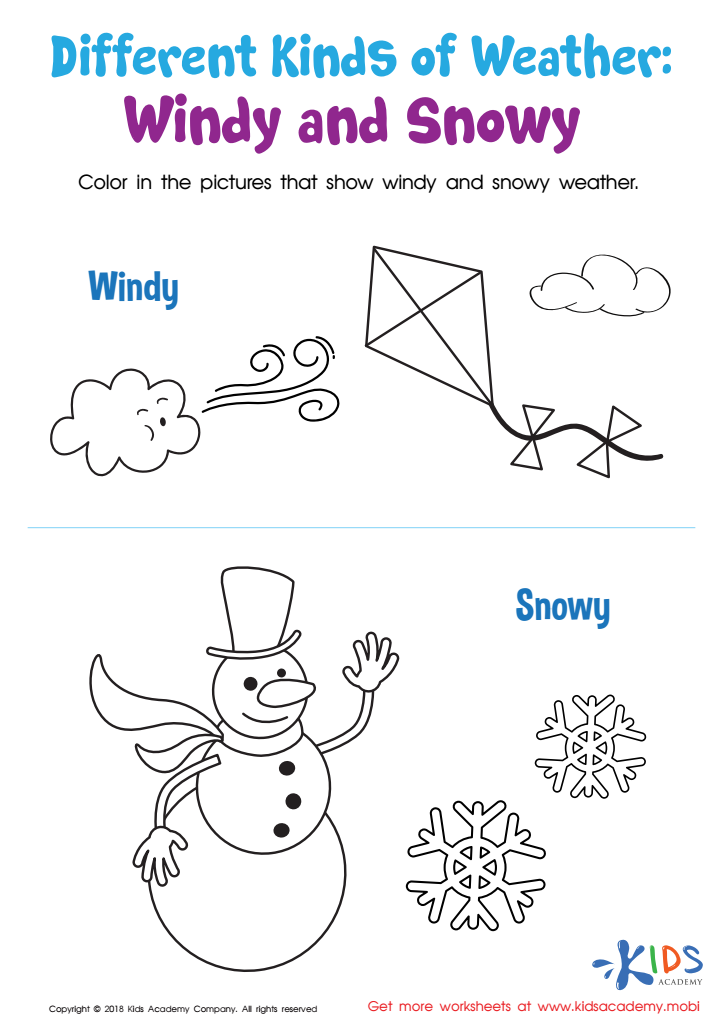
Different Kinds of Weather: Windy and Snowy Worksheet
 Assign to My Students








Introducing weather vocabulary to children aged 4-7 is crucial for several reasons, compelling both parents and teachers to engage actively in this learning area. Firstly, understanding basic weather terms aids in children's general comprehension of their surroundings, fostering a sense of awareness and curiosity about the natural world. Engaging with concepts like sunny, rainy, windy, or snowy helps them identify and describe everyday conditions they encounter.
Additionally, knowing weather vocabulary can enhance safety. By understanding warnings or updates about severe weather, children can respond appropriately, promoting personal safety and preparedness. For instance, recognizing what "thunderstorm" means can help them understand the importance of seeking shelter.
Cognitive development is another valuable outcome. Learning new words significantly boosts language skills by expanding their vocabulary, aiding effective communication. Discussing weather conditions also sharpens critical thinking skills, as children begin to understand cause-and-effect relationships—such as why rain might result in using an umbrella.
In the social context, weather is a universal topic, thus providing a common platform for children to engage in conversations with peers and adults, which supports social interactions and builds confidence.
Overall, weather vocabulary is not just about understanding meteorological terms; it supports multiple facets of a child's development, making it a vital component of early education.







