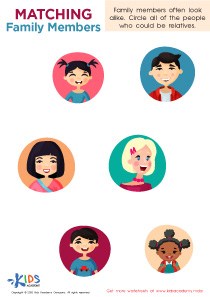
Understanding history History Worksheets for Ages 4-7
3 filtered results
Difficulty Level
Grade
Age
-
From - To
Subject
Activity
Standards
Our "Understanding History Worksheets for Ages 4-7" provide young learners with a captivating look into the past, fostering curiosity and knowledge about historical events and figures. Designed to align with early learning goals, these printable worksheets combine fun activities with age-appropriate lessons, helping children grasp the basic concepts of history. Engaging tasks such as matching, coloring, and simple reading encourage critical thinking and memory skills, making history both accessible and enjoyable. Join us at Kids Academy to enhance your child's learning journey, building a solid foundation for future historical understanding and a love for learning that lasts a lifetime.
Favorites
With answer key
Interactive
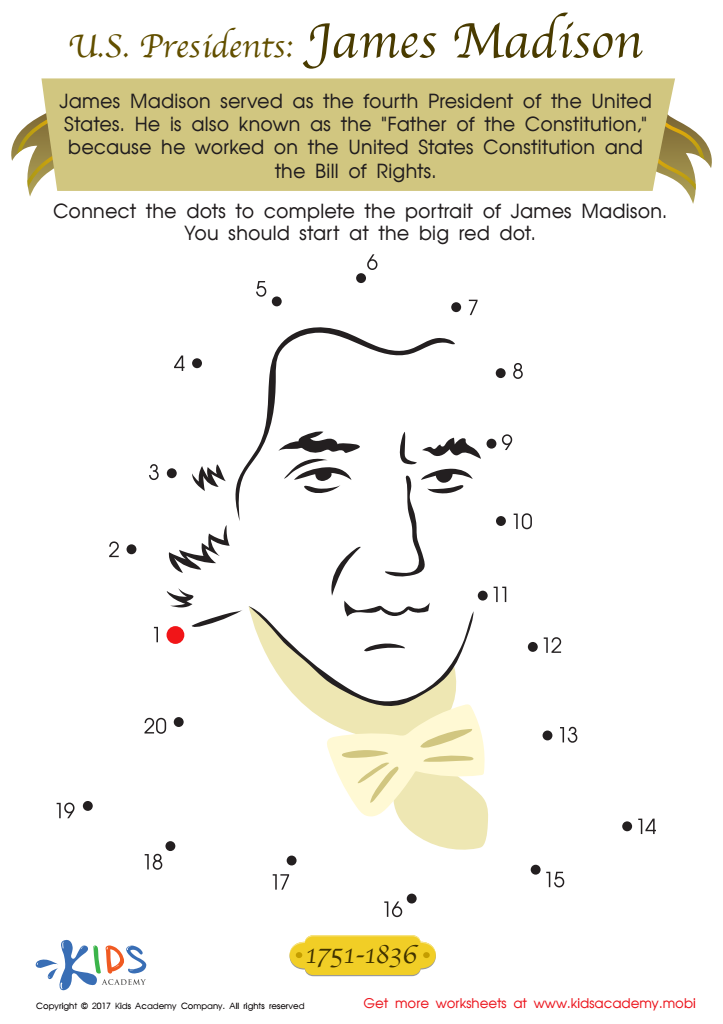
President Madison Printable
Introduce your child to the nation's fourth president, James Madison. This worksheet helps them learn about the "Father of the Constitution" and his contributions to American history. Discover Madison's legacy with your child today!
President Madison Printable
Worksheet
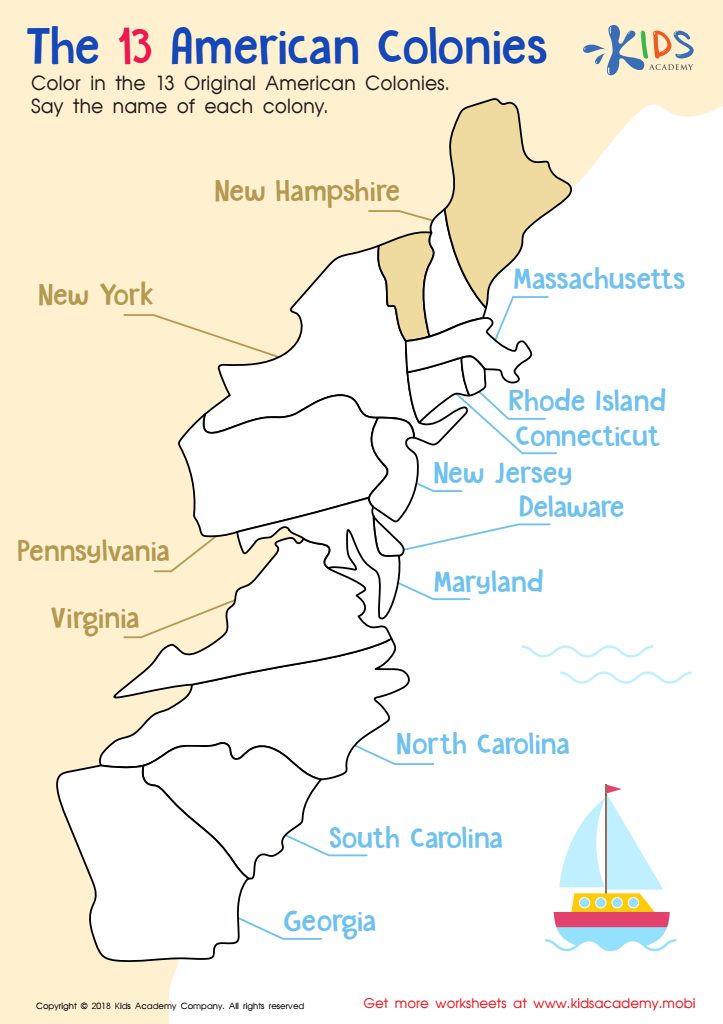
The 13 American Colonies Worksheet
Ensure kids are knowledgeable in maths, English, science, history, and geography. Test their American knowledge: Can they name the 13 Original American Colonies? Use the worksheet; have them color each colony and name it out loud.
Download (PDF)
 Assign to My Students
Assign to My Students
The 13 American Colonies Worksheet
Worksheet
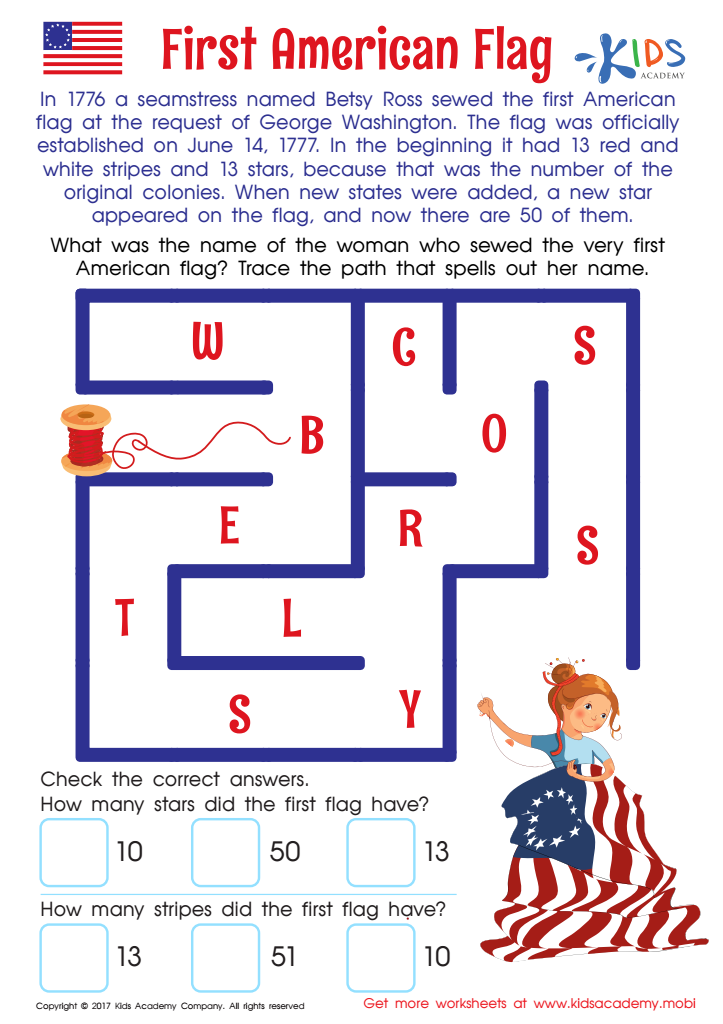
First American Flag Worksheet
Betsy Ross sewed the first American flag at the request of George Washington. This worksheet helps kids learn about this milestone in U.S. history, plus the design and origins of the flag.
First American Flag Worksheet
Worksheet
Join Kids Academy for Free
Who is primarily going to use this learning content?



.jpg)




Understanding history is crucial for young children because it lays the foundation for their overall development and growth. From ages 4 to 7, children are in their formative years, where they are curious and capable of absorbing information like sponges. Introducing history at this age helps develop critical thinking by teaching them to ask questions, understand different perspectives, and recognize cause and effect.
Learning history at an early age fosters a sense of identity and belonging. It helps children understand their place in the world, starting with personal history and branching out to family, community, and global history. This understanding builds confidence and helps children appreciate the diversity around them. By learning about various cultures and historical figures, children can develop empathy and respect for others, fostering a more inclusive attitude.
Moreover, history lessons can enhance language and storytelling skills. When children hear stories of past events, they learn new vocabulary and how to sequence events logically. This strengthens their communication skills, aiding in overall academic performance.
Lastly, understanding history helps instill values and lessons derived from past experiences. As children learn about successes and mistakes from the past, they can adopt important values like honesty, responsibility, and perseverance, guiding their behavior and choices. In sum, understanding history enriches young minds and shapes well-rounded individuals.