
Sentence structure understanding Writing Worksheets for Ages 4-7
4 filtered results
Difficulty Level
Grade
Age
-
From - To
Subject
Activity
Standards
Enhance your child’s writing skills with our engaging Sentence Structure Understanding Worksheets designed for ages 4-7! These fun and interactive worksheets help young learners grasp the basics of sentence formation through varied activities, including filling in blanks, rearranging words, and matching phrases. Each worksheet is thoughtfully crafted to promote early literacy by strengthening their comprehension of subject-verb agreements and punctuation. Nurture your child's creativity and confidence in writing as they explore language in an enjoyable way! Perfect for at-home practice or classroom use, these worksheets provide essential building blocks for a solid foundation in writing. Start your child’s writing journey today!
Favorites
With answer key
Interactive
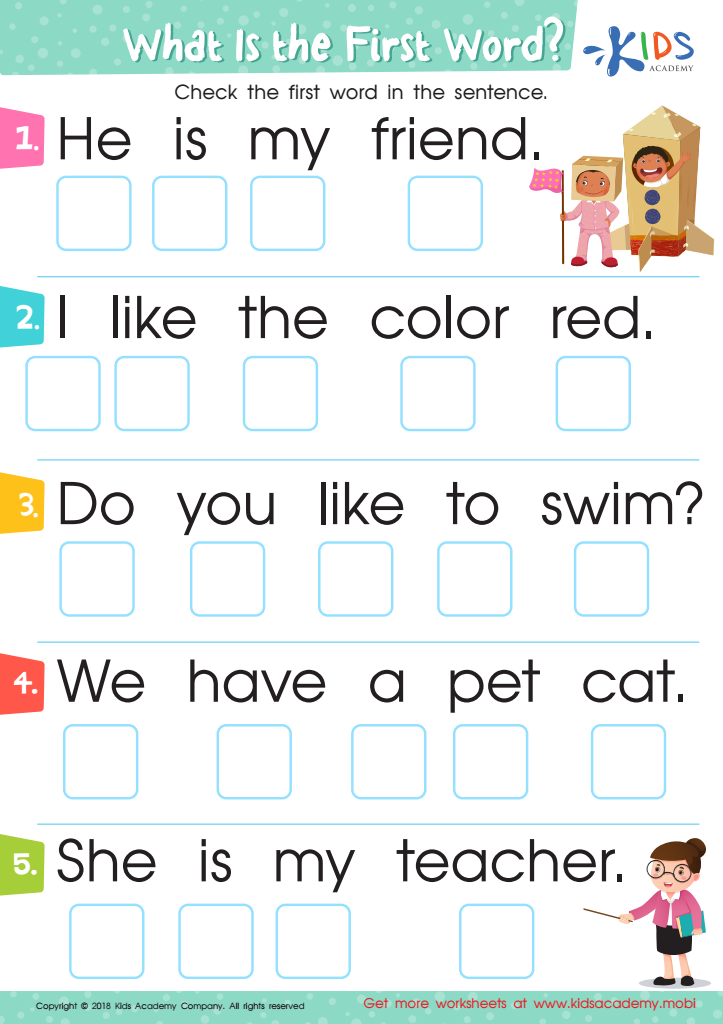
What is the First Word? Worksheet
Help your students test their sentence-reading skills with this printout! After teaching the alphabet, have them identify and write the first word in each sentence. With this exercise, they'll gain reading proficiency and be better prepared to write their own sentences.
What is the First Word? Worksheet
Worksheet
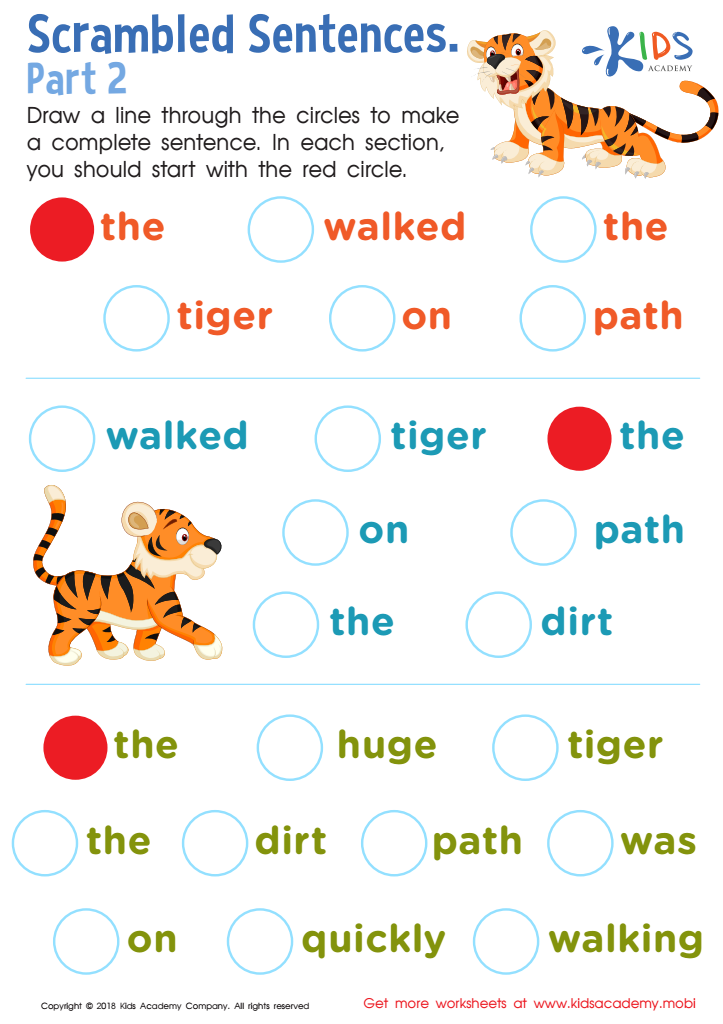
Scrambled Sentences Part 2 Worksheet
This printable worksheet helps kids construct simple, correct sentences. Introduce them to making sentences if they're new to it. Have them draw a line through the circles to form a sentence, starting with the red circle. After completing this exercise, they'll be able to craft short sentences with confidence.
Scrambled Sentences Part 2 Worksheet
Worksheet
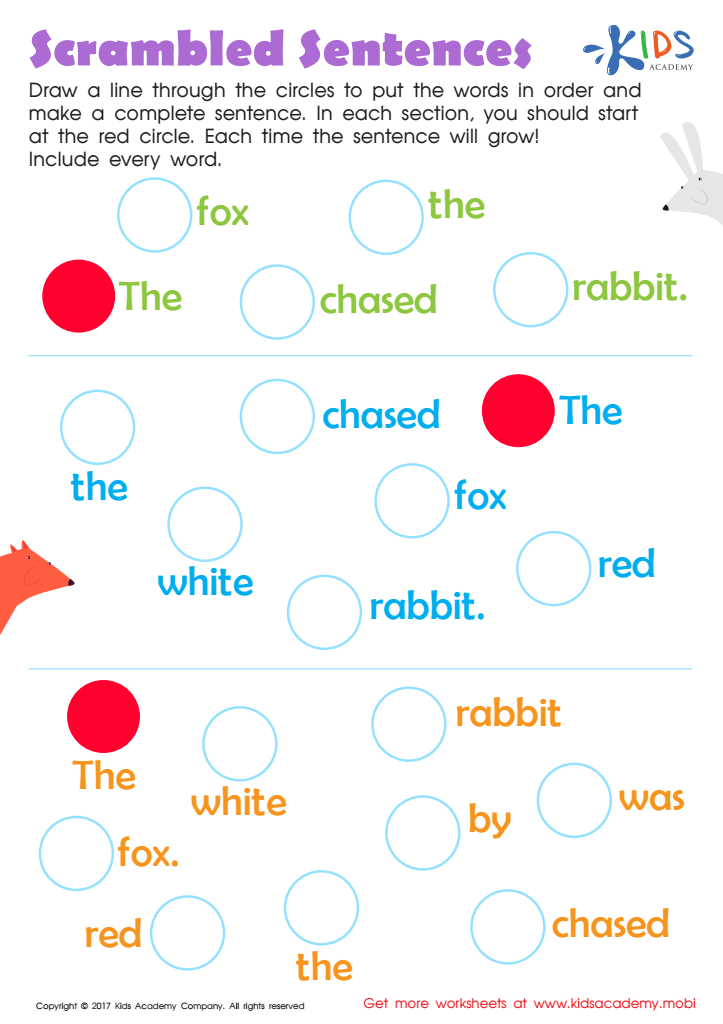
Scrambled Sentences Worksheet
Kids will have fun with the scrambled sentences worksheet: draw lines to make complete sentences. As the sentence grows, they'll learn sentence structure and word order. Easy instructions included!
Scrambled Sentences Worksheet
Worksheet
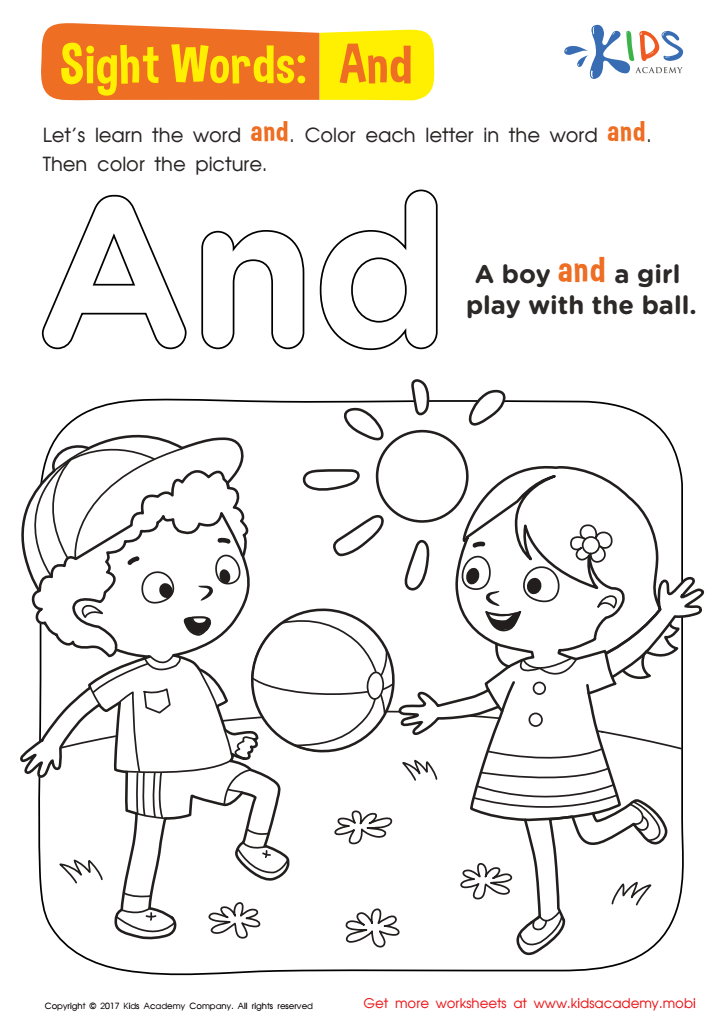
And Worksheet Sight Words Worksheet
Help your child get a jumpstart on reading with sight words! Print out this fun worksheet and get your child to read the sentence. Point out the word "and", then color the word and enjoy the rest of the scene! It's a great way to introduce sight words and get their early reading skills going!
Download (PDF)
 Assign to My Students
Assign to My Students
And Worksheet Sight Words Worksheet
Worksheet
Join Kids Academy for Free
Who is primarily going to use this learning content?








Understanding sentence structure is crucial for children ages 4-7 as it lays the foundation for effective communication, literacy development, and critical thinking skills. During these formative years, children begin to grasp the concept of language and how sentences are constructed, which aids in expressing their thoughts clearly and coherently. When parents and teachers emphasize sentence structure, they are not only helping students create grammatically correct sentences but also enhancing their overall writing skills.
Children gain the ability to connect ideas logically, which is essential for writing narratives, descriptions, and explanations. This understanding fosters creativity, allowing them to express themselves more comprehensively. Additionally, mastering sentence structure can boost a child’s confidence in their writing abilities, encouraging them to engage more in reading and communication activities.
Moreover, strong sentence skills are linked to improved reading comprehension, as children learn to decode text structure and understand the flow of ideas. In essence, teaching sentence structure is not merely about grammar; it’s about empowering young learners to articulate their experiences and thoughts, setting them up for future academic success and effective communication in their everyday lives. Therefore, parents and teachers should prioritize instruction in this vital area for all-around developmental growth.








