Fine motor development Alphabet Worksheets for Ages 4-8
3 filtered results
-
From - To
Unlock your child's potential with our "Fine Motor Development Alphabet Worksheets for Ages 4-8"! Designed to strengthen essential motor skills, these engaging worksheets help young learners practice letter recognition and writing while enhancing their fine motor abilities. Children will enjoy various interactive activities, such as tracing, coloring, and cutting, all centered around the alphabet. These worksheets not only make learning fun but also support the development of crucial hand-eye coordination and dexterity. Perfect for at-home practice or classroom use, our resources provide the ideal blend of education and enjoyment, ensuring kids build foundational skills for future learning successfully. Start your journey today!
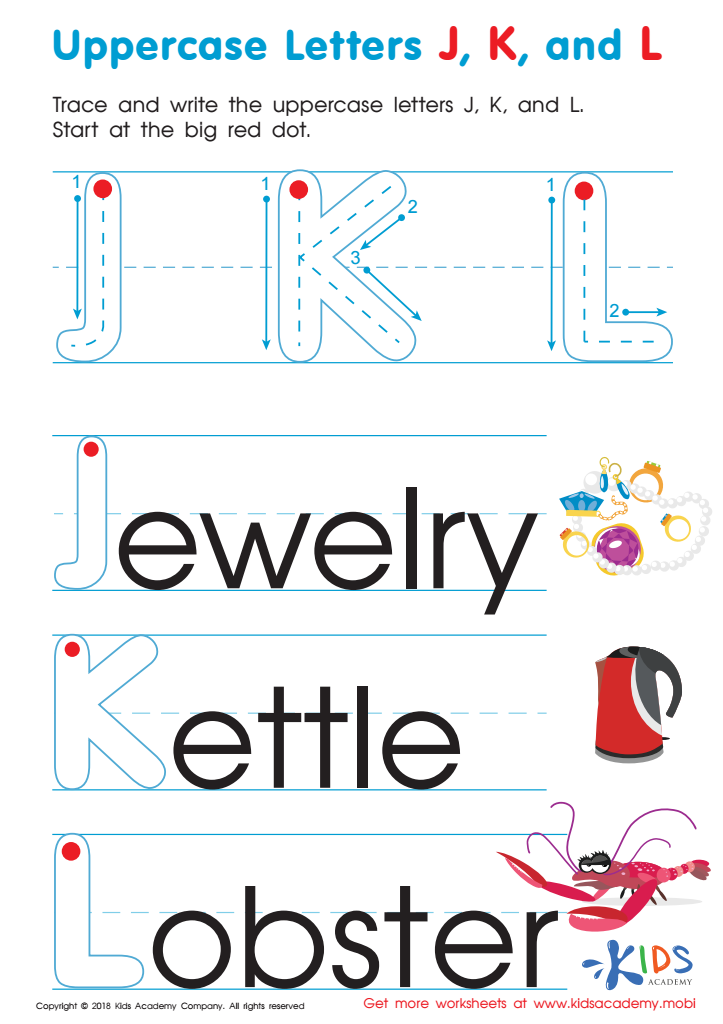
Uppercase Letters J, K, and L Worksheet
 Assign to My Students
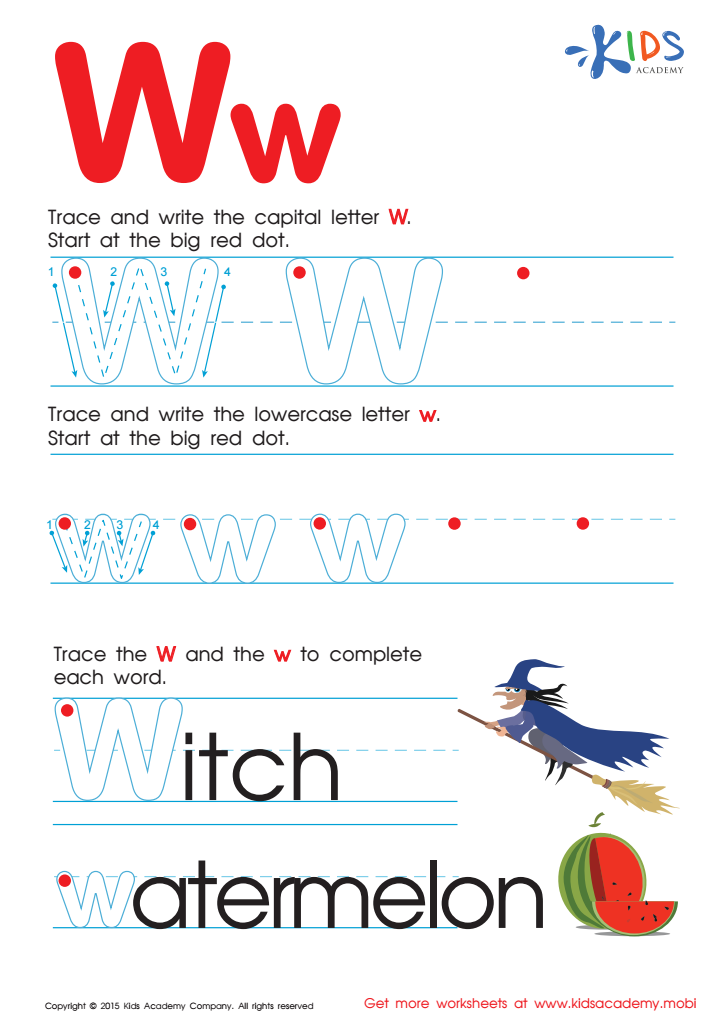
Letter W Tracing Page
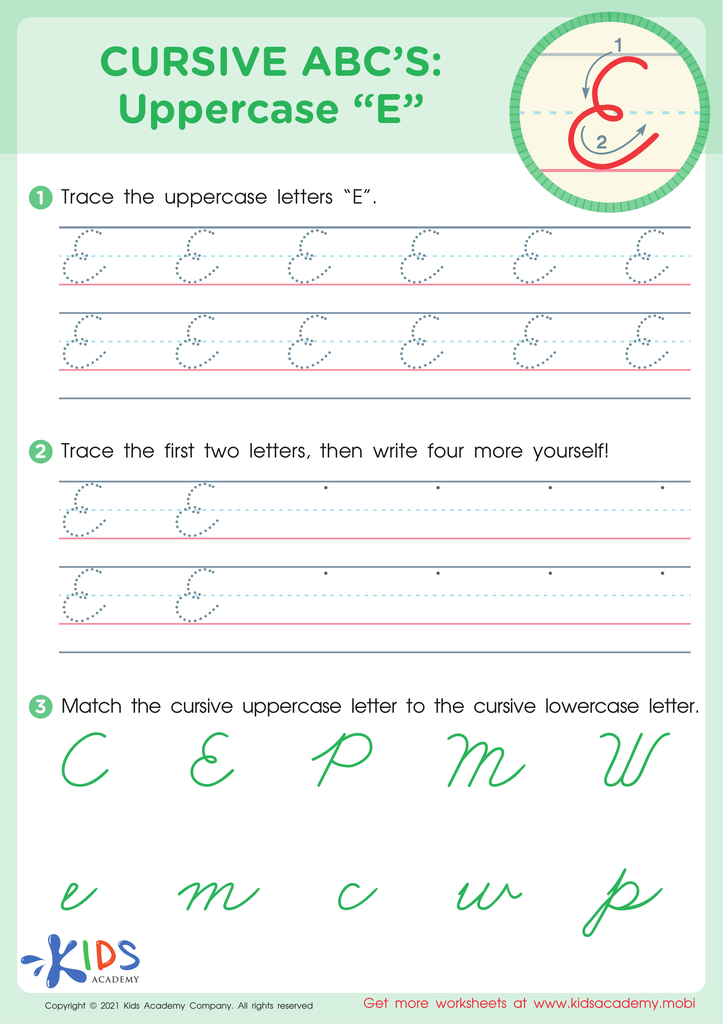
Cursive ABCs: Uppercase E








Fine motor development is crucial for children aged 4-8 as it plays a significant role in their overall growth and learning potential. During these formative years, children develop control over their hand and finger movements, which are essential for everyday tasks. The ability to grasp a pencil, cut with scissors, or manipulate small objects not only fosters independence but also boosts self-confidence.
Fine motor skills are closely tied to academic success, particularly in writing and creative expression. Mastering the alphabet involves intricate finger movements that help children create legible letters and develop their own writing style. Teachers and parents should prioritize fine motor activities, such as drawing, using playdough, or engaging in crafts, to enhance these skills.
Moreover, fine motor development contributes to cognitive processes such as problem-solving and hand-eye coordination. These abilities are foundational for various subjects beyond language arts, including math, science, and even social skills through cooperative play. By nurturing fine motor skills, adults are providing children with the tools they need for both academic and personal success. Ultimately, investing time in fine motor activities during these formative years lays a sturdy foundation for lifelong learning and adeptness in various aspects of life.







