Sound-letter correlation Alphabet Worksheets for Ages 4-8
3 filtered results
-
From - To
Unlock your child’s reading potential with our Sound-Letter Correlation Alphabet Worksheets designed for ages 4-8. These engaging and interactive worksheets help young learners connect sounds to letters, reinforcing phonetic skills essential for early literacy. With a variety of fun activities such as coloring, matching, and tracing, children will enjoy practicing their letter recognition while developing their pronunciation skills. Our worksheets align with educational standards to ensure a productive learning experience that caters to diverse learning styles. Perfect for at-home learning or in the classroom, these resources empower children to build a strong foundation for reading success. Start the adventure today!
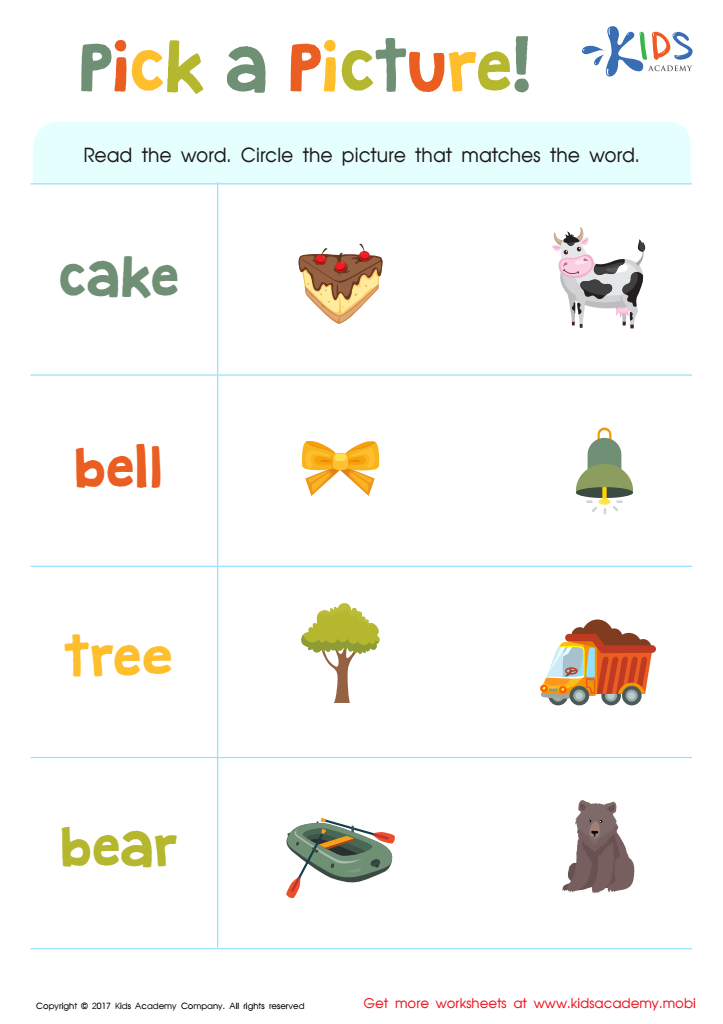
Pick a Picture Word Recognition Worksheet
 Assign to My Students
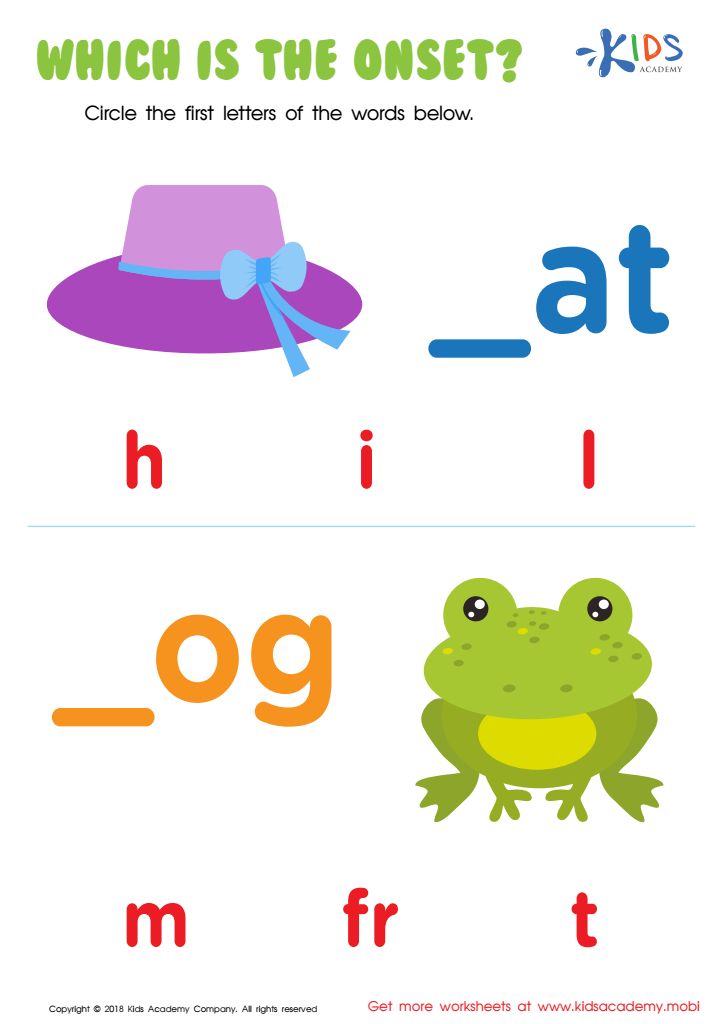
Which Is the Onset? Worksheet
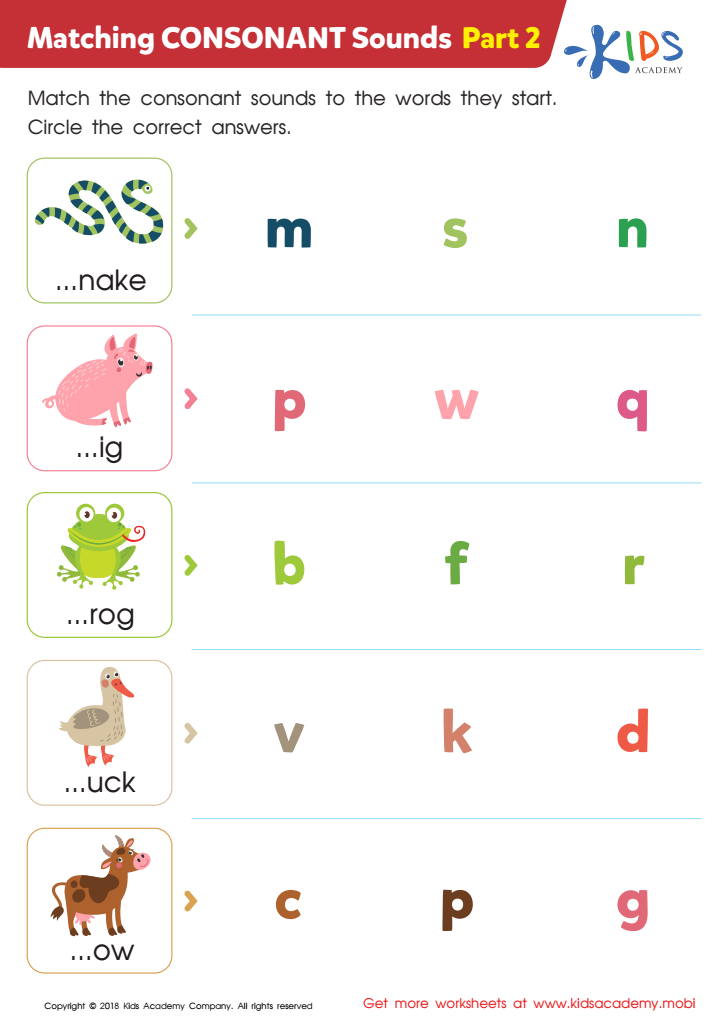
Matching Consonant Sounds: Part 2 Worksheet








Sound-letter correlation, or phonics, is crucial for early literacy development in children aged 4-8. Understanding how sounds correspond to letters and letter combinations helps children decode words, enabling them to read independently and with confidence. When parents and teachers emphasize sound-letter correlations, they equip children with the foundational skills necessary for reading assessments and everyday comprehension, promoting a love for reading from a young age.
Moreover, strong phonetic skills enhance a child's ability to spell and write. By recognizing sound patterns, children can articulate words more clearly and structure their thoughts effectively on paper. This not only boosts their language skills but also fosters improved communication, critical for academic success and social interactions.
Additionally, awareness of sound-letter correlation assists children who may struggle with reading, such as those with dyslexia, by providing clear strategies for overcoming challenges. By integrating fun activities and games surrounding sounds and letters, parents and teachers can create engaging learning experiences. Ultimately, investing time and effort into teaching sound-letter correlations lays the groundwork for lifelong literacy skills, which benefit children throughout their educational journey, career opportunities, and personal development. This makes it essential for caregivers and educators to prioritize this foundational aspect of learning.







