Enhance your child's reading abilities with our engaging Phonics Worksheets designed for ages 4-8. These specially crafted resources focus on phonics skills improvement, making learning fun and effective. Our worksheets cover essential phonetic concepts, helping young learners master letter sounds and blends through interactive activities. With vibrant illustrations and age-appropriate challenges, children will build confidence in their reading skills while enjoying the process. Whether at home or in the classroom, our phonics worksheets serve as an invaluable tool for parents and teachers alike. Start your child's journey to literacy and watch them flourish in their reading skills today!

Check out this FREE Trial Lesson on Phonics for age 4-8!

Distinguish between Long U and Short U

Favorites
With answer key
Interactive
  • 4-8
  • Phonics skills improvement
  • Phonics
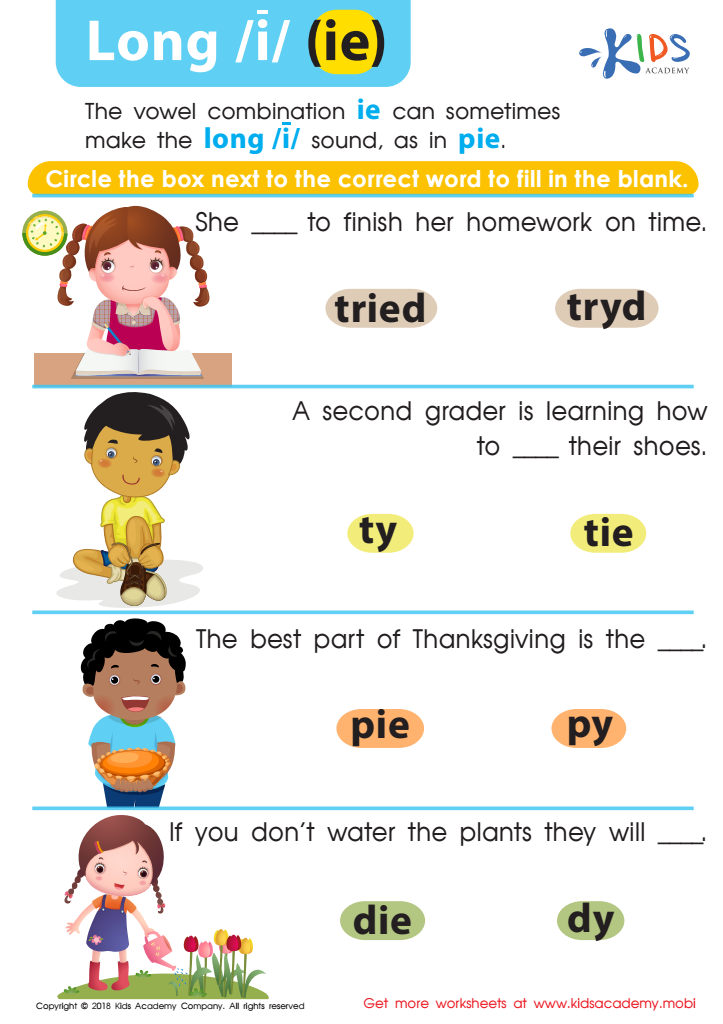
Reading: Long I and IE Worksheet

Reading: Long I and IE Worksheet

Have your child list words with the long /i/ sound (eg. 'pie'), and if needed, help them out with some examples. Read each word in the worksheet together and check their answer by having them circle the correct word.
Reading: Long I and IE Worksheet
Worksheet
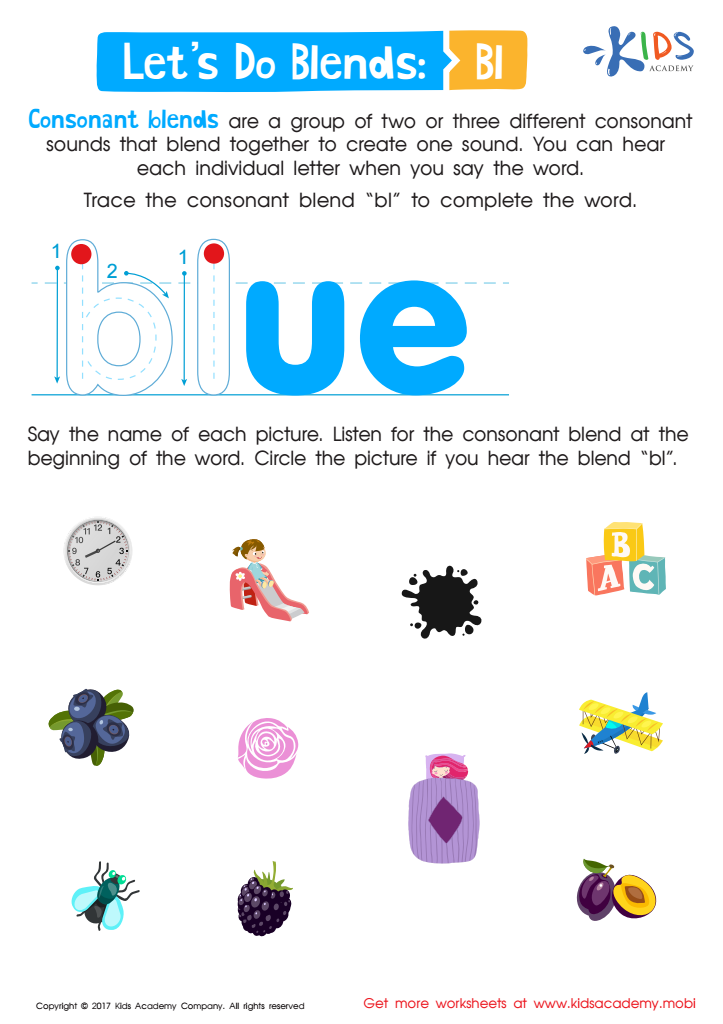
Consonant Blend Bl Printable Worksheet

Beginning Blends: "Bl" Words Worksheet
Help your child master their phonics skills with this fun, focused consonant blend worksheet! They'll practice spelling, reading, and sounding out the words, which will help their speech and other skills. The worksheet focuses on "Bl" but extend your child's learning by finding other blends on the page. After completion, they'll be closer to phonics mastery!
Beginning Blends: "Bl" Words Worksheet
Worksheet
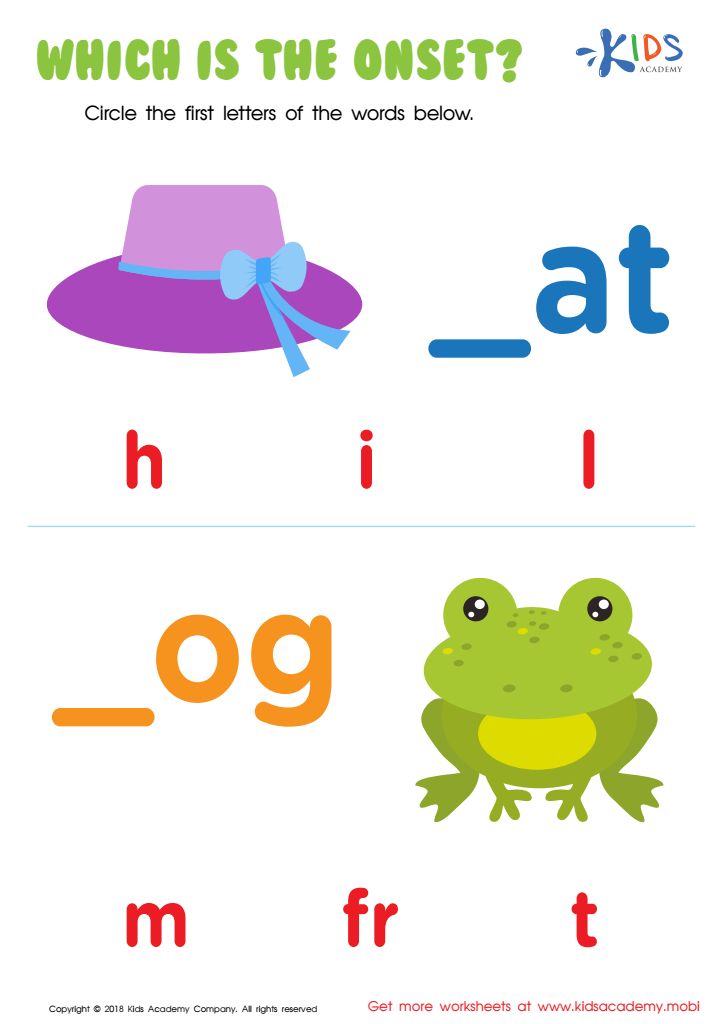
Which Is the Onset? Worksheet

Which Is the Onset? Worksheet

Help your children learn to spell with this bright, fun worksheet. Struggling with spelling small words can make reading and writing sentences difficult. Encourage them to look at the pictures, say the names aloud and circle the correct first letter from the options. They will soon overcome any reluctance to spell.
Which Is the Onset? Worksheet
Worksheet
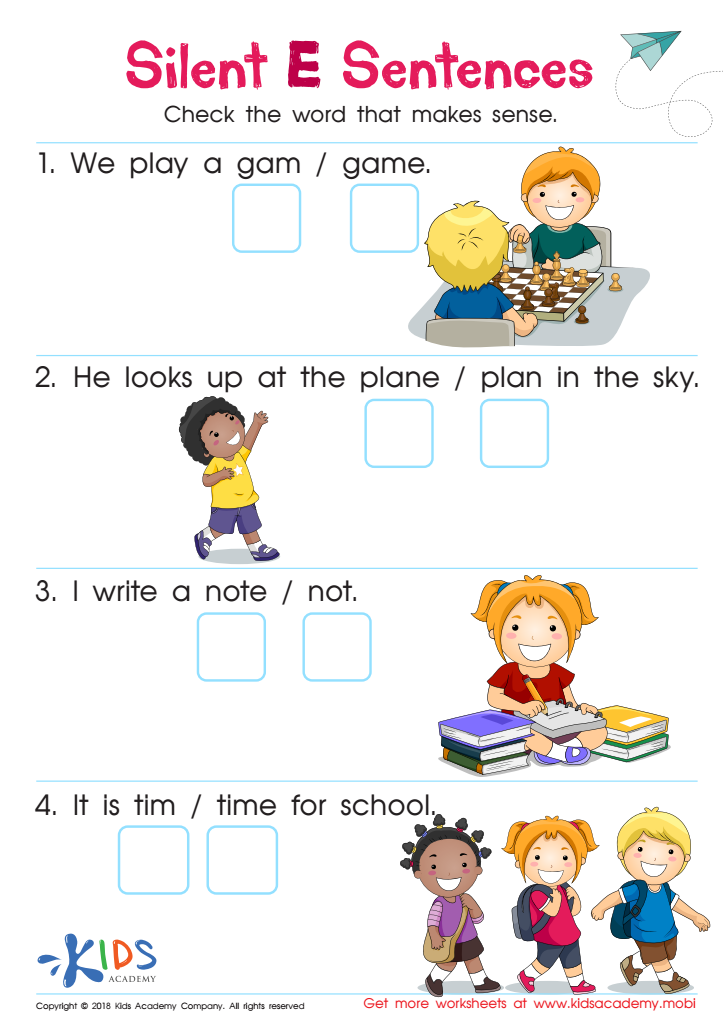
Silent E Sentences Worksheet

Silent E Sentences Worksheet

Young readers can find learning Silent E tricky, so this helpful worksheet can help! It teaches them to distinguish words that look the same but for the Silent E and choose the right word for sentence blanks. Kids can mark the correct answer and become familiar with closed syllables and words that require the E.
Silent E Sentences Worksheet
Worksheet
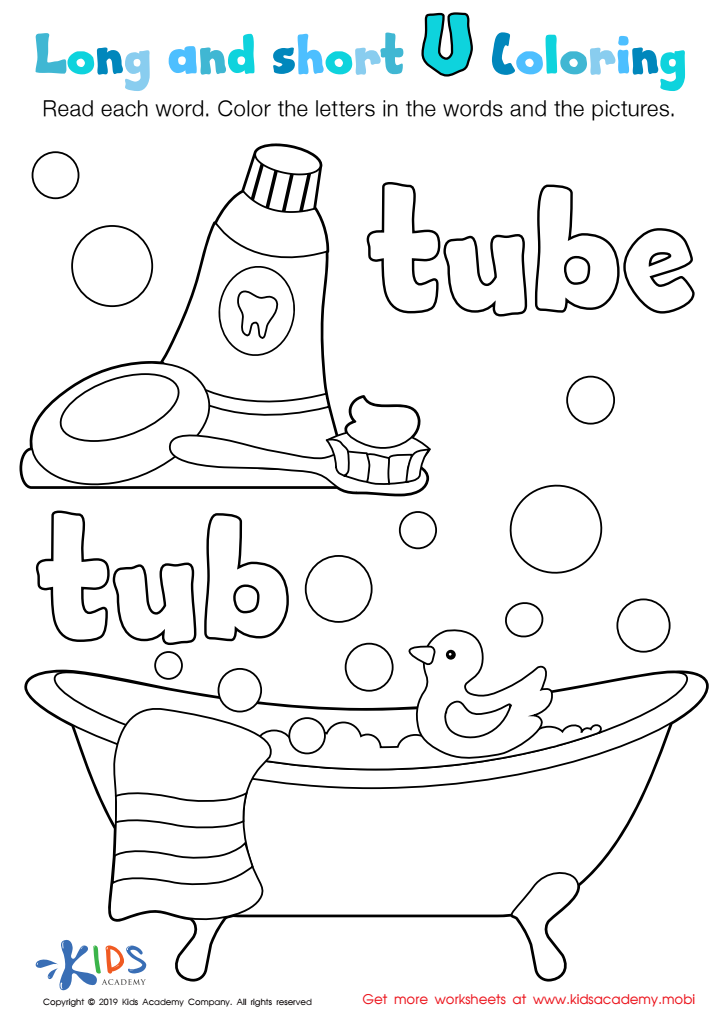
Long and Short U Worksheet

Long and Short U Worksheet

Revised: Spice up your lesson on long and short vowels with this fun printout! Kids read the words "tube" and "tub," then reinforce the sound by coloring in the words and pictures. It's a great way to make phonics class enjoyable!
Download (PDF)
Assign to My Students
Long and Short U Worksheet
Worksheet
Silent e worksheet
Silent e worksheet

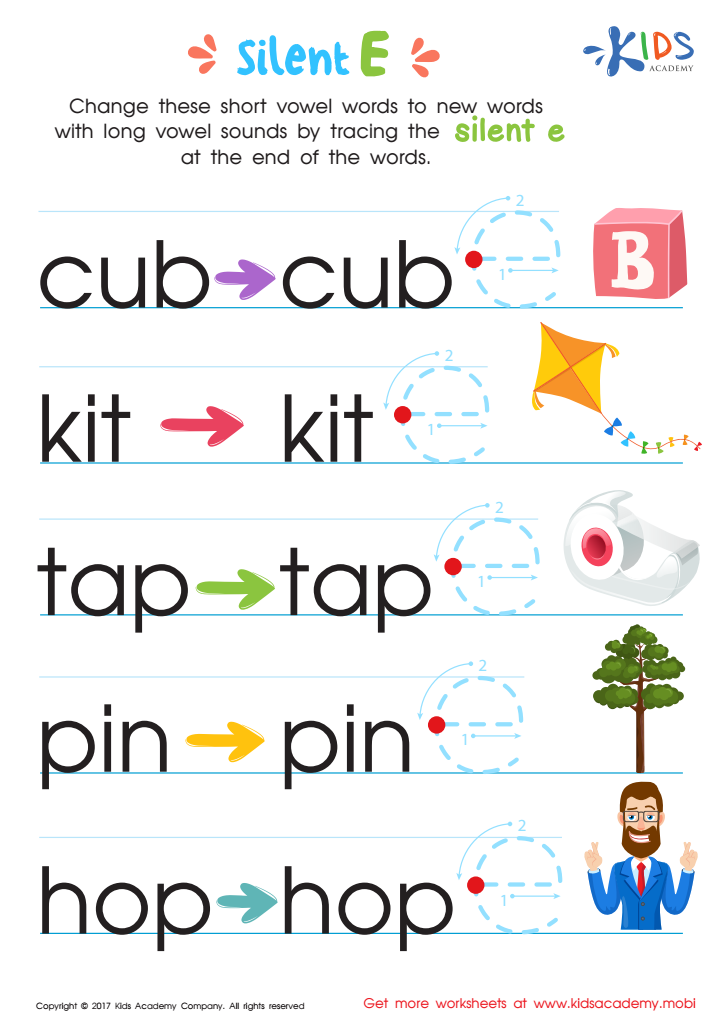
Silent E Words Worksheet

The letter e is amazing - it changes words without making a sound! Boost spelling and phonics with this Silent e worksheet from Kids Academy - fun and colorful!
Silent E Words Worksheet
Worksheet
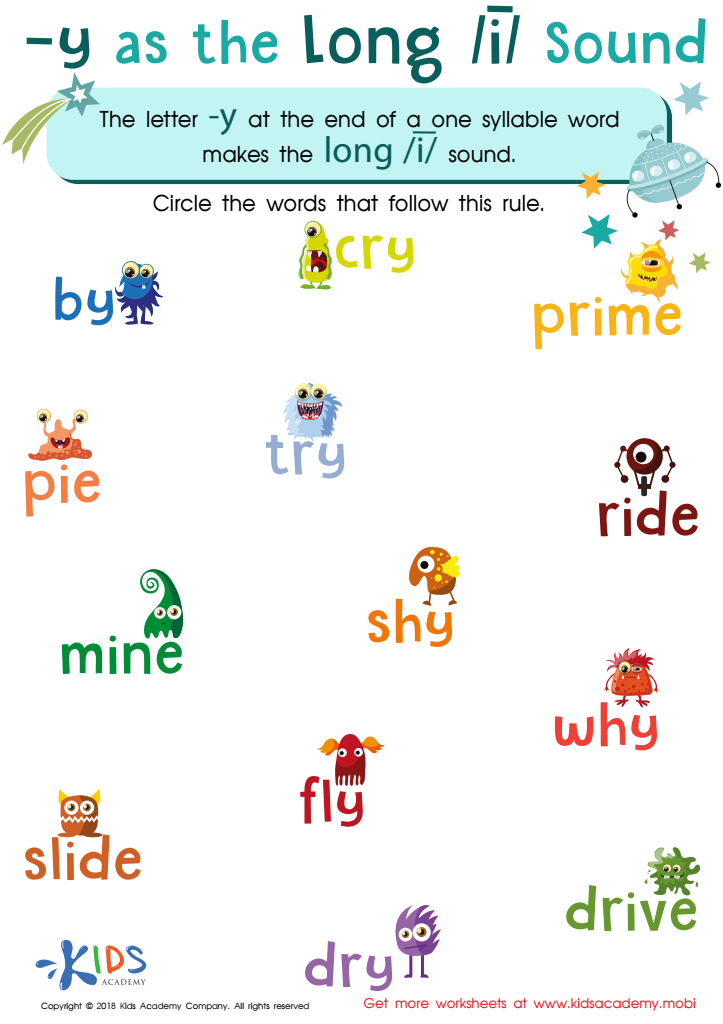
Reading: Y as Long I Worksheet


Reading: Y as Long I Worksheet

Students need practice and exposure to letters that make different sounds for decoding and reading success. This printable is a great resource for language arts classes: it explains that words ending with Y and having only one syllable make the long I sound. Students will circle all words with Y that have this sound.
Reading: Y as Long I Worksheet

Worksheet


Phonics skills are crucial for children ages 4-8 as they form the foundation for reading and writing. When children learn phonics, they understand the relationship between letters and sounds, enabling them to decode words effectively. This skill not only enhances their reading fluency but also boosts their confidence in literacy activities.

For parents and teachers, supporting phonics improvement is essential because it directly correlates with academic success. Early literacy skills significantly influence a child’s future learning trajectory; children lacking phonics proficiency may struggle with more complex texts in later grades, leading to frustration and disengagement.

Moreover, phonics instruction fosters a love for reading, as children learn to process texts independently. It also enhances vocabulary development and comprehension, facilitating improved performance across all subjects.

Investing in phonics skills at this age encourages children to engage more deeply with literature, forming positive reading habits that last a lifetime. By collaborating on phonics activities—such as playing sound games or encouraging phonetic spellings—parents and teachers not only support cognitive development but also reinforce a love for learning, laying the groundwork for lifelong academic achievement. Therefore, prioritizing phonics skills is vital for nurturing competent, confident readers who thrive.