Rhyming Worksheets for Ages 4-8
18 filtered results
-
From - To
Discover our engaging rhyming worksheets designed for children ages 4-8! These colorful, printable resources make learning fun while enhancing early literacy skills. Children will develop phonemic awareness and improve their vocabulary through various activities like matching rhyming words, completing sentences, and fun illustrations. Our worksheets cater to diverse learning styles, ensuring every child can explore the world of rhymes creatively. With easy-to-follow instructions, parents and teachers can seamlessly integrate these worksheets into lessons or at-home learning. Spark your child's love for language and rhythm – visit our collection of rhyming worksheets today and watch their confidence soar!
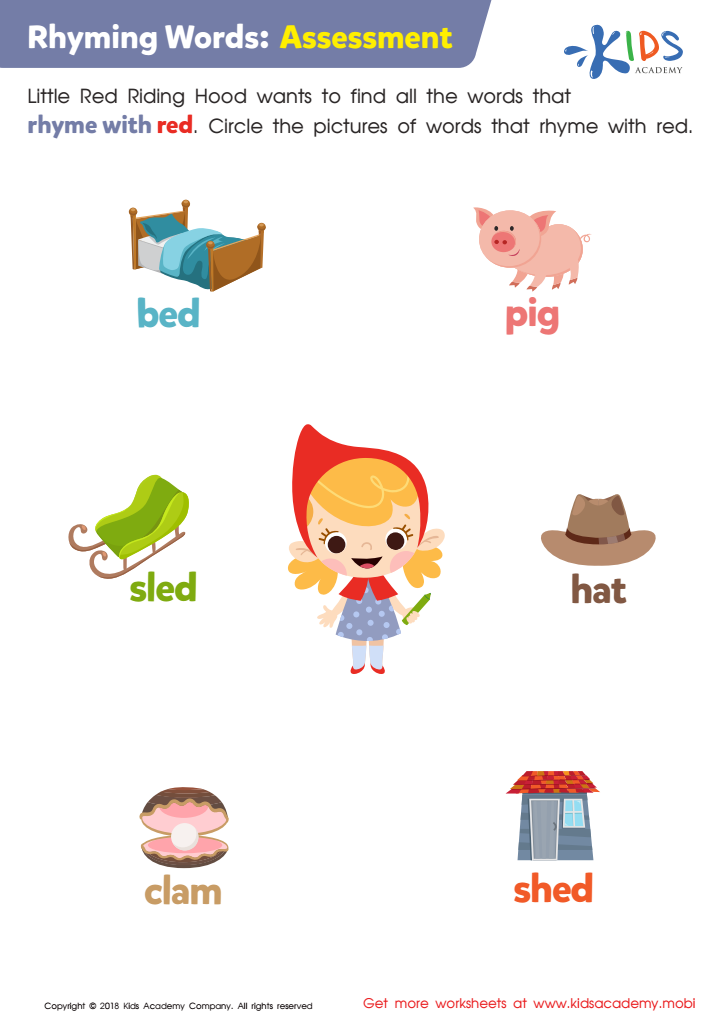
Rhyming Words: Assessment Worksheet
 Assign to My Students
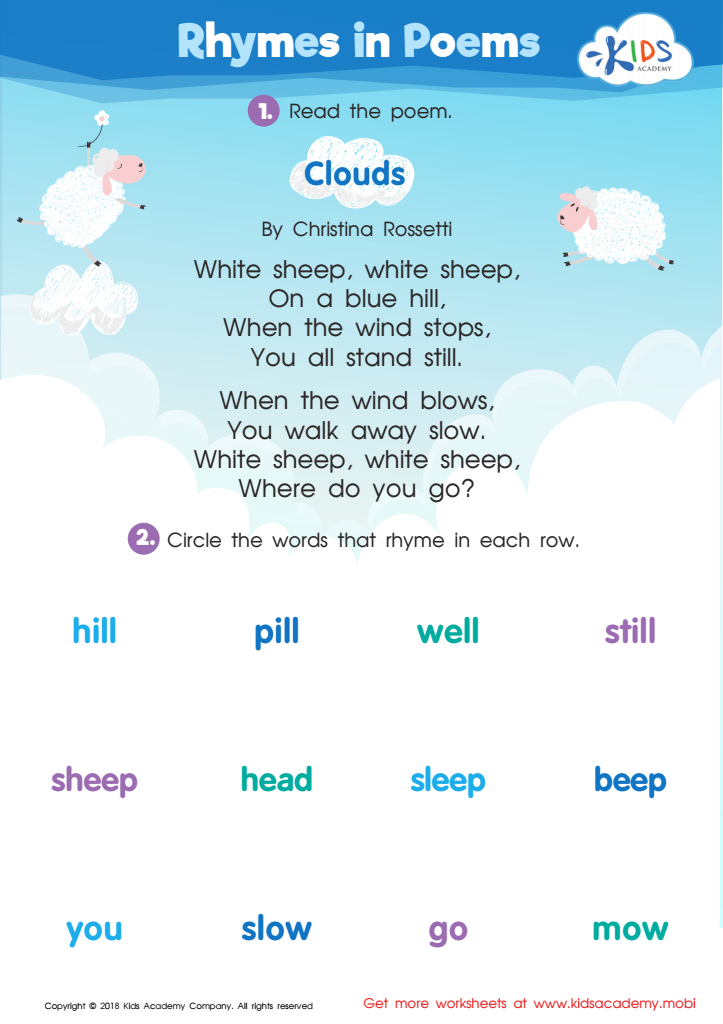
Rhymes in Poems Worksheet
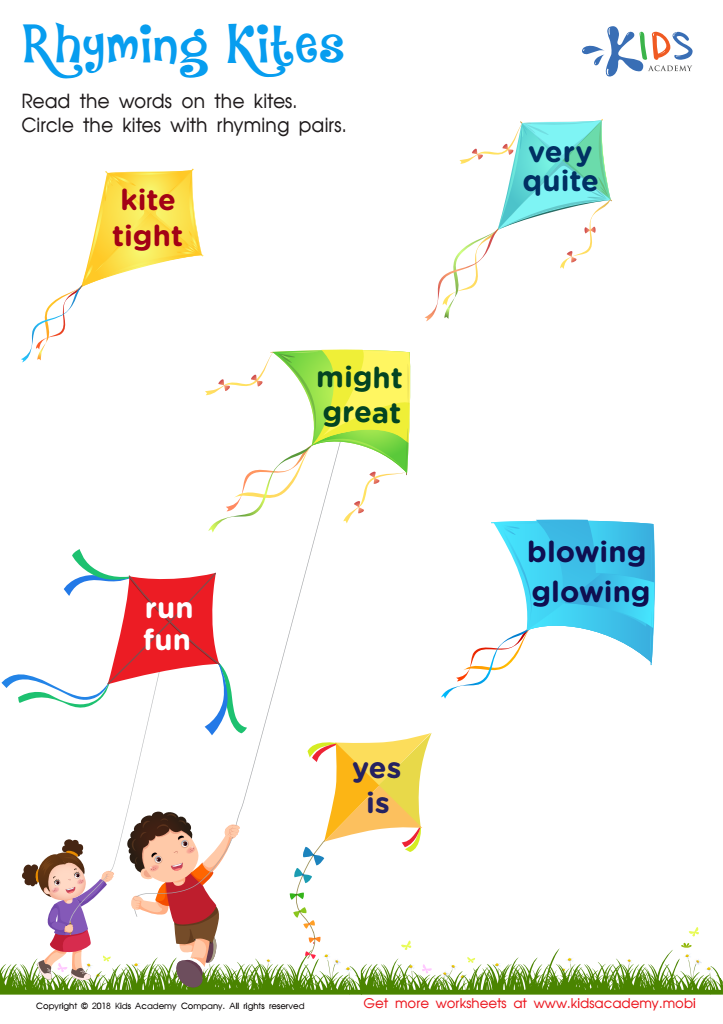
Rhyming Kites Worksheet
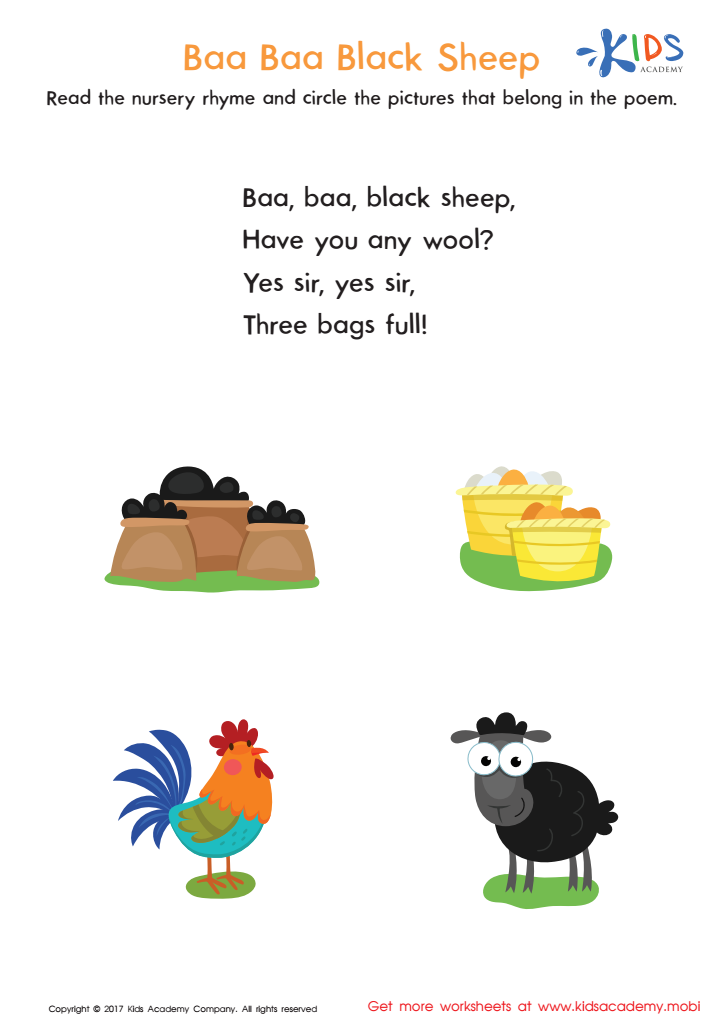
Baa Baa Black Sheep Printable
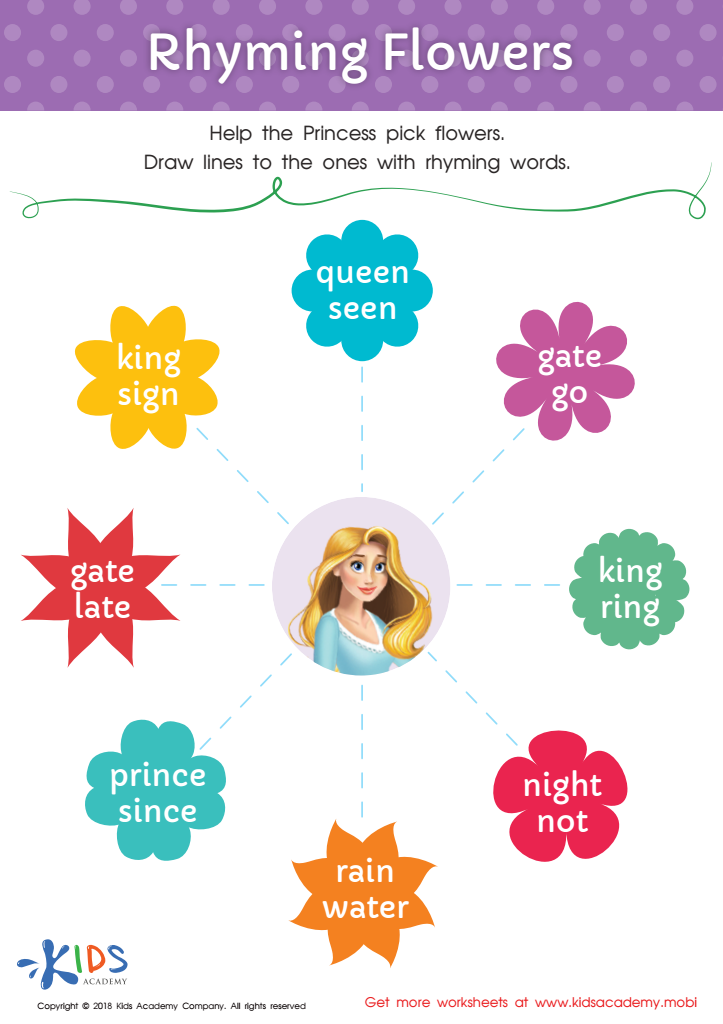
Rhyming Flowers Worksheet
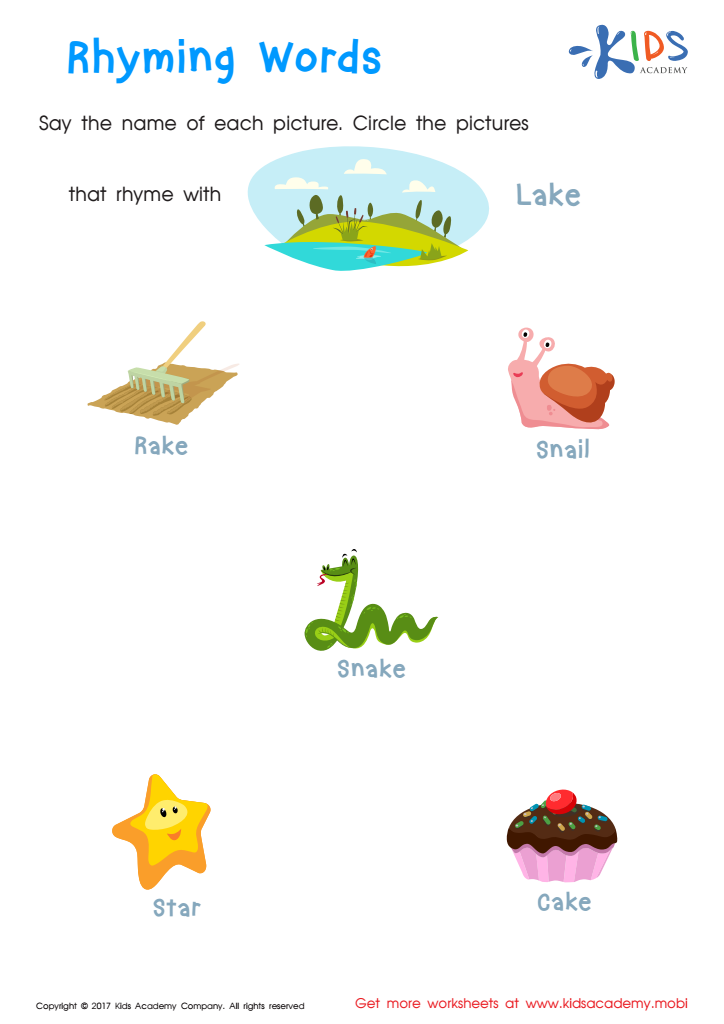
Rhyming Words Rhyming Worksheet
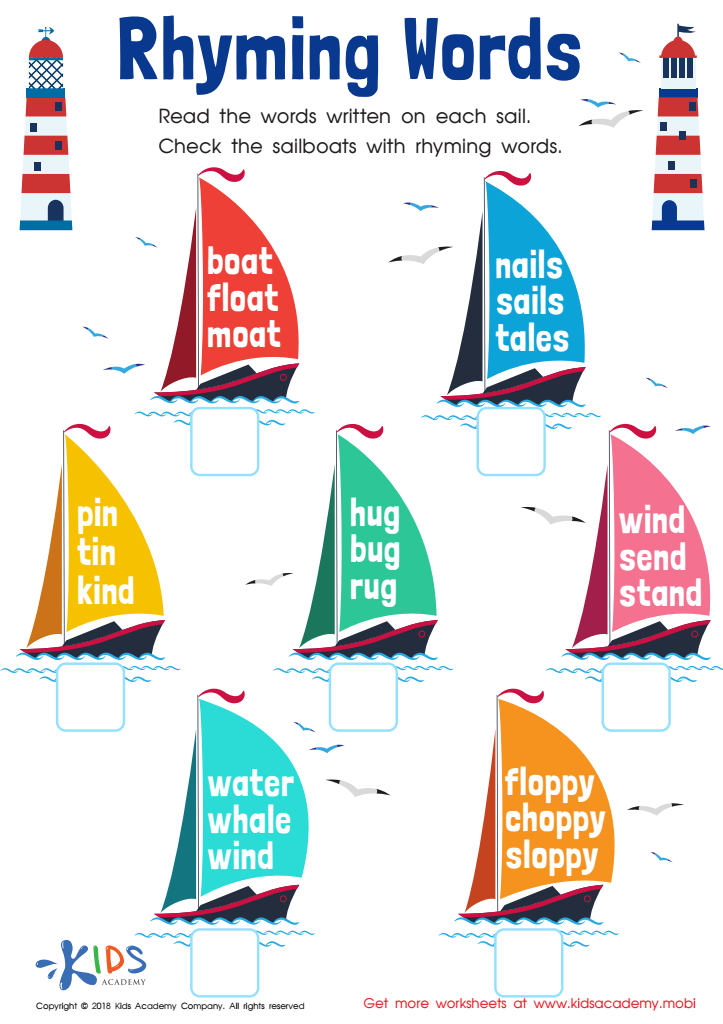
Rhyming Words Worksheet
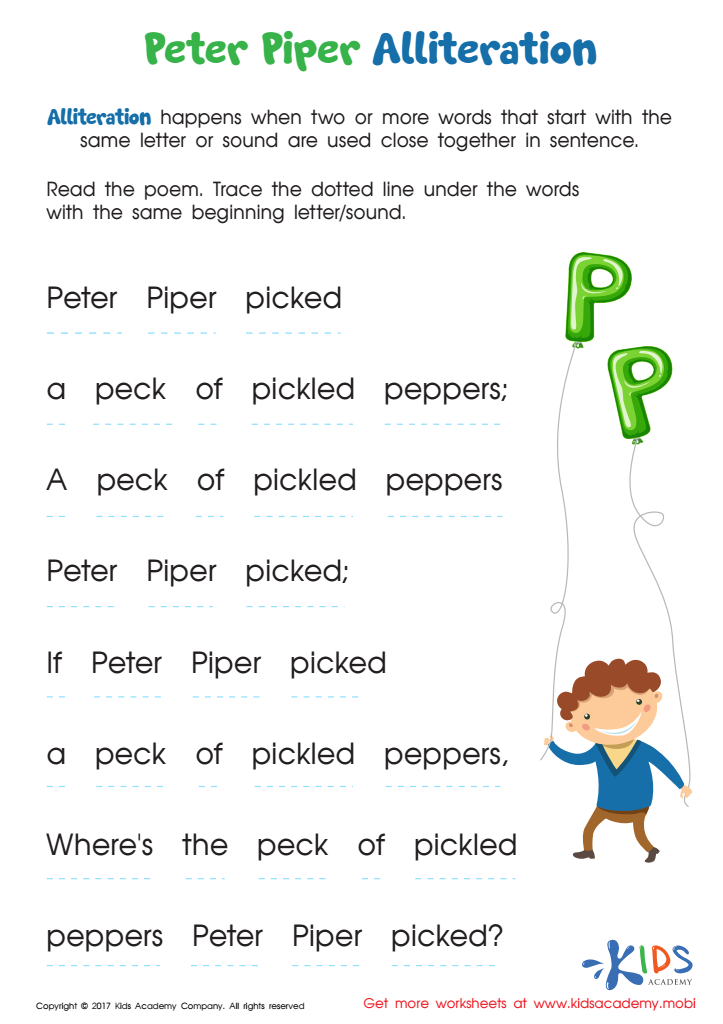
Peter Piper Alliteration Worksheet
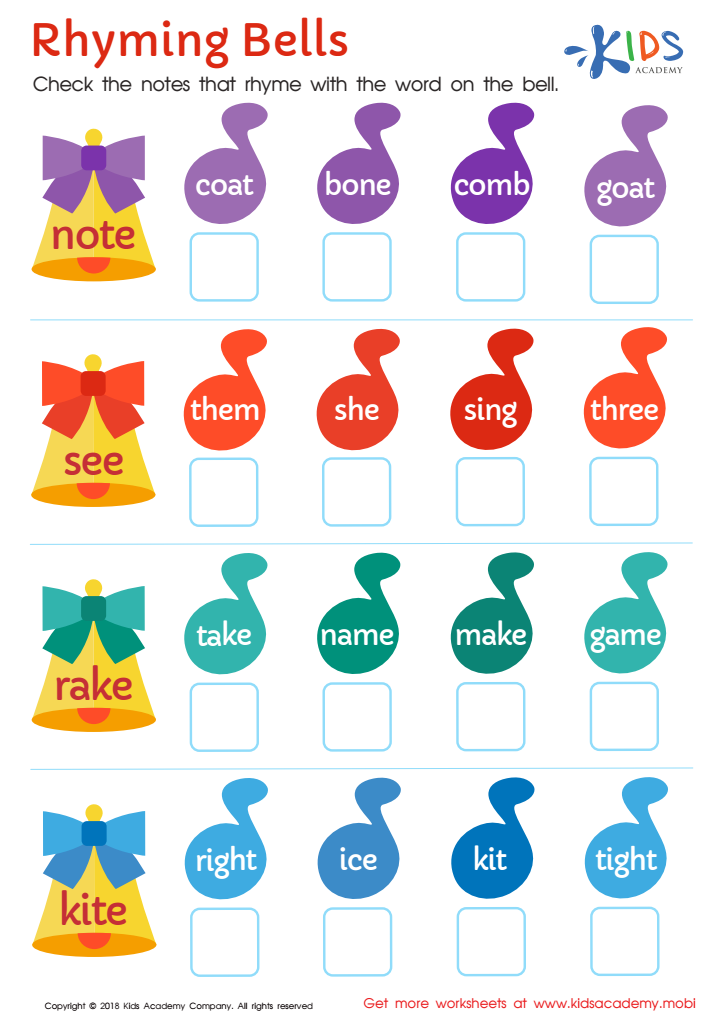
Rhyming Bells Worksheet
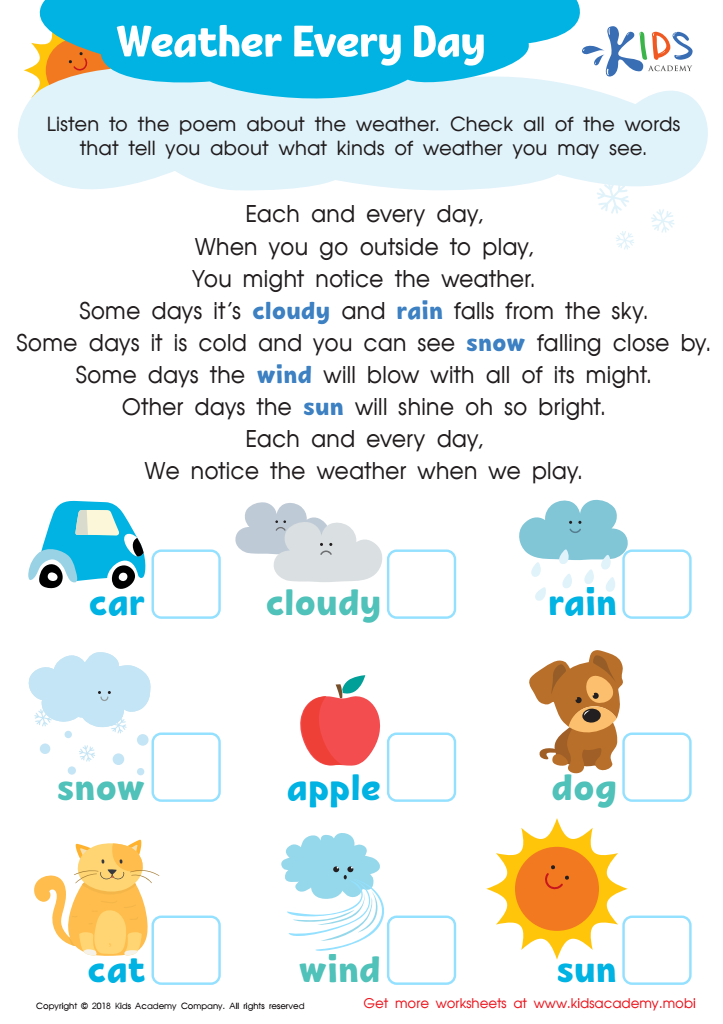
Weather Every Day Worksheet
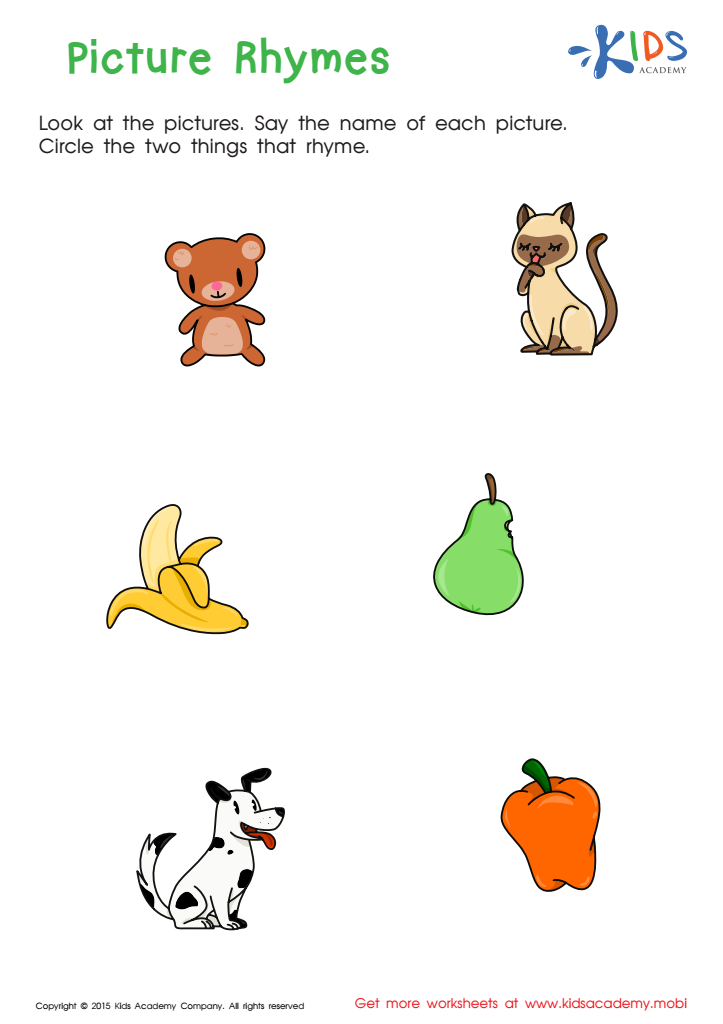
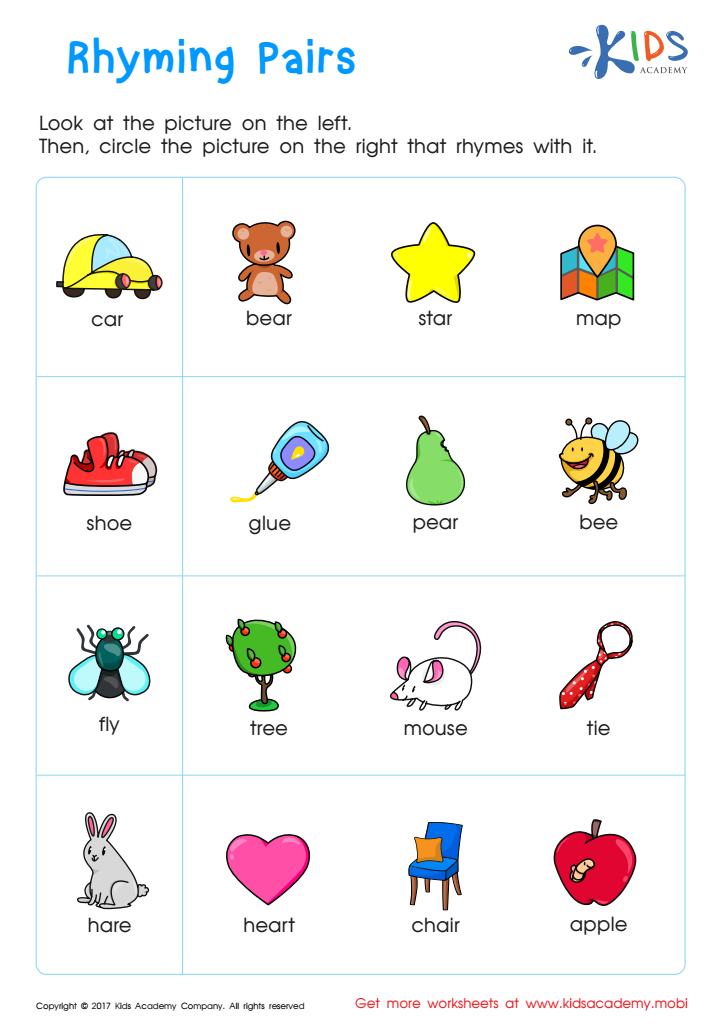
First Words: Picture Rhymes Worksheet
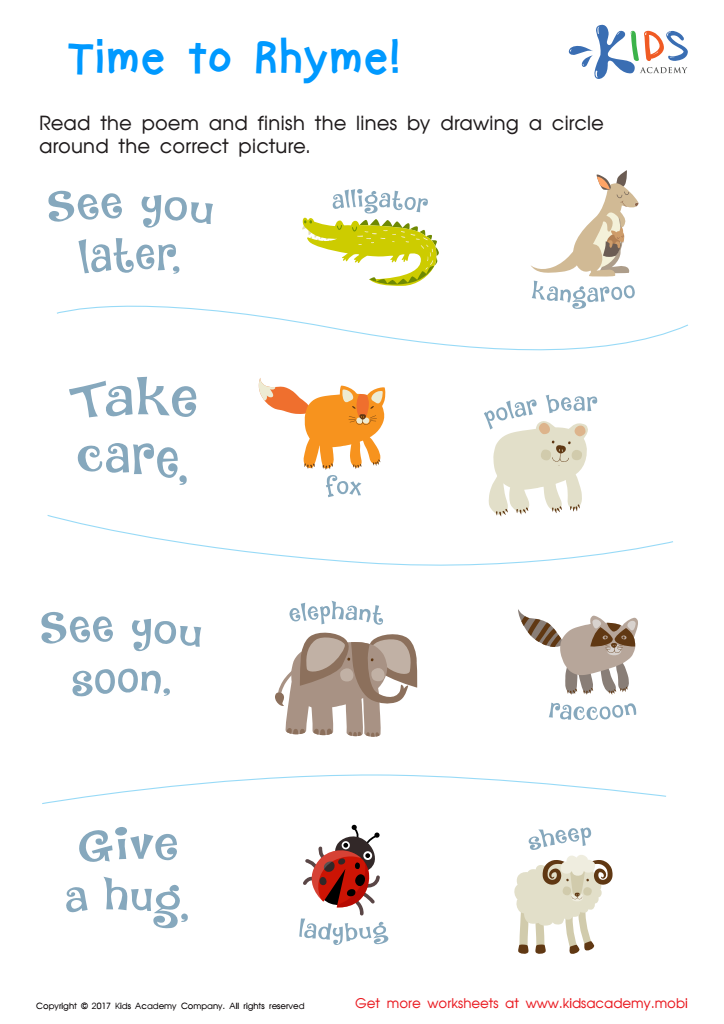
Time to Rhyme Rhyming Worksheet
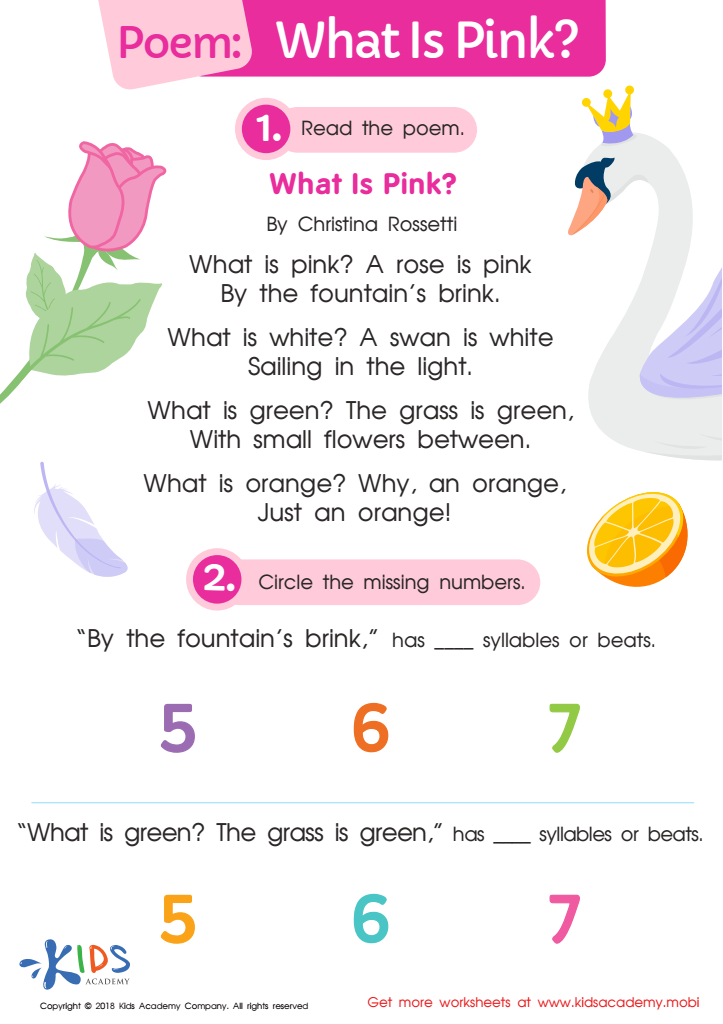
Poem: What Is Pink? Worksheet
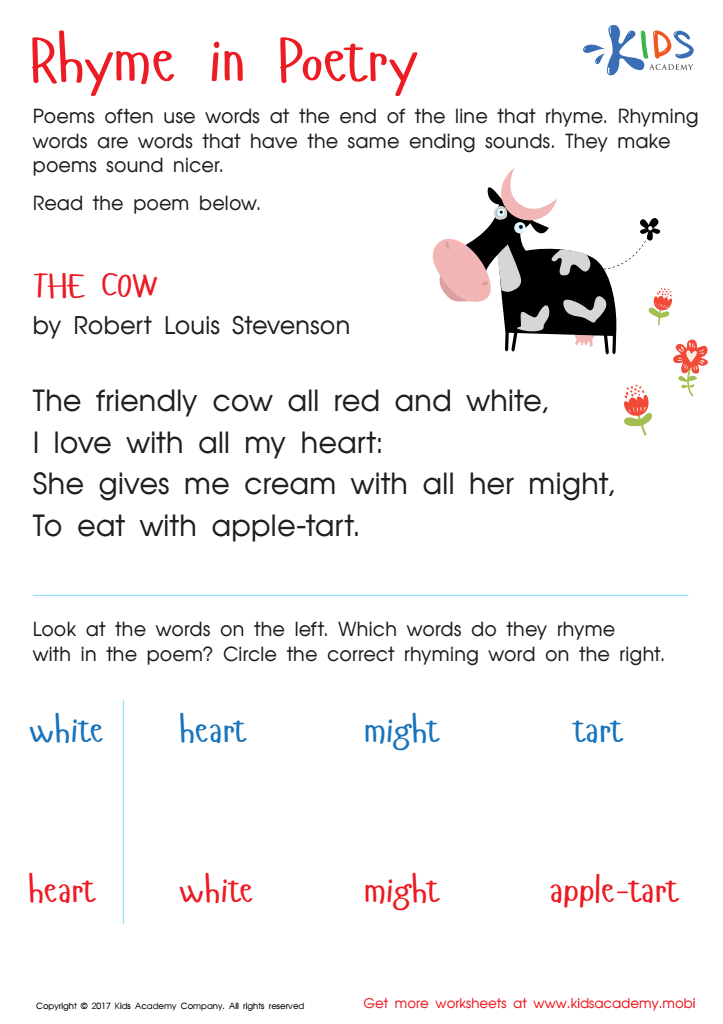
Rhyme In Poetry Worksheet
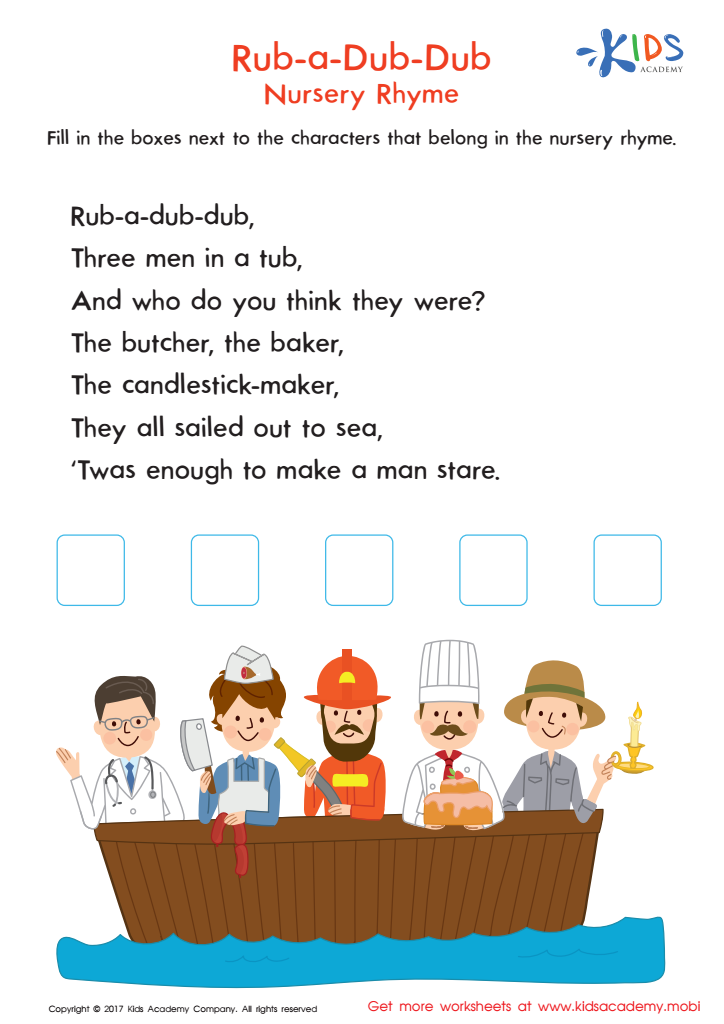
Rub a Dub Dub Printable
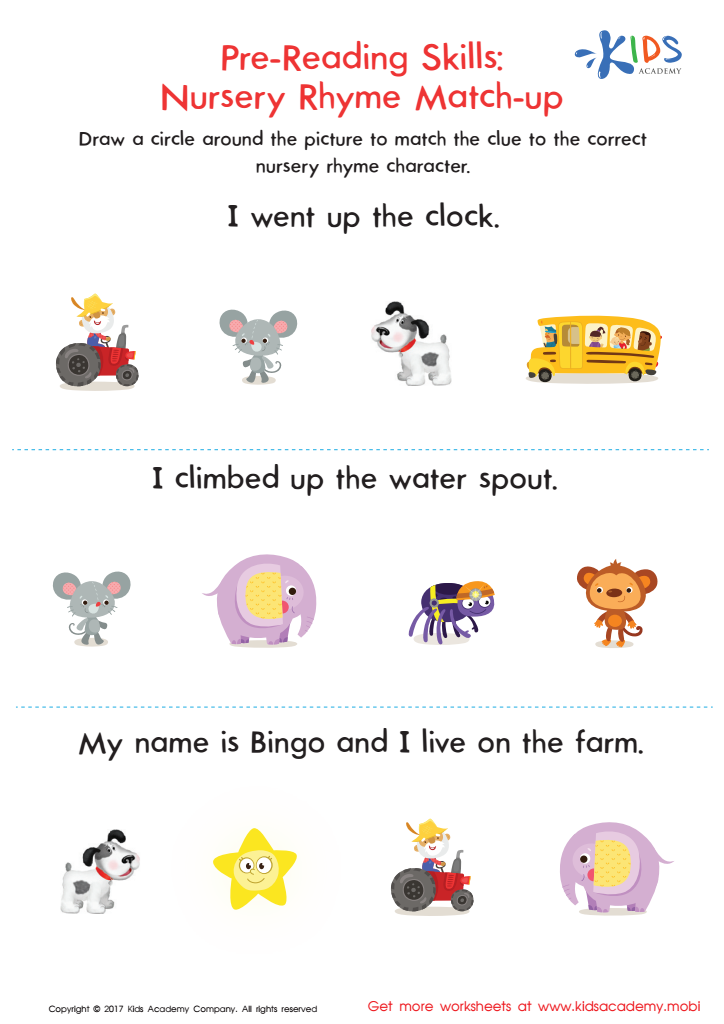
Nursery Rhyme Match–Up Worksheet
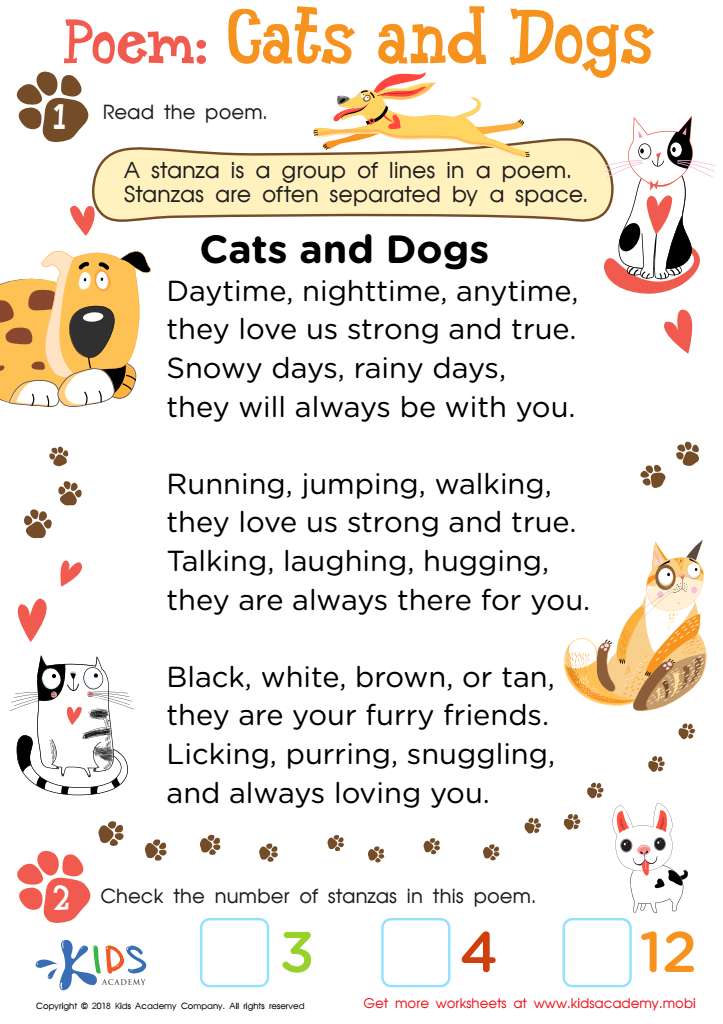
Poem: Cats and Dogs Worksheet







Rhyming is a crucial aspect of early childhood literacy and language development that parents and teachers should prioritize for children aged 4-8. Engaging with rhymes enhances phonemic awareness, which is the ability to hear and manipulate sounds in language. This skill is fundamental for developing reading skills, as it helps children decode words by recognizing sound patterns.
Moreover, rhyming enjoys a playful and rhythmic quality that captivates young learners. It fosters an enjoyment of language, stimulating curiosity and creativity. Engaging with nursery rhymes and other poetic forms promotes meaningful interactions between caregivers and children, reinforcing social and emotional bonds.
Additionally, exposure to rhyming words enhances vocabulary acquisition. Children learn new words and their meanings in a contextually rich and enjoyable manner. This early vocabulary building lays a foundation for future literacy skills, as they become adept at recognizing both spoken and written language.
Finally, rhyming assists in improving memory skills. The repetitive nature of rhymes aids retention, making it easier for children to recall information. By incorporating rhyming activities into education and home life, caregivers are equipping children with essential tools for successful reading and writing in later years.







