Upper & Lowercase Letters Worksheets for Ages 4-8 - Page 3
50 filtered results
-
From - To
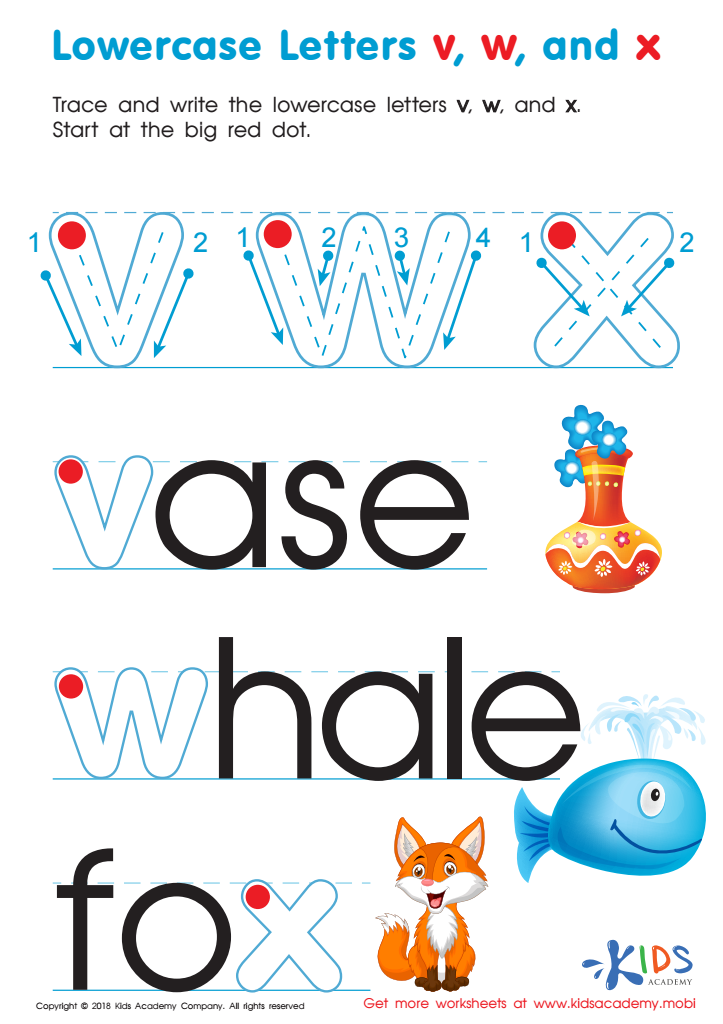
Lowercase Letters v w x Worksheet
 Assign to My Students

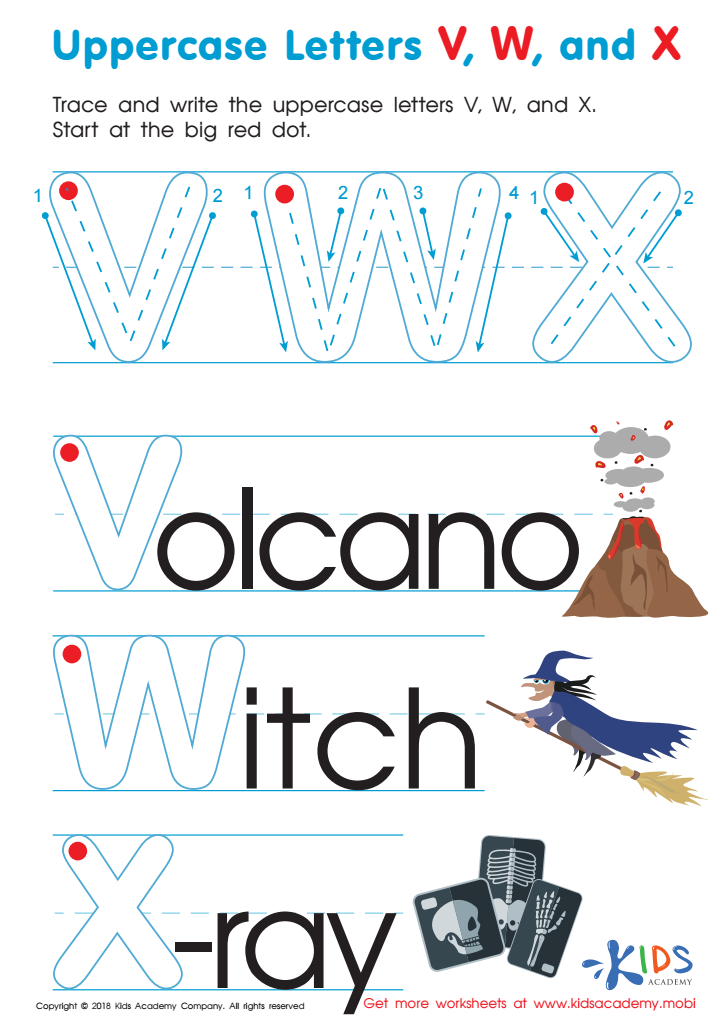
Uppercase Letters V, W, and X Worksheet






Caring about uppercase and lowercase letters for children ages 4-8 is crucial for their early literacy development. At this formative stage, understanding and recognizing both uppercase and lowercase letters lay the foundation for reading and writing skills essential for future academic success. Uppercase letters often serve as entry points since they are more uniform and easier for young learners to distinguish. Introducing lowercase letters, on the other hand, is vital because the majority of text they will eventually read and write is in lowercase.
Knowing both letter forms can help children understand the structure and rules of written language, like recognizing that names and the start of sentences use uppercase letters. This comprehensive understanding can improve their ability to read fluidly and write accurately. Additionally, early familiarity with both sets of letters can enhance phonemic awareness, where children begin to understand that letters represent sounds.
Teachers and parents play a critical role by providing ample opportunities for kids to interact with letters, through activities like alphabet games, reading books, and writing practice. This not only aids cognitive development but also nurtures a love for reading, fostering a smoother transition to more complex language skills as they grow. Engaging children at this age can have a lasting impact, setting them on a path to academic and literacy success.







