Vowel Digraphs Worksheets for Ages 4-8
3 filtered results
-
From - To
Explore our engaging Vowel Digraphs Worksheets for children ages 4-8! Designed to enhance early literacy skills, these worksheets introduce young learners to digraphs—two vowels that come together to create unique sounds. Each worksheet combines fun activities, such as coloring, matching, and fill-in-the-blanks, that make learning enjoyable and interactive. These resources help children recognize vowel combinations, build their phonetic awareness, and boost their reading confidence. Perfect for homeschooling or classroom use, our printables promote a strong foundation in phonics, ensuring your child can read and spell with ease. Download now and support your child's literacy journey today!
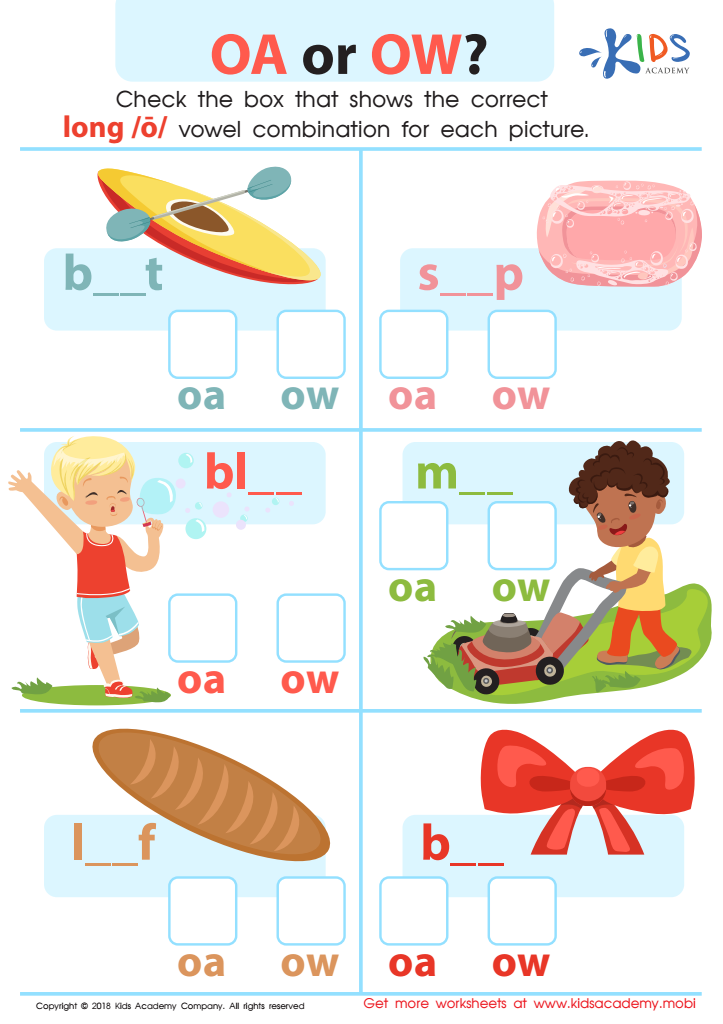
Reading: OA or OW Worksheet
 Assign to My Students
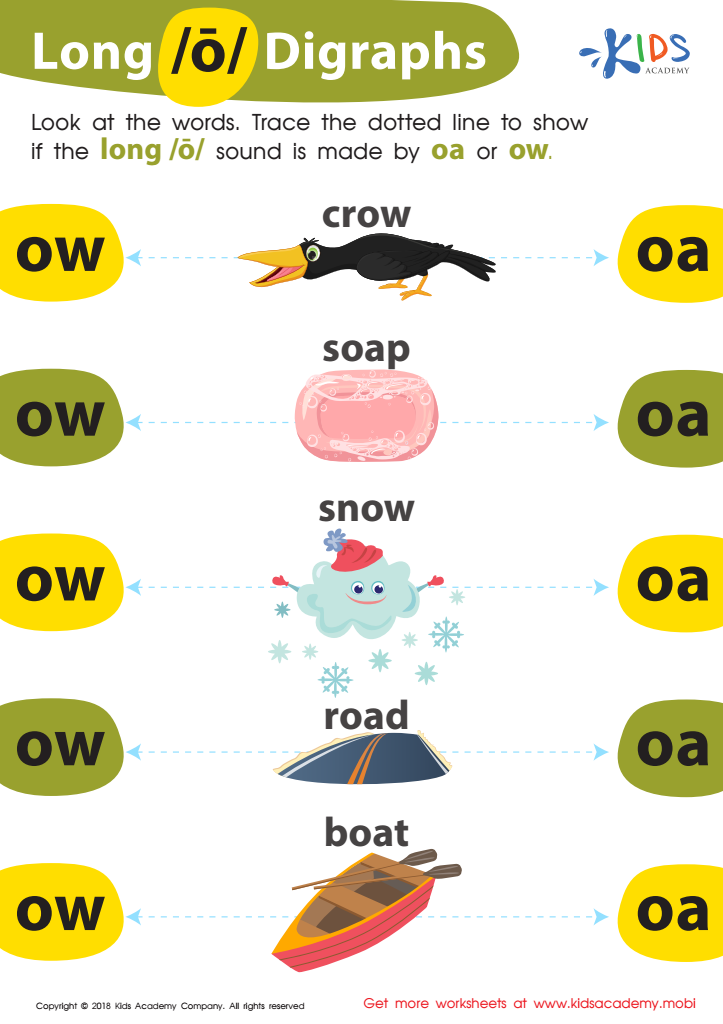
Reading: Long O Digraphs Worksheet
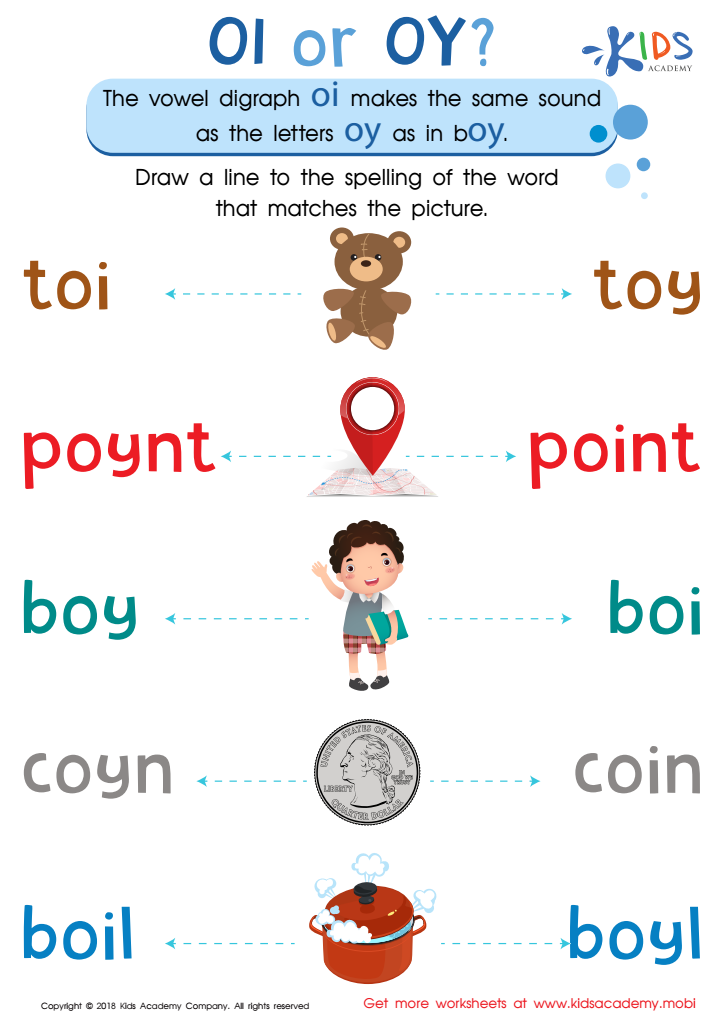
Reading: OI and OY Worksheet


Vowel digraphs, combinations of two vowels that create a single sound, are crucial in early reading development for children aged 4-8. Understanding these patterns enhances phonemic awareness, allowing students to decode words more effectively. Parents and teachers should care because a solid understanding of vowel digraphs, such as "ai" in "rain" or "oo" in "moon," helps children to read fluently and with greater confidence.
Recognizing vowel digraphs empowers children to tackle unfamiliar words, promoting a love for reading and independence in learning. Moreover, foundational skills developed during these formative years lay the groundwork for more complex literacy skills. Engaging students with activities focused on vowel digraphs—such as games, songs, and reading exercises—can make learning enjoyable and effective.
Additionally, proficient reading skills correlate directly with academic success across subjects. When parents and teachers prioritize vowel digraphs, they contribute to a supportive learning environment that nurtures literacy. Ultimately, understanding vowel digraphs is an essential building block that will carry children through their educational journey, making a substantial difference in their literacy skills and lifelong learning. By emphasizing these elements, parents and teachers can positively influence a child’s reading proficiency and overall engagement with language.








