Filters

148 filtered results

Clear all filters
Favorites
With answer key
Interactive

148 filtered results

Difficulty Level

Grade


Subject

    Check out this FREE Trial Lesson on English for Beginners for age 4-8!

    Match Pictures with Words

    Favorites
    With answer key
    Interactive
    • 4-8
    • English for Beginners
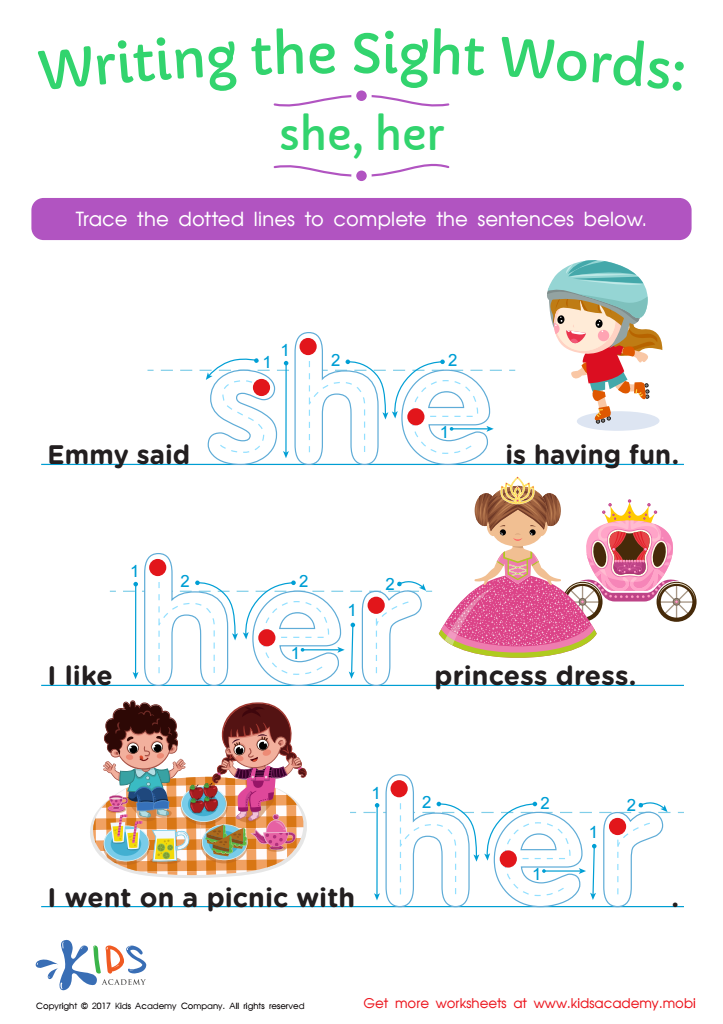
    Sight Word Tracing Worksheet: She, Her
    Sight Word Tracing Worksheet: She, Her

    She, Her Printable Sight Words Worksheet

    Help your child build literacy with daily sight word tracing! Have them read and trace the words 'she' and 'her' for a fun, focused practice. It's a great way to develop reading and writing skills.
    She, Her Printable Sight Words Worksheet
    Worksheet
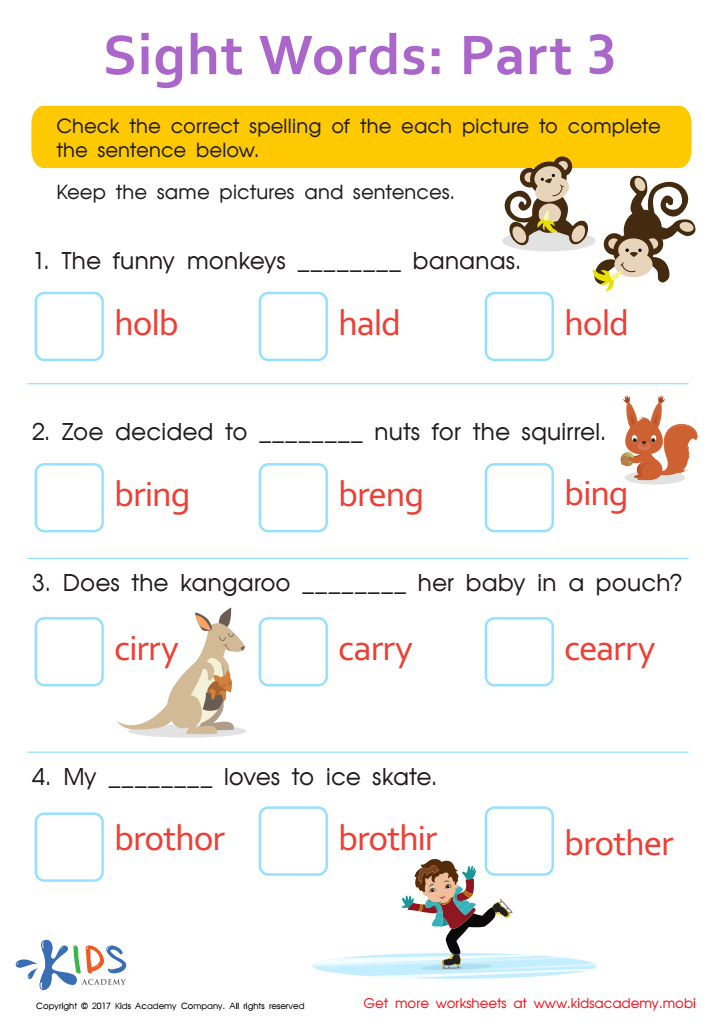
    Sight Words Worksheet: Hold, Bring, Carry, Brother
    Sight Words Worksheet: Hold, Bring, Carry, Brother

    Hold, Bring, Carry, Brother Sight Words Worksheet
    This sight words worksheet has fun illustrations to engage kids. They must read each sentence, then fill in the missing word, selecting from: hold, bring, carry, brother!
    Hold, Bring, Carry, Brother Sight Words Worksheet
    Worksheet
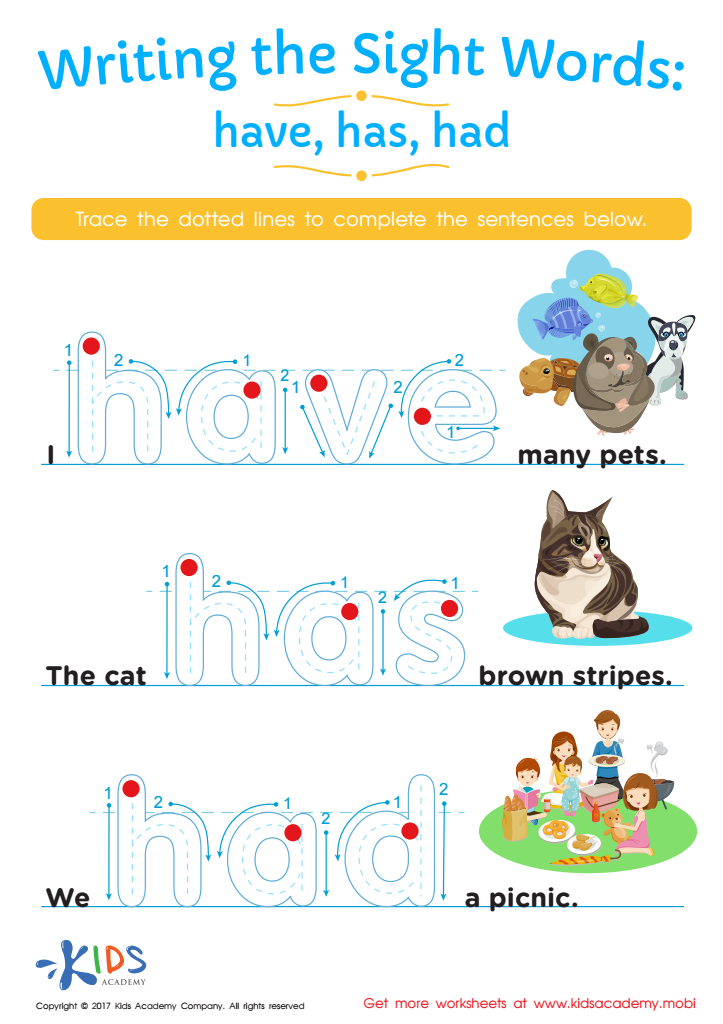
    Writing the Sight Words: Have, Has, Had
    Writing the Sight Words: Have, Has, Had

    Have, Has, Had Worksheet Sight Words Worksheet
    Writing and reading go hand-in-hand. Build your child's literacy with this helpful worksheet, focusing on the sight words - have, has, had. Have them read through the sentences and trace the words to master the skill.
    Have, Has, Had Worksheet Sight Words Worksheet
    Worksheet
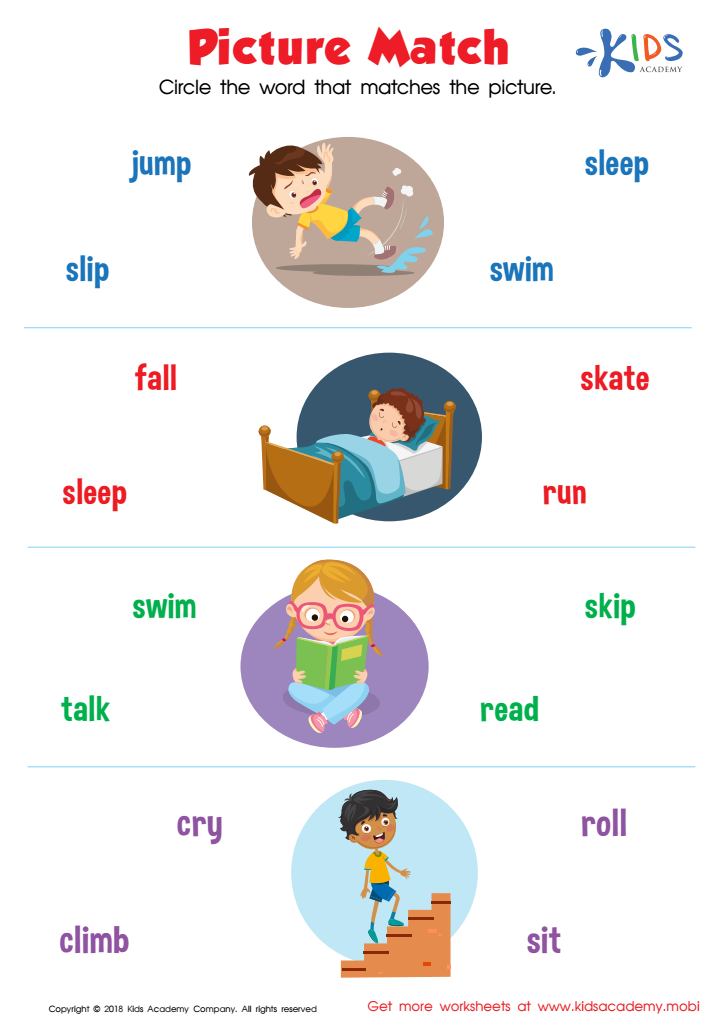
    Picture Match Worksheet

    Picture Match Worksheet

    Picture Match Worksheet

    If your kids can read, this exercise will be a breeze. Show the pictures and ask them what's happening. Read the words and see if they can identify any of them and help them circle the word that matches the picture. Simple!
    Picture Match Worksheet
    Worksheet


    ... 6 7

    Parents and teachers should prioritize English for Beginners for ages 4-8 because this foundational stage is critical for language development. During these early years, children absorb language at an impressive rate, making it an ideal time to introduce English. Proficiency in English not only enhances communication skills but also boosts cognitive development, as language learning promotes critical thinking and problem-solving abilities.

    Additionally, learning English lays the groundwork for academic success later on. Many educational systems use English as the medium of instruction, so early exposure helps children navigate their learning environments effectively, fostering confidence and encouraging participation. It also opens doors to global opportunities, as English is widely regarded as a key international language.

    Moreover, engaging with English through songs, stories, and interactive activities can make the learning process enjoyable and culturally enriching. This creates positive connections to the language that can last a lifetime. Ultimately, by investing time and resources in teaching English to young learners, parents and teachers empower children to thrive in diverse settings and equip them with essential life skills for their future.